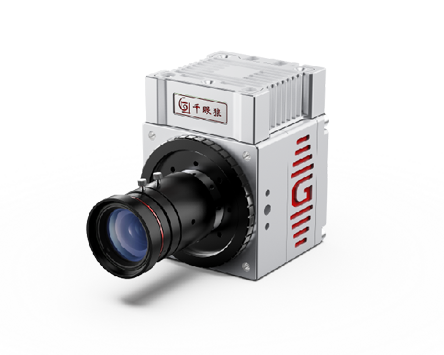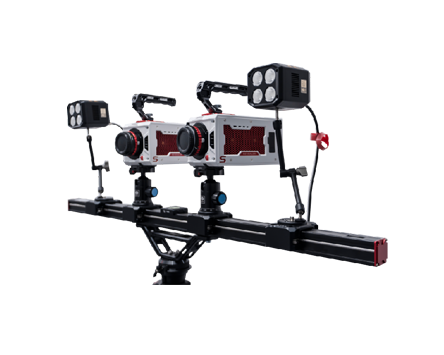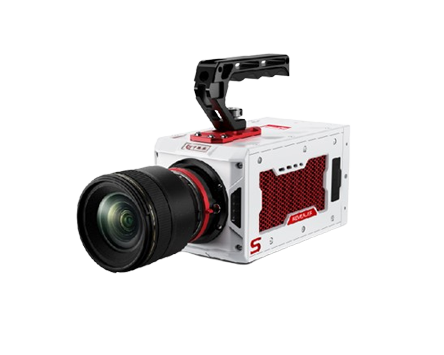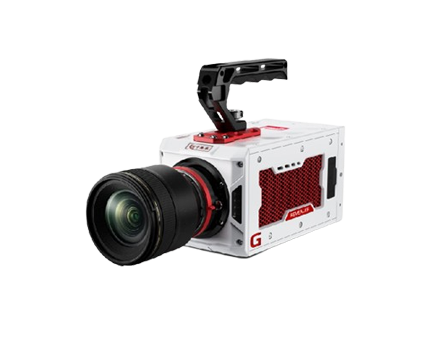
On October 15–18, 2026, the Combustion Academic Symposium of the Chinese Society of Engineering Thermophysics was held in Chongqing. Revealer exhibited its high-speed cameras, Particle Image Velocimetry (PIV) systems, and PIV–PLIF synchronous coupled measurement system, focusing on combustion flow, flame stability, and flow–reaction coupling research, and exchanging with participating experts and scholars on the application requirements of high-speed optical diagnostics.

Figure 1 – Opening ceremony of the Combustion Symposium
Whether a flame remains stable depends not only on the reactivity of the fuel, but also on recirculation zones, shear layers, and mixing processes. A high-speed camera can continuously record particle motion and flame optical signals; PIV (Particle Image Velocimetry) estimates the velocity field from particle image displacement. By synchronizing the two observation modes, researchers can further analyze the correspondence between flame evolution and flow structures.
When the study requires observing the species fluorescence distribution within a selected cross-section, Planar Laser-Induced Fluorescence (PLIF) can be introduced. PIV and PLIF provide different types of information; the value of synchronous measurement lies in establishing reliable temporal and spatial links between them.
Changes in flame appearance do not directly reveal how the internal flow has changed. Investigating jet impingement, recirculation zone formation, or mixing state variations requires velocity distribution data as the basis. In a PIV system, the high-speed piv camera performs the particle image acquisition task; combined with illumination, calibration, and correlation computation, particle displacement is converted into velocity information.
Researchers led by Gao Hetong at Southeast University conducted two interrelated studies on gradient magnetic field modulation of flames. One started from non-reactive gas jets to reduce the influence of combustion heat release and thermal expansion; the other investigated nitrogen-diluted methane diffusion flames, combining flow measurements with three-dimensional Computational Fluid Dynamics (CFD) to analyze flame behavior under magnetic field action.
In the non-reactive jet experiments, the team used a Revealer X213 high-speed camera together with a 532 nm continuous laser sheet and TiO₂ seeding particles for PIV measurement, combined with oxygen concentration measurement, shadowgraphy, and numerical computation, to compare jet behavior under different magnetic field conditions.
The PIV results provided velocity distributions within the effective field of view, which could be cross-checked against the jet core, velocity decay, and confinement range in the computational results.

Figure 2 – The Southeast University research team used the Revealer X213 high-speed camera for PIV measurements, comparing experimental axial velocity results with CFD results for nitrogen jets under different magnetic field conditions.
In the reactive flame study, the team likewise adopted the Revealer X213 high-speed camera as the PIV acquisition device, recording particle images at 5,000 fps with a 199 μs exposure, and compared the velocity results within the effective measurement region with CFD predictions. Detailed interpretation of fuel recirculation, outer vortex structure variation, and the triple-flame structure was carried out in conjunction with the three-dimensional model.
These two studies illustrate the concrete role of PIV: first use velocity measurements to constrain the flow description, then combine other experiments and models to interpret flame behavior. The non-reactive experiments help isolate fundamental flow effects, while the reactive experiments further examine changes under heat release conditions — the two provide evidence at different levels.
Researchers including An Qiang at Beihang University (Beijing University of Aeronautics and Astronautics) studied the flow and flame characteristics of a premixed methane–air flame approaching Lean Blowout (LBO) in a stratified swirl combustor. The study employed 5 kHz stereoscopic PIV synchronized with OH* chemiluminescence measurement, combined with Spacetime Linear Stability Analysis, to examine changes under different combustor states.
The stereo PIV system used two high-speed cameras — a Revealer X213 and an S1315 — reconstructing the three velocity components in the measurement plane through dual-view particle imaging. The paper records that the cameras acquired particle images at 10 kHz in frame-straddling mode, giving the velocity measurement system an effective repetition rate of 5 kHz. The OH* chemiluminescence was recorded by an independent image-intensified imaging channel with a detection band of 308±5 nm.
The study found that, under the examined conditions, as the global equivalence ratio decreased, the main recirculation zone and the axial length of the flame increased. Instantaneous images further revealed fluctuations in the flame luminosity distribution, and the process in which the luminous structure developed gaps and progressively decayed just before final blowout. Combined with linear stability analysis, the researchers discussed the spatial growth characteristics of the Precessing Vortex Core (PVC) and their connection with the approach to blowout.

Figure 3 – The OH* chemiluminescence and PIV velocity vector sequences synchronously recorded by the Beihang research team before lean blowout of the stratified swirl flame, showing flame luminosity decay and the corresponding velocity distribution.
The contribution of synchronous measurement is that these changes can be compared on a common time base. Researchers can examine both the velocity structures and track the flame luminosity at the corresponding instants, avoiding interpreting the entire blowout process solely by the mean recirculation zone or the averaged flame shape. Therefore, stereoscopic PIV synchronized with chemiluminescence is well suited for analyzing the link between velocity variation and the overall luminous response.
PIV–PLIF coupled measurement adds laser-induced fluorescence information on top of velocity diagnostics. Taking OH-PLIF as an example: the laser sheet excites OH within a selected cross-section, and the imaging channel records the corresponding fluorescence. Compared with line-of-sight-integrated OH* chemiluminescence, OH-PLIF offers cross-sectional selectivity, making it more convenient to establish spatial correspondence with the
PIV velocity field in the same measurement region.
A national laboratory, built a PIV–PLIF synchronous system using a Revealer high-speed camera as the acquisition terminal, organizing continuous measurement at a 10 kHz system sampling setting.
The PIV channel used a Revealer S1310M high-speed camera, a 527 nm dual-pulse laser, and Al₂O₃ seeding particles; the PLIF channel used a Revealer S1310-series high-speed camera coupled with an image intensifier, together with a pump laser and tunable dye laser, UV lens, and filter assembly to record OH fluorescence. The two laser sheets were aligned to the same measurement cross-section, and the coordinate mapping between the two imaging channels was established through common calibration.

Figure 4 – The PIV–PLIF synchronous measurement experimental platform built with Revealer high-speed cameras. The figure labels the particle imaging channel, intensified UV imaging channel, laser light sources, and synchronization control components.
The system also monitored laser pulse energy fluctuation and corrected for the non-uniform distribution of the sheet energy, reducing the interference of illumination variation on the fluorescence images. After temporal alignment and spatial registration, researchers could compare the PIV velocity field with the OH fluorescence image, analyzing the relationship between local flow structures and morphological changes of the fluorescence layer such as bending and wrinkling.

Figure 5 – Example of a PIV velocity vector field and a PLIF fluorescence image. The left shows the velocity distribution and the right shows the fluorescence structure, illustrating the complementary information provided by the two types of measurement.
What this type of measurement adds is the information of “how the flow structure and the fluorescence structure correspond within the same cross-section.” PIV provides the velocity basis, PLIF supplements the species fluorescence distribution, and the high-speed camera supports continuous image acquisition, enabling researchers to track the joint evolution of the two along the time sequence.
PIV, high-speed synchronized imaging, and PIV–PLIF provide progressively complementary information for combustion research. The Southeast University magnetic field study used PIV velocity data to validate flow predictions; the Beihang lean blowout study synchronized stereoscopic PIV with OH* chemiluminescence recording to analyze the relationship between velocity structures and flame evolution; the PIV–PLIF engineering case further established the cross-sectional correspondence between the velocity field and the OH fluorescence structure.
The Revealer high-speed camera served the particle image or fluorescence image acquisition tasks in these studies and systems. In scientific experiments, only by clarifying the velocity components, optical signals, sampling sequence, and spatial registration relationships can synchronized images be converted into comparable data, providing the basis for the analysis of combustion flow, flame stability, and their interaction.
 English
 Deutsch