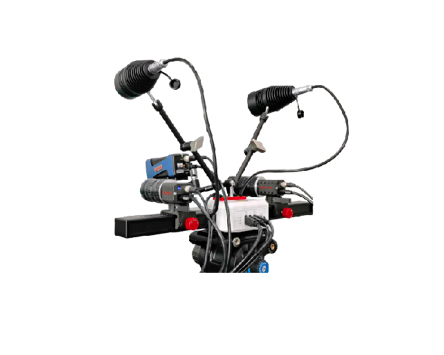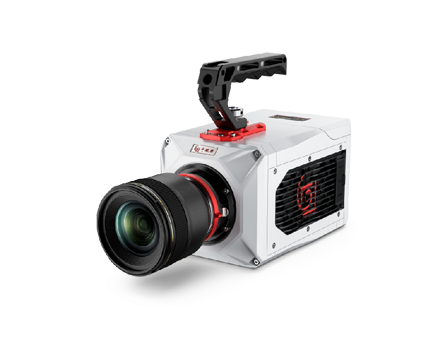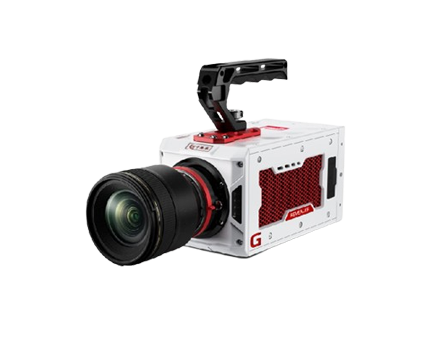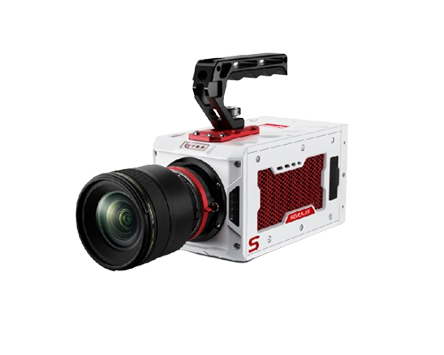
On October 15–18, 2026, the Combustion Academic Symposium of the Chinese Society of Engineering Thermophysics was held in Chongqing. Revealer exhibited the NEO 25 high-speed camera and the NEO 25 (UV) high-speed ultraviolet camera, exchanging with participating researchers on transient imaging and optical diagnostics requirements in combustion experiments.

Figure 1 – Opening ceremony of the Combustion Symposium
Whether ignition succeeds, how a flame propagates, and when combustion oscillations appear — all these questions require continuous time-resolved information. A high-speed camera records brief processes as image sequences, enabling researchers to extract event timing, front positions, and structural evolution; combined with narrow-band filters, UV optics, or laser diagnostics, the variation of selected emission bands can also be observed and cross-referenced with pressure, flow field, and other data.
The research value of high-speed imaging depends on what information the images provide, and whether that information supports conclusions about the combustion process.
Many critical differences in combustion experiments first manifest as differences in when events occur and in what order they develop. When a droplet contacts the oxidizer and begins to glow, whether the ignition kernel continues to develop, when particles are ejected — a single image is rarely sufficient to judge these.
High frame rate cameras can continuously record these changes. With spatial calibration and image recognition, the time evolution of front position, projected contour, or particle trajectories can be obtained, from which front propagation velocity, oscillation amplitude, and characteristic frequency can be further computed.
In research on ionic liquid and alcohol fuel blend formulations, the research team of Prof. Gao Xuyao at Xi’an Jiaotong University focused on the influence of droplet size, impact velocity, and fuel blending ratio on spontaneous ignition. The team used a Revealer X113 high-speed camera, recording at 1280×1024 pixels and 5,000 fps the process of droplet contact with the oxidizer and subsequent ignition, identifying events such as contact, morphological change, and first luminous emission from consecutive frames, and obtaining ignition phenomena and ignition delay data under different operating conditions.

Figure 2 – Xi’an Jiaotong University recording of the ignition process with a Revealer high-speed camera.
This type of measurement gives the previously hard-to-observe ignition process a comparable temporal basis.
Continuous imaging provides the time information; band selection determines which type of radiation the image mainly records. Broadband visible imaging is suitable for observing visible luminous structures, incandescent particles, and droplet/particle motion under external illumination. However, radiation from high-temperature particles can mask weaker molecular band emission, and a bright contour does not necessarily correspond to the actual reaction zone boundary. High-speed UV imaging provides the means to observe ultraviolet emission signals. In combustion diagnostics, the commonly used OH* chemiluminescence lies at approximately 308–310 nm, in the ultraviolet band; the CH* chemiluminescence band commonly used lies at approximately 431 nm, in the visible band.
The research team at Tsinghua University used the Revealer NEO25 (UV) high-speed ultraviolet camera, together with a UV lens and narrow-band filters, configuring the image intensifier according to the wavelength band and signal strength. Under the experimental conditions, the 310 nm channel recorded the flame contour at 100 fps without an image intensifier, and achieved 1,000 fps continuous imaging with the intensifier added; the 430 nm visible channel achieved 1,000 fps imaging without an image intensifier.

Figure 3 – Methane + ammonia combustion, 430 nm, 1000 fps, maximum exposure, 100 mm/F2.0 aperture (no image intensifier).
This set of experiments obtained flame luminosity images in different channels, and also clarified how to combine exposure, optical throughput, and intensifier configuration under weak-signal conditions, providing the basis for subsequent band-resolved combustion observation.
Beyond ignition timing and characteristic band emission, the flame propagation process is another important observation object in combustion research. In methane–coal dust mixed explosion experiments, suppressants may alter the flame front morphology, propagation velocity, and pressure development. The Revealer S1325 (NEO25) ultra high speed camera used in this study can continuously record these changes, providing process data for evaluating suppression effectiveness.
Researchers including Li Haitao from Chongqing University and other institutions analyzed the flame front morphology, flame height, propagation velocity, and arrival time through image sequences. The results showed that the effect of the suppressant has a clear concentration dependence: MFAC2 at 50 g/m³ exhibited a flame propagation promotion phenomenon, with the maximum flame propagation velocity 15% higher than the blank condition; the nitrogen- and phosphorus-modified system PMFAC showed stronger suppression within the studied range. For example, PMFAC2 at 125 g/m³ reduced the maximum flame propagation velocity by 67% compared with the blank condition.

Figure 4 – The methane–coal dust mixed explosion flame sequences recorded by the Chongqing University research team with a Revealer S1325 (i.e., NEO25) high-speed camera.
High-speed imaging enables suppressant evaluation to further distinguish at which stage the flame accelerates, how the front deforms, and whether propagation is delayed. Cross-referencing these results with pressure curves allows a more complete comparison of the effects of different suppressants.
High-speed imaging provides continuous temporal and spatial information for combustion research. The droplet ignition experiments used this information to identify the sequence of contact, first luminous emission, and subsequent development; UV and band-resolved imaging was used to observe the distribution and evolution of selected emission bands; the methane–coal dust explosion experiments extracted propagation characteristics from flame sequences and evaluated suppression effectiveness in combination with pressure measurements.
The research value of Revealer high-speed cameras and high-speed UV imaging equipment is embodied in these concrete measurement tasks. Only by defining the observed signal, establishing consistent event criteria and image processing methods, and reporting the actual acquisition conditions, can the changes in images be converted into comparable data, providing the basis for the analysis of ignition characteristics, flame luminous structure, and explosion propagation behavior.
 English
 Deutsch