This study investigates the application of three-dimensional digital image correlation (3D-DIC) in the mechanical characterization and structural integrity analysis of NEPE solid propellant. The Revealer 3D-DIC system acquires longitudinal, transverse, and full-field strain data simultaneously through non-contact stereo measurement, characterizing the evolution of Poisson's ratio with tensile strain, time, and cyclic loading. The experimental results show that Poisson's ratio decreases in an approximately linear manner from an initial value of about 0.495, reaching approximately 0.35 at 60% strain; it slightly recovers during stress relaxation and exhibits a ratcheting-type decrease under cyclic loading. The DIC strain fields of center-hole specimens agree well with finite element results in terms of strain concentration location and distribution trends. SEM, CT, and RVE analyses further link the decrease in Poisson's ratio to cohesive-zone propagation at the particle–binder interface. This study demonstrates that 3D-DIC can provide a single set of traceable experimental data for large-deformation measurement, nonlinear Poisson's ratio calibration, and viscoelastic constitutive model validation of solid propellants.
NEPE (nitrate ester plasticized polyether) solid propellant is a highly filled polymer-based composite material. During tensile loading, interface debonding, crack propagation, and void growth occur between the particles and the binder matrix, and the volumetric response of the material changes accordingly. If a constant Poisson's ratio is assumed throughout large-deformation analysis, the relationships between shear modulus, bulk modulus, and damage variables may be incorrectly allocated.
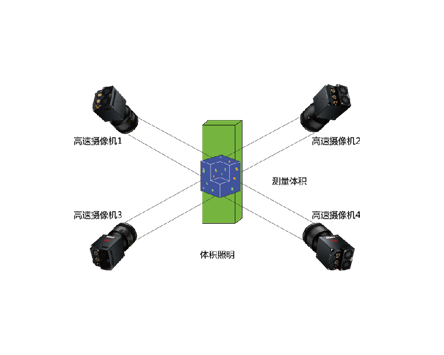
This study addresses two questions simultaneously — material parameters and spatial distribution: how does Poisson's ratio evolve under tension, relaxation, and cyclic loading; and can this macroscopic evolution be linked to microscopic interfacial damage and applied to predictions under complex stress states such as center-hole specimens. Stereo 3d digital image correlation (3D-DIC) measures longitudinal, transverse, and out-of-plane displacements synchronously within a single image sequence, thereby accommodating both Poisson's ratio calculation and local full-field strain analysis.
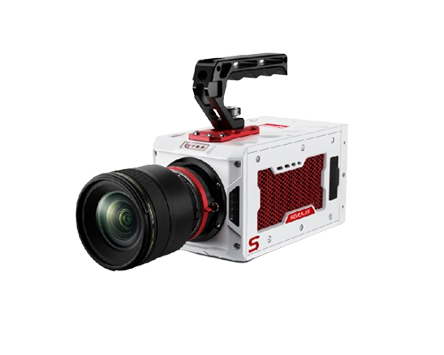
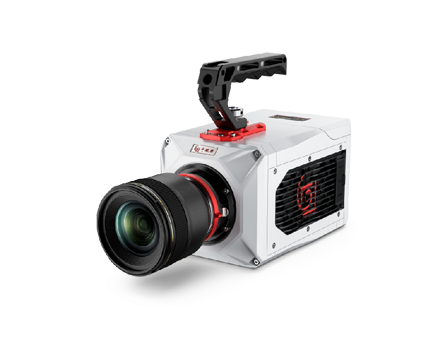
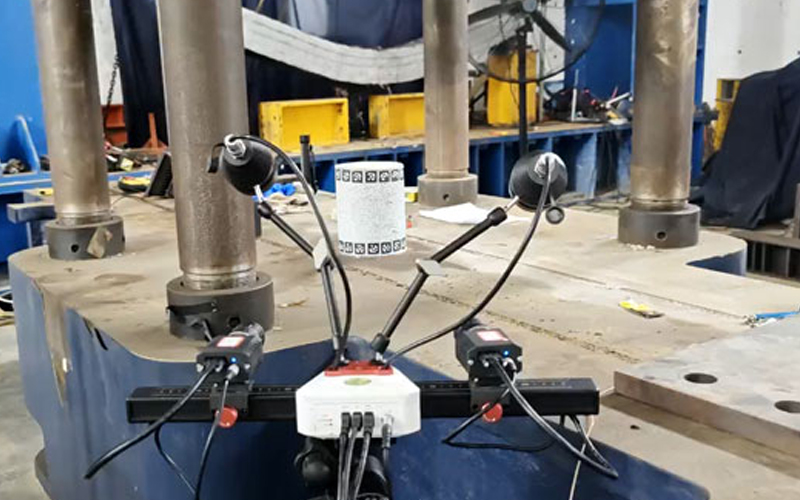
Macroscopic mechanical testing was performed on a universal testing machine equipped with an environmental chamber. A black speckle pattern was applied to the specimen surface, and the Revealer 3D-DIC system acquired stereo image pairs through the optical windows of the environmental chamber via two synchronized cameras. The cameras were configured with 50 mm lenses and a 4096 × 3000 pixel resolution, with a maximum acquisition rate of 20 fps.

Fig. 1 Test setup inside the environmental chamber: Revealer 3D-DIC stereo cameras and dog-bone specimen layout
The test program included uniaxial tension, stress relaxation, and stepwise cyclic loading. Tensile tests covered 10, 25, 40, and 60 °C at strain rates of 2.38 × 10⁻⁴, 2.38 × 10⁻³, and 1.19 × 10⁻² s−1. Relaxation tests consisted of two loading steps to 7 mm and 14 mm, each held for 1800 s. Cyclic loading increased from 0 to 56 mm in 7 mm increments, comprising 8 loading levels with 3 complete loading–unloading cycles per level. Each test condition was repeated at least five times.
DIC analysis adopted 49-pixel subsets, a 7-pixel step size, and 7 × 7 Gaussian filtering, with a calibration scale of 0.040 mm/pixel. Longitudinal and transverse DIC extensometers were used for Poisson's ratio calculation, while the center-hole specimen was analyzed using full-field strain results benchmarked against finite element simulations. SEM, industrial CT, and RVE simulations were employed to observe surface interfacial damage, internal void evolution, and interfacial mechanical mechanisms, respectively.
Under uniaxial tension, Poisson's ratio fluctuated slightly in the initial small-strain stage and then decreased approximately linearly with strain. The initial value was approximately 0.495, decreasing to approximately 0.37 at 50% strain and approximately 0.35 at 60% strain. The curves under different temperatures and strain rates were broadly similar, indicating that, within the test envelope of this study, the degree of deformation is the dominant factor governing Poisson's ratio evolution.

Fig. 2 Stress–strain curves (left) and 3D-DIC Poisson's ratio–strain curves (right) at various temperatures and strain rates
During the displacement-hold stage, stress decayed with time, while Poisson's ratio increased slightly at the onset of relaxation and then gradually stabilized. In the first relaxation step, the longitudinal strain decreased by approximately 0.3% while the transverse strain increased by approximately 0.12%. The asynchronous evolution of strain in the two directions reflects viscoelastic strain redistribution.

Fig. 3 Stress and Poisson's ratio versus time during stress relaxation
Under cyclic loading, Poisson's ratio decreased with both strain and cycle progression, and residual strain after unloading accumulated progressively, reaching approximately 7.5% at the end of the test. In the three cycles at the 42 mm loading level, the evolution of the loading and unloading branches of Poisson's ratio was nearly identical, indicating no pronounced Mullins effect in Poisson's ratio; however, the stress response still exhibited cyclic softening. The Poisson's ratio at zero stress decreased by approximately 0.004 per cycle, manifesting as a cycle-accumulated ratcheting effect.

Fig. 4 Ratcheting decrease of Poisson's ratio: a decrease of 0.004 per cycle at zero stress; residual strain of approximately 7.5% at the end of the test
The center-hole specimen was loaded at 25 °C and 10 mm/min. At a displacement of 15 mm, the maximum longitudinal strain near the hole edge was approximately 39%; at 25 mm, it reached approximately 59%, with the high-strain zone corresponding to the failure initiation location. The 3D-DIC and finite element strain fields agree in terms of concentration location and overall distribution, providing an experimental benchmark for model predictions under complex stress states.

Fig. 5 Left: DIC-measured versus FE-simulated longitudinal strain fields; Right: stress contour at 25 mm displacement
3D-DIC directly measures the three-dimensional displacement and strain fields on the specimen surface, from which Poisson's ratio is computed from the longitudinal and transverse strains. RVE results indicate that the decrease in Poisson's ratio occurs mainly during the cohesive-zone propagation stage following interfacial damage. The study accordingly introduces normalized interface displacement, crack length, and volume ratio into a multiscale constitutive model.

Fig. 6 Left: load prediction; Right: gage-section contraction displacement prediction
Fig. 6 compares the constant-Poisson's-ratio model with the nonlinear viscoelastic Poisson's ratio model. In the small-strain stage, the load predictions of the two models differ only slightly; as deformation increases and Poisson's ratio continues to decrease, the load and transverse contraction predictions progressively diverge. The final load discrepancy reaches 15 N for the dog-bone specimen and 5 N for the center-hole specimen.
Normalized by the original gage-section width, the contraction displacement of the dog-bone specimen decreases from 9.0% under the constant-Poisson's-ratio model to 7.2% under the nonlinear model, and that of the center-hole specimen decreases from 18.7% to 17.6%. This indicates that neglecting Poisson's ratio nonlinearity overestimates stress while underestimating the volume after deformation. Further damage decomposition shows that the constant-Poisson's-ratio assumption underestimates bulk modulus damage while overestimating shear modulus damage.
The Revealer 3D-DIC system measured the Poisson's ratio of NEPE solid propellant decreasing from an initial value of approximately 0.495 to approximately 0.35 at 60% strain, and identified the relaxation recovery and cyclic ratcheting decrease.
The full-field strain results of the center-hole specimen validated the model's capability to predict local strain concentration.
Adopting the measured nonlinear Poisson's ratio reduces the systematic bias introduced by the constant-Poisson's-ratio assumption in load, necking, modulus damage, and post-deformation volume predictions.
This study demonstrates a methodological pathway that connects full-field experimentation with material characterization, constitutive modeling, and structural validation. 3D-DIC can acquire simultaneous local and global, in-plane and out-of-plane deformation information under non-contact conditions, and is applicable to strain concentration, damage initiation, and failure evolution studies under complex geometry, environmental loading, and large-deformation conditions. Combining 3D-DIC with mechanical testing, microscopic and CT characterization, finite element analysis, and multiscale modeling establishes a mutually cross-validated evidence base for parameter identification, local response validation, and structural integrity assessment of composite materials in the aerospace field.
Source: Xu Zhang et al., Multiscale mechanisms of the nonlinear Poisson's ratio in viscoelastic particle-filled composites, Composites Part A, 109172. DOI: 10.1016/j.compositesa.2025.109172

 English
 Deutsch