Exploring New Applications in Sports Equipment Research with Revealer High-Speed Cameras and DIC Technology
In a single jump — from take-off to landing — what changes does an athletic shoe undergo?
What the athlete feels is the support and cushioning underfoot; what researchers focus on is more specific: which parts of the sole undergo compression, when does the local deformation increase, and how does it recover after unloading. These details, difficult to discern with the naked eye, are important clues for studying material properties, shoe structure, and the fit between the human body and equipment.
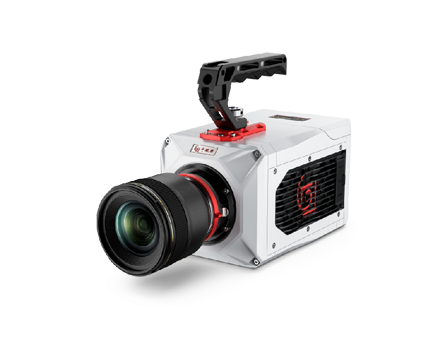
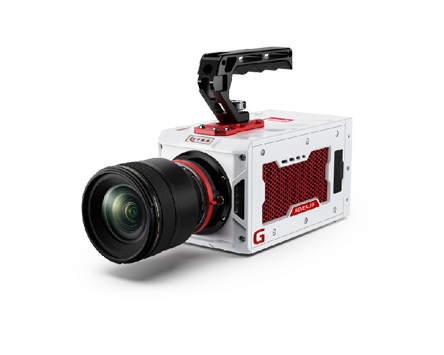
High-speed imaging and DIC digital image analysis provide the tools for observing these changes. In the athletic shoe test materials presented by Revealer, a high-speed camera records the motion process, while DIC digital image correlation technology analyzes the displacement and strain in the visible region of the sole’s lateral surface: it can show not only how the sole moves, but also how its surface deforms.
Targeted at research topics related to the key special project “Sports Empowered by Science and Technology” under the National Key R&D Program, such measurement methods offer an experimental pathway worth attention for sports equipment R&D.
Jumping, cutting, and fast running place different demands on athletic shoes. As the support position changes and the loading direction varies, the responses of different regions of the shoe also differ.
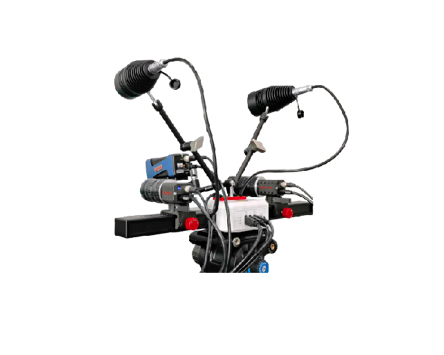
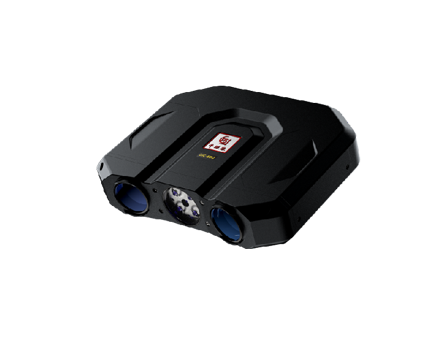
Revealer’s related tests adopted stereo (binocular) high-speed imaging with DIC analysis, showing the strain distribution on the lateral sole surface and local variation curves under jumping, cutting, and fast-running scenarios. Researchers can examine along the time axis when changes appear in different regions, and then return to the original images to identify the corresponding movement phases.

Figure 1: Surface strain analysis results of an athletic shoe during a jumping scenario, obtained with a Revealer high-speed camera and a DIC system.
Such observations help refine the broad question of “how does this shoe perform” into questions that can be experimentally tested: does a particular structure show concentrated deformation? After adjusting the material or the connection method, does the response change? Under the same loading, where do the differences between two designs occur?

Figure 2: DIC analysis results of the lateral sole surface of an athletic shoe during a cutting scenario.
For equipment development, locating the position and the process of a difference is the starting point for further design improvement. For sports science, correlating shoe deformation with movement, contact force, or pressure data helps study how the equipment responds in actual use.

Figure 3: DIC analysis results of the lateral sole surface of an athletic shoe during a fast-running scenario.
DIC is the abbreviation for Digital Image Correlation. It matches the positions of speckle patterns or texture features on the object surface across different images, calculates surface displacement, and then derives the local strain.
Displacement indicates how much a location has moved; strain reflects the relative deformation of the material locally. Overall rigid-body movement of an object does not necessarily mean the material has undergone significant stretching; likewise, an object with little overall appearance change may still exhibit local responses worth attention.
The role of the high-speed camera is to provide continuous images of rapidly changing processes, while DIC extracts the deformation information from these images. The combination of the two makes it possible to review, locate, and compare the changes occurring within a short time.
In dynamic tests, the Revealer high-speed camera undertakes the image acquisition task, while measurement quality also depends on illumination, surface features, calibration, and analysis settings. For curved surfaces or movements that deviate significantly from the original plane, stereo 3D DIC can be adopted according to the task to analyze the spatial changes of the visible surface.
The advantage of such techniques is the ability to observe responses at different locations within the effective measurement area, rather than obtaining data from only a few measurement points. However, what it measures is still the visible surface, and it cannot directly replace internal structural inspection or other mechanical tests.
In sports equipment, the objects that require deformation research go far beyond athletic shoes.
A racket bends under loading; researchers care about both the overall deflection and the local strain of the racket frame, the joint region, or the shaft. Through controlled loading tests, the responses of different structures can be compared, providing the basis for design analysis.
Sports apparel stretches with body extension, and different deformations may occur at seams and splicing positions. The digital image correlation technique can be used in fabric and seam tests, and, when observation conditions are satisfied, can also analyze local surface changes in the worn state, providing references for material orientation, splicing position, and pattern-cutting research.
Protective gear and cushioning materials involve compression, bending, and impact. High-speed imaging combined with DIC can record the development of deformation in visible regions, which is then jointly analyzed with force and acceleration data to help understand how structures respond to loading.
Extending from Revealer’s shoe tests to these objects, what can be borrowed is the measurement approach. Different equipment has different geometry, materials, and usage patterns, so the test plans still need to be designed separately.
Surface deformation also cannot be directly equated with final performance. The cushioning and rebound of shoes, the contact pressure and drag reduction of apparel, and the protective effectiveness of gear all require corresponding complete evaluations. What DIC provides is one category of experimental data, giving performance research the opportunity to trace further into local structures and the change process.
The fit between the human body and equipment is an important research topic in sports science. Beyond the equipment itself, the response of the human body surface can also become an observation object.
Figure 4 shows a DIC test on the skin surface of the lower leg. Researchers used recognizable surface features to record the displacement and strain during heel-raise related movements, observing how different regions change with the movement.

Figure 4: DIC measurement regions, strain distribution, and local time-history curves on the skin surface of the lower leg.
For sports training, its value lies in helping researchers pose more specific questions and seek answers through repeated trials and joint measurements. Only when the data are interpreted together with movement performance can research conclusions with practical significance be gradually formed.
The improvement of sports equipment ultimately needs to be verified in the usage scenario. From a localized sole deformation, to a seam on apparel, to the response of protective gear under impact, high-speed cameras and DIC give these details a recordable and comparable form of expression.
What the Revealer-related tests demonstrate is precisely one practice of optical measurement entering sports equipment research. For topics related to “Sports Empowered by Science and Technology,” connecting high-speed images, surface strain, and mechanical testing helps material and structural design gain more specific experimental evidence, and also provides a new observational perspective for sports training and biomechanics research.
 English
 Deutsch