A New Perspective on Flow Field Measurement in Sports Science — Starting from a Single Swim Stroke
In swimming training, coaches focus on the stroke path, body posture, and movement rhythm. Researchers also want to know further: as the hand passes through the water, how does the surrounding water move? How does the flow generated by kicking change? After adjusting a technique, what is the relationship between these changes and propulsion effectiveness?
These questions are difficult to answer by merely observing the athlete’s movements.
A high-speed camera can record the motion process of the hands, feet, and body, while the PIV measurement system extends the observation range to the surrounding fluid.
Through tracer particle image analysis, water flow changes that are otherwise difficult to identify can be converted into velocity distributions, providing data for studying the interaction between movements and the fluid.
Targeted at research topics related to the key special project “Sports Empowered by Science and Technology” under the National Key R&D Program, Revealer high-speed cameras and PIV technology offer a measurement pathway: linking the motion process, flow field changes, and mechanical responses, supplementing experimental evidence for sports training research and the development of competitive equipment.
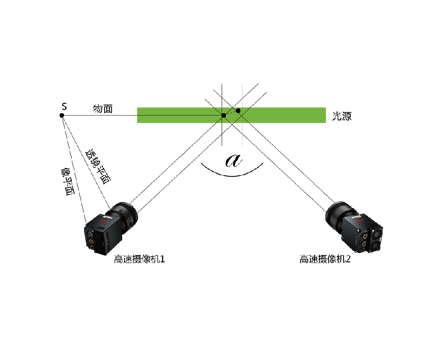
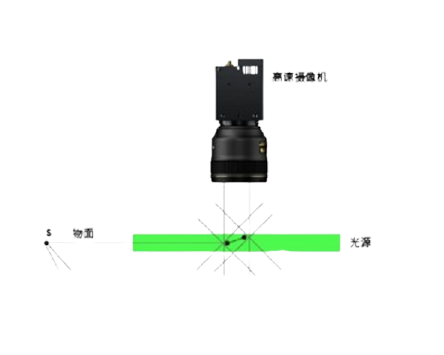
PIV is the abbreviation for Particle Image Velocimetry. Its basic method is to use cameras to record images of tracer particles in the fluid at adjacent time instants, and then estimate the fluid velocity based on image displacement and the time interval through correlation computation.
When the velocity data at different locations are combined, a velocity field within the measurement area is formed. When data quality and resolution meet requirements, further analysis of vortices and flow evolution can also be performed.
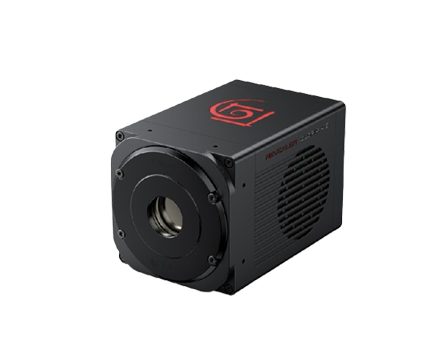
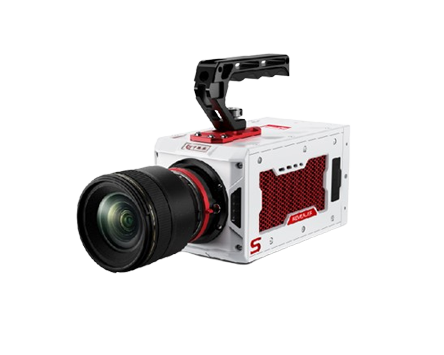
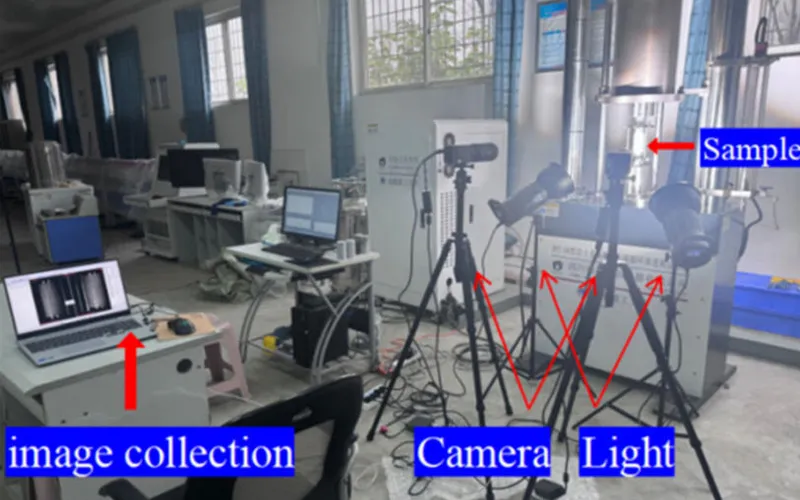
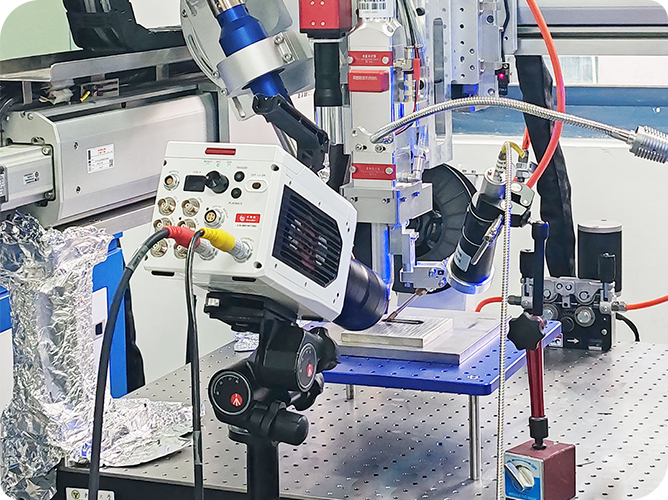
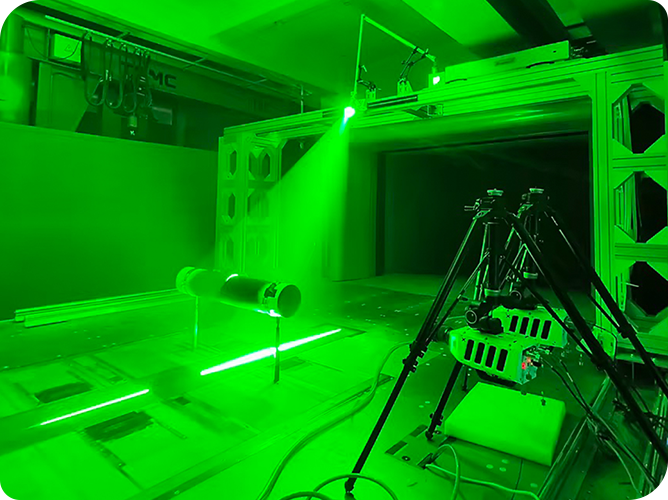
In time-resolved PIV experiments, the high-speed camera is responsible for continuously recording tracer images; illumination, tracers, synchronization control, and analysis software jointly complete the measurement. A Revealer high-speed piv camera can serve as the image acquisition device, while the specific configuration needs to be determined by the research process being studied.
For sports science, the significance of continuous data lies in its correspondence to movement phases. Researchers can check whether a particular flow structure is formed during the stroke acceleration phase, or appears after the transition between movements, and then compare it with the concurrent kinematic and kinetic information.
What the PIV measurement system provides first is velocity data. The evaluation of propulsion, drag, and efficiency still requires corresponding force measurements, kinematic information, or validated computational methods. This is also an important prerequisite for flow field images to be adopted in sports training research.
The orientation of the hand, the movement path, and the acceleration process all influence the surrounding flow. Two strokes that look similar from the outside may correspond to different local hydrodynamic processes.
Takagi et al.'s robotic arm study jointly measured hand hydrodynamic force, surface pressure, and the surrounding flow field, analyzing the link between vortex structures and unsteady force generation. The methodological reference it provides for swimming research is to observe movement and flow within the same time process.
In repeatable experiments, the hand path, orientation, or rhythm can be varied to examine how the flow field and hydrodynamic forces change. Kick research can follow a similar approach, corresponding foot motion to local velocity and wake structures.
For sports training, these data help refine broad technical discussions into specifics. For example, after adjusting the kick amplitude, does the movement path change? At which phase do differences in the surrounding flow appear? Do these differences have a stable relationship with swimming speed or energy expenditure?
The answers require repeated experimental support. Stronger local jets or more distinct vortex structures alone cannot prove that a movement is more effective.
Human movement is affected by fitness, coordination, fatigue, and other factors, making it difficult to fully reproduce in every trial. Controllable motion models therefore have research value.
A bioinspired robotic fish can move in a prescribed manner, providing a relatively stable object for comparing different motion parameters and incoming flow conditions.
Related research has used PIV to measure the flow downstream of different obstacles, with a no-fish control condition, to analyze the interaction between the robotic fish’s motion and the surrounding flow field.

Figure 1: Distribution of the v-velocity component around the bioinspired robotic fish under different obstacle conditions and motion phases. This figure illustrates the comparative analysis of model motion and flow field, and does not represent human swimming results.
The robotic fish differs from the human body in morphology, flexibility, and movement mode, so its parameters cannot be directly converted into swimming training recommendations. However, the repeatable experimental methodology can provide lessons for swimming science.
Researchers can first examine the relationship between motion parameters and the flow in a model, then use mechanisms that more closely resemble human leg morphology and motion paths for validation, and finally move on to human trials, evaluating practical significance by combining movement, velocity, energy expenditure, and force data.
From model to human, this pathway allows the flow field information provided by the PIV measurement system to genuinely participate in technical research, rather than remaining at the level of displaying contour plots. Training adjustments, in turn, still need to be judged in combination with athlete capability, movement quality, and repeated test results.
Swimming and rowing differ in their modes of movement, but both require studying how the moving object interacts with the water.
A rowing blade goes through entry, drive, and exit phases, with continuously changing direction of motion and loading. PIV can observe the velocity distribution near the blade, which is then correlated with blade position, orientation, and force signals to analyze the process by which hydrodynamic changes occur.
Grift et al., in a controllable oar blade experiment, performed synchronized time-resolved PIV and force measurements to study leading-edge vortices, trailing-edge vortices, and unsteady hydrodynamics, comparing propulsion metrics under different pitch angles.
The value of such research lies in explaining configuration differences, not in providing a universal angle suitable for all athletes. Specific results depend on blade geometry, motion path, and evaluation metrics.
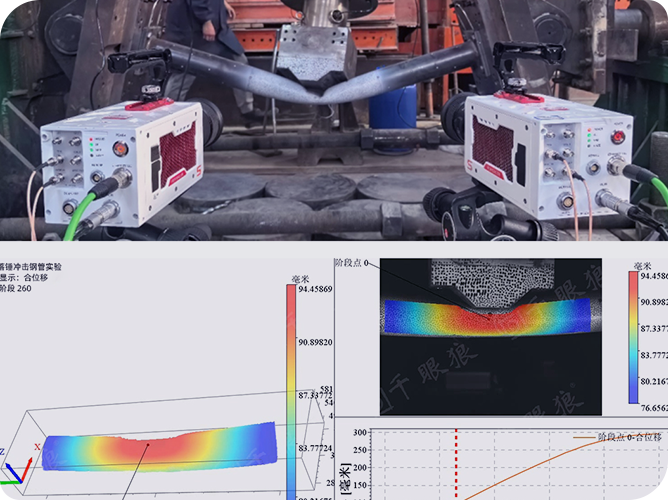
For flexible blades that undergo obvious deformation, deformation measurement using the digital image correlation technique, PIV flow field measurement, and force measurement can be jointly applied to study the relationships among structural response, surrounding flow, and loading. In other blade flow studies, high-speed imaging and PIV have also been used to analyze the influence of structural changes on the surrounding flow. For example, stirred-blade experiments observe flow responses by comparing velocity and vorticity distributions under different conditions. Such experiments can provide methodological references for measuring sports equipment, but specific conclusions still need to be verified on actual rowing blades under corresponding movement conditions.

Figure 2: Vorticity and V-direction velocity component distributions in an industrial stirred-blade experiment, used to illustrate the blade flow field analysis method.
The application scope of flow field measurement also includes competitive equipment such as bicycles, cycling apparel, and swimsuits.
Cycling posture, helmet, clothing, and bike geometry jointly affect the flow around the body. Overall drag testing can compare configurations, while flow field measurement helps identify the local flow regions corresponding to the differences.
Apparel research has similar needs. Fabric texture, seams, and folds alter surface flow conditions; PIV can participate in flat-panel or mannequin tests, observing velocity profiles, local wakes, and separation changes.
These results need to be connected to the full-garment evaluation. The conditions of fabric swatches and finished garments differ, and local wake changes cannot independently represent the overall drag reduction effect. The role of flow field data is to help researchers explain performance differences and pose more specific questions for the next round of design.
The configuration of a Revealer high-speed camera and a PIV measurement system needs to start from the research object: whether the focus is on hand stroking, leg kicking, blade driving, or equipment wake; whether local planar data or volumetric information is needed; whether the study concerns mean flow or continuously evolving processes.
When comparing with simulations, flow field data should also specify the measurement area, test conditions, and uncertainty. Only when comparisons are made under corresponding coordinates, time, and boundary conditions can experimental results effectively support model validation.
For sports training and equipment R&D, piv measurement provides fluid motion data that can be analyzed and reviewed. Only by linking these data with movement, mechanical responses, and actual performance can we further understand why a particular stroke, a rowing cycle, or an equipment configuration produces different effects.
For research topics related to “Sports Empowered by Science and Technology,” the application value of Revealer high-speed cameras and PIV technology is also embodied in this concrete research process: recording rapid changes, measuring the surrounding flow, and providing the basis for formulating hypotheses, designing experiments, and testing schemes.
 English
 Deutsch