Weak-fluorescence, fast-dynamic and long-exposure experiments impose multiple requirements on an imaging system: a high quantum efficiency helps improve photon utilization, low readout noise helps identify weak signals, low dark current helps control background noise during long exposures, and a high frame rate governs the temporal sampling of fast processes. These metrics need to be evaluated comprehensively within the specific sensor operating mode, camera readout circuitry, cooling conditions, and experimental optical path.
The GSENSE6504BSI from Gpixel is a back-illuminated scientific-grade CMOS image sensor with 2048×2048 pixels and a 6.5 μm pixel size. Its datasheet lists a peak quantum efficiency of 95% @ 450 nm, a readout noise of approximately 0.43 e⁻ rms in the low-noise mode, and a maximum frame rate of 300 fps in the high-speed mode. These figures are sensor-level specifications and should not be taken directly as the performance achievable by the complete camera under identical conditions.
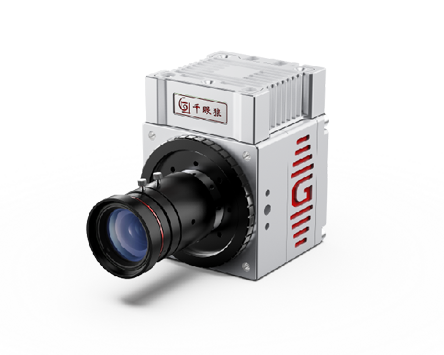
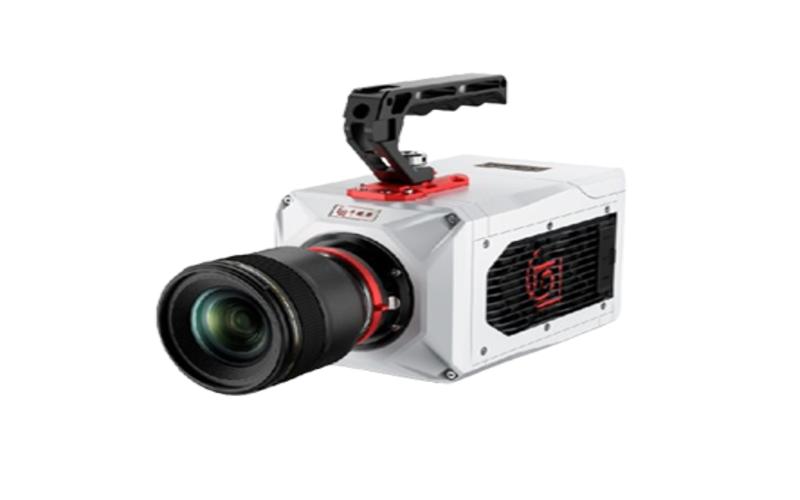
Based on this sensor, Hefei Zhongke Junda Shijie Technology Co., Ltd. (Revealer) has introduced the Gloria 6504 series of cooled scientific sCMOS cameras. Camera-level performance is further influenced by the camera’s readout electronics, data interface, image processing, and operating modes. This article presents the sensor and camera parameters separately, and describes the conditions under which the Gloria 6504 is suitable for applications such as low-light microscopy, life sciences, quantum physics, astronomical observation, and spectroscopic detection.
The GSENSE6504BSI adopts a back-illuminated architecture with a rolling shutter design. Its effective pixel array is 2048×2048 with a 6.5 μm × 6.5 μm pixel size, an active area of approximately 13.3 mm × 13.3 mm, and a diagonal of approximately 18.8 mm. The square active area can be matched with various microscopy imaging systems; the actual field of view and sampling performance also depend on the objective magnification, imaging optics, and camera mounting configuration.
According to publicly available documentation from Gpixel, the key specifications of the GSENSE6504BSI include:
Effective pixels: 2048×2048, approximately 4.2 megapixels;
Pixel size: 6.5 μm × 6.5 μm;
Sensor type: back-illuminated, monochrome, scientific-grade CMOS;
Peak quantum efficiency: 95% @ 450 nm;
Average quantum efficiency over 200–300 nm: above 50%;
Readout noise in low-noise mode: approximately 0.43 e⁻ rms;
Maximum frame rate in high-speed mode: 300 fps;
Frame rate in HDR mode: approximately 170 fps;
Dark current at a sensor temperature of −30 °C: approximately 0.004 e⁻/pixel/s;
Output: 16 Sub-LVDS channels, with a maximum data rate of approximately 19.2 Gbps;
Shutter: rolling shutter, supporting global reset and correlated readout modes.
The readout noise, frame rate, and dynamic range listed above correspond to different operating modes and measurement conventions, and should be interpreted in conjunction with the sensor documentation and camera-level specifications. The dark current figure applies to the −30 °C sensor temperature condition and does not represent the camera-level dark current under arbitrary cooling settings.
In low-light imaging, the number of photons received by the sensor is small, and readout noise can become one of the limiting factors for signal discrimination. Low readout noise helps reduce the impact of weak signals relative to electronic noise; however, the total system noise also includes photon shot noise, dark current noise, background light, and the readout chain.
In the low-noise mode, the GSENSE6504BSI achieves a readout noise of approximately 0.43 e⁻ rms, with the noise distribution peaking as low as approximately 0.28 e⁻. Such specifications indicate that the sensor exhibits sub-electron readout noise characteristics and provides the conditions for discriminating weak signals. The actual signal discrimination capability in a given experiment should be assessed comprehensively in terms of the sample photon flux, exposure time, background level, per-pixel noise distribution, and image-processing pipeline.
“Single-photon-level signal discrimination” is not equivalent to the per-photon digital counting of SPAD cameras. The GSENSE6504BSI is an integrating sCMOS sensor, whose imaging results are jointly determined by the photo-generated charge accumulated during the exposure and the readout process. The distinguishing feature of this sensor is the combination of low readout noise, high quantum efficiency, megapixel resolution, and high frame rate, making it suitable for imaging tasks that require both low-light sensitivity and spatial and temporal resolution.

Figure 1. Single-molecule fluorescence signals captured with the Revealer Gloria 6504 sCMOS camera.
The back-illuminated architecture reduces the obstruction of incident light by the front-side wiring layers, which helps improve photon detection efficiency. The GSENSE6504BSI offers a peak quantum efficiency of 95% at 450 nm and an average quantum efficiency above 50% over the 200–300 nm band. Quantum efficiency varies with wavelength, and the actual system response is also affected by the lens, filters, protective window, and other optical elements.
For weak-fluorescence experiments, a higher quantum efficiency means that more photoelectrons are generated for the same number of incident photons. Provided the target signal-to-noise ratio is met, researchers can evaluate the possibility of shortening the exposure time or lowering the excitation optical power; whether the light dose can actually be reduced still needs to be verified against sample brightness, fluorescent probes, optical-path efficiency, and imaging quality requirements.
Under appropriate light sources, filters, and optical path conditions, the Gloria 6504 can be used for a variety of visible and ultraviolet imaging tasks, such as fluorescence imaging with DAPI, GFP, or FITC labels, as well as certain UV low-light detection applications. For red or near-infrared fluorescence, astronomical observation, and similar applications, performance should be evaluated against the quantum efficiency curve of the target emission band and the overall camera optical configuration, rather than relying solely on the peak QE.

Figure 2. Quantum efficiency curve of the GSENSE6504BSI, with wavelength (approximately 200–1100 nm) on the horizontal axis and quantum efficiency (%) on the vertical axis; the peak near 450 nm is approximately 95%.
The GSENSE6504BSI sensor offers a maximum frame rate of 300 fps in the high-speed mode and approximately 170 fps in the HDR mode. The Revealer Gloria 6504 sCMOS camera achieves up to 291 fps in the 12-bit high-speed high-sensitivity mode at the full 2048×2048 frame over the CXP interface, and up to 170 fps in the 16-bit HDR output mode. Actual camera-level frame rates should be confirmed against the specific model, interface, and operating mode.
A high frame rate improves the temporal sampling density of fast processes, but the frame rate alone does not determine the temporal resolution of an experiment. Exposure time, triggering scheme, illumination pulses, readout mode, and sample motion speed also affect how dynamic processes are recorded. For applications such as calcium imaging, fast cellular processes, light-sheet microscopy, cold-atom dynamics, or transient luminescence, the required time scale of the experiment should be defined first, followed by the selection of full frame, ROI, and the corresponding readout mode.
The HDR mode and the on-chip dual-gain design are intended to extend the recordable signal range and help handle signals of different intensities within the same scene. Their actual effectiveness depends on the camera output mode and subsequent data processing, and should not be broadly interpreted as simultaneously avoiding saturation of strong signals while fully preserving weak-signal details in every scenario.

Figure 3. Zebrafish imaging with the Gloria 6504 sCMOS camera (left: zebrafish skeleton, 100-stack, green FL, 5.6×; right: zebrafish immune cells, 100-stack, red FL, 5.6×).
Dark current is the signal generated by processes such as thermal excitation in the absence of incident light; it accumulates with exposure time and introduces corresponding shot noise. Gpixel specifies a dark current of approximately 0.004 e⁻/pixel/s for the GSENSE6504BSI, corresponding to a sensor temperature of −30 °C. For long exposures, the effects of dark current, hot pixels, and background light need to be evaluated in conjunction with the camera’s actual cooling temperature, exposure time, and dark-frame correction results.
The Revealer Gloria 6504 sCMOS camera employs a TEC-based cooling design with corresponding temperature control schemes. Cooling helps reduce dark current and improve background stability during long exposures; however, the camera-level dark current is affected by the actual operating temperature and specific configuration. For applications such as astronomical imaging, chemiluminescence, Raman spectroscopy, and very weak bioluminescence, dark-frame data should be acquired under the target exposure conditions to confirm the background level and its stability.

Figure 4. Unstained-free fluorescence imaging of cell nuclei with the Gloria 6504 sCMOS camera.
Image sensor specifications cannot substitute for camera-level performance. Integrating the GSENSE6504BSI into an sCMOS camera suitable for research experiments further involves the following engineering aspects:
Low-noise power supply and sensor drive electronics;
High-speed data acquisition, timing control, and stable transmission;
Sensor cooling, chamber sealing, anti-condensation, and temperature control;
Dark offset, photoresponse non-uniformity, and defective pixel correction;
External triggering, synchronization I/O, and status signals;
Camera data interfaces such as USB or CoaXPress;
SDK, microscopy software, and third-party platform compatibility;
Data integrity and system stability during long-duration continuous acquisition.
These aspects jointly determine whether the camera can operate stably on a given experimental platform, and also affect the reproducibility and usability of the measured data. The design goal of the Gloria 6504 is to translate the capabilities of the GSENSE6504BSI sensor into an integrable, controllable scientific imaging device.
The Revealer Gloria 6504 series comprises back-illuminated cooled scientific sCMOS cameras based on the Gpixel GSENSE6504BSI, available in two versions: the Gloria 6504 and the Gloria 6504 Pro. The two models share the same sensor platform but differ in readout noise, dynamic range, and other specifications. The maximum frame rate, readout noise, and dynamic range each correspond to specific interfaces or readout modes and should not be regarded as parameters achievable simultaneously under a single condition.
| Parameter | Gloria 6504 Series |
| Image Sensor | Gpixel GSENSE6504BSI |
| Sensor Type | Back-illuminated monochrome sCMOS |
| Effective Resolution | 2048 × 2048 |
| Pixel Size | 6.5 μm × 6.5 μm |
| Photosensitive Area | Approx. 13.3 mm × 13.3 mm |
| Peak Quantum Efficiency | 95% @ 450 nm |
| Typical Readout Noise | Standard version approx. 0.7 e⁻; Pro version approx. 0.4 e⁻, subject to operating mode and datasheet specifications |
| Full Well Capacity | Approx. 13,500 e⁻ |
| Dynamic Range | Standard version approx. 83 dB; Pro version approx. 91 dB |
| CXP Interface Frame Rate | 12-bit high-speed high-sensitivity mode up to 291 fps; 16-bit HDR output mode up to 170 fps |
| USB Interface Frame Rate | 12-bit high-speed high-sensitivity mode up to 159 fps; 16-bit HDR output mode up to 119 fps |
| Data Interface | USB 3.2 Gen 2, CXP-12 × 2 |
| Shutter Mode | Rolling shutter, supports global reset |
| Cooling Method | TEC cooling, supports air cooling and water cooling configurations |
| Exposure Time | Approx. 11 μs ~ 30 s |
| Readout Mode | Full frame, ROI, 2×2 and 4×4 pixel binning |
| Lens Mount | C-Mount or F-Mount, depending on specific configuration |
| SDK & Software | C, C#, C++, Python SDK; supports RPC, Micro-Manager, LabVIEW, MATLAB and other platforms, subject to software version and configuration |
In the 12-bit high-speed high-sensitivity mode at full resolution over the CXP interface, the Gloria 6504 achieves a maximum camera frame rate of 291 fps; in the 16-bit HDR output mode, up to 170 fps. The standard and Pro versions differ in readout noise specifications, and readout noise, frame rate, and dynamic range each correspond to different readout modes. Users should select the operating mode according to sample brightness, dynamics speed, field of view, and target signal-to-noise ratio, and verify the corresponding performance against the camera datasheet.
The Gloria 6504 provides USB 3.2 Gen 2 and CXP-12×2 data interfaces. The USB interface suits routine laboratory system integration, while the CXP interface suits continuous acquisition with higher data bandwidth. Interface selection should also consider the host computer configuration, frame grabber, cabling, storage throughput, and software processing capability. Multi-camera synchronization capability and actual sustained acquisition duration should be confirmed against the specific configuration.
TEC cooling and temperature control help reduce dark-current-related effects and improve background stability during long exposures. The camera’s actual dark current depends on sensor temperature, cooling method, and operating state. For long-exposure tasks such as astronomical imaging, chemiluminescence, or Raman spectroscopy, dark-frame testing based on the target exposure time is recommended, together with an evaluation of hot pixels and background drift.
The camera’s dark offset correction, pixel response correction, and defective pixel handling help improve image consistency. Dark-field, flat-field, and other corrections should be implemented according to the specific imaging mode and experimental workflow. For quantitative analysis, it is recommended to preserve the raw data and camera parameters, and to record the exposure time, gain, temperature, illumination conditions, and correction workflow to facilitate reproducibility and review.
The Gloria 6504 supports multiple external trigger and status output schemes, and can be synchronized with light sources, lasers, microscope controllers, or experimental timing systems. The specific trigger logic, output signal types, and timing accuracy should follow the corresponding model’s manual. When the global reset function is used, note that it is not the same concept as a true global shutter; the per-row exposure timing of a rolling-shutter sensor still needs to be understood in conjunction with the readout mode.
With appropriate microscope optics and fluorescence labeling conditions, the Gloria 6504 can be used for widefield fluorescence, TIRF, PALM/STORM, SIM, spinning-disk confocal, light-sheet microscopy, calcium imaging, and live-cell dynamic observation. The effective sampling pitch after combining the 6.5 μm pixels with the microscope objective depends on the magnification and optical system. High quantum efficiency, low readout noise, and high frame rate provide a hardware basis for weak-fluorescence or dynamic imaging; the actual imaging results still need to be assessed against label brightness, background, exposure, and illumination dose.
Cold-atom, ion-trap, optical-lattice, quantum-dot, and quantum optics experiments may simultaneously require signal discrimination at low photon flux and stringent experimental timing control. The readout noise, full-frame resolution, and external triggering capability of the Gloria 6504 can serve as a basis for system selection. Whether it meets the requirements of atomic fluorescence, occupation-number measurement, or fast dynamics experiments should be verified against photon flux, field of view, imaging magnification, and experimental timing.
The low dark current design, cooling capability, and spectral response provide an application basis for long-exposure weak-light observation and spectroscopic detection. For astronomical observation, solar imaging, Raman spectroscopy, chemiluminescence, and other weak-light detection tasks, the camera configuration should be evaluated according to the target band’s QE, spectrograph efficiency, filter transmission, exposure time, and background noise.
In tasks such as wafer-defect-related weak-luminescence inspection, photoluminescence, electroluminescence, and precision optical metrology, the Gloria 6504 can be used to acquire images with low photon flux or dynamic variation. The specific inspection capability depends on the target signal, lens and illumination scheme, field of view, and inspection workflow, and should not be inferred solely from camera resolution or peak QE.
The Revealer Gloria 6504 and Gloria 6504 Pro use the Gpixel GSENSE6504BSI back-illuminated scientific-grade CMOS image sensor, with 2048×2048 effective pixels and a 6.5 μm × 6.5 μm pixel size.
The Gloria 6504 Pro offers low readout noise, which helps discriminate low-photon-flux signals, but its operating principle remains integrating sCMOS imaging — it is not a SPAD-type per-photon digital counter. The actual single-photon-level signal discrimination capability needs to be verified against the noise distribution, photon flux, exposure conditions, and experimental data.
Over the CXP interface, the Gloria 6504 reaches up to 291 fps at the full 2048×2048 resolution in the 12-bit high-speed high-sensitivity mode, and up to 170 fps in the 16-bit HDR output mode. The USB interface corresponds to lower frame rates. ROI modes may increase the frame rate; actual values depend on the ROI size, readout configuration, and camera operating mode.
Both use the same GSENSE6504BSI sensor platform, but their readout noise and dynamic range specifications differ. The manufacturer’s typical readout noise is approximately 0.7 e⁻ for the standard version and 0.4 e⁻ for the Pro version, with dynamic ranges of approximately 83 dB and 91 dB, respectively. When comparing, the test mode, statistical conventions, and the camera datasheet should also be cross-checked.
The Gloria 6504 provides C, C#, C++, and Python SDKs, and supports the RPC acquisition software, Micro-Manager, LabVIEW, MATLAB, and other platforms. Specific compatibility depends on the software version, operating system, and camera configuration.
The GSENSE6504BSI integrates a 2048×2048 resolution, 6.5 μm pixels, a 95% @ 450 nm peak quantum efficiency, and sub-electron readout noise into a back-illuminated scientific-grade CMOS sensor. Its 300 fps high-speed mode and low dark current are chip-level specifications and should be distinguished from camera-level performance.
On the basis of this sensor, the Revealer Gloria 6504 sCMOS camera integrates cooling, data interfaces, trigger control, and companion software, providing an sCMOS scientific camera solution for low-light and dynamic imaging tasks. For life-science microscopy, quantum physics, astronomical observation, spectroscopic detection, and semiconductor weak-light inspection, selection should be evaluated holistically in terms of the model, readout mode, interface frame rate, noise conventions, cooling conditions, and experimental optical path.
 English
 Deutsch