A joint research team led by Yanshan University has developed a flexible impact sensor that integrates a corrugated (bellows-type) structure with a three-dimensional interpenetrating-phase composite (IPC²) architecture. Using a Revealer high-speed camera to record the drop-weight and high-velocity projectile impact processes, and in combination with mechanical and electrical characterization, the team elucidated the sensor’s structural stability, shape-recovery behavior, and energy-absorption characteristics.
Flexible sensors are widely used in wearable electronics, electronic skin, and impact monitoring. However, under transient loading events such as falls and collisions, they are prone to global buckling, irreversible (non-recoverable) deformation, and anomalous sensing signals. How to simultaneously achieve structural stability, energy absorption, and sensing performance remains a key research challenge for impact-protective flexible sensors.
To address this challenge, the research team designed a three-dimensional interpenetrating-phase composite architecture (IPC²) that combines structural stability, energy absorption, and sensing functionality. Externally, the design borrows the corrugated morphology of bellows to guide axial deformation and suppress global instability; internally, it combines a cellulose acetate skeleton modified with carbon nanotubes with a carbon nanotube/silicone-rubber (PDMS) composite material, forming a dual-continuous three-dimensional interpenetrating-phase structure that enables cooperative load bearing, energy dissipation, and piezoresistive sensing.
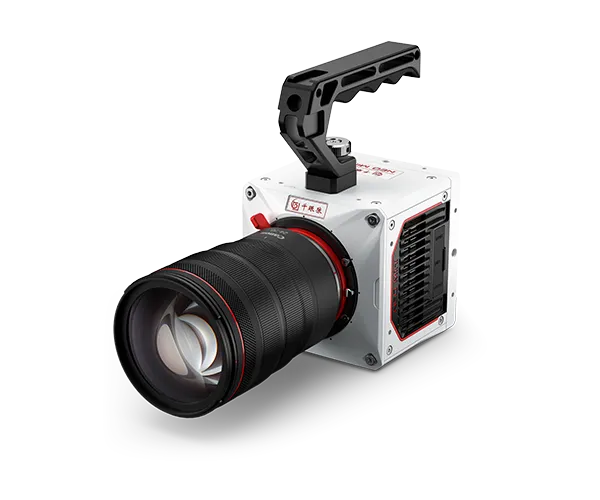
To verify the performance of this structure under realistic impact conditions, the research team introduced a Revealer high-speed camera to observe the transient deformation and post-impact shape recovery, and evaluated the overall performance of the material through combined mechanical and electrical testing.
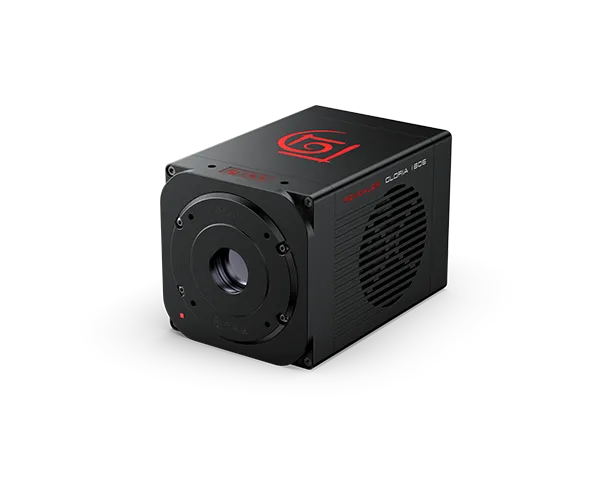
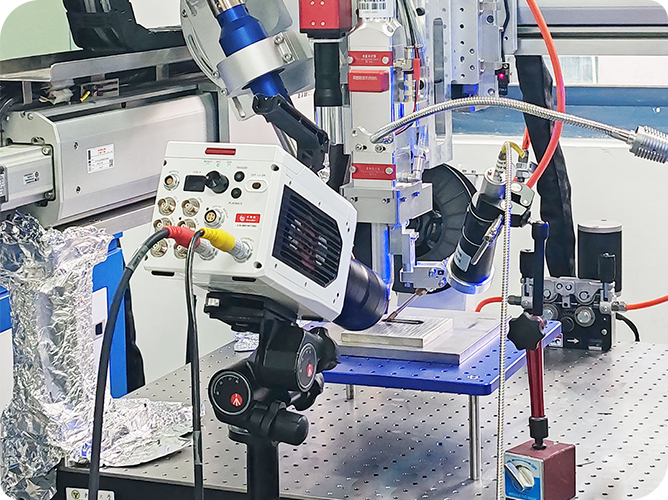
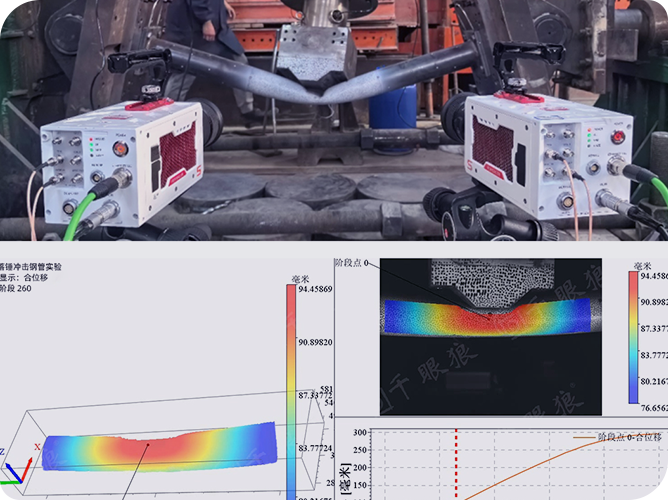
The experiments employed a Revealer high-speed camera in conjunction with a drop-weight impact rig and a projectile impact system to record, respectively, the transient deformation, shape recovery, and projectile rebound behavior of the flexible sensor.
Within the experimental setup, the high-speed camera was responsible for capturing dynamic visual evidence; the mechanical testing machine was used for compression testing; the electrochemical workstation was used for electrical signal acquisition; and ABAQUS/Explicit was used for structural deformation simulation.
The core task of the high-speed camera is to convert the structural configurations during the impact process into observable, comparable dynamic sequence information.
The researchers fabricated IPC² flexible sensors with and without the corrugated (bellows) structure, and designed two categories of dynamic impact experiments:
Drop-weight impact: A 200 g drop hammer was released from a height of 2 m, with the measured impact velocity of approximately 6.2 m/s. The high-speed camera was used to record the impact deformation and unloading recovery of the specimens; the two structures were compared in terms of the bending angle and residual bending angle, and repeated impact testing of up to 200 impacts was conducted.
High-velocity projectile impact: Projectiles were launched at 30 m/s against model manikins equipped with, respectively, the corrugated IPC² sensor, the non-corrugated IPC² sensor, and plain steel plates. The projectile rebound and manikin motion behavior were compared through high-speed image sequences, and the impact buffering and sensing performance were analyzed in combination with the current response.
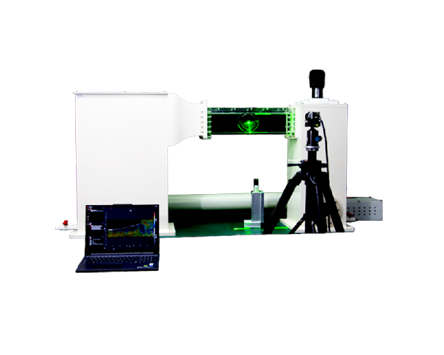
A 200 g drop hammer was released from a height of 2 m, and the impact process was recorded with the Revealer high-speed camera; the measured actual impact velocity was approximately 6.2 m/s (Figure 1). From the high-speed images, the impact bending angle θ_b and the residual bending angle θ′_b were extracted, enabling a quantitative comparison of the dynamic stability and shape-recovery capability of the two structures.

Figure 1. High-speed camera and drop-weight impact experimental system. The researchers released a 200 g drop hammer from a height of 2 m and recorded the impact process with the Revealer high-speed camera, obtaining an actual impact velocity of approximately 6.2 m/s.
The high-speed images show (Figure 2) that the non-corrugated structure underwent pronounced global bending during impact, with a bending angle of approximately 69.8°, recovering to only approximately 172.7° after unloading — i.e., a residual deformation remained. In contrast, the corrugated structure exhibited an impact bending angle of approximately 170.5°, recovering to nearly 180° after unloading, demonstrating superior resistance to bending-induced buckling and shape-recovery capability. This indicates that the corrugated structure can guide axial deformation and suppress the global lateral bending induced by transient impact.

Figure 2. Drop-weight deformation and recovery of the corrugated and non-corrugated IPC² flexible impact sensors recorded by the high-speed camera. The non-corrugated structure exhibits an impact bending angle of 69.8° and a residual bending angle of 172.7°; the corrugated structure exhibits an impact bending angle of 170.5°, recovering to nearly 180°.
Repeated impact experiments of up to 200 impacts were further carried out (Figure 3). The results show that the impact-deformation resistance of the corrugated specimens degraded to a certain extent, whereas the degradation of shape-recovery capability remained small. The former may be attributed to damage to the structural integrity of the internal three-dimensional fiber skeleton, while the latter benefits from the elasticity of the PDMS and the overall stability provided by the corrugated structure.

Figure 3. Repeated drop-weight experiments on the IPC² flexible impact sensors with high-speed camera support, comparing the bending angles, residual bending angles, and specimen morphology of the corrugated and non-corrugated structures over up to 200 impacts, and analyzing the impact-deformation resistance and shape-recovery performance.
The experimental value of the high-speed camera lies in distinguishing the transient deformation during impact from the residual deformation after unloading, and in evaluating the evolution of structural stability through the repeated-impact image sequences.
To verify the functional performance of the IPC² flexible impact sensor under high-velocity impact conditions, the researchers launched projectiles at 30 m/s against model manikins equipped with the corrugated IPC² sensor, the non-corrugated IPC² sensor, and plain steel plates, respectively. The Revealer high-speed camera was used to record the projectile impact, rebound, and manikin motion behavior, and the impact-sensing performance was evaluated in combination with an electrical signal acquisition device.
The high-speed images show (Figure 4) that both IPC² composite structures provided a certain degree of impact buffering, with the manikins remaining upright after impact; by contrast, the manikin with plain steel plates was knocked down. Among the two, the projectile rebound distance corresponding to the corrugated IPC² structure was smaller than that of the non-corrugated structure, which the study cites as one piece of experimental evidence that the corrugated structure provides superior impact buffering and energy absorption.
The current response results further show that the non-corrugated sensor exhibited multiple response peaks of relatively low amplitude, whereas the corrugated sensor produced a more concentrated and pronounced current peak, exhibiting distinct dynamic electromechanical response characteristics. This difference is mutually consistent with the aforementioned structural stability and impact-buffering results.

Figure 4. Experimental process of 30 m/s projectile impact on the flexible impact sensors recorded by the Revealer high-speed camera, comparing the projectile rebound and manikin motion behavior for the corrugated IPC² structure, the non-corrugated IPC² structure, and plain steel plates, and analyzing the structural buffering and impact-sensing performance in combination with the current response curves.
The core value of the high-speed camera in this set of experiments lies in obtaining dynamic visual evidence of projectile rebound and manikin motion, extending the impact evaluation from the material specimen level to the projectile–sensor–manikin system level.
I. Structural stability: The corrugated structure can guide axial deformation of the IPC² composite architecture and reduce the tendency toward global bending under transient impact. The drop-weight experiments recorded by the Revealer high-speed camera show that the non-corrugated structure exhibits an impact bending angle of approximately 69.8°, whereas the corrugated structure exhibits approximately 170.5°, with the latter nearly fully recovering after unloading; repeated impact experiments of up to 200 impacts further verified its superior shape-recovery capability.
II. Energy absorption and sensing performance: Combining mechanical and electrical testing, the study reports a specific energy absorption of 2.66 ± 1.2 kJ/kg for the IPC² composite architecture, a density of 720 ± 10 kg/m³, and a gauge factor (GF) of approximately 39.6 in the low-strain regime. In the 30 m/s projectile impact experiments, the high-speed camera recorded the rebound and model motion behavior under different structural configurations; in combination with the current response results, this verifies the functional potential of the composite architecture in impact buffering and dynamic sensing.
III. Measurement perspective: The high-speed camera extends the impact evaluation of flexible functional materials from quasi-static mechanical results to transient deformation processes, providing direct evidence for structural stability and dynamic response analysis by recording the macroscopic configurations during impact, recovery, and repeated loading. Combined with mechanical and electrical testing, high-speed imaging helps establish the experimental correlation between composite architecture design, impact deformation, and sensing response, serving as an important measurement tool for research on flexible impact sensors and multifunctional energy-absorbing materials.
For detailed research findings, please refer to the original paper: https://doi.org/10.1002/adfm.202419882
 English
 Deutsch