The 48th WorldSkills Competition is being held in Shanghai. Welding is a key competition within the Manufacturing and Engineering Technology skill area. According to the 2026 edition of the WorldSkills Occupational Standards, the competition covers processes including SMAW (111), GMAW (135), FCAW-G (136), and GTAW (141), with assessment scope spanning joint preparation, parameter setting, welding operation, quality control, and final inspection.
Weld appearance, dimensional measurement, non-destructive testing (NDT), and destructive testing can all determine whether the finished work meets the requirements; however, they can hardly reconstruct the state of the arc, the droplets, and the weld pool at the moment a defect forms. The value of high-speed cameras lies precisely in converting the welding process — from the millisecond down to the microsecond scale — into images that can be replayed, time-aligned, and analyzed.
In GMAW, a high-speed camera can record the formation, growth, necking, detachment, and transfer of droplets into the weld pool, enabling the analysis of the stability of short-circuiting transfer, globular transfer, and spray transfer.
CMT (Cold Metal Transfer) is a short-circuiting variant of GMAW characterized by controlled wire retraction. A high-speed camera can resolve the individual phases of droplet contact with the weld pool, wire retraction, liquid-bridge necking, droplet separation, and arc re-ignition, and can statistically quantify the transfer period, short-circuit duration, and spatter events.
With appropriate auxiliary illumination and optical filtering, a high-speed camera can also capture arc length variation and arc deflection, weld pool boundary and surface oscillation, and, in laser welding, the evolution of the keyhole opening. These images provide process-level evidence for parameter optimization and defect root-cause tracing.

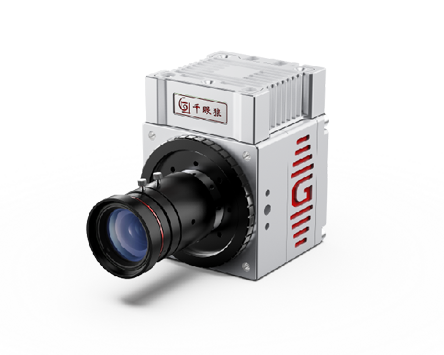
Figure 1. Synchronized, clear observation of the arc, droplet transfer, and weld pool during welding captured by the Revealer S1315M high-speed camera.
The primary challenge in high-speed welding imaging is overcoming interference from arc light. Backlighting is suited to capturing droplet silhouettes (contours), whereas front lighting favors observation of the weld pool surface. In engineering practice, the illumination wavelength is typically selected according to the arc emission spectrum, and the signal-to-noise ratio is further improved by combining narrow-bandpass filters, short exposure times, and high-dynamic-range imaging.
Frame rate and exposure time are two distinct parameters. The frame rate determines the temporal sampling interval, while the exposure time determines the degree of motion blur. In the GMAW case study presented in the appendix, imaging was performed at 1280 × 1024 pixels, 5000 fps, and 3 μs exposure; the CMT wire-additive manufacturing case used 10000 fps. The specific parameters should nonetheless be determined according to the droplet velocity, field of view, spatial resolution, and the target process duration.
Slow-motion playback of transient process footage recorded by a high-speed camera allows engineers to see *what* happened; only by integrating a synchronized current–voltage acquisition system can they analyze *how the electrical parameters changed* when the anomaly occurred.
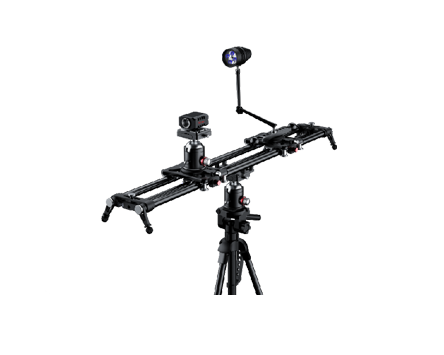
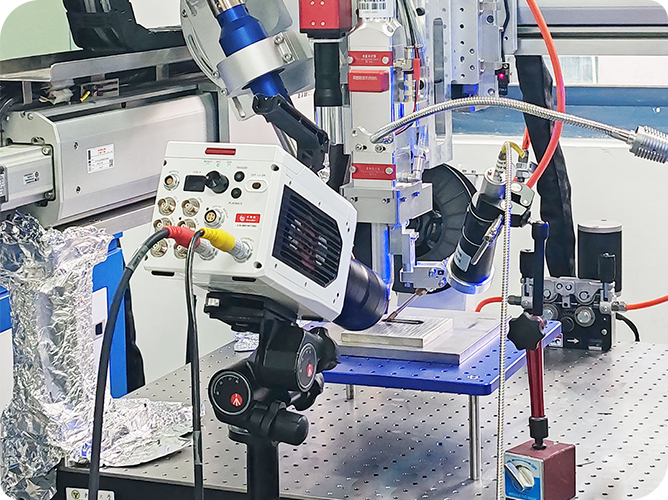
The Revealer current–voltage synchronized acquisition system places the high-speed camera, the auxiliary light source, the welding current, and the arc voltage on a unified time base, so that every image frame can be mapped to a definite position on the current and voltage waveforms.

Figure 2. Revealer current–voltage synchronized acquisition.
In short-circuiting transfer analysis, this allows the correlation between droplet contact, short-circuit current rise, liquid-bridge rupture, and arc re-ignition to be identified; in pulsed GMAW, it allows the current pulse to be checked against droplet detachment; and in GTAW, weld pool dimensions and surface oscillation can be examined against current variations.

Figure 3. Revealer current–voltage analysis system.
The Revealer current–voltage synchronized acquisition system also supports statistical analyses such as U–I characteristics, probability density distributions, mean values, RMS (root-mean-square) values, and standard deviations, which are used to compare process stability across different welding parameter sets.
In competitor training, a high-speed camera can correlate the torch work angle, travel angle, wire-feeding technique, and dwell position with the weld pool response. Combined with the current–voltage synchronized acquisition system, it can further confirm whether a given manipulation change induces fluctuations in the arc, droplets, and electrical signals, thereby upgrading training debriefs from experience-based description to process-based analysis.
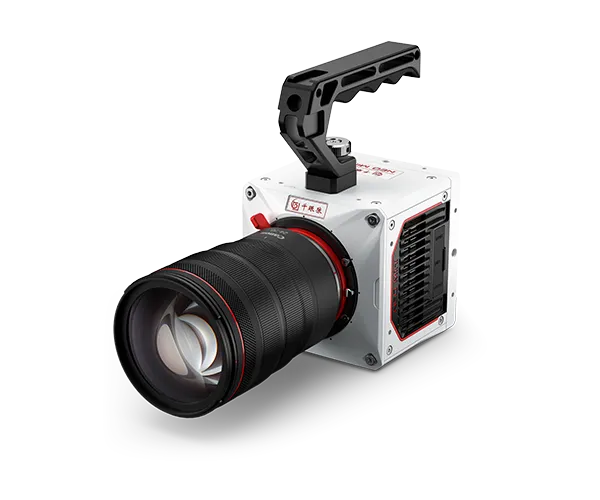
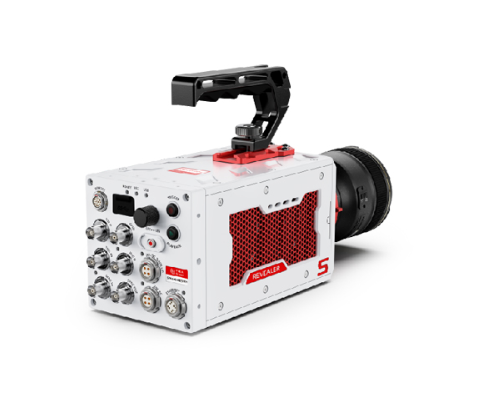
In production and R&D settings, the Revealer high speed camera can be used jointly with the current–voltage synchronized acquisition system, robot trajectory data, thermal imaging, and post-weld inspection data to answer three specific questions: when did the anomaly begin, how did the current, voltage, and weld pool change at that moment, and what quality outcome did it ultimately correspond to?
The role of the high-speed camera is to record transient processes that the naked eye cannot observe continuously, and to place the droplets, arc, weld pool, current, and voltage on the same time axis — providing reviewable process evidence for skills training, defect tracing, and process optimization.
 English
 Deutsch