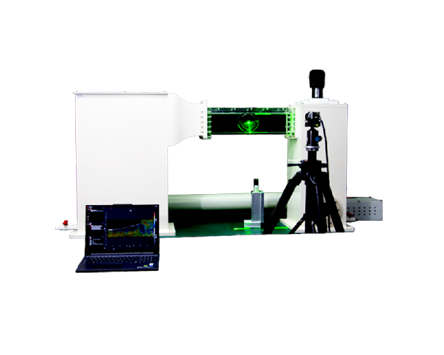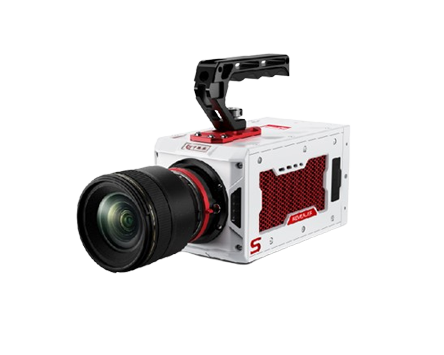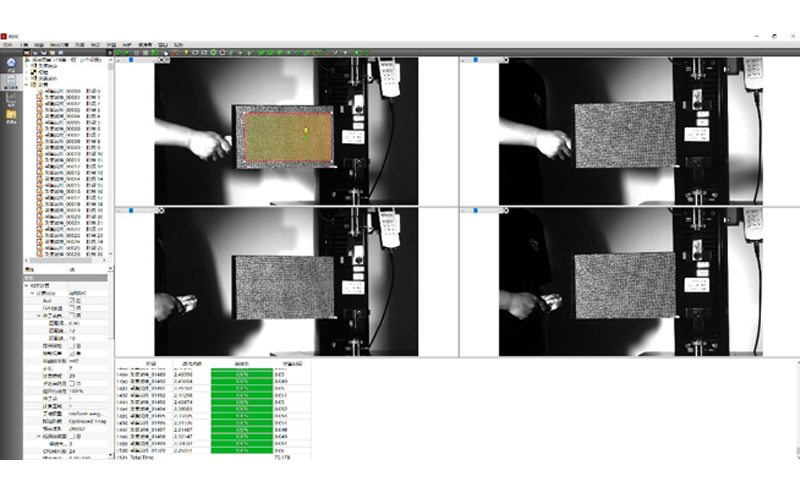
In October 2026, the Heat and Mass Transfer Academic Conference of the Chinese Society of Engineering Thermophysics was held in Xi’an. Revealer attended the conference with its high-speed cameras and PIV flow measurement systems, engaging with researchers on transient imaging and quantitative measurement needs in experiments involving droplet heat transfer, liquid mixing, and gas jets.

Figure 1 — Presentation session at the Heat and Mass Transfer Academic Conference of the Chinese Society of Engineering Thermophysics
When does a droplet begin to boil? How does a dyed region expand inside a stirred vessel? How does the front of a leakage jet advance? These questions all require continuous process information. High-speed cameras record experiments as image sequences, allowing interface positions, characteristic dimensions, and event timings to be extracted, and cross-referenced with temperature measurements, colorimetric analysis, or numerical simulations.
The representative studies below, all conducted with Revealer high-speed cameras, respectively address droplet heat transfer on vibrating surfaces, mixing of non-Newtonian fluids, and gas jets in confined spaces. They employ different imaging and processing methods to convert visible changes into comparable data, illustrating the correspondence between observed objects and measurement methods in heat and mass transfer experiments.
Droplet heat transfer on vibrating surfaces is related to spreading, retraction, contact states, and the evolution of boiling. Comparing only the total time for droplet evaporation makes it difficult to identify at which stage differences between operating conditions arise; continuous imagery can supplement this missing process information.
In a study published in *Applied Thermal Engineering* by researchers from Tongji University, Yangzhou University, and other institutions, a Revealer high-speed camera was used to record, from a side view at 5,000 fps, the spreading, retraction, oscillation, evaporation, and boiling of droplets on a vibrating copper surface, and to extract dynamic parameters such as spreading diameter and droplet height from the images.
Figure 2 shows the droplet evolution sequence at an initial surface temperature of 120 °C. Figure 2(a) compares the process at different vibration frequencies, and Figure 2(b) compares different amplitudes. The authors identified the onset of nucleate boiling from the imagery: at a vibration amplitude of 0.2 mm and a frequency of 80 Hz (Figure 2(a)), the marked onset of nucleate boiling occurs at 116 ms.
These images give temporal grounding to the stage-by-stage changes under different vibration conditions. Combined with copper-plate temperature measurements and heat conduction calculations, the study analyzed droplet morphology evolution and its heat transfer response. The spreading and boiling phenomena captured in the images could therefore be matched against thermal results, giving the heat transfer evaluation a concrete process reference.

Figure 2 — Revealer high-speed camera recording droplet evaporation and boiling at different vibration frequencies and amplitudes, with an initial surface temperature of 120 °C.
While droplet experiments analyze local heat transfer through interface evolution, for non-Newtonian fluids in stirred vessels the research focus shifts to whether materials can cross between different flow regions, for which dye-based imaging provides a visible marker for observing this transport process.
Under laminar stirring conditions, continuous rotation of the impeller does not guarantee that materials are thoroughly exchanged throughout the vessel. Relatively stable separations may exist between local flow regions, limiting axial mixing.
In a study published in *Chemical Engineering Journal* by researchers from Chongqing University, Tsinghua University, and other institutions, three configurations were compared: single-shaft centered stirring (SSC), single-shaft eccentric stirring (SSO), and dual-shaft eccentric stirring (DSO). The experiments used a Revealer high-speed camera to record the dyeing and decolorization processes in methylcellulose (CMC) solution, and combined RGB channel mean brightness and dyed-area analysis to evaluate mixing time and mixing degree.
Figure 3 shows the dyeing sequences of the three configurations at an experimental Reynolds number of Re = 7.14. In the single-shaft centered and single-shaft eccentric systems, the dyed region expands first and then stabilizes, with relatively clear boundaries remaining between some regions; the dual-shaft eccentric system drives the dyed region to expand further along the axial direction. The image sequences preserve the path and order of regional expansion, providing a basis for comparing axial transport across configurations.
Building on the image sequences, the study further used the RGB variations in Figure 3 to determine directional mixing times: 803 s for the single-shaft centered system, 663 s for the single-shaft eccentric system, and 326 s for the dual-shaft eccentric system. High-speed imaging thus supports the progression from phenomenon observation to quantitative mixing metrics. The study then combined numerical simulation to interpret the flow mechanisms; the simulated velocity fields and streamlines should be distinguished from the dye-based experimental images.

Figure 3 — Revealer high-speed camera recording the expansion of dyed regions under three stirring configurations.
The development of a gas leakage jet involves simultaneous front advancement, lateral expansion, and local structural changes. By continuously recording these changes and extracting image boundaries, near-field jet characteristics under different leakage conditions can be compared.
In a study published in *International Journal of Hydrogen Energy* by researchers from Xi’an University of Science and Technology and other institutions, a 1:15 scale confined-space model was established, with helium replacing hydrogen for near-field leakage jet experiments. The study employed a Revealer X1310 high-speed camera with a schlieren imaging system, converting light deflection caused by refractive-index gradients of the gas into brightness variations, so that the structure of the colorless jet could be continuously recorded.


Figure 4 — High-speed camera combined with schlieren imaging recording the structural evolution of ammonia jets at different leakage flow rates.
Figure 4 shows the jet evolution at flow rates of 2, 4, 6, and 8 SLPM. The time-sequenced images allow researchers to compare the advancement of the jet front, lateral expansion, and structural changes as processes, rather than being limited to the diffusion extent at a single instant. Extracting the penetration distance as a function of time further enables comparison of how different flow rates influence jet development.
This experiment demonstrates the value of combining a high speed motion camera with an optical system: the schlieren apparatus makes the structure of a colorless gas jet visible, while continuous recording provides the temporal basis for boundary tracking and diffusion parameter calculation.
High-speed imaging provides continuous process information for heat and mass transfer research. Droplet experiments use imagery to identify the development stages of spreading, evaporation, and boiling, combined with temperature data to analyze heat transfer response; mixing experiments evaluate axial transport through dyed regions and RGB variations; and gas jet experiments extract boundaries via schlieren imaging to compare diffusion processes under different leakage conditions.
The role of the Revealer high-speed camera in these studies is to correlate the stage, position, and dimension changes in the images with temperature data, colorimetric indicators, and numerical computations, helping to establish the connection between local processes and overall system response.
 English
 Deutsch