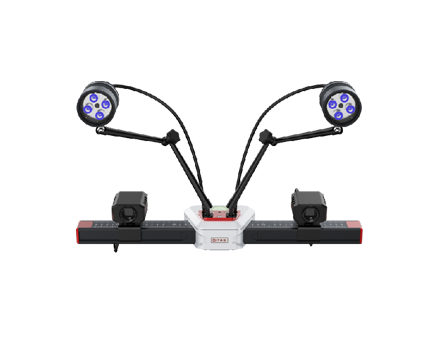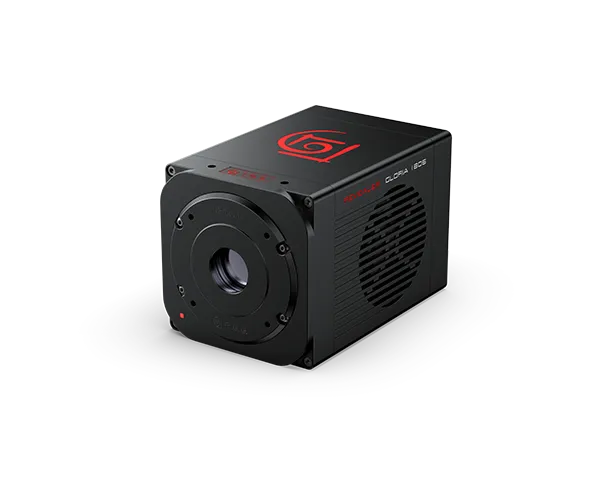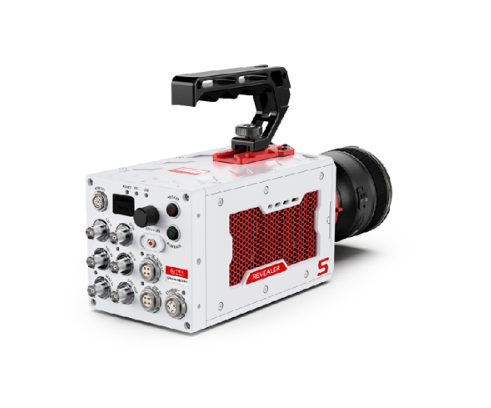
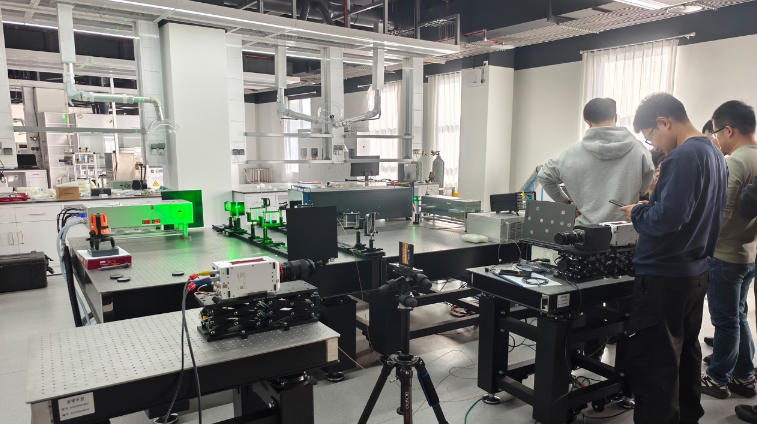
In the field of advanced combustion research, understanding the intricate relationship between fluid dynamics and chemical kinetics is essential. Agile Device, in collaboration with a national laboratory, has developed a state-of-the-art diagnostic system using Revealer technology. This system achieves a 10 kHz synchronous coupling of Particle Image Velocimetry (PIV) and Planar Laser Induced Fluorescence (PLIF).
Traditional combustion analysis often relies on isolated measurements, which fail to capture the transient interactions between flow structures and reaction zones:
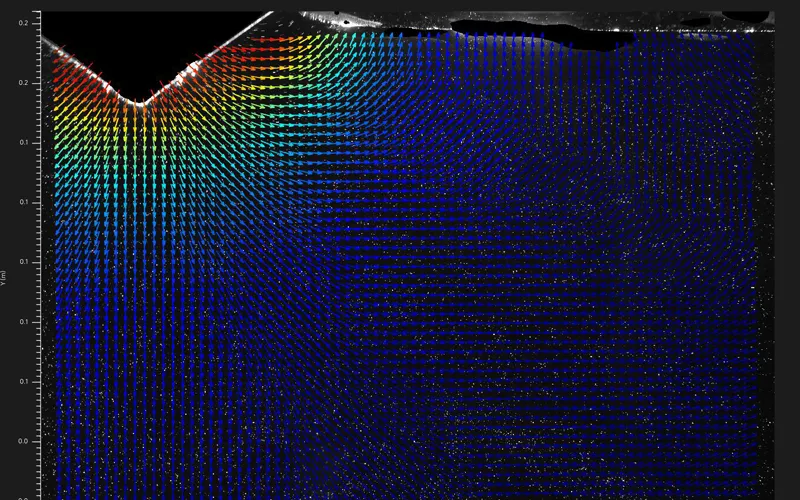
Particle Image Velocimetry (PIV): Essential for obtaining high-resolution velocity fields but lacks data on chemical radical distribution
Planar Laser Induced Fluorescence (PLIF): Visualizes key intermediate products (like OH radicals) but provides no kinetic flow information.
The Agile Device Solution: By integrating these technologies into a single, time-aligned plane, researchers can quantitatively reveal how turbulent shear and vortex evolution trigger dynamic flame responses.
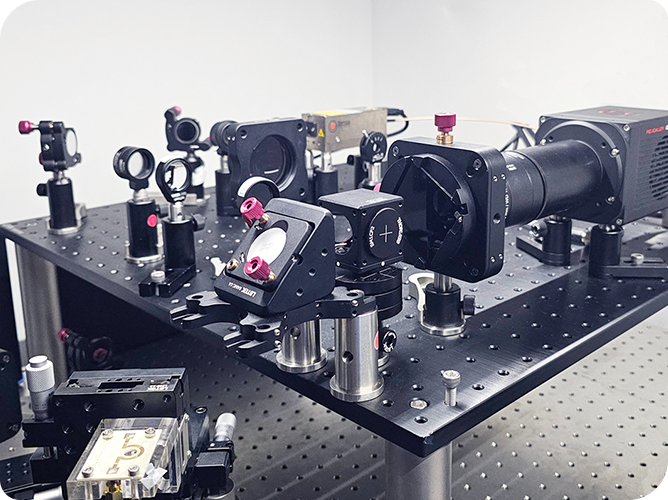
The hardware core of this diagnostic suite is designed for extreme temporal and spatial precision:
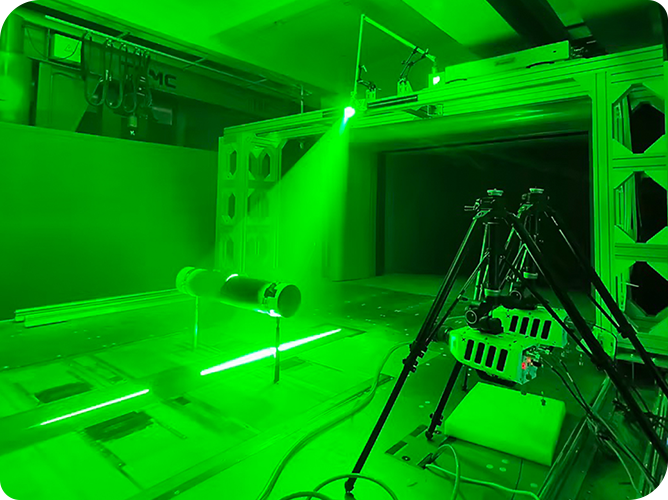
PIV Subsystem: Utilizes a Revealer High Speed Camera (S1310M) paired with a 527 nm Nd:YLF dual-pulse laser and 1 μm Al2O3 tracer particles.
PLIF Subsystem: Employs a Revealer High Speed Camera (S1310) coupled with an image intensifier, a tunable dye laser, and specialized UV optics to capture OH signals.
Synchronization Hub: A digital delay pulse generator provides nanosecond-level triggering to ensure the High Speed Camera frames align perfectly with laser pulses.
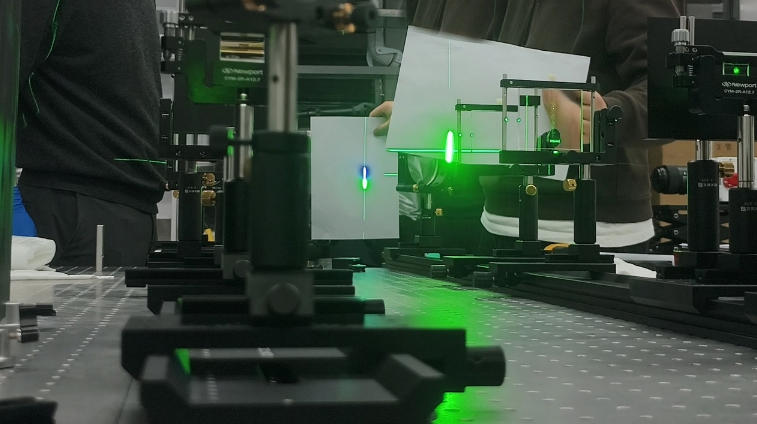
To ensure data integrity, Agile Device engineers follow a rigorous five-step coupling process:
Step1-Spatial Calibration: PIV and PLIF laser sheets are merged into a single physical plane. Iterative coordinate mapping corrects for lens distortion and viewing angles.
Step2-Temporal Synchronization: The High Speed Camera frame trigger acts as the master clock for the intensifiers and lasers.
Step3-Laser Energy Fluctuation Correction: Photodiodes record pulse energy to eliminate "false" reaction intensity changes caused by laser instability.
Step4-Sheet Energy Distribution Correction: Using an acetone concentration field, the system compensates for Gaussian energy distribution (bright center, dim edges) in the laser sheet.
Step5-Data Fusion: Using Revealer RFlow4 software, the PIV velocity field and PLIF fluorescence field are overlaid for synchronized visualization.
The 10 kHz sampling rate allows for a frame-by-frame breakdown of combustion mechanisms:
Pre-Coupling Observation: Particle Image Velocimetry (PIV) identifies vortex shedding and recirculation, while PLIF maps the spatial topology of the flame front.
Post-Coupling Discovery: By overlaying the data, researchers can directly observe how transient vortices deepen or fold the flame front. This allows for the tracking of vortex trajectories in direct relation to reaction zone morphology.
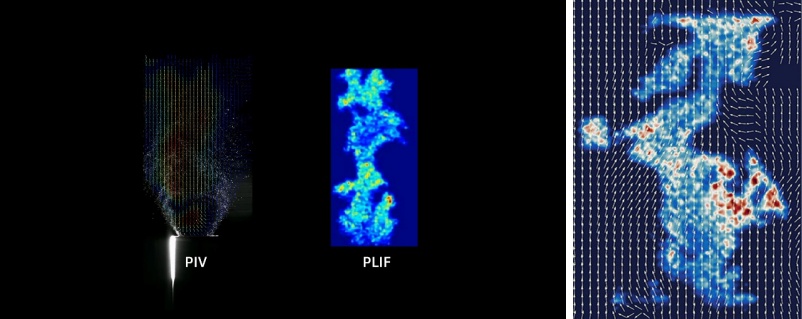
The high-speed PIV-PLIF synchronization system developed by Agile Device represents a breakthrough in combustion fluid dynamics. By utilizing Revealer High Speed Camera technology, the experiment provides a robust empirical foundation for understanding flame propagation, mass transport, and ignition stability in next-generation power systems.
 English
 Deutsch