For high-speed rigid object tracking and measurement, single-hardware visual measurement systems typically employ a "shoot-transmit-server-backend processing" model to sequentially complete tasks such as image acquisition, feature extraction, and object tracking. This suffers from high data latency and significant bandwidth pressure, making it difficult to meet the millisecond-level real-time processing requirements in high-speed scenarios.
Revealer visual measurement engineers have developed a dual-core collaborative computing technology based on a GPU and an NPU, achieving technological advancements in hardware architecture, task coordination mechanisms, and algorithm adaptation and optimization:
Hardware Architecture Design: The GPU and NPU are connected through a hardware-level collaborative architecture, fully leveraging the GPU's parallel floating-point computing capabilities and the NPU's neural network inference optimization capabilities.
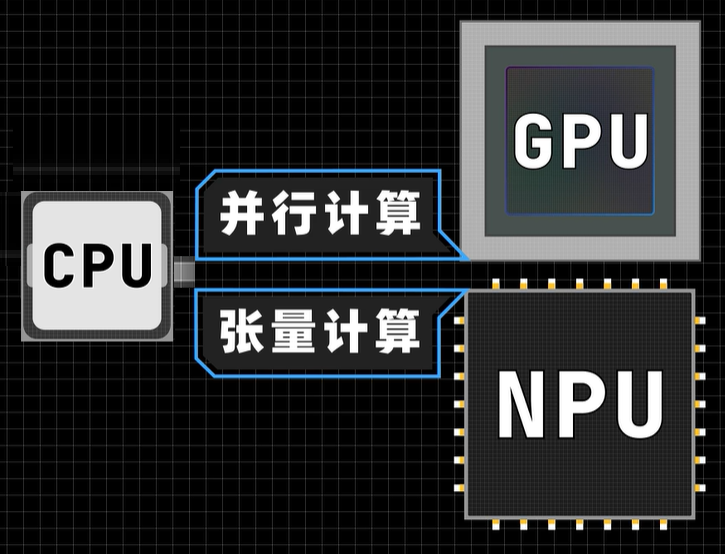
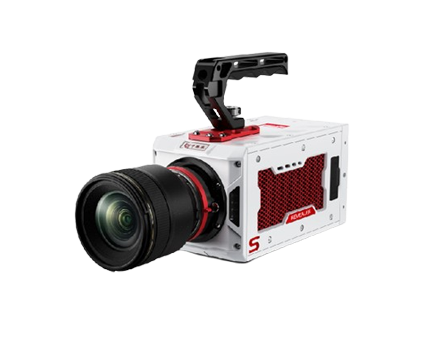
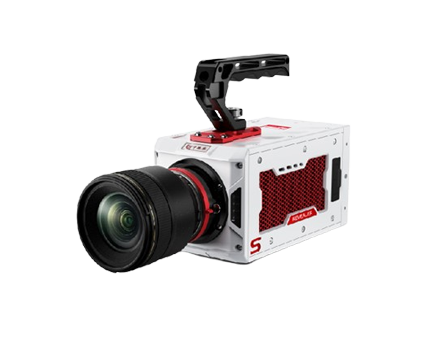
Task coordination mechanism: In the first step, a Revealer high-speed camera (recommended high-resolution high-speed camera G536, 2560×2016 @3600fps) captures a transient image. The image is then processed by the GPU multi-core architecture for RAW data stream processing, such as image denoising, image enhancement, and ROI cropping, to generate candidate regions. In the second step, the GPU-processed data is transmitted to the NPU in real time for AI inference of target tracking. Distributed small processing units are used for feature matching and classification to complete target recognition or tracking.
Algorithm adaptation and optimization: Pruning, quantization, and knowledge distillation techniques are used to lightweight the deep learning model in the NPU computing unit, reducing computational complexity and power consumption. Furthermore, a mixed-precision strategy is employed to match different algorithms. For example, high-precision algorithms are used on the GPU for tasks such as 3D reconstruction, while high-efficiency, lightweight algorithms are used on the NPU for low-precision inference tasks, balancing accuracy and real-time performance.
The tracking and measurement solution based on the dual-core collaborative computing model of GPU and NPU offers distinct advantages over traditional GPU solutions in terms of real-time performance, energy efficiency, flexibility, and security:
Real-time performance: Traditional solutions transmit data back to the server for processing, resulting in latency ranging from seconds to minutes. The dual-core collaborative solution, through algorithm adaptation and optimization, reduces latency to milliseconds and supports real-time output.
Energy efficiency: Traditional solutions consume significantly more power at high frame rates. The dual-core collaborative solution dynamically adjusts the load distribution between the GPU and NPU, significantly improving energy efficiency.
Flexibility: Traditional solutions are highly dependent on backend servers and have poor scalability. The dual-core collaborative solution provides a complete system in a single device and supports distributed deployment, greatly improving flexibility and meeting the needs of diverse measurement scenarios.
Security: Traditional solutions transmit data back to the server, posing a risk of data leakage. The dual-core collaborative solution enables closed-loop processing within the high-speed camera, eliminating the need for external transmission links and ensuring data security.
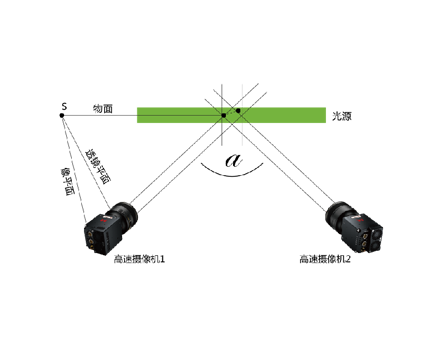
Revealer 's newly developed 6D measuring instrument incorporates dual-core collaborative computing, tracking and measuring 6Dof data in real time at the moment a cone-shaped object separated from its mounting bracket. The G536 Revealer high-speed camera captures the target image at 1000 frames per second. The GPU performs real-time image enhancement and multi-view matching, while the NPU identifies the cone's key points and calculates its 6Dof pose. The data processing process is entirely internal to the high-speed camera, eliminating the need for data transmission and providing real-time output of motion trajectories and pose change curves.
Revealer's high-speed, real-time tracking and measurement technology, based on a dual-core collaborative computing model using GPUs and NPUs, overcomes the bottlenecks of traditional architectures in terms of real-time performance, energy efficiency, flexibility, and security through innovative hardware architecture, task coordination mechanisms, and algorithm adaptation and optimization. This technology brings efficient, accurate, and real-time solutions to the field of high-speed visual measurement, helping high-speed visual measurement systems achieve a truly closed "perception-decision-control" loop.
 English
 Deutsch