Accurately capturing the deformation and failure process of rocks under complex environmental conditions has long been a key challenge in rock mechanics and slope engineering research. Researchers from the State Key Laboratory of Geohazard Prevention and Geoenvironment Protection conducted a systematic experimental study on the damage evolution of tuff subjected to repeated dry–wet cycles using the Revealer High-Speed 3D-DIC system developed by Agile Device, combined with Acoustic Emission (AE) monitoring.
This study provides a representative application case of Digital Image Correlation (DIC) technology in rock mechanics, offering valuable insights for researchers selecting a DIC system for rock testing and deformation measurement.
In mountainous regions with frequent rainfall, highway slopes and rock engineering structures often contain volcanic clastic rocks such as tuff. Repeated water absorption and dehydration cycles cause dry–wet cycling effects, which gradually deteriorate the mechanical properties of the rock. This process promotes the propagation of internal microcracks and may eventually trigger geological hazards such as landslides and slope failures.
Traditional rock mechanics experiments typically rely on:
· strain gauges
· displacement sensors
· stress–strain measurements
However, these methods can only capture localized deformation data and are unable to monitor the full-field deformation and crack initiation process on the rock surface.
With the development of Digital Image Correlation (DIC) technology, more research groups are introducing 3D-DIC systems into rock mechanics experiments. By continuously capturing speckle images on the specimen surface using High-Speed Cameras, DIC systems can reconstruct the three-dimensional displacement field and strain field of the rock in real time.
In this study, researchers used the Revealer High-Speed 3D-DIC system together with Acoustic Emission (AE) monitoring to investigate crack evolution in tuff specimens subjected to different numbers of dry–wet cycles.
The experimental system consisted of three main components:
1. Uniaxial Loading System
A DYT-50 multi-field coupled dry–wet cycle permeability testing system was used to perform uniaxial compression tests, simulating the stress conditions experienced by rocks in engineering environments.
2. Acoustic Emission (AE) Monitoring System
The AE system was used to capture elastic wave signals generated by internal crack propagation in the rock, enabling the analysis of crack activity and damage evolution stages.
3. High-Speed 3D-DIC System (Core Equipment)
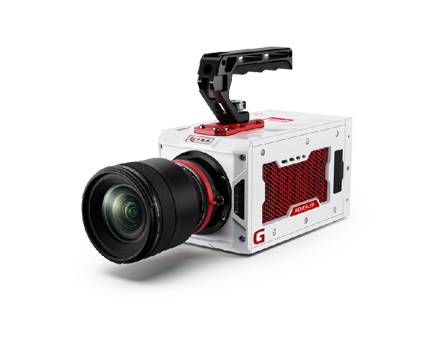
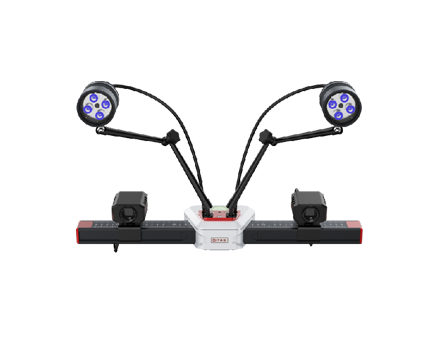
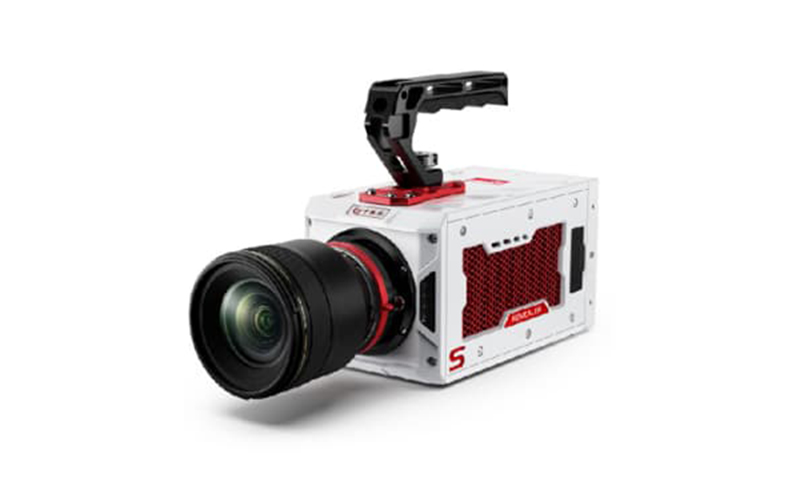
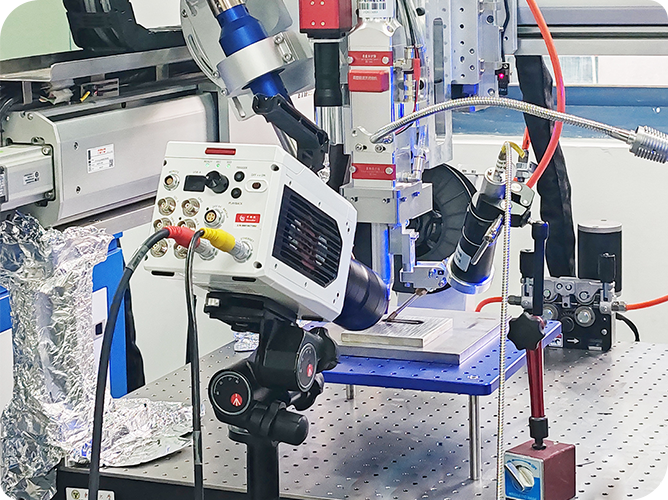
The experiment employed the Revealer 3D-DIC system developed by Agile Device, consisting of two Revealer M230 High-Speed Cameras configured in a stereo vision setup.
Using image correlation algorithms, the system calculates:
· full-field 3D displacement fields
· XY strain fields on the specimen surface
Compared with conventional DIC systems, the Revealer High-Speed 3D-DIC system offers several advantages:
· High-speed imaging capability suitable for transient rock failure processes
· Higher accuracy in three-dimensional strain measurement
· Stable full-field deformation calculation
· Compatibility with rock mechanics and material failure research
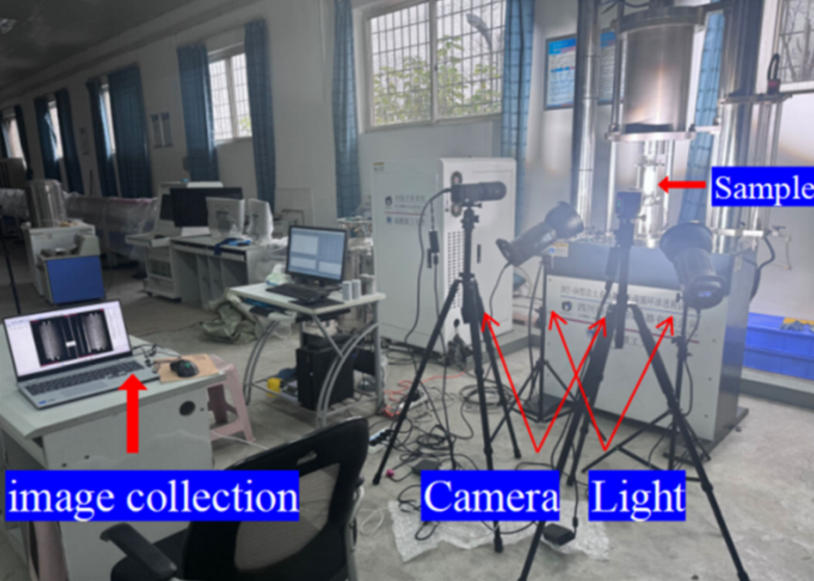
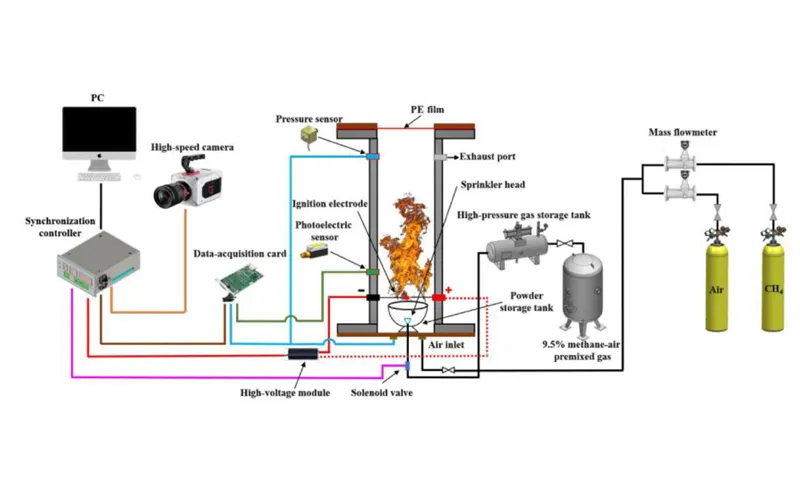
Figure 1. Schematic of the High-Speed 3D-DIC experimental system.
1. Specimen Preparation
Tuff samples collected from a highway slope were processed into cylindrical specimens with a diameter of 50 mm and height of 100 mm.
Six dry–wet cycle groups were prepared:
0, 1, 5, 10, 15, and 20 cycles
Each group contained five specimens, resulting in a total of 30 samples.
2. Speckle Pattern Preparation
To enable accurate displacement tracking by the Digital Image Correlation (DIC) system, a random speckle pattern was created on the specimen surface.
A white matte base coat was first sprayed onto the specimen surface, followed by black matte speckles to generate a high-contrast random pattern.
After drying, the specimen was installed in the loading system. The Revealer High-Speed Cameras were adjusted for optimal focus and aperture, and stereo calibration was performed before loading began.
3. Loading and Synchronized Image Acquisition
During the uniaxial compression test, displacement-controlled loading was applied.
The Revealer M230 High-Speed Cameras continuously captured surface images of the specimen. The Revealer 3D-DIC system then calculated the three-dimensional displacement field and strain field in real time, recording the entire deformation and failure process until specimen fracture.
The Revealer High-Speed 3D-DIC system successfully captured the full-field evolution of displacement and strain in tuff specimens subjected to different dry–wet cycle conditions.
4.1 Specimen Without Dry–Wet Cycles (0 Cycles)
As shown in Figure 2, during the initial loading stages—including the crack closure stage and the linear elastic stage—the displacement field remained uniform and the strain field showed no abnormal concentration. This indicates that internal microcracks had not yet propagated.
When the specimen entered the stable crack growth stage, a localized strain concentration gradually appeared in the middle region of the specimen, corresponding to microcrack initiation. At the peak stress stage, this concentrated zone rapidly developed into a penetrating main crack, with the crack path primarily aligned with the loading axis. The failure mode was dominated by tensile fracture.
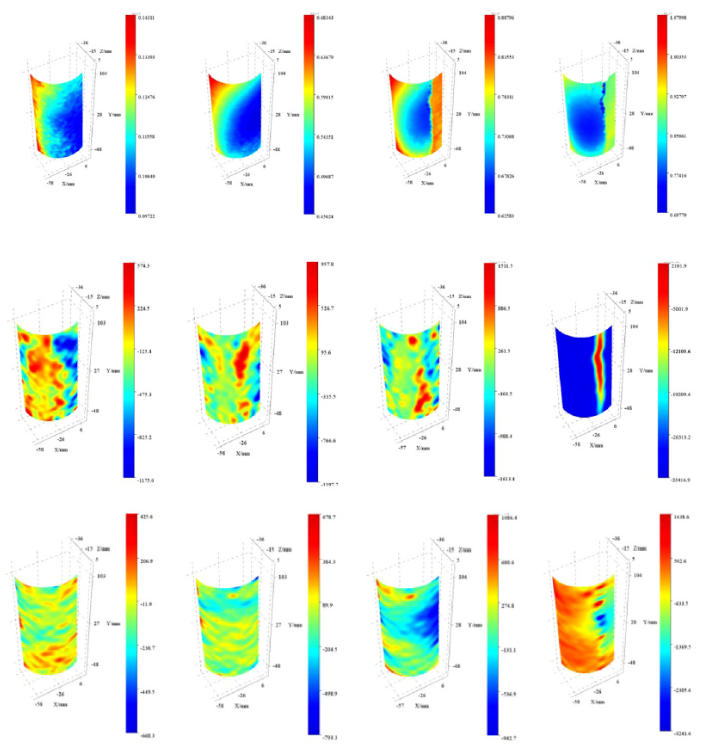
Figure 2. Evolution of the displacement field and XY-direction strain field of the specimen under 0 dry–wet cycles.
4.2 Specimen with 10 Dry–Wet Cycles
As shown in Figure 3, the early deformation stages were similar to those observed in the specimen without dry–wet cycles.
However, during the stable crack growth stage, strain localization appeared earlier and covered a larger area. At the peak stage, secondary cracks formed on both sides of the main crack, and the strain field exhibited multiple band-shaped concentration zones. The displacement field also showed asymmetric features, indicating that internal structural degradation caused by dry–wet cycles led to more complex crack propagation paths.
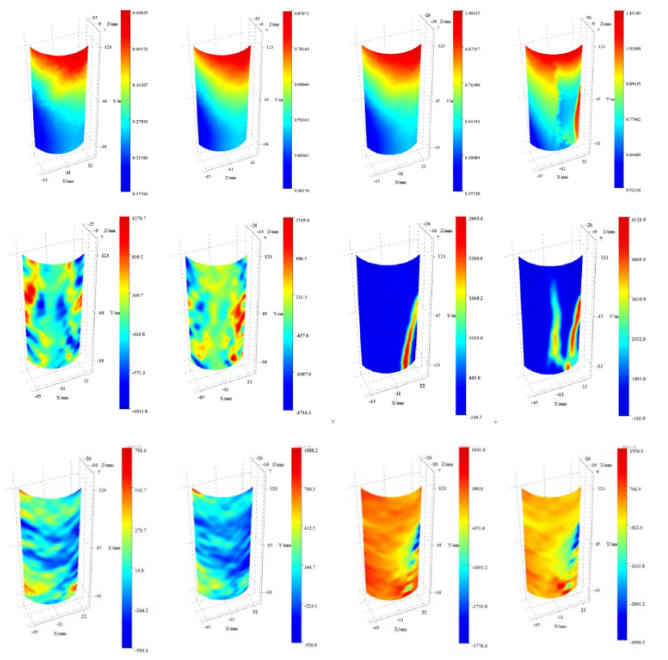
Figure 3. Evolution of the displacement field and XY-direction strain field of the specimen under 10 dry–wet cycles.
4.3 Specimen with 15 Dry–Wet Cycles
As illustrated in Figure 4, the strain evolution showed more pronounced damage characteristics. Strain concentration regions formed earlier during the stable crack growth stage.
At the peak stress stage, the crack bands exhibited inclined orientations and branching features, while strain concentration zones became more dispersed. These observations indicate that the failure mode gradually shifted from tensile-dominated failure to mixed tensile–shear failure.
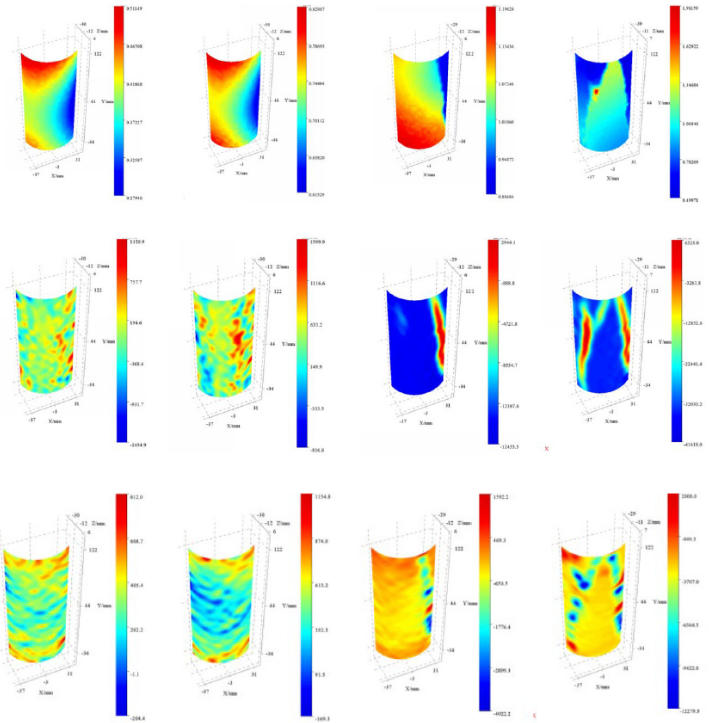
Figure 4. Evolution of the displacement field and XY-direction strain field of the specimen under 15 dry–wet cycles.
4.4 Comparison of Damage Morphology
As shown in Figure 5, the number of secondary cracks along the main crack channel increased significantly with the number of dry–wet cycles.
The crack geometry evolved from a simple penetrating crack to a multi-branch crack network, demonstrating that repeated dry–wet cycles weaken the internal structure of the rock and promote complex fracture patterns.
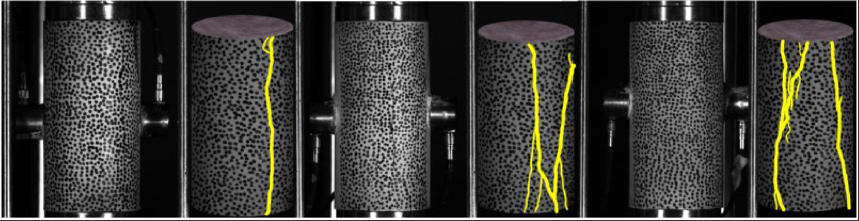
Figure 5.Comparison of damage patterns at peak stress under different dry–wet cycle numbers.
Using High-Speed 3D-DIC technology, this study monitored the full-field displacement and strain evolution during the uniaxial compression failure of tuff subjected to dry–wet cycles.
The key conclusions are as follows:
1. The Revealer High-Speed 3D-DIC system can effectively reveal early crack initiation and strain localization caused by dry–wet cycles, providing a clear visualization of crack propagation paths and failure mechanism evolution.
2. The 3D-DIC observations show strong consistency with Acoustic Emission (AE) signals, where increased AE event counts correspond to the stable crack growth stage, and a rapid increase in AE energy together with a decrease in the b-value occurs before peak stress. This confirms the reliability of DIC technology in rock mechanics research.
3. The crack evolution patterns revealed by Digital Image Correlation (DIC) provide important experimental evidence for developing damage degradation models, demonstrating that High-Speed 3D-DIC has significant potential in rock mechanics research and engineering safety assessment.
The academic details of this study can be found at:
DOI: 10.1063/5.0273697
The experimental results further demonstrate that the Revealer 3D-DIC system developed by Agile Device is an effective tool for dry–wet cycle damage monitoring and crack evolution analysis in rock mechanics research.
 English
 Deutsch