A non-contact measurement approach using the Revealer Digital Image Correlation (DIC) system was applied to capture full-field dynamic strain and 3D displacement of a composite UAV rotor blade under 3 Hz aerodynamic-centrifugal coupled loading.
During service, UAV rotors are subjected to combined periodic aerodynamic and centrifugal loads, which can lead to fatigue failure. In a typical operating condition, the rotor undergoes flap-lag complex motion at 3 Hz. Strain amplitudes at key connection areas such as the blade root can reach several thousand microstrains. Long-term cyclic loading may induce delamination and crack initiation in composite materials, directly affecting flight safety and service life.
Conventional strain gauges only provide single-point data and cannot fully capture large-span or large-torsional deformation fields, nor reflect true multi-dimensional deformation and strain gradients. Standard optical measurements are often limited by working distance, field of view, distortion, and lighting conditions, making high-precision full-field measurement at short distances challenging. To overcome these limitations, this study introduces a two-camera stereovision system based on Digital Image Correlation (DIC) to obtain high-resolution full-field strain and 3D displacement fields of the rotor during fatigue loading.
The Revealer 3D Digital Image Correlation (3D DIC) optical measurement system was used, with the following core hardware and auxiliary devices:
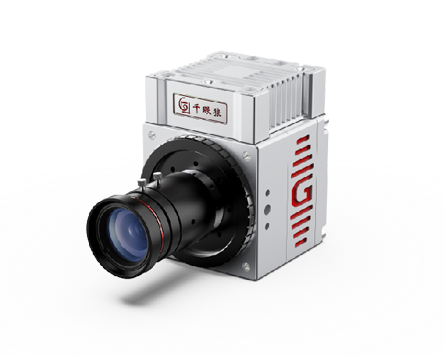
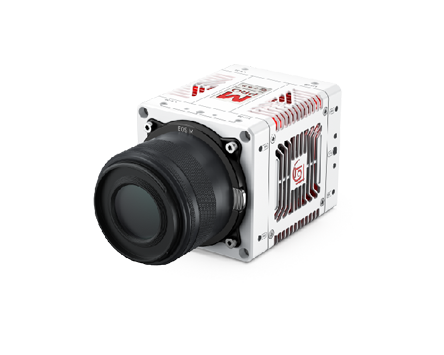
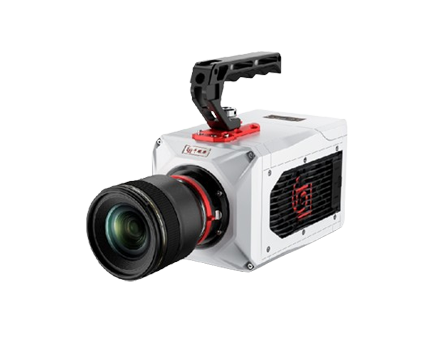
Industrial cameras: Resolution 4096×3000, acquisition rate 20 fps, meeting high-resolution and time-synchronization requirements for dynamic rotor deformation.
Imaging lenses: 17–50 mm zoom lenses, suitable for a field of view of 300×400 mm at short working distance, with small aperture to increase depth of field and ensure clear imaging throughout the motion range.
Lighting system: Strobe light synchronized with camera frame rate, combined with a matte speckle pattern to eliminate highlights and shadows on the composite surface.
Mounting and loading equipment: A three-degree-of-freedom adjustable tripod head for precise camera positioning and vibration resistance, ensuring stereo calibration accuracy; a three-axis actuator fatigue testing machine providing 3 Hz cyclic loading to simulate flap-lag complex loads.
DIC analysis software (RVM): Supports intelligent calibration, subpixel matching, 3D displacement reconstruction, Lagrangian strain calculation, time-history analysis, and contour generation.
_01.jpg "Full-Field_Strain_and_Displacement_Measurement_of_UAV_Rotor_in_Fatigue_Test_Using_Digital_Image_Correlation_(DIC)_01.jpg")
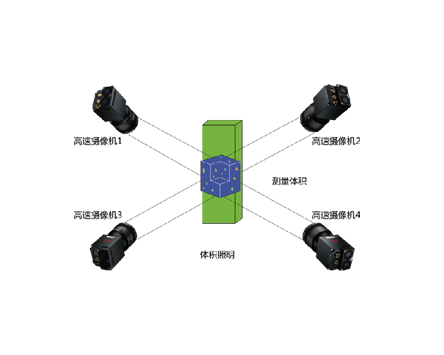
Figure 1: Schematic of the Revealer 3D DIC optical measurement system
The experiment employed a 3D DIC non-contact measurement method based on binocular stereo vision. Full-field deformation was quantified through sequential image correlation calculations.
First, the surface of the UAV rotor was prepared with a speckle pattern – a white matte base coat followed by random speckle stickers to create a uniform and stable speckle field.
Next, stereo calibration of the two cameras was performed using the DIC software (DVM) to obtain intrinsic/extrinsic parameters and distortion coefficients, establishing a unified measurement coordinate system.
During formal acquisition, the fatigue tester applied cyclic loads simulating aerodynamic and centrifugal coupling at 3 Hz. The dual cameras were synchronously triggered to record sequential images at 20 fps. The images were imported into the RVM DIC analysis software, where distortion correction, image filtering, subpixel correlation matching, and 3D reconstruction were performed to obtain full-field 3D displacement fields. Lagrangian principal strain fields were then derived from the displacement fields, and quantitative time-history analysis and contour visualization were carried out along the rotor span (root→tip) and chord (leading edge→trailing edge).
4.1 Strain Field Analysis
Sequential images processed by the Revealer DIC software RVM revealed the spatiotemporal distribution of Lagrangian principal strain (E1) on the rotor surface. Along the span, the principal strain amplitude gradually decreases from tip to root. At the tip, the amplitude is approximately 295 με, with a standard sinusoidal time-history. Transitioning toward the root, the waveform changes from a single sine to an alternating large-small peak pattern, and the amplitude at the root drops to about 90 με, indicating the restraining effect of the root stiffness on deformation and stress.
Along the chord, time histories of principal strain at various sections all show approximately sinusoidal periodic variations, with clear differences in amplitude. The largest amplitude (~299 με) appears at the mid-chord, followed by the leading edge, while the trailing edge shows the smallest amplitude (~81 με). This reveals non-uniform chordwise stiffness distribution and load transmission. Full-field strain contours clearly highlight strain concentration at the blade root and hub connection, providing direct evidence for identifying fatigue-prone regions.
_02.jpg "Full-Field_Strain_and_Displacement_Measurement_of_UAV_Rotor_in_Fatigue_Test_Using_Digital_Image_Correlation_(DIC)_02.jpg")
Figure 2: Lagrangian principal strain (E1) analysis – top: spanwise strain contour and time-history curves; bottom: chordwise strain contour and time-history curves
4.2 Displacement Field Analysis
Full-field 3D resultant displacement fields reconstructed by the Revealer DIC software RVM show deformation patterns closely coupled with strain fields. Along the span, resultant displacement amplitude decreases monotonically from tip to root: ~0.644 mm at the tip and ~0.457 mm at the root, consistent with typical cantilever beam behavior. The displacement time-history curves exhibit stable sinusoidal waveforms strictly synchronized with the 3 Hz loading frequency.
Along the chord, resultant displacement continuously decreases from the leading edge to the trailing edge, from ~0.656 mm to ~0.486 mm. The displacement curves along the entire chord are consistent in shape and phase, indicating that the rotor deforms predominantly as an integrated structure under test loads, with no significant local distortion or incompatible deformation. The displacement field results accurately characterize the 3D deformation mode of the rotor under fatigue loading, providing measured boundary conditions for dynamic modeling and stiffness validation.
_03.jpg "Full-Field_Strain_and_Displacement_Measurement_of_UAV_Rotor_in_Fatigue_Test_Using_Digital_Image_Correlation_(DIC)_03.jpg")
Figure 3: Resultant displacement analysis – top: spanwise displacement contour and time-history curves; bottom: chordwise displacement contour and time-history curves
I. Using a 3D DIC system (including binocular cameras and RVM analysis software), this experiment successfully performed non-contact, high-precision, full-field dynamic strain and displacement measurement on a composite UAV rotor under 3 Hz cyclic loading. The approach overcomes the limitations of conventional point-wise measurement methods, insufficient field of view, short-distance distortion, and lighting interference.
II. Spanwise principal strain decreases significantly from tip to root, with the waveform transitioning from sinusoidal to an alternating large-small peak pattern. Chordwise, the maximum strain occurs at the mid-chord and the minimum at the trailing edge, revealing the stiffness distribution and strain concentration zones. Resultant 3D displacement exhibits gradient decay along both span and chord, with time histories strictly synchronized with the loading frequency and stable deformation modes, confirming structural deformation compatibility under test loads.
III. Full-field strain contours, displacement evolution curves, and load-deformation coupling data obtained by the Revealer DIC system can be used for UAV rotor structural optimization, fatigue life prediction, and finite element model updating. This provides a reliable experimental method and data support for fatigue performance research on composite rotating components in aviation.
The Revealer DIC system, with its excellent imaging accuracy, software analysis capabilities, and adaptability to complex rotor operating conditions, offers a preferred technical solution for fatigue testing and structural dynamics analysis of UAV rotors, wind turbine blades, and aerospace structural components.
 English
 Deutsch