Imaging and measuring cold ion clouds is a key research topic at the intersection of cutting-edge fields such as quantum precision measurement, many-body physics, and quantum simulation. As an ideal isolated quantum system, it provides an ideal platform for verifying the Eigenstate Thermalization Hypothesis (ETH). ETH proposes that individual eigenstates of many-body quantum systems can exhibit statistical behavior consistent with thermal equilibrium.
In the field of cold ion cloud imaging and measurement, EMCCD camera technology has the following limitations:
Long-term use can lead to aging of electronic components, unstable gain, and the need for frequent calibration.
Multiplicative noise introduces, reducing effective quantum efficiency and limiting dynamic range, making it difficult to simultaneously capture details in both bright and dark regions of the cold ion cloud.
Complex manufacturing processes make maintenance difficult, and the size, weight, and power consumption are unfavorable. Import restrictions also make these cameras expensive.
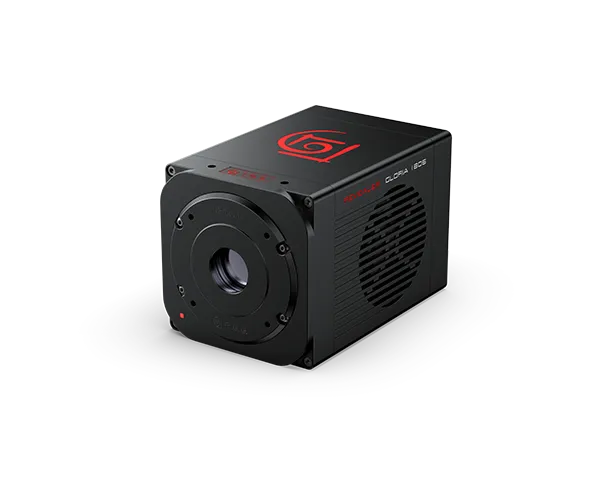
To overcome these limitations, a physics laboratory selected a domestically produced Revealer high-performance sCMOS camera, the Gloria 1605 (Figure 1). This scientific camera boasts 800×600 resolution, a large 16μm pixel size, low readout noise <1 e-, 90.7% QE, 16-bit analog-to-digital conversion, and a 40,000:1 high dynamic range, significantly improving image quality and signal-to-noise ratio. The experimental object was a cold ion cloud trapped in a vacuum chamber, illuminated by a 532 nm laser. The sCMOS camera exposure time was set to 100 ms in low-noise mode, and the display was enhanced by the flexible use of color gradation to enhance contrast. This enhanced visualization of the weak cold ion cloud signal was achieved.
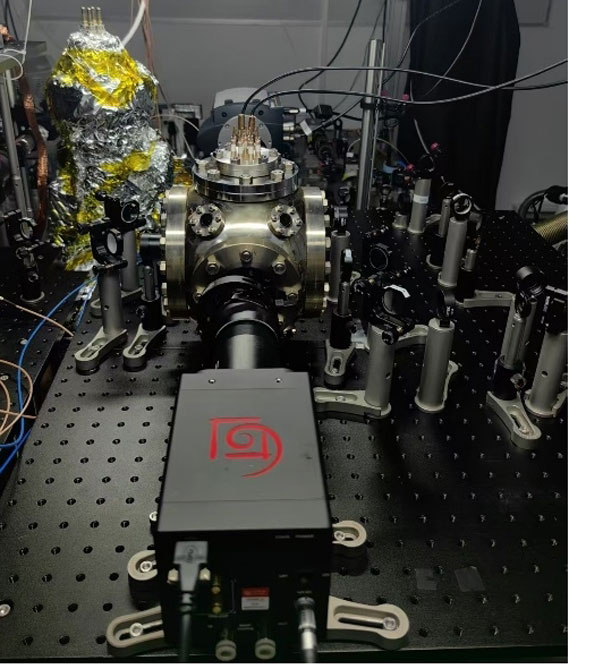
Figure 1
Figure 2 shows an image of the cold ion cloud captured by the Gloria 1605 sCMOS camera. The image clearly shows the morphology, size, and internal distribution of the cold ion cloud. The sCMOS camera has a strong ability to capture extremely weak signals, maintaining a high signal-to-noise ratio, allowing the internal structure of the ion cloud to be clearly visualized.
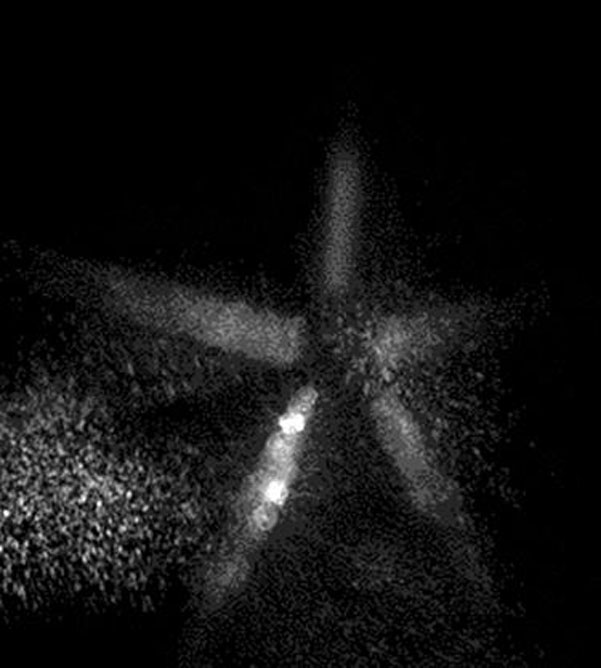
Figure 2
Through further time series analysis, the sCMOS camera captured the relaxation process of the cold ion cloud from a non-equilibrium state to a steady state (Figure 3), accurately quantifying the local dynamic fluctuations. At the same time, the high dynamic range characteristics of Gloria 1605 support the good presentation of the details of the bright/dark areas of the cold ion cloud.
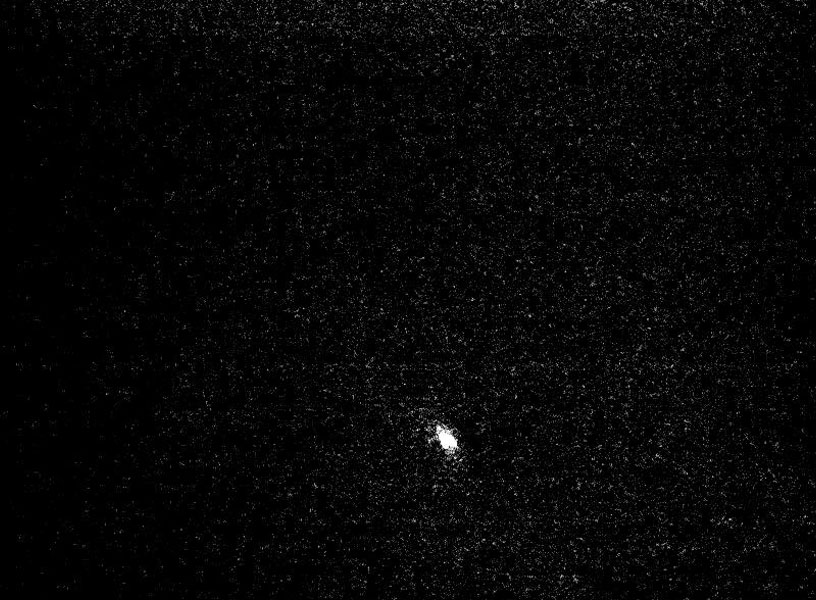
Figure 3
This experiment demonstrates that high-performance sCMOS cameras can be used to effectively image and measure cold ion clouds. The Revealer Gloria 1605 camera demonstrated excellent detection performance in extremely weak signal environments, clearly capturing the evolution of the cold ion cloud in an isolated system. Key parameters extracted from the images were then compared with theoretical predictions from ETH theory, providing strong experimental evidence for the theory's applicability to cold ion systems.
NEXT
 English
 Deutsch