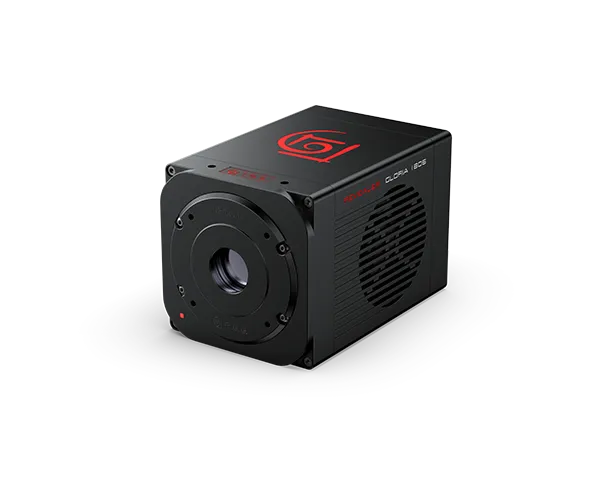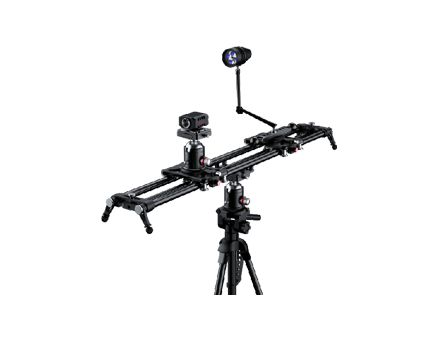
In September 2025, China ushered in its first National Science Popularization Month . In this nationwide science feast, HF Agile Device Co.,Ltd independently developed high-speed cameras acted like " time microscopes " , capturing scientific phenomena imperceptible to the naked eye or fleeting at ultra-high frame rates, allowing the public to understand the mysteries of the world while experiencing the charm of science.
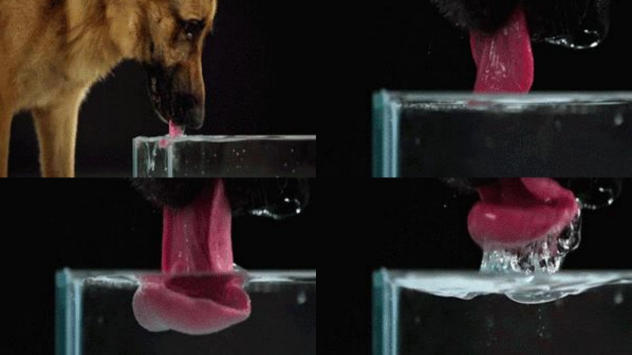
Figure 1-The secret of dogs drinking water
High-speed cameras can capture moving images with exposure times less than 1 millisecond or frame rates greater than 1000 frames per second (fps). They record fast-moving objects as digital images onto storage media. After recording, the stored images can be played back in slow motion. High-speed cameras are scientific instruments that study transient images through time magnification. By stretching time, high-speed camera technology allows for detailed observation and analysis of rapid phenomena such as magnetic field distribution, droplet evaporation, and explosions .
Popular Science Experiment 1 - Magnetic Field Visualization: Making Invisible Magnetism Visible
Magnetic fields are everywhere, yet they are invisible and intangible. Engineers from HF Agile Device Co., Ltd sprinkled iron powder around a magnet. These tiny iron powder particles were magnetized in the magnetic field, like countless miniature compasses, arranged in an orderly manner along the direction of the magnetic lines of force, outlining the complete distribution of the magnetic field. High-speed cameras can be used to dynamically capture the entire process of magnetic powder "standing", moving, and finally forming a stable, regular pattern under the magnetic field of bar magnets and ring magnets. Through high-speed image recording, the public can clearly see how the magnetic powder, driven by magnetic force, goes from a disordered, scattered state to a very beautiful and mysterious pattern, and their understanding of the magnetic field moves from a conceptual to a concrete one.
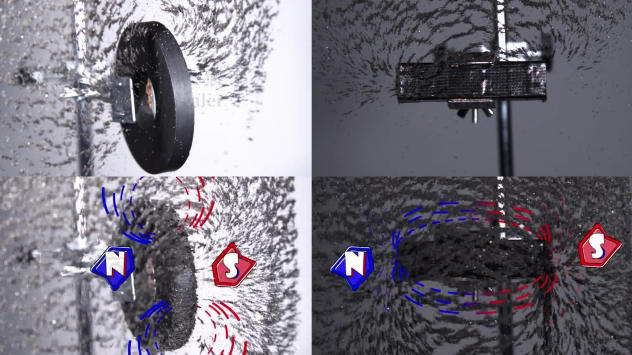
Figure 2 - Visualization of magnetic flux lines
Popular Science Experiment 2 - The Leidenfrost Effect: The "High-Temperature Ballet" of Liquid Droplets in Thermodynamics
The Leidenfrost effect refers to the instantaneous vaporization of a liquid upon landing on a surface well above its boiling point, forming a vapor film. This vapor film separates the droplet from the hot surface, significantly reducing heat transfer efficiency and allowing the droplet to remain suspended for extended periods without immediately evaporating. HF Agile Device Co.,Ltd's high-speed cameras can clearly interpret this phenomenon. High-speed cameras can capture the critical moment, recording the precise formation of the vapor layer at the bottom of the droplet as it contacts a hot surface, such as a 300°C metal plate, and the "dance" of the droplet as it suspends, rolls, and even dances on the vapor film. Furthermore, by comparing the different states of water and oil at the same high temperature, high-speed cameras can visually demonstrate the differences in the properties of different liquids, enabling the public to gain a deeper understanding of the thermodynamic and fluid mechanics principles behind this effect.
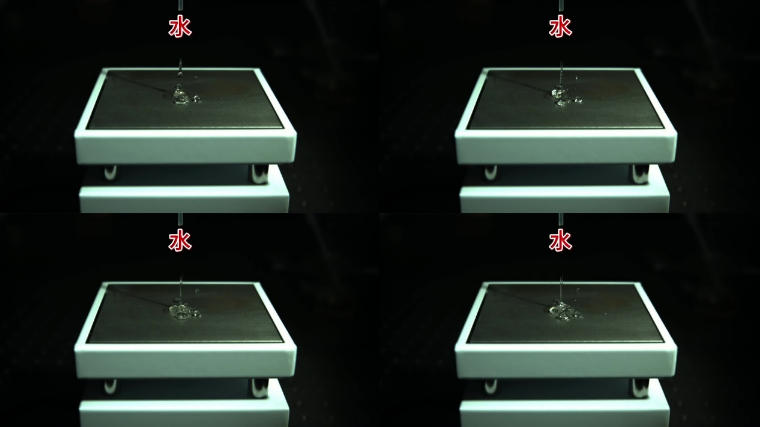
Figure 3 - Leidenfrost effect
Popular Science Experiment 3 - Balloon Explosion - Decoding the Mechanics of Explosion
Balloon explosions are a classic example of rapid fracture mechanics. When the air pressure inside a balloon exceeds the ultimate strength of the rubber material, the rubber material instantly tears, and the high-pressure gas rapidly expands, generating shock waves and turbulence. To enhance the visualization of balloon explosions, engineers at HF Agile Device Co.,Ltd filled the balloons with colored sequins to act as missing particles. Using a Revealer high-speed camera, NEO 25 , they captured the images at 25,000 fps, stretching the millisecond-long explosion into a measurable image sequence lasting several seconds. This allows viewers to observe the path and speed of crack propagation (the rapid contraction of the rubber) and the propagation of the balloon's shock wave, facilitating their understanding of physical phenomena such as material failure, energy release, and acoustic wave generation.
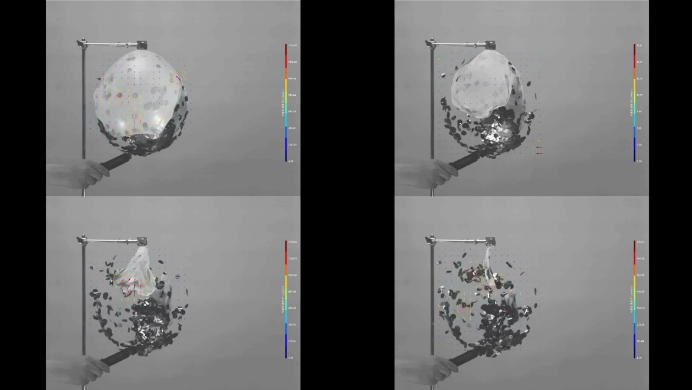
Figure 4 - Balloon explosion visualization
Through typical popular science experiments in magnetism, thermodynamics, and explosion mechanics, high-speed cameras played the important role of "time microscopes," demonstrating the following value:
Scientific visualization: Capturing the movement of iron powder in a magnetic field, the bouncing of liquid droplets, and the diffusion of exploding sequins through high frame rates (e.g., 25,000 frames per second with a NEO25 high-speed camera ) stretches invisible transient processes into observable slow-motion images, enhancing public understanding.
Scientific appeal: With the help of high-speed photography technology , unique visual wonders can be presented, such as dancing magnetic powder and suspended droplets, which have a strong visual impact and help stimulate the public's curiosity and desire to explore, and realize interesting science popularization.
Scientific application: The details revealed by high-speed cameras , such as the vapor film of the Leidenfrost effect, can be mapped to engineering practices such as fire suit design, promoting the transformation of scientific knowledge from the laboratory to daily life.
During the National Science Popularization Month , HF Agile Device Co.,Ltd's high-speed cameras are no longer just scientific instruments, but also a bridge connecting cutting-edge science and public cognition. By perfectly integrating scientific rigor with art, it makes profound scientific principles easy to understand, and freezes fleeting scientific phenomena into clearly visible visual miracles, empowering science popularization education and providing strong momentum for improving the public's scientific literacy.
 English
 Deutsch