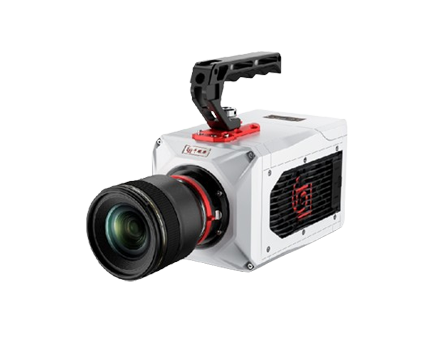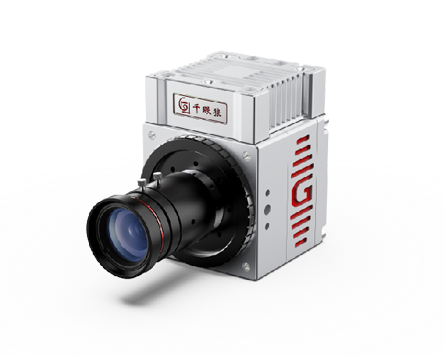
Currently, the nation is in the critical flood prevention period of "late July to early August," with a sharp increase in the risk of landslides and debris flows triggered by heavy rainfall. Accurately monitoring the deformation mechanisms and movement processes of hazardous bodies has become the core of disaster prevention and control efforts. The Revealer Digital Image Correlation (DIC) technology, as a non-contact, high-precision measurement method, calculates the displacement and strain changes of marked points in images by comparing captured image sequences, making it suitable for studying landslides and debris flows under complex geological conditions.

Landslides and debris flows undergo a progressive process of "deformation accumulation - local failure - overall instability." Conventional optical equipment cannot precisely quantify millimeter-level displacement and strain evolution of large-field targets. Using the Revealer binocular 3D quasi-static DIC technology, a slope fragmentation experiment was conducted in the laboratory on a shaking table to simulate the progressive fragmentation process under vibrational loading.
The test object was the side of a slope measuring 1m × 1.5m. Due to the large field of view and the obstruction of supplementary lighting by frames on both sides, speckles were manually applied using a brush, with optimized design of speckle size and distribution density to ensure texture features could be recognized by the 3D quasi-static DIC system. The simulation experiment completed several groups of loading tests with different vibration frequencies and amplitudes, covering typical landslide instability stages.
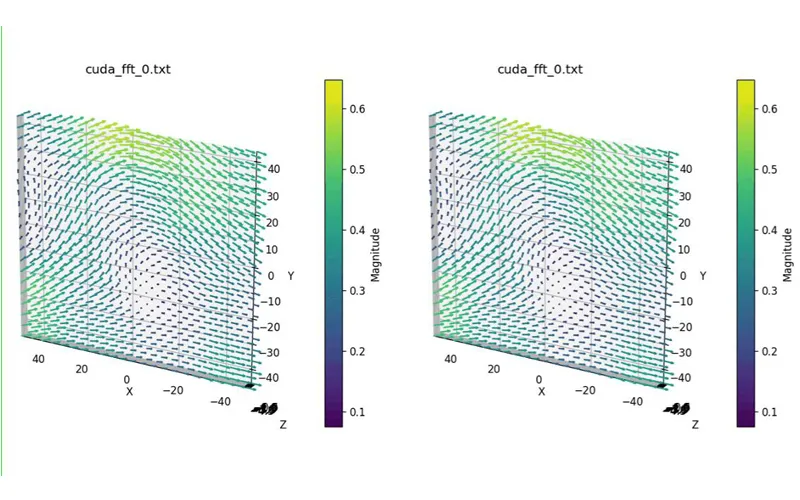
Using the Revealer DIC software to analyze the displacement and strain changes of the slope under vibrational loading, it was found that during the initial vibration phase, the slope surface displacement showed linear growth. At the critical instability stage, the displacement rate suddenly increased, and a shear strain concentration zone appeared in the slope toe area, with the ε_xy peak reaching 0.8%. The experimental data closely matched the numerical simulation results.


Continuous heavy rainfall can cause the water content of loess to exceed its shear strength, leading to transient sliding. With the Revealer binocular 3D quasi-static DIC technology combined with high-speed cameras, the slow deformation process of loess under continuous rainfall and the transient sliding process can be tracked and captured.
The test object was a 90cm × 60cm loess slope surface. Due to the loose slope surface, direct speckle spraying was not possible, so white pebbles were used as markers to track continuous slope displacement. The experiment completed multiple groups of loess landslide displacement observations under different water content conditions (corresponding to rainfall intensity and duration).
DIC software analysis showed that under one condition, rainfall-induced progressive displacement of 0.2~50mm occurred from 0~3500s. After 3500s, the sliding rate exhibited exponential growth.

The digital image correlation (DIC) measurement system does not require contact with the hazardous body, avoiding damage to the slope structure. It supports the analysis and output of multiple physical field parameters such as displacement, strain, and velocity of the measured body. Based on the real-time, full-field data provided by DIC technology, landslide warning thresholds can be established to accurately identify precursor information of landslides, enabling early visualization and refined warnings for landslides. This provides valuable time for evacuation and disaster prevention.
Additionally, DIC measurement results can locate potential sliding surfaces and critical areas of landslides, providing quantitative basis for the optimization of landslide control engineering and the design of support structures.

 English
 Deutsch