Composite woven materials exhibit a complex deformation mechanism under uniaxial compression loads, accompanied by failure modes such as local buckling, interlaminar shear, and fiber fracture. Traditional contact extensometers can only obtain local or average mechanical responses; video extensometers have limited spatial resolution, with measurement degrees of freedom restricted to axial + transverse directions and a limited field of view, making it difficult to balance macrostructural response and local detail observation.
As a non-contact measurement technology based on full-field speckle image matching, Digital Image Correlation (DIC) technology can be used for accurate and visual characterization of surface displacement and strain fields of measured objects under dynamic and static loads. A university material laboratory adopted the Revealer Digital Image Correlation (DIC) instrument provided by Agile Device to conduct real-time monitoring of the full-field displacement and strain of composite woven materials during uniaxial compression loading, revealing their local deformation characteristics and damage evolution laws.
2.1 Experimental Equipment and Specimens
Universal testing machine: Used for uniaxial compression loading.
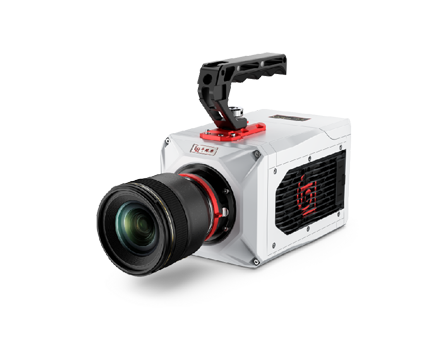
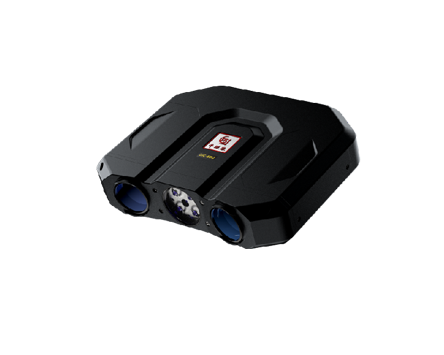
Revealer 3D quasi-static DIC system independently developed by Agile Device, with core parameters of 4096×3000@1fps.
Specimen: Plate-shaped specimen of composite woven material.
2.2 Experimental Process
Randomly spray high-contrast speckles on the surface of the specimen.
Fix the DIC equipment directly in front of the specimen, with the field of view covering the loading area.
Start the universal testing machine to simulate a quasi-static mechanical environment, with the loading method being displacement-controlled uniaxial compression.
Synchronously trigger the DIC system to continuously collect the sequence of surface images of the specimen until the specimen fractures.
Use Revealer DIC software to calculate the displacement field and strain field throughout the loading process.
3.1 Displacement Field Data Analysis
The Digital Image Correlation (DIC) instrument captured the displacement evolution of the specimen during the entire compression process. The resultant displacement field showed spatial gradient characteristics: bounded by the main crack, the displacement value of the upper area of the specimen was higher than that of the lower area. The upper area generally presented a gradient distribution where displacement gradually increased from top to bottom, while the overall displacement of the lower area was small, indicating higher stiffness in this area.
To quantify the deformation behavior of different regions during compression, multiple rectangular analysis regions were set in the post-processing of the DIC software. The average resultant displacement of each region was calculated separately, and the curve of displacement variation with time was plotted. The findings are as follows:
I. Near-loading region: Represented by Stage Rectangles 0, 1, and 3 (regions close to the loading end), the average resultant displacement increased linearly with the load and remained in the elastic stage for a long time. After entering the yield stage at 340s, the displacement increased sharply, reflecting the degradation of material stiffness.
II. Transition region: Represented by Stage Rectangles 4, 5, and 6, the average resultant displacement increased linearly with the load in the elastic stage. At approximately 192s, the displacement growth rate accelerated, and the first inflection point appeared in the average value curve, indicating that the material entered the yield stage.
III. Constrained region: Represented by Stage Rectangle 8 (boundary constrained region), the average displacement of Rectangle 8 was the smallest, indicating that this region was adjacent to the fixed end and subject to strong crack constraints. At 320s, the slope of the curve changed abruptly, reflecting that the material entered the failure stage, corresponding to crack penetration and structural failure.


3.2 Strain Field Data Analysis
The principal strain field of the specimen was measured using Digital Image Correlation (DIC) technology, further revealing the localization behavior and attenuation law of the strain field under load. Similarly, to quantify the strain evolution behavior of different regions during compression, multiple rectangular analysis regions were set in the post-processing of the DIC software to track the maximum principal strain and plot the curve of strain variation with loading time. The results are as follows:
I. Near-loading region: Represented by Stage Rectangles 0, 1, and 3 (regions close to the loading end), the principal strain level was at a medium magnitude. When loaded to 320s, the strain curve decreased abruptly, indicating that the fiber bundles in this region reached the critical stress, stiffness decreased, and the bearing load was transferred to the lower region.
II. Transition region: Rectangle 6 was adjacent to the initiation region of internal microcracks in the material. The principal strain curve increased abruptly at 320s. It is inferred that Region 6 is a specific region of fiber orientation in the composite woven material, becoming the main target of load transfer, and the strain increased sharply accordingly.


III. Constrained region: For Rectangle 8 near the fixture constraint boundary, the average principal strain was always the highest in the entire field, the strain curve was the steepest, and the growth rate was the fastest, indicating that this was the most dangerous region for damage initiation.
I. In this experiment, high-resolution 3D quasi-static DIC technology was used to obtain full-field displacement and strain data of composite woven materials during compression failure, which was consistent with the expected mechanical behavior of the material.
II. Through the analysis of the resultant displacement trends in the near-loading, transition, and constrained regions, quantitative characterization of the local deformation behavior of composite woven materials during the compression process was achieved.
III. Through the analysis of the average Lagrangian strain in the near-loading, transition, and constrained regions, it was found that the principal strain field formed a strain concentration zone near the upper and lower parts of the crack zone. The strain values of other rectangles were negatively correlated with the distance from the crack. The inflection point of the strain curve in high-strain regions (such as Region 6) can be used as a basis for judging the initiation of damage.
IV. The DIC experiment provides visual data support for the compression damage mechanism of composite woven materials, and has guiding significance for the performance evaluation and structural optimization of composite woven materials.
 English
 Deutsch