In the world of materials testing, structural analysis, and mechanical engineering, accurate strain measurement is fundamental. For decades, electrical resistance strain gauges have been the industry standard for point-based measurements. However, with the advent of optical measurement technologies, Digital Image Correlation (DIC) has emerged as a powerful alternative for full-field analysis.
At Revealer Technologies, we've helped thousands of engineers and researchers navigate this technological transition. This comprehensive guide compares these two fundamentally different approaches, helping you make an informed decision for your specific application.
Fundamental Technology Comparison
Electrical Resistance Strain Gauges: The Traditional Workhorse
How They Work: Strain gauges operate on the principle that the electrical resistance of a conductor changes when it's mechanically deformed. A fine wire or foil pattern is bonded directly to the test specimen. As the specimen deforms, the gauge deforms with it, changing its electrical resistance proportionally to the strain.
Cost per Point: Low to moderate ($20-$200 per gauge)
Digital Image Correlation: The Modern Optical Approach
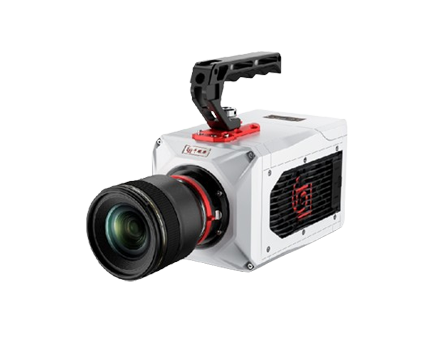
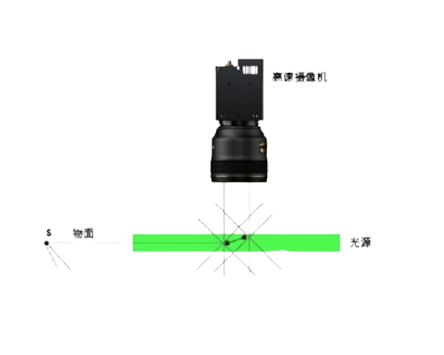
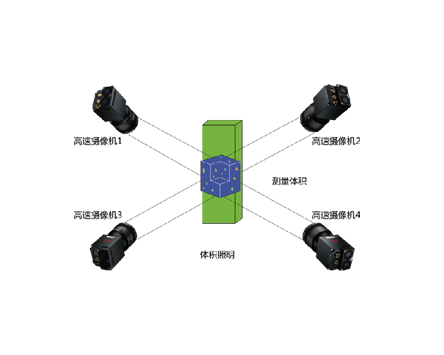
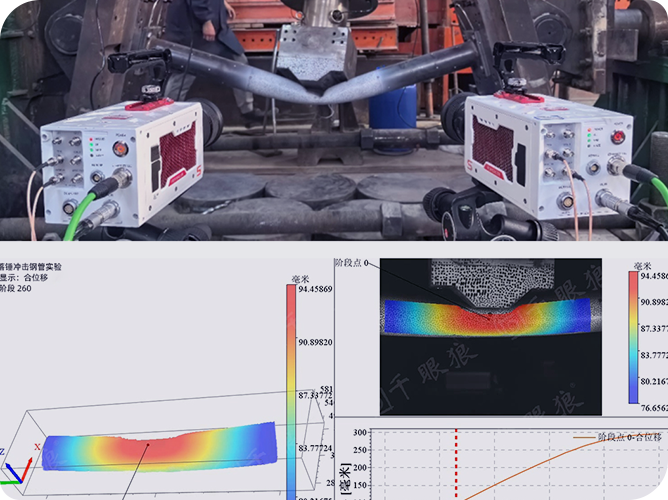
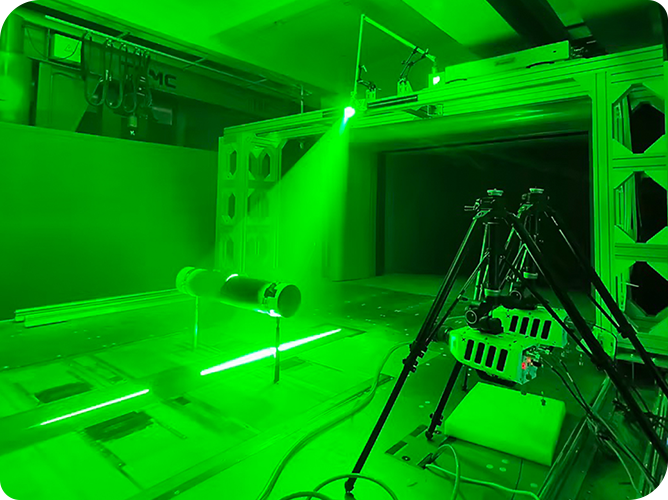
How It Works: DIC is a non-contact optical technique that tracks the movement of a random speckle pattern applied to the specimen surface. Using one or more calibrated cameras, the system captures images before and during deformation, then uses sophisticated algorithms to calculate full-field displacement and strain.
Key Characteristics:
Measurement Type: Full-field (thousands to millions of points)
Output: Displacement and strain maps
Installation: Non-contact (surface preparation still required)
Temperature Sensitivity: Minimal (with proper calibration)
Provides rich data for FEA correlation Example: Thermo-mechanical testing of electronic components
Hybrid Approach: When to Use Both Techniques
Complementary Applications:
1. Validation and Correlation Studies
Strategy: Use strain gauges as "truth" reference points within a DIC measurement field Benefit: Validates DIC accuracy at specific locations Example: Aerospace component testing where both point accuracy and full-field data are critical
2. Multi-Scale Measurements
Strategy: DIC for global behavior, strain gauges for local high-frequency detail Benefit: Combines global context with local precision Example: Wind turbine blade testing during dynamic loading
3. Redundant Critical Measurements
Strategy: Independent measurement systems for mission-critical applications Benefit: Provides measurement redundancy and confidence Example: Nuclear power plant component monitoring
Cost Analysis: Total Cost of Ownership
Initial Investment:
Cost Component
Strain Gauges (10 points)
2D DIC System
3D DIC System
Hardware
$2,000 - $10,000
$15,000 - $40,000
$30,000 - $100,000+
Installation Equipment
$500 - $2,000
Minimal
Minimal
Software
$1,000 - $5,000
$5,000 - $20,000
$10,000 - $30,000
Training
$500 - $2,000
$1,000 - $5,000
$2,000 - $10,000
Total Initial
$4,000 - $19,000
$21,000 - $65,000
$42,000 - $140,000
Operational Costs:
Cost Factor
Strain Gauges
DIC Systems
Consumables per Test
$200 - $2,000 (gauges, adhesives)
$50 - $500 (speckle materials)
Setup Time
1-8 hours per gauge
1-4 hours per test setup
Analysis Time
1-2 hours per gauge
2-8 hours for full-field data
Reusability
Single use typically
Infinite reuse
Cost per Data Point
High
Very Low
Break-Even Analysis:
For laboratories conducting:
< 50 tests annually: Strain gauges often more cost-effective
Strain Gauges Limited to: Hard tissue or embedded applications
Growth Area: DIC for in-vitro and ex-vivo tissue testing
Consumer Electronics:
DIC Preferred for: Drop testing, flexible display analysis, component warpage
Strain Gauges Used for: Specific internal component monitoring
Advantage: DIC's non-contact nature ideal for delicate assemblies
The Revealer Perspective: Practical Recommendations
Based on our experience with thousands of measurement applications, here's our practical guidance:
Start with Strain Gauges When:
You need measurements at a few specific, known locations
High-frequency data (>1 kHz) is required
The environment prevents optical access
Budget constraints are primary
You have experienced gauge installation technicians
Invest in DIC When:
You need to understand full-field strain distributions
The specimen has complex geometry or loading
You're testing new materials with unknown behavior
You need to correlate with FEA or other simulation tools
The cost of multiple strain gauge installations exceeds DIC investment
Consider Our Hybrid Systems:
Revealer offers integrated solutions that combine:
DIC Systems with built-in interfaces for strain gauge inputs
Simultaneous data acquisition from optical and electrical sensors
Unified software for correlated analysis
Training programs covering both technologies
Future Trends and Technology Development
Strain Gauge Innovations:
Wireless and energy-harvesting gauges for remote monitoring
Printed electronics for conformable, large-area sensors
Nanomaterial-based gauges with improved sensitivity
DIC Advancements:
Higher speed systems approaching strain gauge temporal resolution
Stereo-DIC on chip for miniaturized systems
AI-enhanced analysis for automated defect detection
Integrated multi-physics combining DIC with thermal, acoustic, and other measurements
Convergence Technologies:
Fiber optic sensors with DIC correlation
Digital twins with real-time measurement integration
Augmented reality interfaces for field measurements
Conclusion: Making the Right Choice
The decision between Digital Image Correlation software and strain gauges isn't about which technology is "better"—it's about which is better for your specific application.
Quick Decision Guide:
Choose Strain Gauges if your primary needs are:
Point measurements at known locations
High-frequency dynamic data (>1 kHz)
Long-term, embedded monitoring
Limited initial budget
Measurements in optically inaccessible locations
Choose Digital Image Correlation if your primary needs are:
Full-field strain visualization
Measurements on complex geometries
Non-contact requirements
Understanding strain gradients and concentrations
Data for FEA validation and correlation
The Reality Check:
For most modern materials testing and research applications, DIC provides more comprehensive data and better return on investment over time. While the initial cost is higher, the information density and flexibility often justify the investment.
However, strain gauges remain irreplaceable for specific applications where their unique advantages are critical.
Our Final Recommendation:
Evaluate your true data needs—not just immediate requirements but future applications
Calculate total cost of ownership—not just initial purchase price
Consider team capabilities—available skills and training requirements
Plan for the future—technology roadmaps and scalability
Test before committing—many suppliers (including Revealer) offer evaluation systems

 English
 Deutsch