Cells are the basic functional units in the field of life sciences, and analyzing fine structures such as subcellular organelles and cytoskeletons is a key research focus. Traditional optical microscopes are limited by the diffraction limit, making it difficult to clearly present cellular fine structures at the 100 nm scale. Structured Illumination Microscopy (SIM) is a wide-field super-resolution imaging technology. Through spatially modulated illumination and frequency-domain reconstruction algorithms, it can improve the lateral resolution to ~100 nm, becoming a new approach for super-resolution cellular imaging.
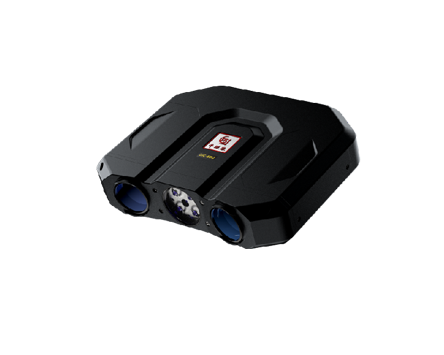
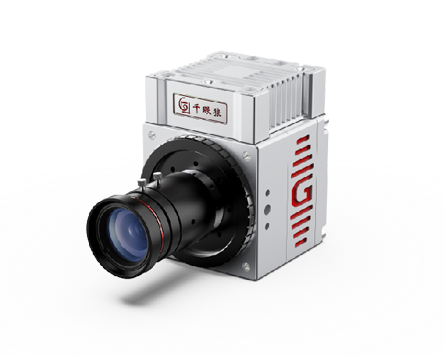
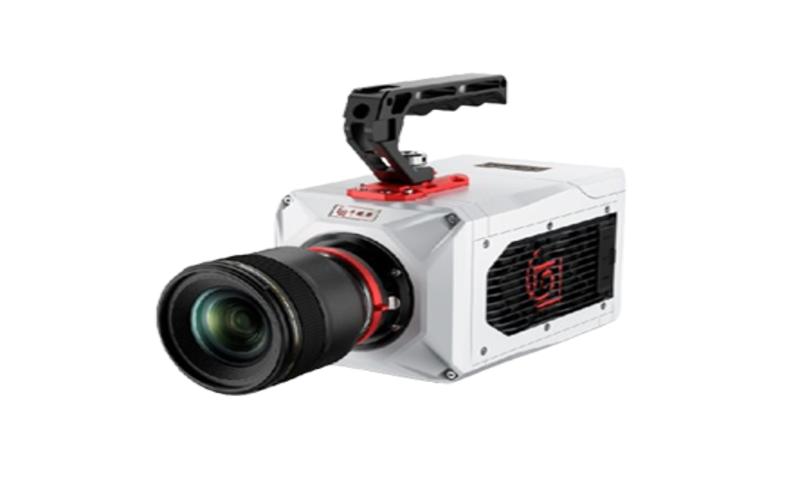
SIM requires high-speed dynamic imaging of living cells under extremely low phototoxicity conditions, thus imposing extremely high requirements on the imaging system’s sensitivity, noise control, and temporal resolution. A research team adopted the self-developed Revealer Gloria 4.2 sCMOS camera by HF Agile Device Co.,Ltd. —which has a quantum efficiency (QE) as high as 95%—to conduct super-resolution dynamic imaging experiments on biological cytoskeletons.
I. Evaluate the imaging capability of the sCMOS camera for 100-nm-scale cellular samples in the SIM super-resolution microscope.
II. Evaluate the signal-to-noise ratio (SNR) performance of the sCMOS camera under short exposure time (to meet low phototoxicity requirements).
An inverted fluorescence microscope integrated with a SIM super-resolution imaging module was used in the experiment. The samples were fluorescently labeled cytoskeletons, which were fixed on the stage after standard preparation. For image detection, the Revealer Gloria 4.2 sCMOS camera was adopted, with the following settings: ROI resolution of 960×368, Binning mode of 2×2 (to enhance sensitivity), exposure time of 10 ms, frame rate of 100 fps, external trigger synchronization, and CMS low-noise readout mode (to optimize image SNR).
4.1 Analysis of Imaging Performance
Under the 10 ms exposure condition, the Revealer Gloria 4.2 camera could achieve image acquisition at a frame rate of 100 fps—outperforming EMCCD cameras under the same conditions, which only support an acquisition frame rate of 30 fps within 10 ms, resulting in lower image data acquisition efficiency.
4.2 Analysis of Image Quality
Single-Frame Image:
Under 10 ms exposure, after computational reconstruction of the images captured by the sCMOS camera, the contour microfilament network structure of the cytoskeleton could be presented (Figure 1). Features such as fiber orientation and branch structures were initially distinguishable, and local intersections of microtubule fibers were clearly visible without smearing. This proves that the sCMOS camera—with 95% high QE and 100 fps acquisition frame rate under low light intensity—can effectively capture weak fluorescent signals.

Figure 1
Composite Image:
After reconstruction using the SIM algorithm, the resolution of the final composite image reached approximately 100 nm, breaking through the diffraction limit. This allowed the branch points and intersection morphologies of microtubule fibers to be clearly distinguishable. Moreover, relying on the high dynamic range (16-bit) of the Gloria 4.2 camera, the composite image exhibited excellent linear response and detail retention in both weak-signal regions (e.g., cell matrix) and strong-signal regions (e.g., areas with fluorescent group aggregation), with no saturation or signal compression.
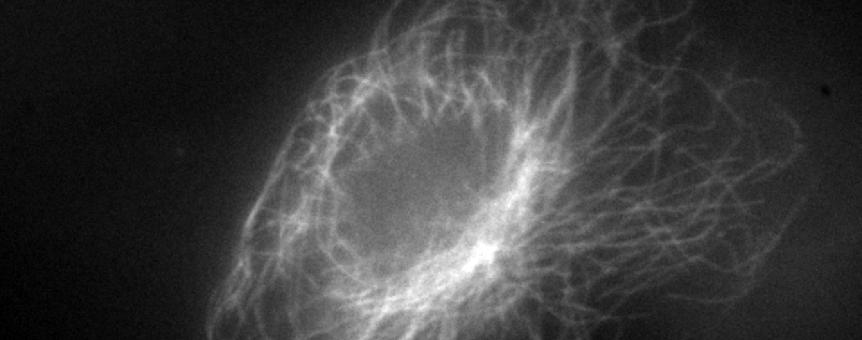
Figure 2
This experiment successfully integrated the Gloria 4.2 sCMOS camera (with 95% high quantum efficiency) into the SIM super-resolution microscopic system, achieving 100-nm-scale resolution imaging of cellular samples at 100 fps. The experimental results show that the self-developed Revealer sCMOS camera by HF Agile Device Co.,Ltd. is suitable for image detection tasks in the life sciences field that require low phototoxicity, low noise, and high speed.
 English
 Deutsch