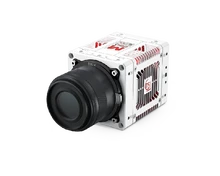
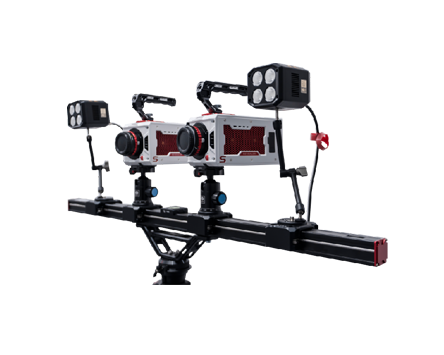
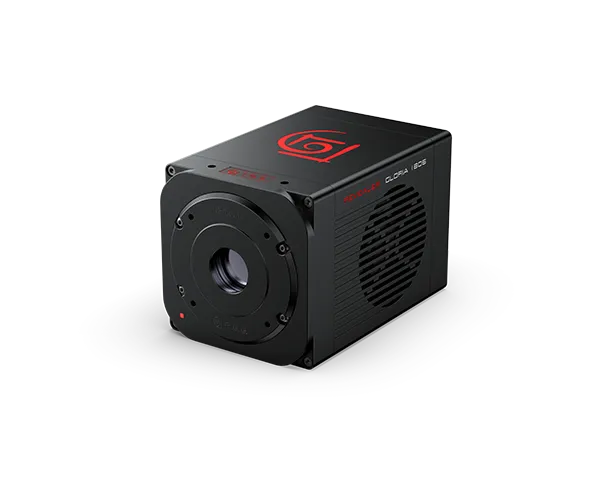
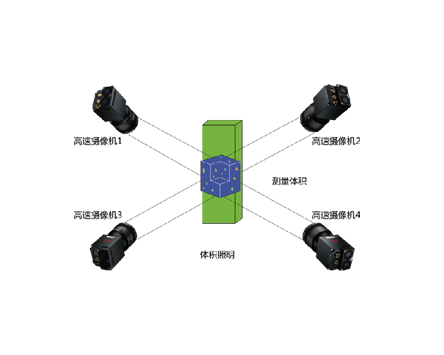
In Particle Image Velocimetry (PIV), every pixel holds potential data. While frame rate and sensitivity are often prioritized, the spatial resolution of your PIV camera is a fundamental parameter that directly dictates the quality, density, and reliability of your velocity field results. Moving beyond standard megapixel counts to true high-resolution imaging, as offered by cameras like the Revealer G2100M, unlocks significant advantages that can redefine the boundaries of your flow experiments.
The Resolution Bottleneck in Traditional PIV
Standard PIV cameras (typically 1-5MP) impose a compromise. To capture a large field of view (FOV), the spatial resolution per unit area—the interrogation spot size in pixels—must decrease. This leads to larger final interrogation windows (IWs), spatial averaging of velocity gradients, and ultimately, a loss of fine-scale flow detail. It's the fluid dynamics equivalent of using a broad brush to paint a detailed landscape.
Key Advantages of a High-Resolution PIV Camera
Increased Vector Density & Spatial Accuracy: A camera like the 21-megapixel Revealer G2100M provides over four times the pixels of a standard 5MP camera at the same FOV. This allows you to use smaller interrogation windows while maintaining a high particle count per IW. The result is a dramatic increase in vector grid density, enabling you to resolve finer flow structures, steep velocity gradients, and smaller turbulent eddies with greater spatial precision.
Expanded Field of View Without Sacrificing Detail: High resolution liberates you from the "zoom or panorama" dilemma. You can now image a much wider area—such as an entire wing profile or a large combustion chamber section—while preserving sufficient pixel density to perform accurate cross-correlation on small, relevant features. This is invaluable for studying large-scale flow interactions and ensuring no critical phenomena occur outside your measurement area.
Enhanced Flexibility in Post-Processing & Analysis: The abundant pixels act as a data reservoir. You can digitally zoom into specific regions of interest (e.g., a boundary layer, a vortex core) during post-analysis without the image becoming pixel-limited. This allows for multi-scale investigation from a single recording and provides a robust buffer against slight misalignments or unexpected flow events occurring at the edge of the planned ROI.
Improved Signal-to-Noise Ratio for Challenging Conditions: With more pixels covering each particle image, the correlation peak in the Fourier domain becomes sharper and more distinct relative to background noise. This improves the signal-to-noise ratio (SNR) of the cross-correlation process, leading to higher vector validation rates and more reliable data in low-seeding-density conditions or in flows with high background luminosity (e.g., combustion).
Practical Considerations and the Revealer Solution
Adopting a high-resolution PIV camera requires a system capable of handling the resulting data flow. Cameras like the Revealer G2100M are engineered for this purpose, pairing the high-resolution sensor with a high-bandwidth CoaXPress 2.0 interface for stable data transfer and features like ultra-short straddle times for high-velocity flows.
Conclusion: An Investment in Data Fidelity Choosing a high-resolution camera for PIV is not merely about capturing "sharper pictures." It is a strategic decision to capture more spatially dense and trustworthy data. For researchers pushing the limits in turbulence modeling, microfluidics, aerodynamics, or combustion diagnostics, the enhanced detail provided by cameras like the Revealer G2100M is not an luxury—it is essential for achieving publishable, high-fidelity results that stand up to rigorous scrutiny.
Ready to see how higher resolution can refine your PIV data? Explore the technical specifications of the Revealer G2100M 21MP PIV Camera and its applications in advanced flow me

 English
 Deutsch