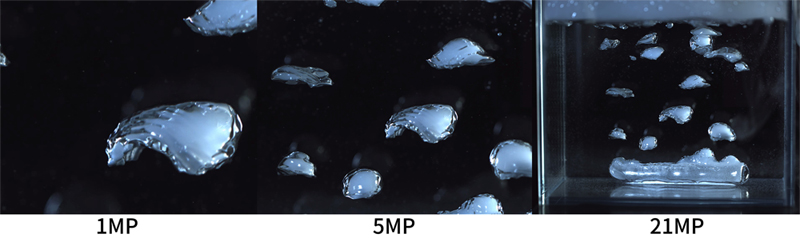
In consumer electronics, "more megapixels" is almost always better. In high-speed imaging, however, resolution is a currency you spend to get more speed. Every extra pixel requires more processing power and memory bandwidth.
Understanding the different resolution tiers will help you choose a camera that captures the data you need without unnecessary technical bottlenecks.
To see how resolution interacts with frame rates, check our The Ultimate Guide to High-Speed Camera Specifications.
In high-speed imaging, Resolution × Frame Rate = Data Bandwidth.
Because the camera's internal processing speed (Throughput) is a fixed constant, you must decrease the resolution to increase the FPS. Choosing the right "Base Resolution" determines the maximum potential of your imaging system across different experimental scales.
| Resolution Tier | Typical Pixels | Max FPS (Approx.) | Best For... | Why Choose This? |
| 1MP / 1.3MP | 1280 x 1024 | 10,000+ | Ballistics, Explosions | Maximum speed & high light sensitivity. |
| 5MP (Mid-Res) | 2560 x 1920 | 500 – 2,000 | Production Line QC | Wide FOV; can "zoom in" on parts. |
| 21MP (Scientific) | 5120 x 4096 | 100 – 500 | DIC / PIV Analysis | Ultra-precision for mathematical strain mapping. |
| 4K (Ultra-HD) | 3840 x 2160 | 1,000 | Cinematic R&D | Highest visual clarity for publication/broadcast. |
Standard Resolution: 1280 x 1024 or 1024 x 1024 Most ultra-high-speed cameras (10,000 fps+) operate at this resolution.
Why it's popular: It provides enough detail to see mechanical failures while allowing the sensor to reach extreme frame rates.
Revealer Choice: Our Ultra Series excels here, offering 10,000 fps at 1MP, perfect for ballistics and rapid combustion.
Standard Resolution: 2560 x 1920 or 2560 x 2048 As seen in our 5 Megapixel High-Speed Camera, this tier is ideal for wider fields of view.
Best For: Production line monitoring where you need to see a larger area of the machine without losing the ability to zoom in on small components.
Pros: 5x more detail than the 1MP tier; excellent for post-event cropping.
Standard Resolution: 5120 x 4096 This is the "Scientific" grade of high-speed imaging.
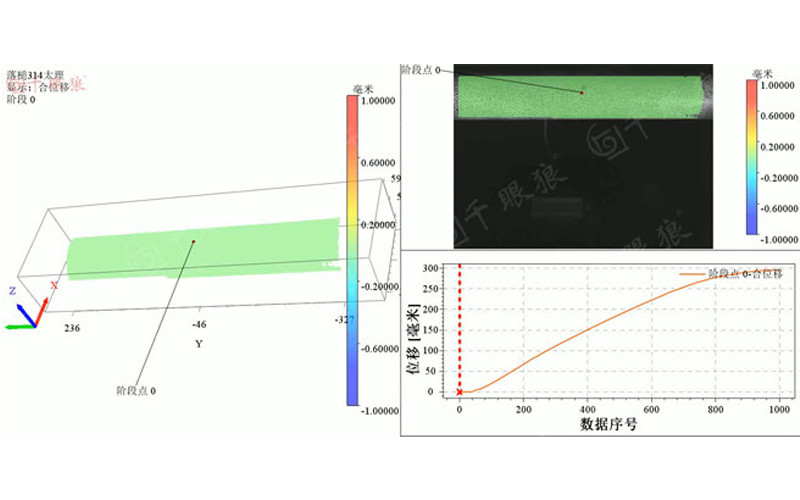
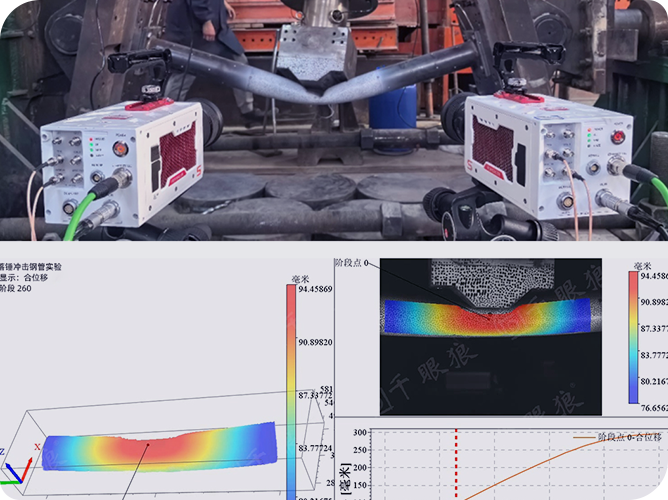
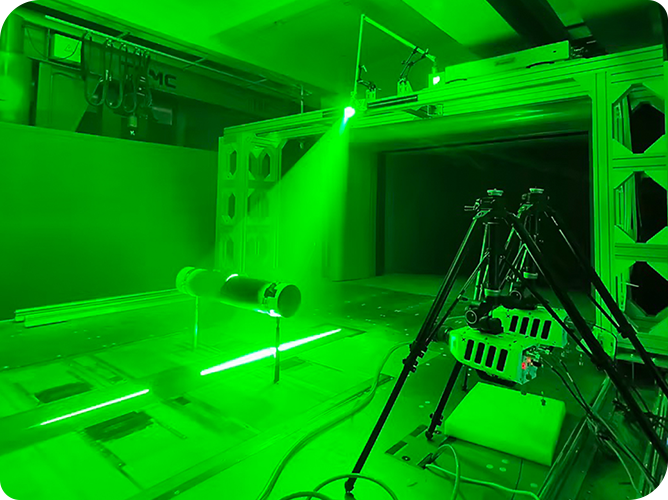
Best For: Digital Image Correlation (DIC) and Particle Image Velocimetry (PIV).
The Benefit: When measuring sub-pixel strain, every extra pixel increases the accuracy of your mathematical model.
Learn why high resolution is vital for strain mapping in our High-Speed Cameras for DIC Guide.
Choosing a higher resolution isn't just about a sharper image; it affects your entire lab setup:
Lighting Requirements: Higher resolution sensors often have smaller pixels, which may require more intense LED lighting.
Data Storage: A 21MP image at 500 fps generates much more data than a 1MP image at 5,000 fps. Ensure your PC has the storage capacity to handle it.
Download Speed: More resolution means longer wait times between tests while data transfers from the camera RAM.
Many Revealer cameras allow for Windowing (ROI - Region of Interest).
How it works: You can buy a 5MP camera and, when you need 10,000 fps, simply reduce the active resolution to a smaller window (e.g., 640x480).
Versatility: This makes a high-resolution camera a very versatile tool for labs with varying needs.
When you choose a 5MP Revealer Camera, you aren't locked into 5MP. By using Region of Interest (ROI) technology:
Full Mode: Capture a 2560 x 1920 area at 500 FPS for general observation.
Windowed Mode: Reduce the sensor active area to 640 x 480 to boost the speed to 5,000+ FPS.
Pro Tip: Always choose a camera with a "Base Resolution" that covers your largest required Field of View (FOV). You can always go smaller for more speed, but you cannot go larger than the sensor's physical limit.
Q: Is 4K high-speed imaging common in industry?
A: While 4K exists, it is extremely data-intensive. For most industrial troubleshooting, 1.3MP to 5MP is the professional standard.
Q: Does higher resolution mean better low-light performance?
A: Usually the opposite. Smaller pixels in high-res sensors catch less light. For low-light, a 1MP sensor with large pixels is often superior.
Q: Which resolution do I need for a 10000 fps camera?
A: For 10,000 fps, most users find that a 1MP or 1.3MP resolution provides the best balance.
Q: Does resolution affect the record time?
A: Yes. Because internal RAM is fixed (e.g., 32GB), a higher resolution consumes memory faster per frame. A 1MP camera will record for significantly longer durations than a 21MP camera at the same frame rate.
Q: Can I use a 4K high-speed camera for PIV?
A: While possible, a monochrome 5MP or 21MP sCMOS sensor is usually better. 4K is often optimized for visual aesthetics (color), whereas PIV/DIC requires the raw grayscale precision found in scientific-grade sensors.
Don't get caught in the "megapixel trap." Choose your resolution based on the smallest detail you need to measure and the size of the area you need to see. Talk to an Expert About Your Resolution Needs.
PREV
 English
 Deutsch