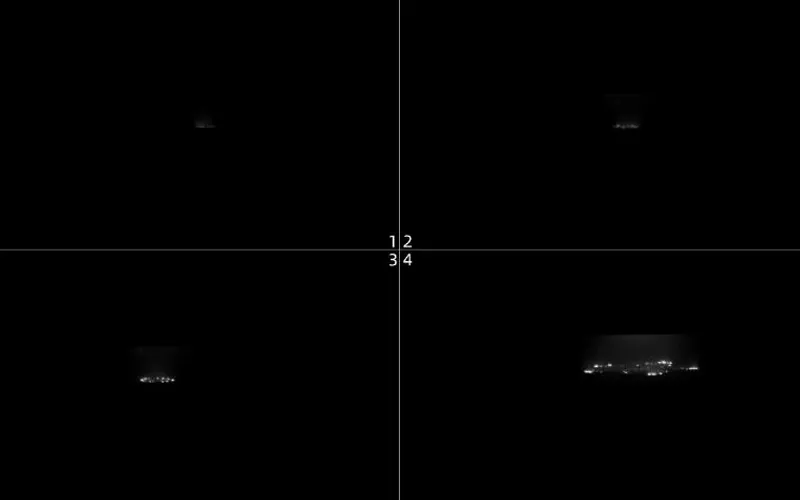
Laser scattering intensity is measured with an sCMOS scientific camera
Revealer Original

Measuring the small-angle backscatter intensity β (ψ) of ocean water is one of the tasks in the field of ocean optics and water color remote sensing, which is conducive to understanding the optical properties of water bodies, characterizing particulate matter, assessing water quality, inverting biogeochemical parameters, and verifying satellite remote sensing data.
Conventional measurements use methods such as turbidity meters, transmittance meters, and backscatter sensors. The turbidity meter uses a fixed angle of 90°C to measure the intensity of the side-scattered light, rather than backscattering at 180°C, and the measurement results vary greatly with the characteristics of the particulate matter. The transmittance meter measures the attenuation of the beam through the water body or the indirect measurement of the transmittance, and the measurement error is large. However, the backscatter sensor is limited by the physical design, and it is difficult to measure the real backscatter < 10° small angle, and the lack of key small angle area is the main source of error.
The use of sCMOS scientific cameras, in combination with specific optical designs such as the measurement of small-angle backscatter based on Sachnarl scattering laser imaging, offers the following differentiating advantages:
1) The high spatial resolution of the sCMOS scientific camera enables direct imaging and measurement of backscattered light close to 180°, obtaining the β (ψ) value that contributes the most to the total backscatter coefficient.
2) The high quantum efficiency QE and low readout noise of the sCMOS scientific camera can detect very weak backscattered light signals, which is suitable for low turbidity measurement of open ocean water.
3) The long-term exposure capability of the sCMOS scientific camera can simultaneously record the continuous, high-resolution β (ψ) angle distribution from a very small angle ψ≈0.5° to a small angle ψ≈10°, ensuring the accuracy and reliability of the integrated calculation of the backscatter coefficient. At the same time, high-resolution β (ψ) angular distribution information can enhance the characterization of particulate matter, which helps to better distinguish different types of particulate matter such as phytoplankton, minerals, and organic detritus.
4) By using a narrow-band laser light source and a matching narrow-band filter, the sCMOS camera can effectively suppress the interference of the water fluorescence signal on the backscatter measurement.
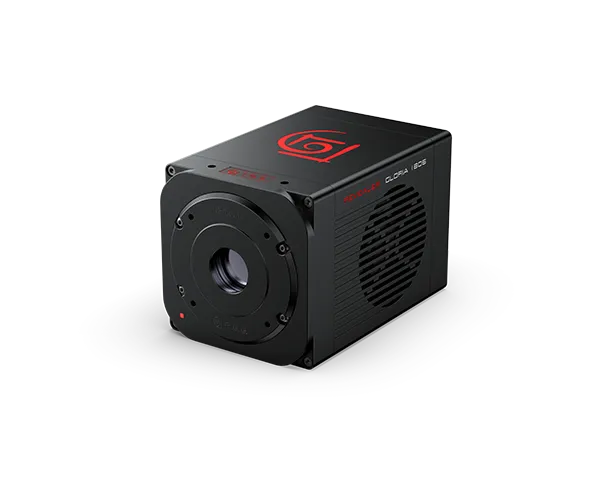
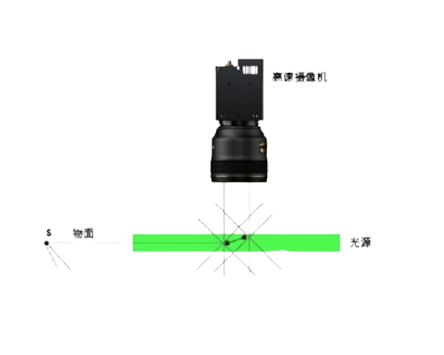
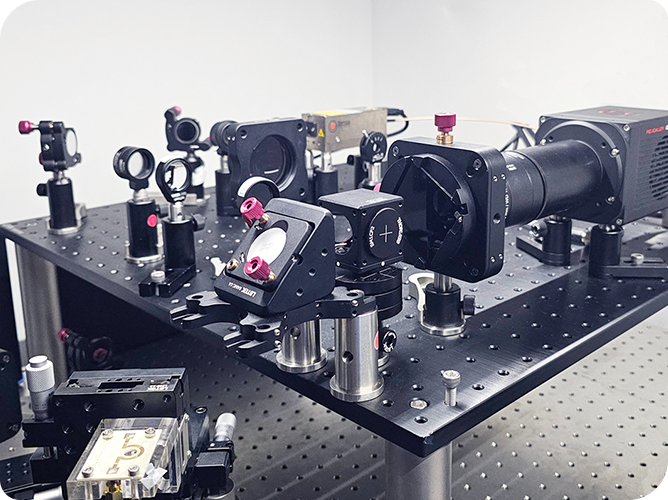
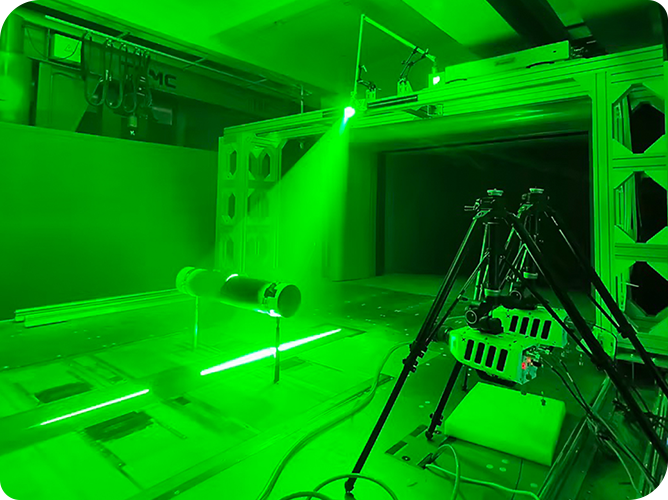
A laboratory uses the high-sensitivity sCMOS scientific camera Gloria4.2 of Revealer combined with the Sarnarl scattering light path to carry out high-precision imaging of the backscattered spot of the 532nm laser in a controllable artificial seawater tank environment, providing data support for the development of marine in-situ detection equipment.
The experimental working condition is set, the resolution of the sCMOS scientific camera is cropped to 512×1270, the binning mode is selected as 2×2 to improve the signal-to-noise ratio, the HDR high dynamic mode is selected for analog-to-digital conversion, the gray response range is expanded, the real-time calibration is enabled to eliminate environmental stray light interference, the exposure time is set to 200ms, the trigger mode is triggered by the external edge, the laser emission signal is synchronized, and the laser spot image is collected after confirming the spot imaging quality through the preview interface.

In HDR mode, the Revealer sCMOS camera captures both the center point of the strong laser and the weakly scattered edge signal, with no obvious overexposed or underexposed areas and no need for multiple exposures stitching.

With its excellent sensitivity and dynamic range, the Revealer Gloria 4.2 sCMOS camera provides a reliable tool for quantitative measurement of laser scattering, which realizes the direct and high-resolution measurement of the backscatter intensity of key small angles (ψ<10°), improves the accuracy and reliability of the total backscatter coefficient inversion, and has the ability to detect weak signals and high dynamic response. With the implementation of the miniaturization of size and the integration of underwater equipment, the sCMOS camera will have engineering practicability in ocean insight research.
 English
 Deutsch