Email Us
Tomographic PIV
Tomographic Piv
Tomographic Piv

Tomographic PIV

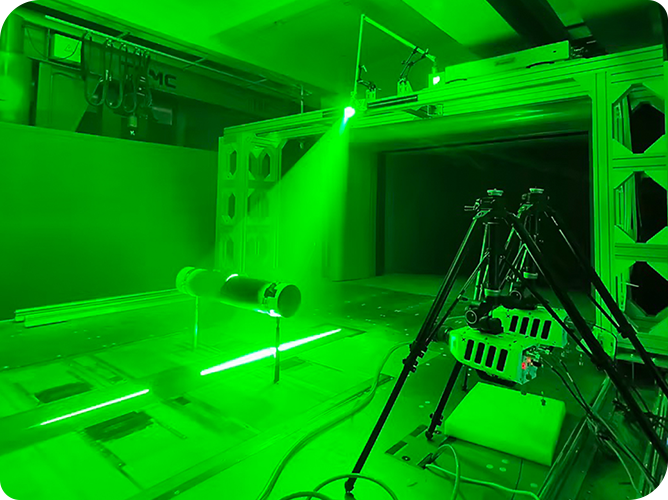
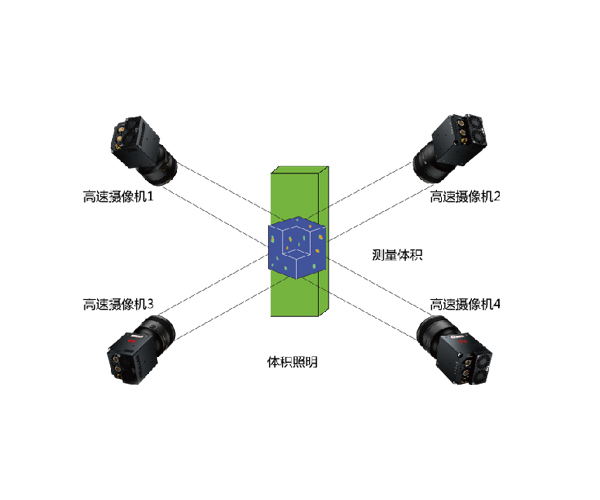
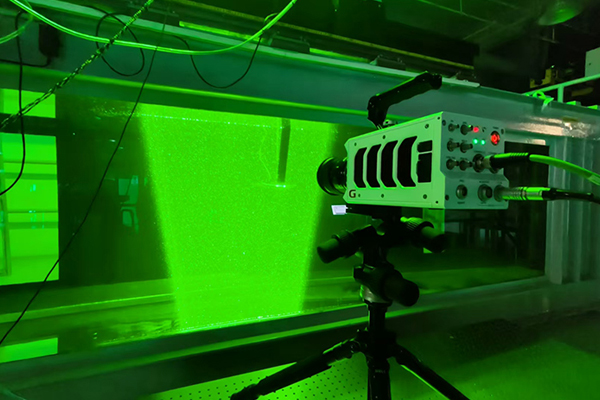
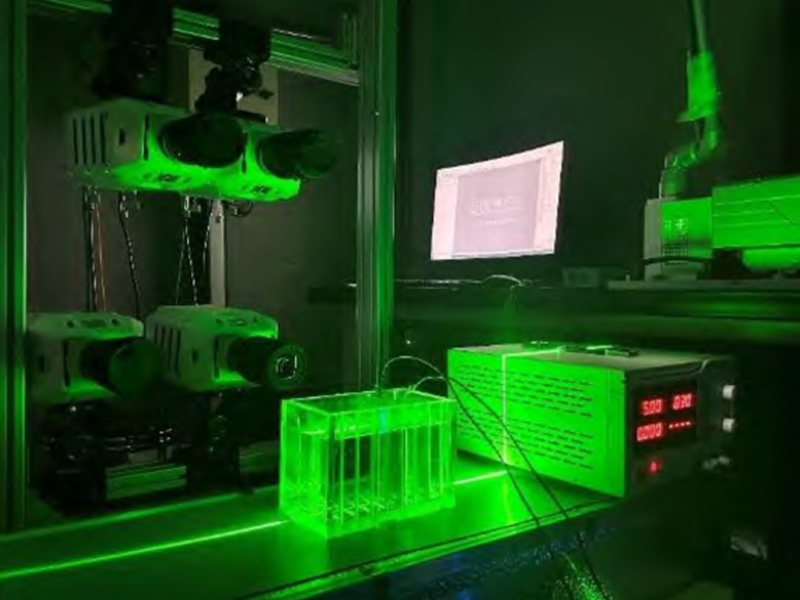
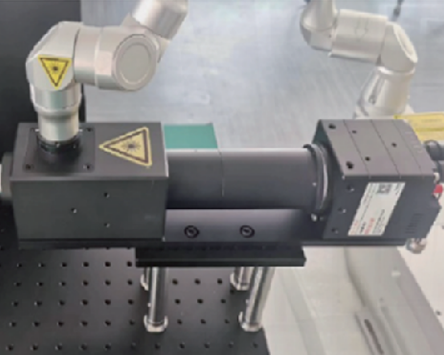
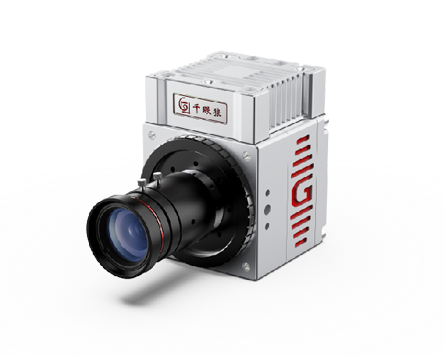
The Revealer Tomographic Particle Image Velocimetry(PIV) System for three-dimensional flow measurement integrates 4 high speed cameras/high-resolution cameras, a laser, a synchronization controller, and RFlow measurement software. It enables instantaneous measurement of three velocity components at every point in a 3D volume.

Features
Specifications
Applications
Cases
FAQ

Advanced Features of Revealer Tomographic PIV Systems

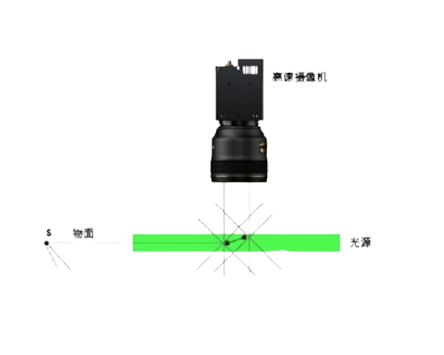
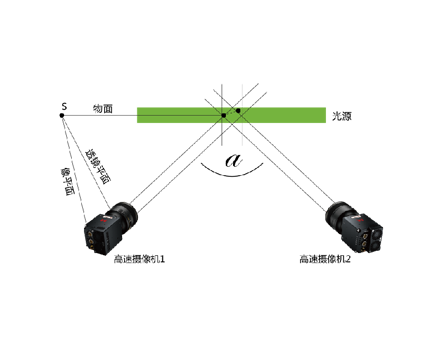
Multi-Camera Master-Slave Synchronization: Four precisely aligned high-speed cameras capture comprehensive scattering light data from multiple angles simultaneously, ensuring reliable 3D3C spatial reconstruction even in high-density seed particle fields.


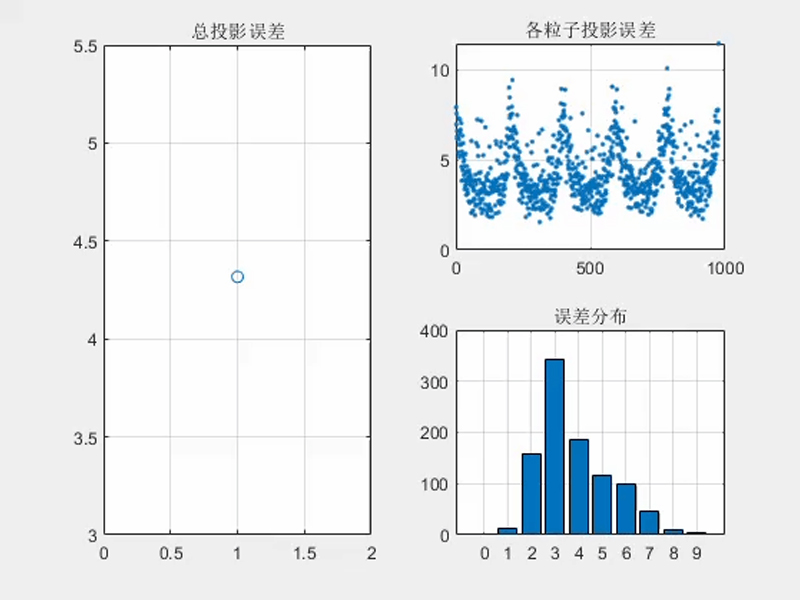
Advanced Volumetric Self-Calibration: Our RFlow software integrates an automated volumetric self-calibration algorithm. This technology corrects micro-misalignments between the laser sheet and the optical sensor matrix in real-time, eliminating calibration line-of-sight errors without requiring tedious manual recalibration.


Deep Learning-Based Background Segmentation: Utilizing proprietary AI neural networks, the system automatically segments complex background scattering, model reflections, and laser flare, substantially increasing the signal-to-noise ratio (SNR) in turbulent flame or bounded flow applications.


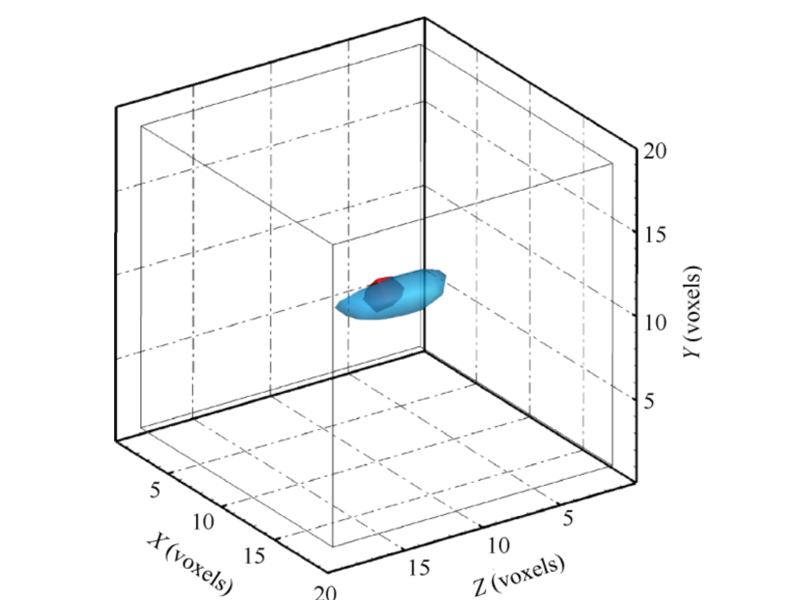
GPU Multi-Core Accelerated Reconstruction: Tomographic reconstruction (such as MART or Tomo-PTV algorithms) involves intense mathematical computation. By harnessing GPU multi-core parallel processing, Revealer cuts voxel calculation times down from hours to minutes, accelerating your data productivity.


Why Choose Revealer’s Tomographic PIV System?

Full 3D3C Insight: Measure all three velocity components (U, V, W) throughout a volume, not just a plane.

High-Speed Capture: Resolve transient and turbulent phenomena with kHz-rate imaging.

Turnkey Solution: Integrated system with cameras, laser, sync controller, and powerful RFlow software.

AI-Enhanced Accuracy: Utilize deep learning for robust background segmentation and particle reconstruction.

Specifications of Tomographic PIV

SKUHigh-frequency VersionLow-frequency Version
Resolution2560×1920/1280×10245120×4096
Frame2000fps/15000fps36fps
Data interfaceGb Ethernet/10Gb EthernetCXP
Laser Wavelength527nm/527nm532nm/532nm
Laser TypeHigh-frequency Pulsed LaserLow-frequency Pulsed Laser
Laser Energy20~50mJ100~500mJ
Software LicenseRflow 3D3CRflow 3D3C
StatisticsInstantaneous Velocity, Average Velocity, Turbulence Intensity, Reynolds Stress, VorticityAverage Velocity, Turbulence Intensity, Reynolds Stress, Vorticity

Specifications will be updated. For details, please contact with us.

FAQs About Tomographic PIV Systems

What type of high-speed cameras are used in the Revealer Tomographic PIV system?

The system’s camera array depends entirely on your flow dynamics frequency. For low-speed or quasi-static aerodynamic testing, high-resolution sCMOS cameras are utilized. For highly transient, turbulent, or hypersonic flows, we integrate our specialized high speed scientific cameras—such as the 10,000fps ultra high speed camera—to achieve the kHz-rate temporal resolution required to resolve micro-vortices.

How does the system handle massive data processing for 3D particle reconstruction?

Tomographic PIV generates immense datasets because four separate cameras are recording synchronized raw images. Our systems feature high-bandwidth data interfaces (10GbE or CoaXPress) coupled with our RFlow 3D3C processing software. For experimental setups generating massive pixel matrices—such as when utilizing our flagship 4K resolution high speed camera—the software deploys GPU multi-core acceleration to process millions of vectors and 3D fluid fields rapidly.

Why is volumetric self-calibration critical for 3D3C flow measurement accuracy?

In 3D Tomographic PIV, even a sub-pixel physical shift of a camera due to mechanical vibration or thermal expansion can destroy the 3D particle reconstruction integrity. Our embedded volume self-calibration technique utilizes the actual tracer particles within the flow field to mathematically recalculate and correct the optical mapping function. This ensures that your Reynolds stress, vorticity, and average velocity statistics are perfectly accurate and compliant with peer-reviewed scientific research standards.

Can the laser and synchronization controller be tailored for existing laboratory setups?

Yes. As an experienced optical measurement manufacturer, Revealer provides tailored system integration. We can customize the laser wavelength (e.g., 527nm high-frequency pulsed laser or 532nm low-frequency pulsed laser), laser pulse energy (20mJ to 500mJ), and specialized synchronization timings to seamlessly fit your wind tunnel or combustion chamber design. Please contact our high speed camera experts to discuss your experimental parameters and request a comprehensive direct factory quote.

Contact with Us
Add:
Fuhuang Intelligent New Vision Building, Baohe District, Hefei City, China.
Seek expert advice to select the ideal optical measurement instruments for your specific needs.
Quick Links
Contact Us
Email:
sales@revealerhighspeed.com
Add:
Fuhuang Intelligent New Vision Building, Baohe District, Hefei City, China.
Quick Links
Add:
Fuhuang Intelligent New Vision Building, Baohe District, Hefei City, China.