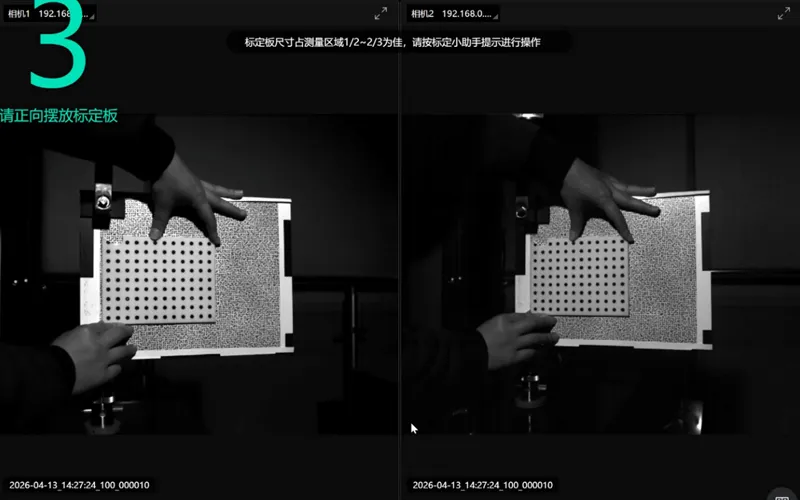
The flow field reconstruction mechanism of gradient magnetic field on diamagnetic/paramagnetic gas jets is quantitatively investigated using the Revealer high-frequency PIV system.
In the coupled system of combustion, fluid mechanics and magnetic field, the gradient magnetic field non-contact regulates the fluid via Kelvin force, thereby changing the flame morphology and combustion stability. However, the behavior of flame under magnetic field is affected by multiple factors such as thermal gradient, component concentration and magnetic force. Traditional studies are difficult to separate the influence of a single physical factor in mechanism. To explore the intrinsic fluid dynamic mechanism of magnetic field effect, the research team of Southeast University focuses on the non-reacting jet process of gases with different magnetism and densities. Faced with extremely weak flow field disturbance and complex local recirculation characteristics, the Revealer high-frequency PIV system is introduced as the core diagnostic tool to accurately quantify weak flow field disturbance and support the closed-loop verification of CFD model.
The experimental equipment consists of gas jet and gradient magnetic field generation system, high-frequency PIV system, schlieren visualization system and oxygen concentration micro-measurement system:
Jet and magnetic field generation system: Jet gases (N₂, He, Ar, O₂, purity >99.99%) are regulated by mass flow controller; the gradient magnetic field is generated by an electromagnet with truncated cone-shaped pole caps, the magnetic pole gap is 20 mm, and the magnetic field strength and gradient are adjusted by coil current I (0~20 A).
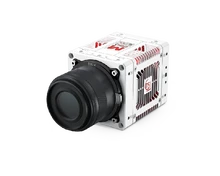
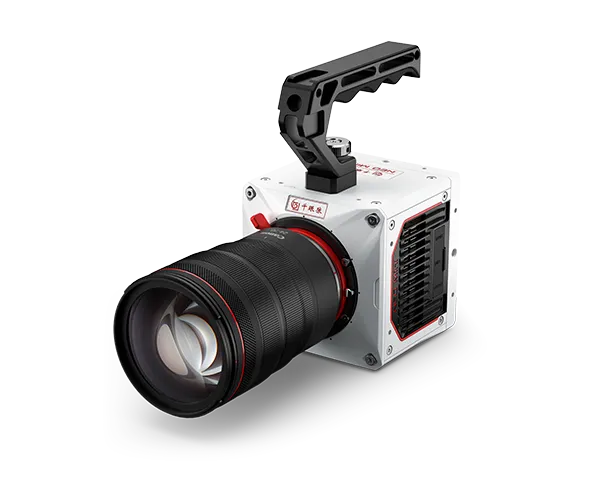
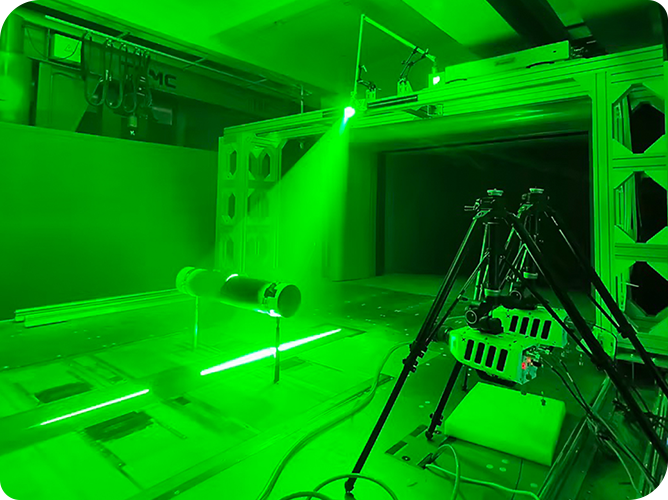
High-frequency PIV system: The core measurement equipment of this study. 1~2 μm titanium dioxide is selected as tracer particles, a 532 nm continuous laser is used as the light source, and Revealer X213 high-speed camera is selected as the flow field image acquisition device, with core parameters of 1280×1024@13600 fps. The acquisition frequency and exposure time are adjusted according to the flow velocity to ensure the particle displacement between adjacent frames within the query window. The high-speed camera and laser are triggered by a synchronous controller, 500~1000 frames are collected for each working condition, and the instantaneous velocity field and time-averaged flow field are obtained by the cross-correlation algorithm (window 32×32 pixels, overlap rate 50%) of Revealer RFlow software.
Auxiliary measurement equipment: Schlieren system is used for the overall morphology and boundary visualization of the jet; optical fiber oxygen concentration micro-sensor realizes the fixed-point measurement of oxygen mole fraction, forming multi-dimensional verification with PIV velocity field and schlieren data.
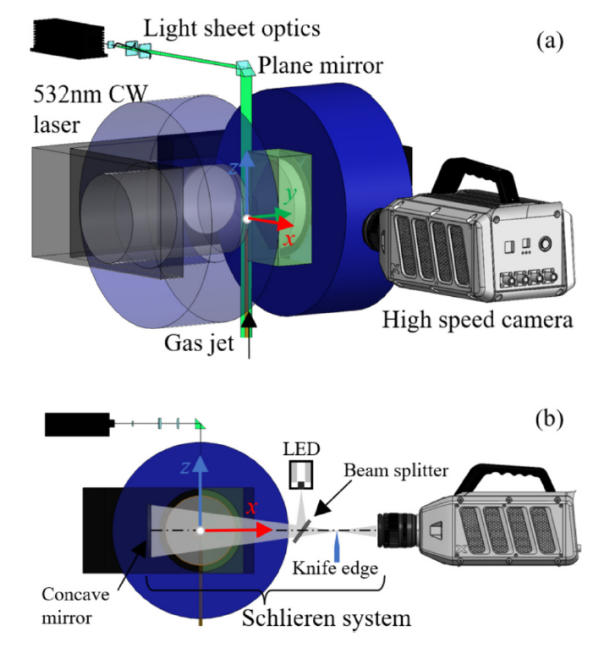
Figure 1 Schematic diagram of experimental setup focusing on high-frequency PIV system
The control variable method is adopted in the experiment. The average velocity at the jet outlet is fixed, and the measurements are carried out on paramagnetic and diamagnetic gas jets by changing the magnetic field strength I=0, 10, 15, 20 A respectively.
The Revealer high-frequency PIV system is used to obtain the z-direction velocity component distribution in the yz symmetry plane, capturing the transient structures of the jet core region, shear mixing region and recirculation region; the schlieren system is synchronously used to record the jet profile, compression effect and stagnation position; the oxygen concentration micro-sensor is used to calibrate the jet boundary and diffusion range.
CFD simulation calculates the flow field with the same boundary conditions, magnetic field distribution and physical parameters as the experiment, and compares point by point with the measured data of high-frequency PIV system to verify the reliability of the numerical model. Based on the flow field information calibrated by PIV, an energy conservation equation including initial kinetic energy, viscous force, buoyancy and Kelvin force is established to realize the quantitative prediction of the height of diamagnetic jet.
This part takes the measurement results of high-frequency PIV system as the core evidence, combined with CFD, schlieren and oxygen concentration data, to analyze the regulation mechanism of gradient magnetic field on jet flow.
4.1 High-Frequency PIV Velocity Field Measurement Results and CFD Benchmarking Analysis
Figure 2 shows the comparison between the PIV measured velocity field results (left) and CFD simulated velocity field results (right) of the z-direction velocity component of nitrogen jet in the yz plane at the outlet velocity U=66.31 cm/s. The black contour line is the jet boundary with oxygen mole fraction of 0.1.
I. I=0 A (no magnetic field): The high-frequency PIV system clearly presents a typical laminar jet structure, with uniform core velocity at the center jet, entrainment of surrounding air, and gradual radial expansion.
II. I=10 A (weak magnetic field): The high-frequency PIV measures a slight decrease in the core height of the jet, inhibited radial expansion, and narrowed jet width, indicating that the magnetic field gradient begins to exert lateral constraint on the jet.
III. I=20 A (strong magnetic field): The high-frequency PIV system captures key transient flow characteristics, and a negative velocity region appears below the electromagnet pole cap. It indicates that the paramagnetic air moves downward under the drive of Kelvin force, and momentum hedges with the upward-moving diamagnetic nitrogen jet, resulting in the exhaustion of nitrogen jet momentum, stagnation and downward turning back, forming a cold-state recirculation characteristic similar to the real flame behavior.
The recirculation structure induced by the "magnetoresistance effect" observed by the high-frequency PIV system is highly consistent with the CFD simulation results in spatial distribution and magnitude, proving that the high-frequency PIV system can effectively capture the subtle flow field structures such as weak countercurrent, low-speed stagnation and boundary compression induced by magnetic field.
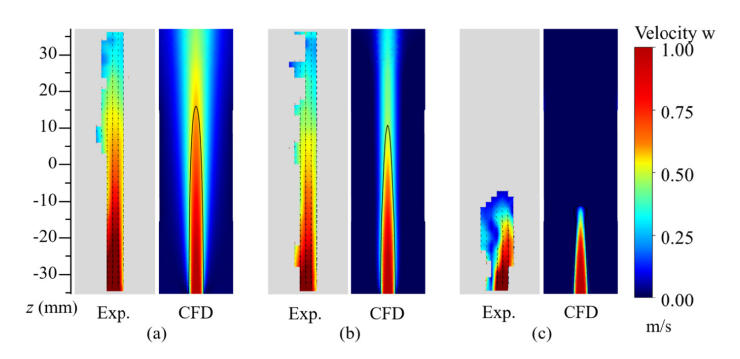
Figure 2 Comparison of velocity field measured by high-frequency PIV system and CFD simulated velocity field of nitrogen jet under I=0, 10, 20 A conditions. The solid black line represents the contour line with oxygen mole fraction of 0.1. The high-frequency PIV system clearly captures the downward reverse flow region under strong magnetic field.
4.2 Influence Law of Magnetic Field on Jet Velocity Field and Morphology
The measurement results of high-frequency PIV system show that the gradient magnetic field drives the paramagnetic air movement through Kelvin force, forming constraint, jacking and expelling effects on the diamagnetic jet. With the increase of magnetic field strength, the jet velocity decays faster, the core length shortens, the radial contraction occurs, and stagnation and recirculation appear under strong magnetic field. Gases with different densities show differentiated responses: helium is dominated by buoyancy and jet splitting occurs, argon decays faster due to large momentum, nitrogen has stable response and can be used as the reference medium; paramagnetic oxygen is enriched by magnetic field in the high field strength region, dominated by molecular diffusion.
4.3 Jet Height Prediction and Energy Conservation Mechanism
Taking the jet stagnation position determined by high-frequency PIV as the height benchmark, a modified energy conservation equation is established combined with auxiliary measurement data, which can quantitatively predict the height of diamagnetic jet, and the calculated value is in good agreement with the experimental value. The model can be extrapolated to combustion scenarios, indicating that the magnetic field regulates flame height by suppressing jet and enriching oxygen, further verifying that the high-frequency PIV measurement results can directly support the mechanism analysis and model construction of combustion magnetic regulation.
This study takes the Revealer high-frequency PIV system as the core quantitative tool, combined with schlieren, oxygen concentration sensor and CFD, to reveal the dynamic laws of diamagnetic and paramagnetic gas jets in gradient magnetic field. The key conclusions are as follows:
I. The high-frequency PIV system can realize high spatio-temporal resolution measurement of transient velocity field of gas jet under gradient magnetic field, quantitatively capture the key characteristics such as jet compression, velocity attenuation, stagnation and recirculation, provide quantitative experimental data for magnetic field-fluid coupling research, and is the core measurement method for combustion flow field magnetic regulation research.
II. The gradient magnetic field exerts expelling and constraining effects on diamagnetic gas jet through Kelvin force. With the increase of magnetic field strength, the jet core shortens, the width narrows, and stagnation and countercurrent appear under strong magnetic field; paramagnetic oxygen is enriched by magnetic field, dominated by molecular diffusion.
III. Gas density determines the response degree of jet to magnetic field by affecting initial momentum and buoyancy work.
IV. The energy conservation equation established based on the calibration data of high-frequency PIV system can quantitatively predict the height of diamagnetic jet, and can be extrapolated to combustion scenarios, providing a theoretical basis for magnetic field regulation of combustion.
This study verifies the key role of Revealer high-frequency PIV system in the coupled diagnosis of magnetic field-gas-non-reacting flow. Its high temporal resolution can analyze the transient process of recirculation initiation, and the spatial resolution meets the fine velocity field characterization in the pole cap gap (20 mm). This method can be further extended to the magnetic field effect research of weakly reacting premixed flame, providing quantifiable experimental methods and measurement basis for magnetic field regulation combustion, magnetofluid enhanced heat transfer and other fields.

 English
 Deutsch