Low-Light Imaging Evaluation of the Revealer Second-Generation BSI sCMOS Camera Gloria 6504
Among today’s scientific imaging instruments, sCMOS cameras from Revealer have gradually become a preferred choice in laboratories worldwide due to their high sensitivity, low readout noise, and stable low-light imaging performance.
To evaluate the performance of the latest Revealer second-generation BSI sCMOS camera Gloria 6504 in real laboratory conditions, researchers conducted low-light imaging experiments using spinach stem tissue samples. The results were compared with images captured by the first-generation Revealer sCMOS camera.
Experimental results show that the second-generation Gloria 6504 sCMOS camera demonstrates clear advantages in weak signal detection, fine structure reconstruction, and background noise suppression, highlighting the technological progress of Revealer in scientific CMOS imaging and life science microscopy applications.
In life science research, microscopic imaging systems must often capture extremely weak photon signals. Typical applications include:
Fluorescent protein expression in cells
Live-cell dynamic imaging
Microscopic observation of plant tissue structures
Microfluidic experiments
Long-exposure low-light imaging
In these experiments, camera performance directly determines the quality of experimental data.
A research-grade scientific CMOS (sCMOS) camera generally needs to provide three critical capabilities:
Ultra-low readout noise
High quantum efficiency and sensitivity
Stable dark current control
Among modern sensor technologies, Backside-Illuminated (BSI) sCMOS technology has become increasingly popular in life science imaging and fluorescence microscopy, thanks to its high quantum efficiency and low-noise architecture.
The Chinese scientific imaging brand Revealer has continuously invested in the development of scientific CMOS cameras, and its second-generation BSI sCMOS product Gloria 6504 has been specifically optimized for low-light scientific imaging scenarios.
2.1 Experimental Sample
To evaluate the low-light imaging performance of different sCMOS cameras, spinach stem tissue was selected as the test sample.
Spinach stems exhibit several typical microscopic structural features:
The cell walls form a distinct honeycomb-like structure
The vascular bundle region contains complex network-like textures
Different tissue regions show noticeable differences in transmission and scattering signals
These characteristics make spinach stems suitable for evaluating the overall imaging performance of scientific CMOS cameras, including:
weak signal detection
low-contrast texture recognition
structural detail restoration
background noise suppression
2.2 Experimental Equipment
Three scientific CMOS cameras were used in the comparison:
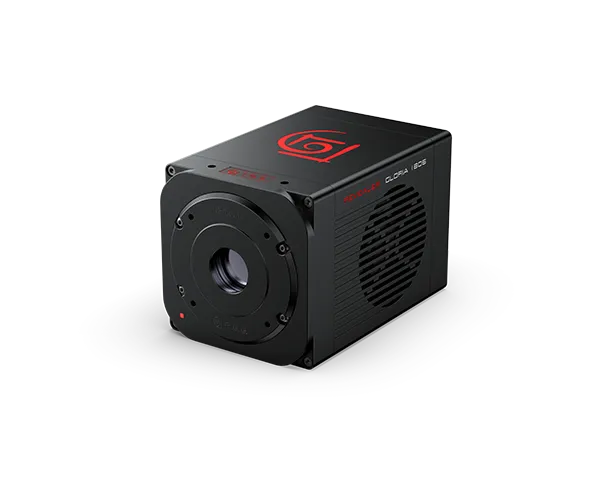
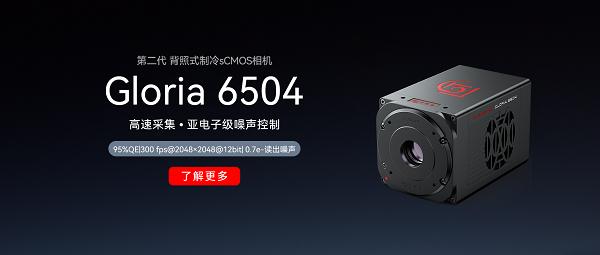
Revealer Second-Generation BSI sCMOS Camera Gloria 6504
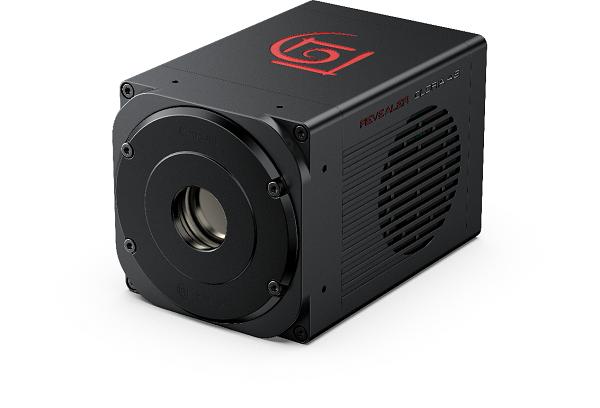
Revealer First-Generation BSI sCMOS Camera Gloria 4.2
Through both longitudinal comparison (within the Revealer product line) and horizontal comparison with an international competitor, the experiment objectively evaluates the technological improvements of Revealer sCMOS cameras in scientific imaging applications.
Under identical microscopy imaging conditions, the image quality obtained from different cameras shows significant differences (see figure below, from left to right: Gloria 6504, Gloria 4.2-CMS, Gloria 4.2-HDR
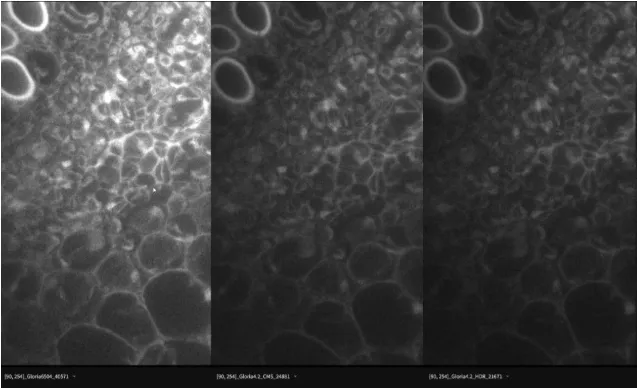
In images captured by the Revealer Gloria 6504 sCMOS camera, the continuous honeycomb structure of the cell walls can be clearly observed.
Within the central vascular bundle region, fine texture details appear rich and well layered, while weak scattering particles in the upper region remain clearly visible. The transition between bright and dark regions is natural, with no obvious overexposure or underexposure, and the background appears smooth and uniform.
In comparison, images captured by the first-generation BSI sCMOS camera appear overall darker.
In CMS mode, the primary structure of the spinach stem remains recognizable, but the level of detail decreases. Internal textures in darker areas merge together, cell wall boundaries become blurred, and slight background noise appears. Noise accumulation causes detail loss, while certain bright areas become saturated.
In HDR mode, the dynamic range between bright and dark areas improves, reducing overexposed and underexposed regions. However, noise amplification becomes more pronounced, causing sample textures to be partially masked by noise. Edge sharpness continues to decrease, and fine structures are eventually lost.
To estimate the signal-to-noise ratio (SNR), grayscale statistical analysis was performed.
The vascular bundle region of the spinach stem was selected as the signal area, while the dark background region was used as the noise reference. The estimated results are shown below:
Camera Model | Signal Mean | Background Mean | Background Noise Std | Estimated SNR | Evaluation |
Gloria 6504 (2nd Gen) | 224 | 98 | 6.82 | 18.48 | Excellent |
Gloria 4.2 CMS | 157 | 99 | 3.88 | 14.95 | Good |
Gloria 4.2 HDR | 143 | 98 | 4.42 | 10.18 | Moderate |
The results indicate that the Revealer Gloria 6504 sCMOS camera achieves the highest signal-to-noise ratio, showing more than 30% improvement compared with the first-generation product.
This means that in low-light imaging experiments, the second-generation scientific CMOS camera can more effectively distinguish true signals from background noise, allowing weak biological structures to be identified more easily.
5.1 Sub-Electron Readout Noise Design
The Revealer Gloria 6504 achieves sub-electron readout noise of 0.7 e⁻.
This performance is enabled by the second-generation BSI sensor architecture, which introduces:
a redesigned pixel structure
optimized charge-to-voltage conversion nodes
dedicated low-noise amplifier circuits
These improvements effectively suppress thermal noise and reset noise in the source follower and column readout circuits.
In practical imaging tests, the Gloria 6504 produces images without noticeable readout noise accumulation, ensuring that sample details are not masked by noise. Even without activating pixel binning, high signal-to-noise images can be obtained.
5.2 Ultra-Low Dark Current Control Technology
Under experimental conditions of 20°C ambient temperature and 15°C cooling liquid temperature, the Revealer Gloria 6504 achieves an extremely low dark current of 0.01 e⁻/pixel/second.
This technological improvement is achieved through several innovations:
1. Improved silicon material purity in the second-generation BSI sensor
2. Optimized backside passivation layer processing
3. Introduction of deeper potential well structures to suppress thermal electron generation
In addition, the camera integrates a TEC deep-cooling module supporting both air cooling and water cooling. Combined with improved sealing structures and thermal dissipation design, this effectively suppresses thermal noise generation.
The combined optimization of sub-electron readout noise and ultra-low dark current enables the Revealer second-generation BSI sCMOS camera Gloria 6504 to achieve higher SNR and more stable background performance in low-light imaging.
Based on the spinach stem imaging comparison experiment, several conclusions can be drawn.
Compared with the first-generation product, the Revealer second-generation BSI sCMOS camera Gloria 6504 demonstrates a clear performance upgrade in low-light biological imaging.
Image brightness is higher
Cellular structures are clearer
Background noise is lower
Signal-to-noise ratio improves by more than 30%
When compared with the Gloria 6504 performs better in weak detail recognition and background uniformity, achieving a higher overall signal-to-noise ratio.
Therefore, for laboratories seeking a high-performance sCMOS camera for life science microscopy and scientific imaging, the Revealer Gloria 6504, with its low readout noise, ultra-low dark current, and backside-illuminated high-sensitivity design, represents a highly effective low-light imaging solution.
NEXT
 English
 Deutsch