Global climate change is exacerbating glacier retreat and permafrost thaw, leading to the frequent occurrence of rock-ice avalanches (RIAs). Previous studies have shown that ice content φᵢ significantly influences the erosive capacity of RIAs, but the lack of a quantitative erosion mechanism has hampered the accuracy of disaster prediction and geomorphic evolution models. Professor Fan Xuanmei's team at Chengdu University of Technology designed an experimental system using a temperature-controlled erodible water flume. Combined with High-speed camera technology with high temporal and spatial resolution, they quantitatively analyzed the impact of ice content φᵢ on erosive capacity, providing an experimental basis for RIAs disaster prediction and glacial geomorphic evolution models.
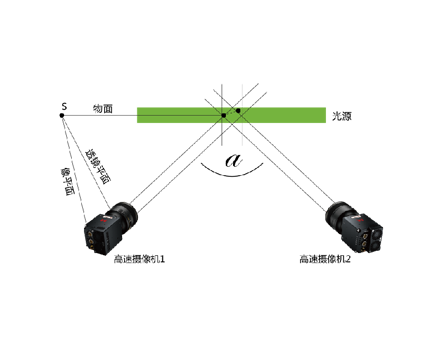
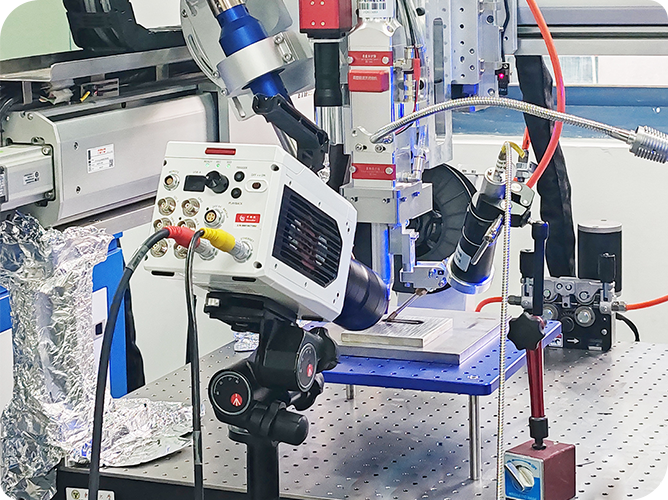
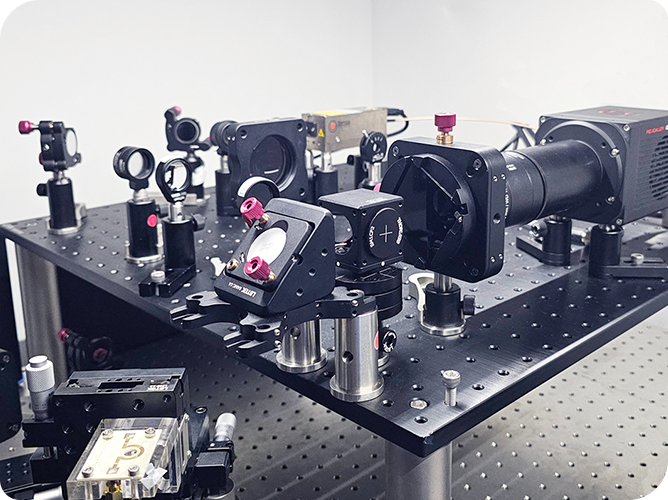
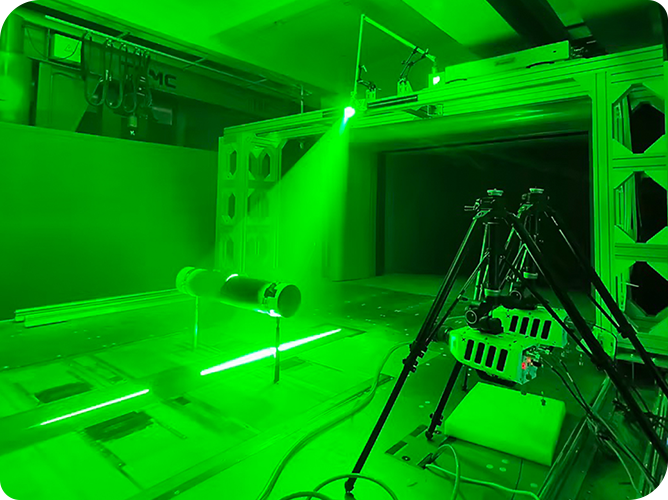
A temperature-controlled (-10 ± 1°C) and adjustable-length flume was designed, featuring an adjustable acceleration section (1-3 m) and an erosion bed section (0.88 m). The experimental material consisted of a mixture of ice and quartz particles with a particle size of 4-8 mm, and an ice content φᵢ ranging from 0 to 100%. The flow velocity was controlled by adjusting the length of the acceleration section. Water contents of 0%, 5%, and 10% were introduced to simulate natural conditions of partial melting. A synchronized observation system consisting of three high-speed cameras (Figure 1) was designed and positioned at different locations within the flume to capture the flow and erosion of RIAs.
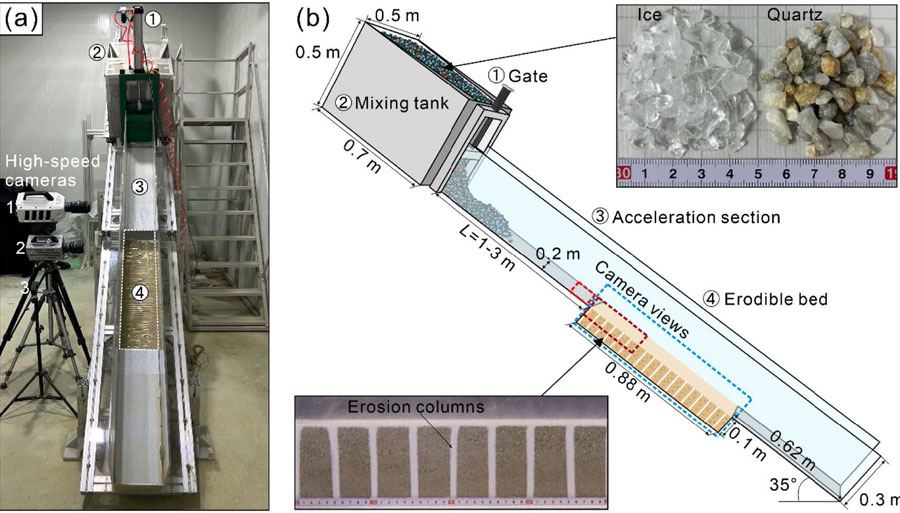
Figure 1
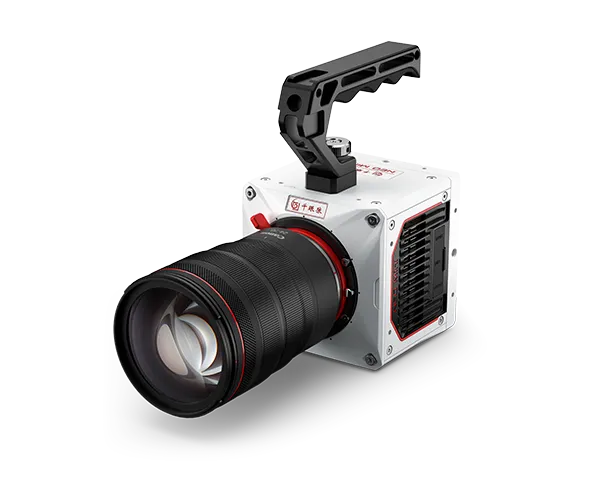
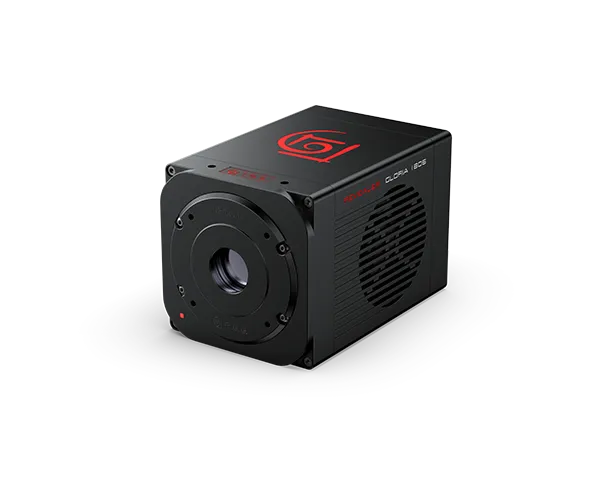
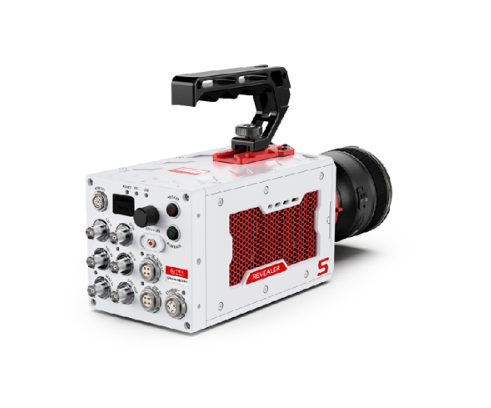
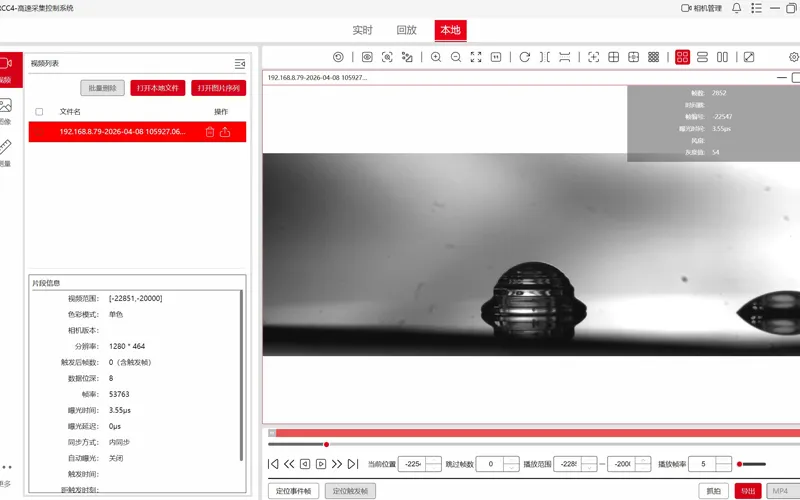
The first Revealer high-speed camera was deployed upstream of the interface between the rigid and erodible bed surfaces, capturing the relative motion between the flow and the substrate at 5000 frames per second. Combined with particle image velocimetry (PIV), the camera quantified the substrate velocity and substrate shear rate immediately before erosion, serving as key input parameters for particle inertial stress. The second high-speed camera was deployed within the initial 30 cm of the interaction between the rigid and erodible bed surfaces, recording the transient erosion process, the exchange of material between particles and the bed surface, and the morphological evolution of the erosion profile at 1500 frames per second. The third high-speed camera covered the entire erodible bed section, monitoring 18 erosion columns positioned along the sidewalls for real-time erosion rate calculation. Figure 2 shows the erosion process and flow dynamics captured by the high-speed cameras. (a) Erosion profiles at different times for tests L1–50% (L = 1 meter, φi = 50%). (b) Erosion profiles for tests with different ice contents at L = 2 meters and t = 1 second. (c) Erosion profiles of different L tests at φi = 30% and t = 1 second.
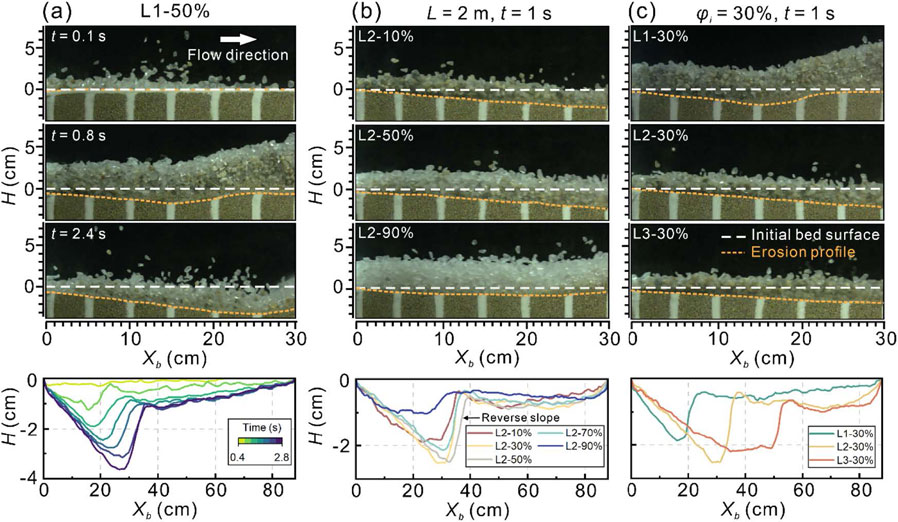
Figure 2
Based on the micron-scale particle motion details captured by the Revealer high-speed camera, the experiments revealed the following:
4.1 The erosion rate is nonlinearly controlled by the φᵢ ice content (0-100%). Specifically, the erosion rate first increases and then decreases with increasing φᵢ, reaching a peak between 40% and 60%.
4.2 The erosion rate is controlled by the competing effects of flow velocity and density. Increasing ice content enhances flow kinetic energy, promoting erosion, while decreasing density weakens the impact force of the flow and inhibits erosion. This competitive relationship between flow velocity and density leads to the nonlinear change in erosion rate with increasing ice content.
4.3 The erosion process recorded by the high-speed camera shows that water contents of 5% and 10% have a modulating effect on the erosion rate. The 5% local wetting effect inhibits erosion by enhancing interparticle adhesion, while the 10% water content enhances the erosion mechanism by altering the interfacial stress between the flow and the substrate.
This study, combining temperature-controlled flume experiments with high-speed camera, quantitatively reveals the nonlinear control of ice content on the erosion rate of RIAs, elucidating the competing effects of flow velocity and density. High-speed camera captured the evolution of the erosion profile and detailed interactions between the flow rise and the bed substrate. Particle image velocimetry (PIV) was used to quantify the substrate flow velocity and shear rate, providing key input parameters for calculating collision stress. The observed particle collisions were directly correlated with erosion rate data, revealing the dominant erosion mechanism.
This article is indebted to Professor Fan Xuanmei's research team. For detailed research results, please see《Rock-ice avalanche flume experiments reveal a non-linear hillslope erosion rule governed by ice-content》
 English
 Deutsch