 English
 Deutsch
0.2 ms Between Frames 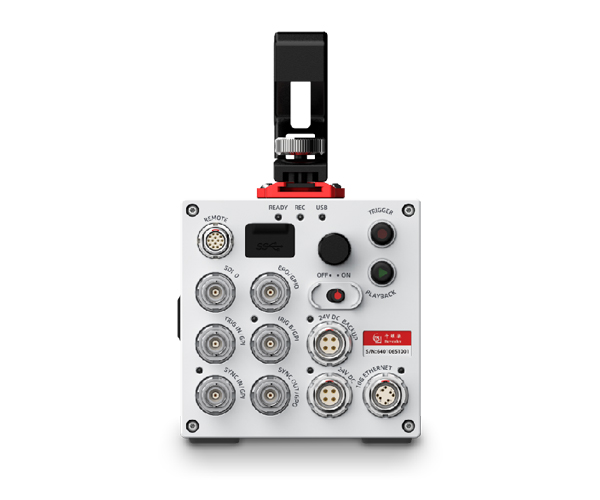
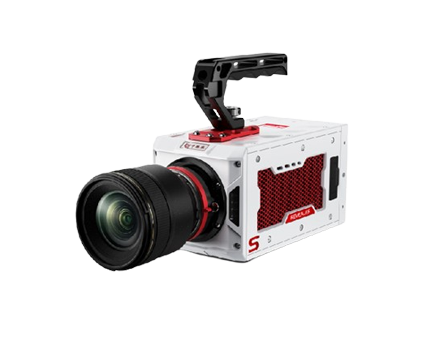
Revealer S1305M/C
5,000 FPS High Speed Camera
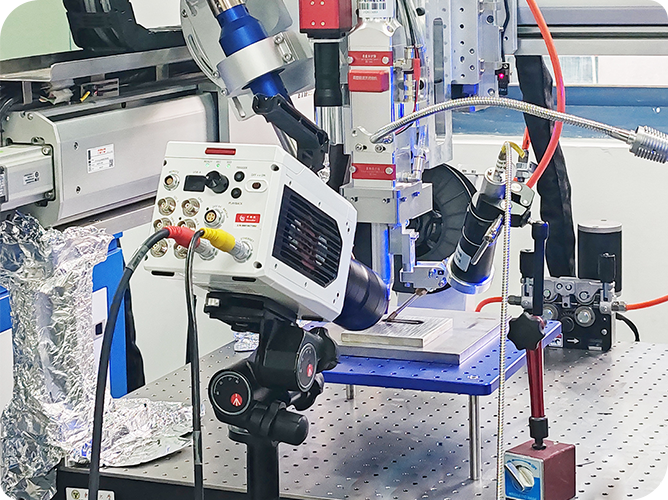
Best for: welding, machinery, spray analysis, material deformation and general impact testing.
View 5,000 FPS Camera →
Selecting the correct frame rate is one of the most important decisions when choosing a high-speed camera. While more frames per second might seem inherently better, the choice between 5000fps and 10000fps depends on the application, event duration, required image detail, available lighting, recording requirements and budget. This guide outlines the key technical considerations.
| Feature | 5,000 fps Camera | 10,000 fps Camera |
| Ideal For | Automotive testing, airbags, welding and mechanical motion | Faster impact, crack propagation, spray, combustion and transient research |
| Temporal Res. | 0.2 ms per frame | 0.1 ms per frame |
| Light Demand | Moderate to high, depending on exposure | Often higher when shorter exposure is required |
| Data Volume | High | Higher at the same resolution and recording time |
| Budget | Cost-effective for many applications | Higher configuration requirements in some applications |
Select the model according to the temporal detail required for your test.
Revealer S1305M/C
Best for: welding, machinery, spray analysis, material deformation and general impact testing.
View 5,000 FPS Camera →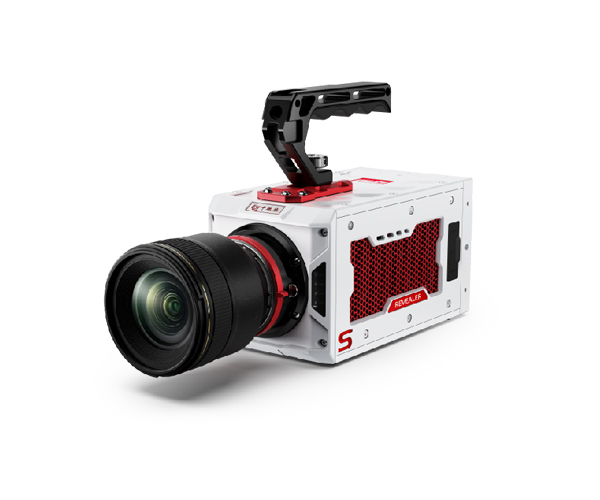
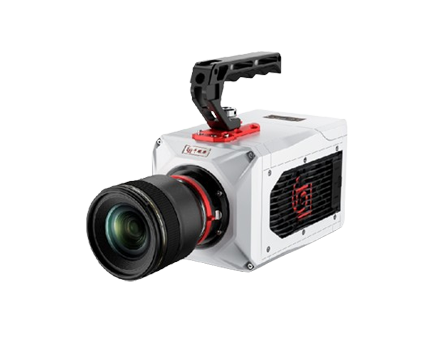
Revealer S1310M/C
Best for: combustion, crack propagation, ballistics, fast impacts and time-resolved imaging.
View 10,000 FPS Camera →Not sure which model fits your test? Ask a Revealer engineer for a camera recommendation.
Frame rate defines your camera’s temporal resolution—its ability to resolve time. A 10000fps camera samples an event twice as frequently as a 5000fps model. This means it can capture finer details in ultra-fast phenomena. For instance, an event lasting 1 millisecond yields 5 frames at 5000fps, but 10 frames at 10000fps, providing a much smoother and more analyzable sequence.
One practical way to decide whether 5000 FPS or 10000 FPS is enough is to estimate how many frames the camera can capture during the event. The basic formula is:
Number of frames = Event duration × Frame rate
For example, if an event lasts 2 ms, a 5000 fps camera captures about 10 frames, while a 10000 FPS camera captures about 20 frames. More frames make it easier to identify the start, peak, and end of a rapid motion process.
| Event Duration | Frames at 5000 FPS | Frames at 10000 FPS | Selection Note |
| 10 ms | 50 frames | 100 frames | 5000 FPS is usually enough for general motion review. |
| 2 ms | 10 frames | 20 frames | 10000 FPS gives smoother event reconstruction. |
| 1 ms | 5 frames | 10 frames | 10000 FPS is preferred for detailed phase analysis. |
| 0.5 ms | 2–3 frames | 5 frames | 5000 FPS may miss important changes. |
Actual useful frame count may vary slightly according to trigger timing. If an event develops entirely within less than 0.1 ms, a frame rate higher than 10,000fps may be required to capture multiple useful frames.
Event Speed & Duration: What is the timescale of your phenomenon?
For 5000fps:Often suitable when 0.2 ms temporal sampling provides enough useful frames, including many automotive, welding, machining and moderate-speed impact applications.
For 10000fps: More suitable when 0.1 ms temporal sampling is needed to examine faster impact, crack propagation, spray, combustion or other short-duration processes.
Required Analysis Detail: Do you need to track discrete stages or measure precise velocities?
A 10000fps high-speed camera can provide additional temporal samples for tracking crack propagation, rapid deformation and complex fluid interfaces. Whether 10,000fps is required depends on the event duration, object speed, field of view and measurement objective.
Light & Exposure:Frame rate and exposure time are related, but they are not the same parameter. Increasing the frame rate reduces the maximum time available for each frame, while the actual exposure time should be selected according to object speed, acceptable motion blur, lens aperture and available illumination.
A 10000fps camera may require stronger illumination when a shorter exposure time is used. Depending on the application, suitable options may include high-intensity flicker-free LEDs, backlighting, continuous scientific light sources or synchronized laser illumination.
Different applications require different frame rates. A higher FPS is useful only when it helps capture more meaningful data without sacrificing too much brightness, resolution, or recording duration.
| Application | Recommended FPS | Why This Frame Rate Works |
| Production line troubleshooting | 5000 FPS | Usually enough for identifying mechanical jams, timing errors, and process defects. |
| Welding observation | 5000–10000 FPS | 5000 FPS can capture general droplet transfer, while 10000 FPS is better for faster spatter and arc instability. |
| Impact and drop testing | 5000–10000 FPS | The choice depends on impact speed, deformation rate, and the required number of frames. |
| Crack propagation | 10000 FPS or higher | More frames help identify crack initiation, propagation path, and failure sequence. |
| PIV flow measurement | 5000–10000 FPS | Frame rate should match particle displacement, flow velocity, and laser timing. |
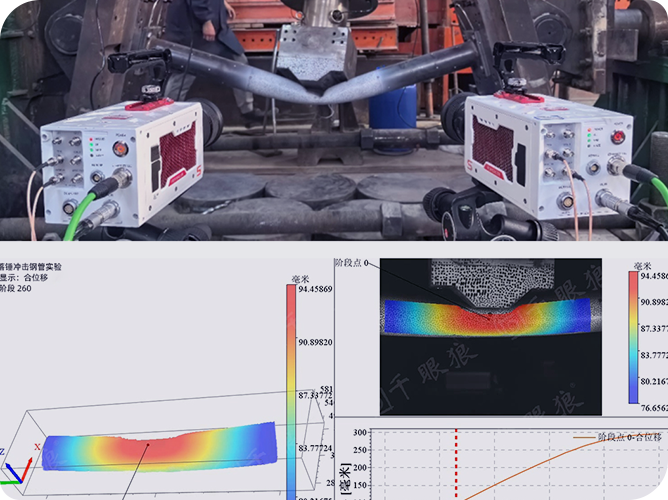
| DIC strain measurement | 5000–10000 FPS | Higher FPS improves dynamic strain, vibration, and impact event reconstruction. |
| Combustion and spray analysis | 10000 FPS or higher | Useful for capturing flame front movement, spray breakup, and transient flow behavior. |
For buyers comparing 5000 FPS high-speed camera options, the key is whether the camera can maintain usable resolution, sensitivity, and synchronization performance at the required speed. For faster transient events, a 10000 FPS high-speed camera can provide more complete data for scientific measurement and industrial testing.
Choose a 5000fps camera if: Your event is relatively “slow,” your budget is constrained, or you have moderate lighting capabilities. It remains a powerful tool for many industrial and research applications.
Invest in a 10000fps camera (like The Revealer S1310M/C) if: You are analyzing explosive, ballistic, or microsecond-scale phenomena where missing a single frame means missing the critical moment. The investment translates into definitive data where standard cameras fall short.
Conclusion: There is no universal “best” frame rate. The optimal choice is the lowest frame rate that adequately resolves the fastest stage of your event while maintaining the required resolution, brightness and recording duration.
If you are unsure whether 5,000fps, 10,000fps or a higher frame rate is appropriate, provide Revealer with your application, estimated event duration, object speed, field of view and image-detail requirements. The engineering team can help evaluate a suitable camera and system configuration.
Is a 10,000 fps high-speed camera better than a 5,000 fps camera?
Not necessarily. While a 10,000 fps camera offers double the temporal resolution 0.1 ms per frame), it also halves the exposure time, which requires significantly more illumination. For events slower than 0.2 ms, a 5,000 fps camera is often more cost-effective and provides superior image quality with less noise.
What specific events require at least 10,000 frames per second?
10,000 fps or higher is essential for capturing ultra-fast physical phenomena, such as ballistic impacts, piezoelectric actuator motion, crack propagation in material stress tests, and fine spray atomization. These sub-millisecond events require the higher frame rate to resolve critical data points that 5,000 fps cameras might miss.
Can I upgrade a 5,000 fps camera to 10,000 fps via software?
Generally, no. The maximum frame rate is determined by the image sensor's throughput and internal bandwidth. However, many professional cameras, such as the Revealer S1310M/C, allow you to increase the frame rate beyond 5,000 fps by reducing the resolution (a process known as windowing or ROI cropping).
NEXT