To address the limitations of traditional vibration modal measurement methods, this article uses a DIC system based on Revealer RVM software to extract full-field synchronous vibration modal parameters of structures under high-speed rotating and transient impact conditions by integrating full-field displacement field reconstruction and frequency domain decomposition algorithms.
Structural vibration modal parameters (natural frequency, damping ratio, and mode shape) are core indicators for evaluating dynamic characteristics and reliability. Traditional methods for obtaining these parameters fall into two categories. The first is accelerometer arrays, which require attaching multiple sensors to the measured surface, introducing mass loading effects. The number of measurement points is limited by channel count, resulting in low spatial resolution and complex wiring – especially difficult for high-speed rotating components. The second is laser Doppler vibrometry, which uses a point-by-point scanning mode that cannot capture full-field transient responses nor respond to millisecond-level impact events.
Digital Image Correlation (DIC) technology is well established for quasi-static deformation measurements. Extending it to high-speed vibration and impact applications requires solving challenges in high-speed image acquisition, full-field displacement extraction, and modal parameter identification. Revealer Digital Image Correlation software RVM integrates a vibration modal measurement module, providing a complete measurement solution through hardware-software synergy.
DIC-based vibration modal measurement essentially obtains the full-field dynamic displacement response of a structure surface and extracts modal parameters from it.
Revealer RVM software uses a local DIC algorithm: a subset containing a speckle pattern is defined in a reference image, and using a shape function and sub-pixel interpolation, gray-scale correlation matching is performed across the sequence of deformed images, thereby accurately calculating the pixel-level displacement time history for all measurement points in the full field.
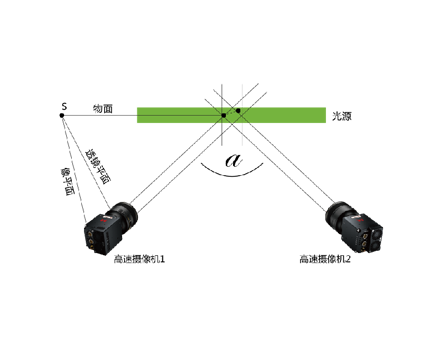
To address the common out-of-plane motion of vibrating structures, the DIC system adopts a 3D-DIC binocular architecture. A dot calibration board is used to calculate camera intrinsic/extrinsic parameters and distortion coefficients. Based on epipolar geometry constraints, left and right views are matched to achieve accurate reconstruction from 2D image coordinates to 3D physical world coordinates.
Revealer RVM software treats the full-field 3D displacement time history as outputs from virtual sensors. It constructs a power spectral density (PSD) matrix via Fast Fourier Transform (FFT) , applies Frequency Domain Decomposition (FDD) to perform singular value decomposition of the matrix, identifies natural frequencies from singular value peaks, and reconstructs 3D mode shapes from the corresponding singular vectors.
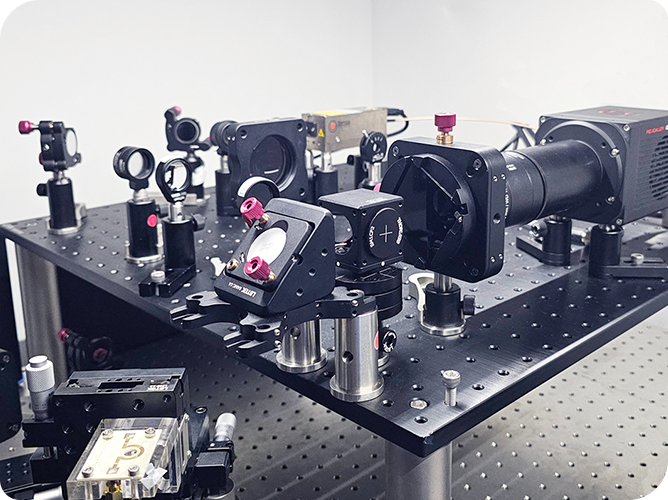
A complete DIC system consists of hardware and software:
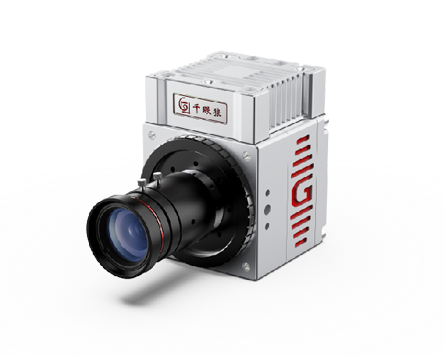
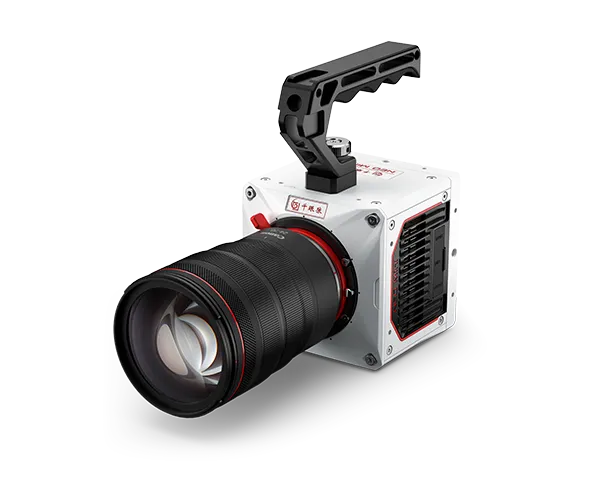
High-speed camera: Recommended Revealer NEO25 high-speed camera (resolution 1280×1024, full-frame 25,000 fps) or Revealer S1315 (1280×1024, full-frame 15,000 fps), used to record high-speed transient processes.
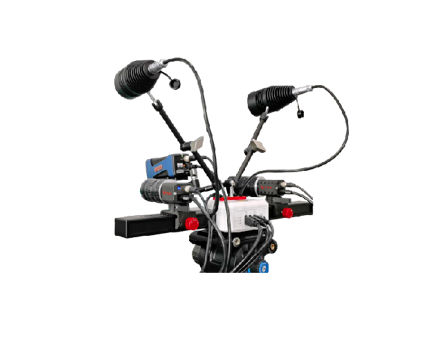
Optics: Laowa 100mm fixed macro lens or other zoom lenses for different fields of view; proprietary high-brightness LED illumination with polarizer components.
Calibration tools: Dot calibration board (for binocular 3D-DIC) and scale calibration board (for monocular 2D-DIC).
Core software: Revealer RVM software, whose vibration modal measurement module supports the entire workflow from displacement field calculation to Operational Modal Analysis (OMA) , Operational Deflection Shape (ODS) , and FFT spectrum analysis.
Revealer RVM software encapsulates the complex measurement process into guided steps, allowing users to complete the entire workflow from hardware setup to modal parameter output.
Choose a monocular or binocular system based on the deformation dimensions. For binocular systems, keep the optical axes angle between 20°–40°. Use RVM’s built-in "focus quality evaluation" and "exposure evaluation" curves to adjust high-speed camera parameters to ensure clear speckle images.
System calibration:
3D-DIC: Use a dot calibration board, acquire calibration images at >12 different poses; the software automatically detects corners and calculates camera intrinsic/extrinsic parameters, using reprojection error as the calibration quality metric.
2D-DIC: Use a scale calibration board to convert pixel coordinates to physical coordinates.
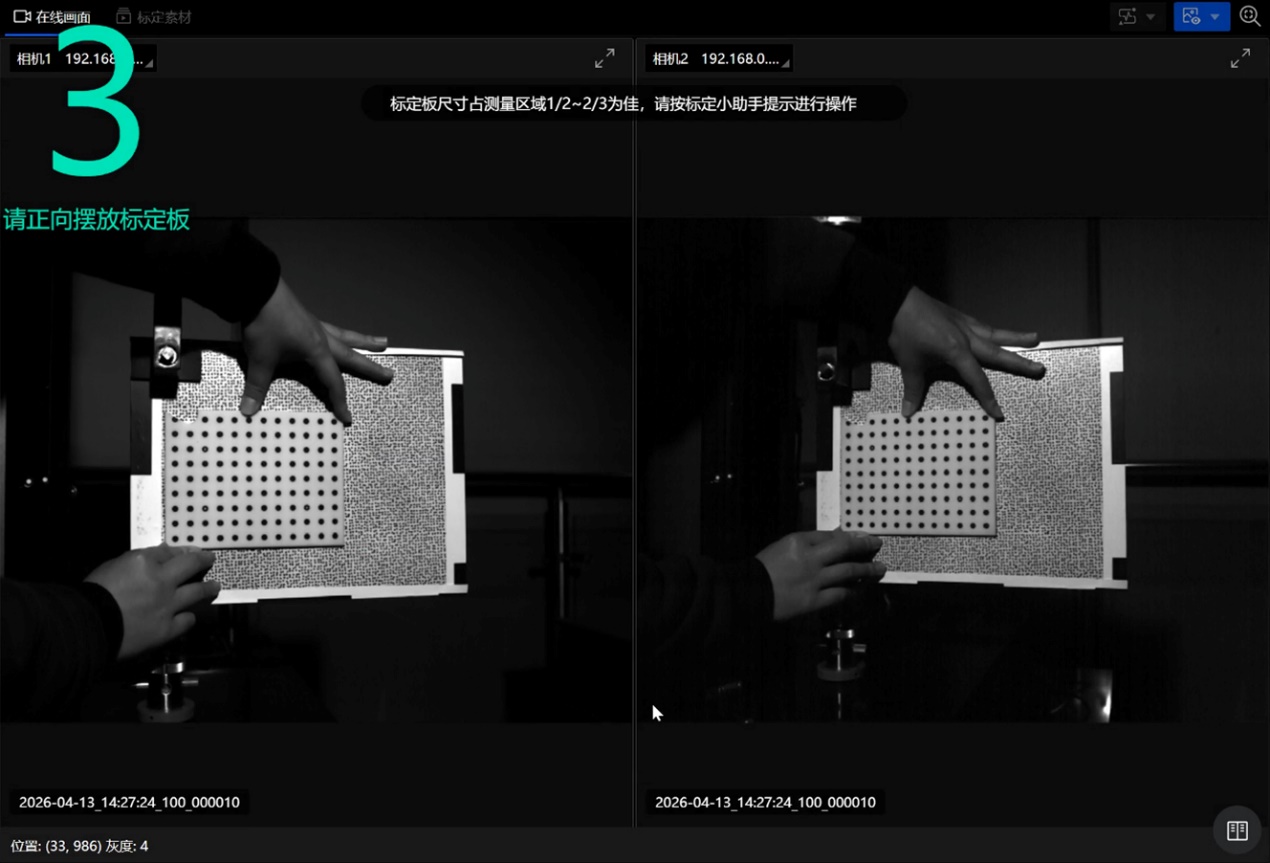
Figure 1: Schematic diagram of 3D-DIC calibration using a dot calibration board
Apply a random, high‑contrast, non‑reflective speckle pattern that deforms with the structure surface. Use a monocular or binocular high‑speed camera to acquire image sequences during vibration/impact transients. Three main acquisition modes:
Acquisition Mode | Application Scenario | Description |
Standard | Steady vibration, fixed-frequency excitation | Start acquisition immediately after trigger |
Pre-trigger | Impact, transient events | Saves images for a set duration before trigger, ensuring complete event capture |
Delayed | Scenarios requiring delayed start | Start acquisition after a set delay from trigger |
Table 1: 3D-DIC acquisition modes
The 3D-DIC system supports master-slave synchronization or external synchronization, ensuring microsecond-level inter-camera sync error.
After importing the image sequence, select the ROI. RVM automatically generates a seed point grid. Set subset size, step, matching criterion, etc., then execute displacement measurement. Output X/Y/Z displacement time-history curves for all measurement points.
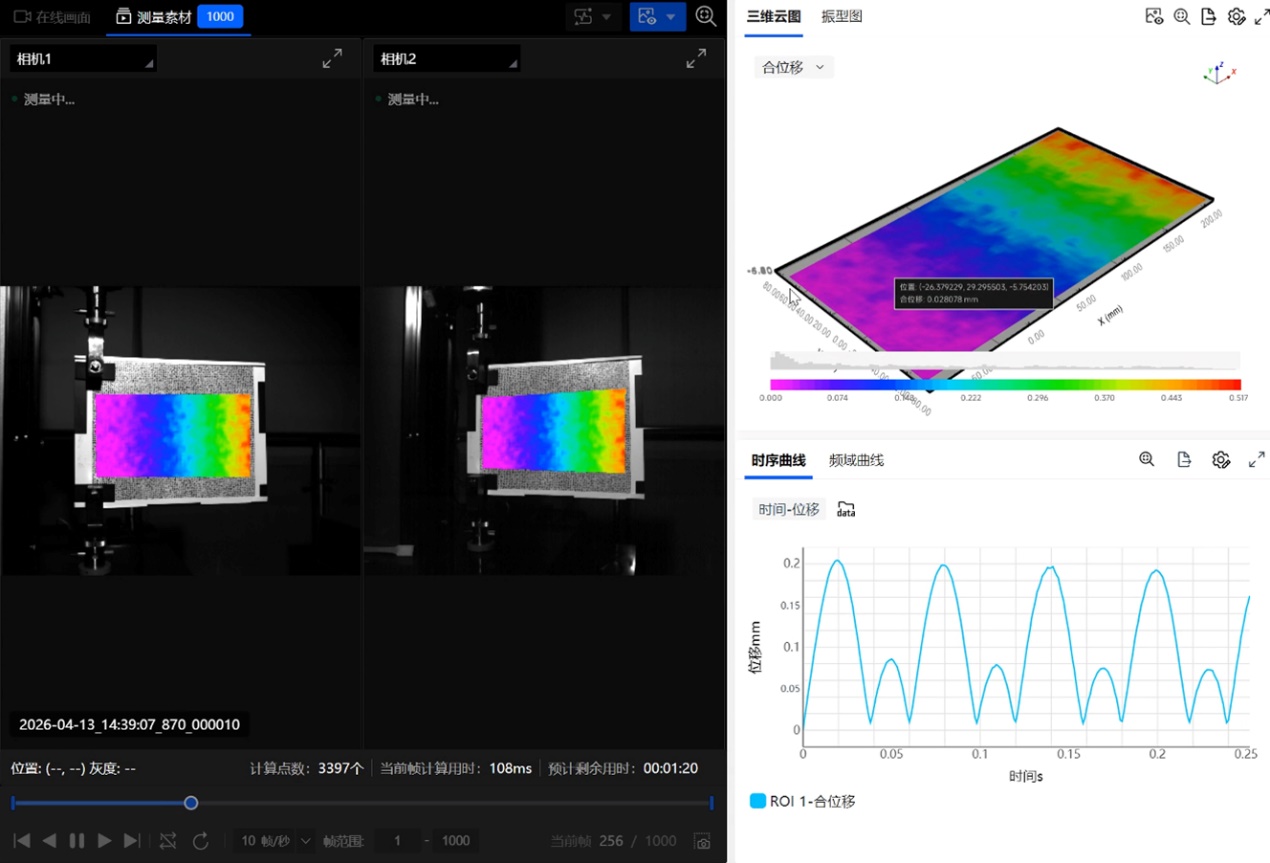
Figure 2: Full-field displacement calculation using DVM (Digital Volume Correlation) software
After displacement measurement, enter the "Modal Measurement" module:
Select analysis objects: Choose the ROI or specific tracked points for analysis.
Run Operational Modal Analysis (OMA): RVM calculates power spectral density (PSD) from displacement time histories and uses the Frequency Domain Decomposition (FDD) algorithm to identify natural frequencies and damping ratios for each mode.
View results: In the "Mode Shape" window, view the reconstructed 3D mode shape animation; in the frequency-domain curve window, perform ODS analysis – manually select any frequency point to view the real-time operational deflection shape of the structure under excitation at that frequency.
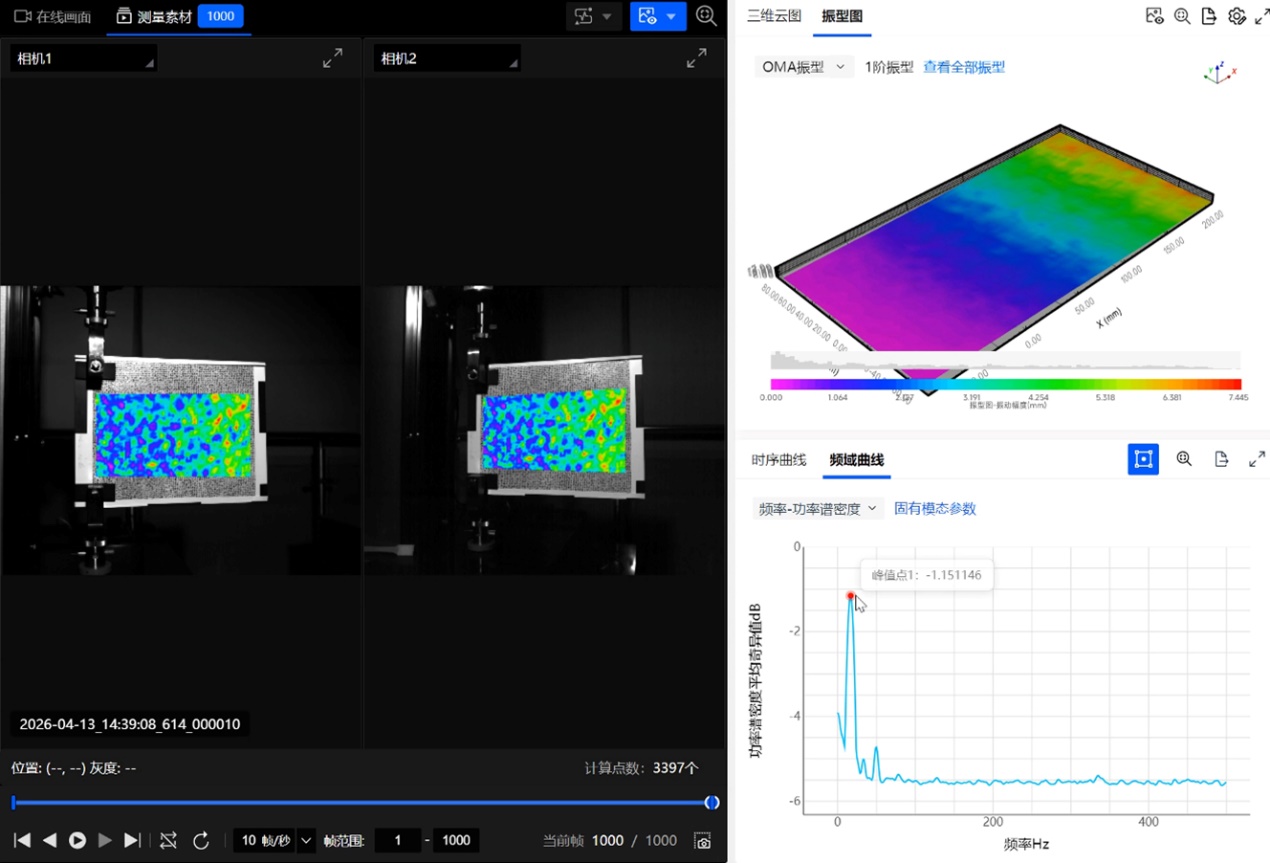
Figure 3: Operational Modal Analysis (OMA) using RVM software
Application background: A high-end equipment online monitoring company performed vibration modal measurement on a rotating blade of diameter 90 mm and thickness 15 mm for blade damage detection and resonance risk assessment.
Technical challenges: The blade’s high rotational speed required very high camera frame rates, and the metallic blade surface reflected light, interfering with image quality.
System solution: Revealer engineers used custom multi-angle lighting with polarizers to eliminate specular reflection. A binocular measurement system was built using the S1315 high-speed camera (capable of 15,000 fps at 1280×1024; experiment at 10,000 fps). Two test conditions: low-speed (measured 609 rpm, Figure 4) and high-speed (measured 1091 rpm, Figure 5).
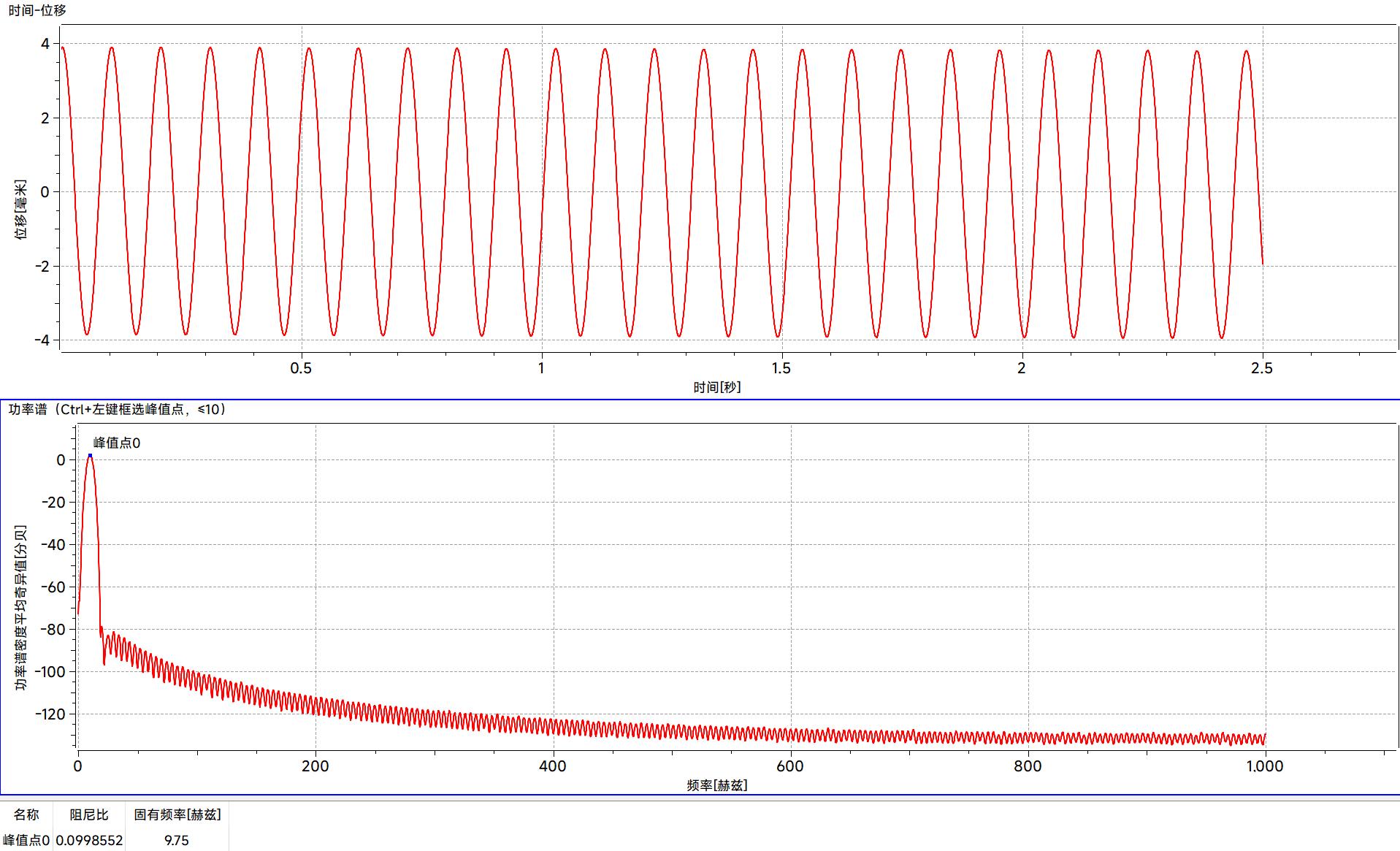
Figure 4: At 500 RPM setting (measured 609 RPM), using modal analysis + FFT, RVM software measured the blade’s primary vibration frequency as 9.76 Hz
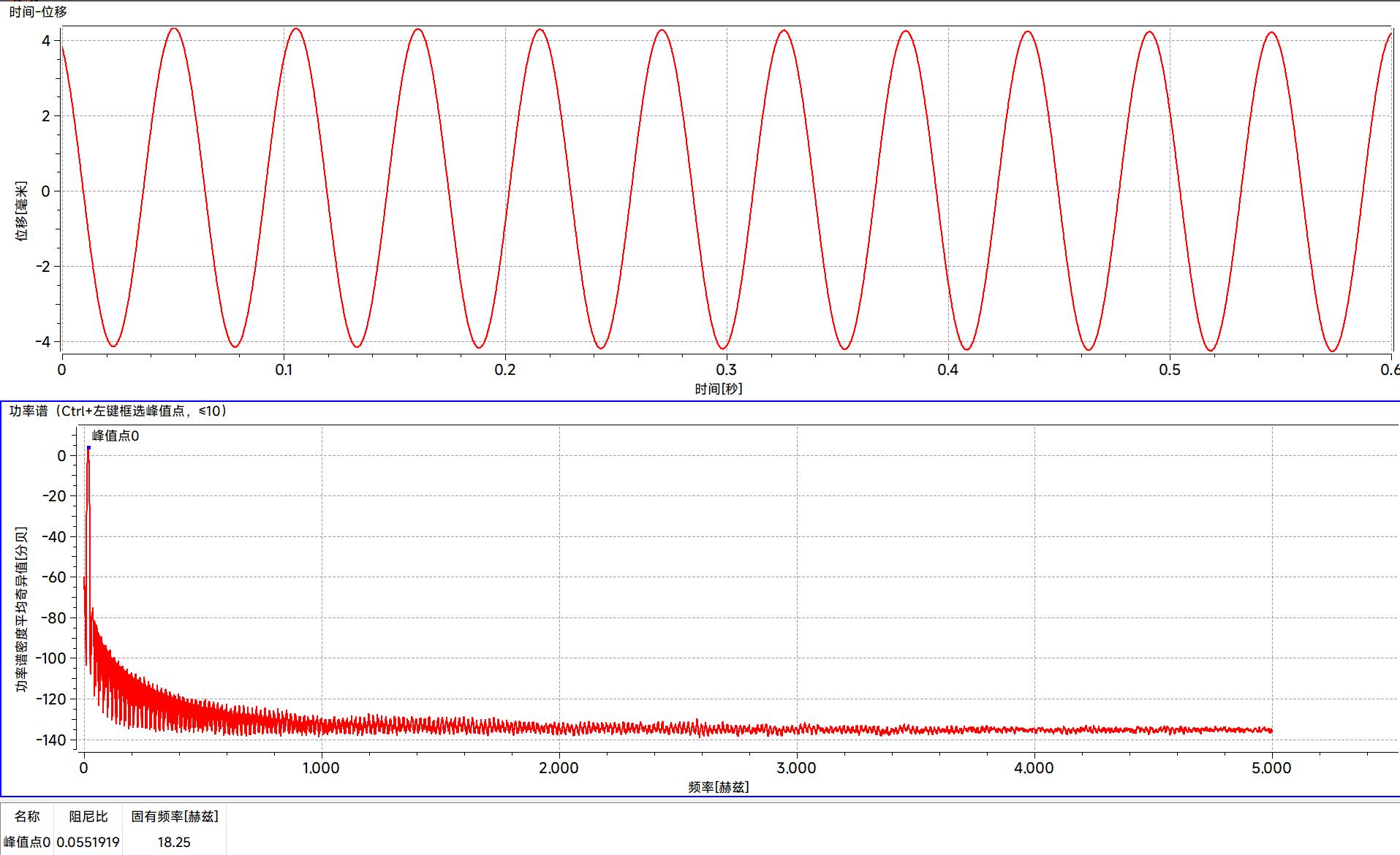
Figure 5: At 1000 RPM setting (measured 1091 RPM), using modal analysis + FFT, RVM software measured the blade’s primary vibration frequency as 18.11 Hz
Measurement results: At measured speed 609 rpm (rotational frequency 10.15 Hz), RVM measured the primary vibration frequency as 9.76 Hz, relative error 3.8%, showing sub-synchronous vibration characteristics. At 1091 rpm (rotational frequency 18.18 Hz), the primary frequency was 18.11 Hz, relative error only 0.4%.
Case summary: The results indicate that at high rotational speeds, rotating imbalance becomes the dominant excitation. This case validates the feasibility of the Revealer RVM vibration module for dynamic testing of high-speed rotating components.
Application background: An authoritative research institute for electronic product reliability performed structural reliability tests on a PCB with soldered chips under vibration (225 Hz fixed-frequency, 50–2000 Hz swept-sine) and impact (peak 10,000 m/s², duration 10 ms).
Technical challenges: Swept-sine and impact tests demand very high temporal resolution; insufficient frame rates of high-speed cameras can distort analysis results.
System solution: Test engineers used the Revealer NEO25 ultra-high-speed camera at 80,000 fps (ROI mode) to fully capture the events.
Measurement results:
Fixed-frequency vibration (225 Hz): RVM performed PSD analysis on the Z-direction displacement time histories of 120 calculation points in the ROI and computed the full-field average singular value. Figure 6 shows a distinct peak at 225 Hz in the average singular value of PSD, indicating that vibration energy at this frequency is highly concentrated across all measured points – perfectly matching the excitation frequency. Further modal parameter identification showed the damping ratio for this mode approached 0, meaning the structure dissipates almost no energy at this frequency, with the vibration response fully maintained by the excitation.
Swept-sine vibration (50–2000 Hz): RVM accurately identified resonance peaks at 226.5 Hz (first bending mode), 902 Hz, and 938.5 Hz (local dense modes) (Figure 7). The measurement results show that the high-frame-rate DIC system can accurately reconstruct the full-field mechanical response of electronic components under extreme dynamic loads, providing an intuitive, full-field visual basis for assessing solder joint failure risks.
Impact test: The total acquisition duration was about 4 ms. The impact event occurred at the 3 ms mark, with instantaneous peak acceleration reaching 100,000,000 mm/s² (approx. 10,200 g). After the impact, the system response exhibited a typical underdamped oscillatory decay (Figure 8), with displacement amplitude gradually converging and returning nearly to zero by the end of acquisition.
Case summary: The 80,000 fps acquisition capability of the Revealer NEO25 provided sufficient temporal resolution. The average singular value curve of PSD reconstructed by RVM software integrates vibration energy information from tens of thousands of full-field points, precisely indicating structural natural frequencies by peak positions while suppressing local noise and interference.
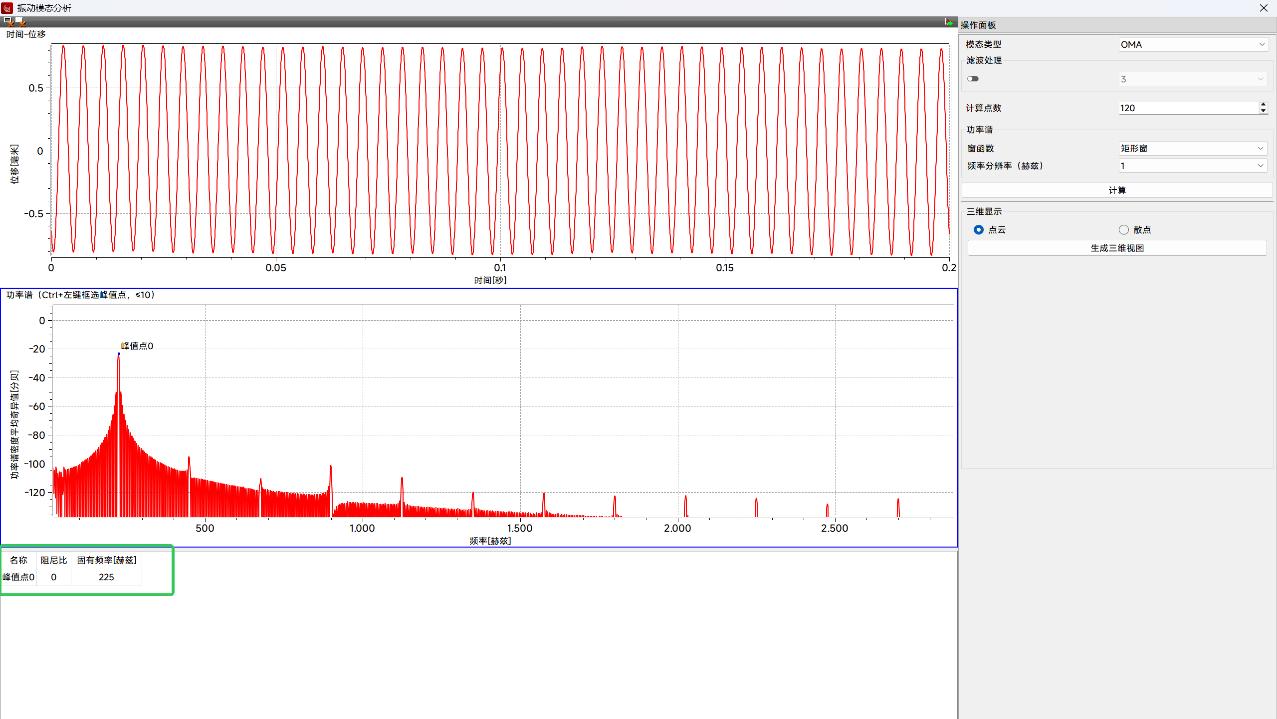
Figure 6: RVM software measuring vibration modal under fixed-frequency condition
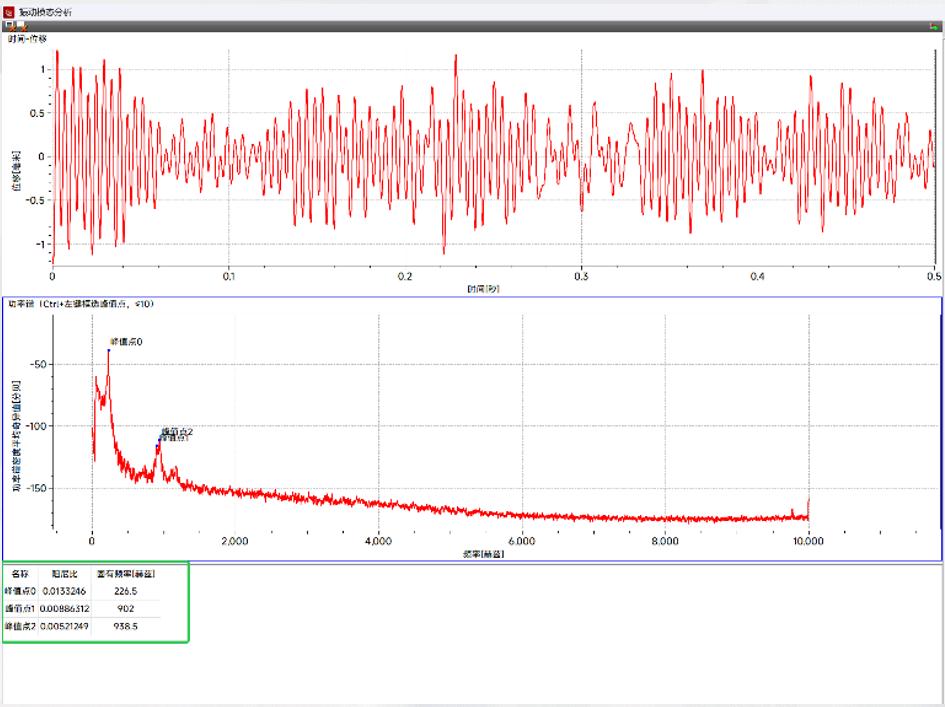
Figure 7: RVM software measuring vibration modal under frequency-swept condition
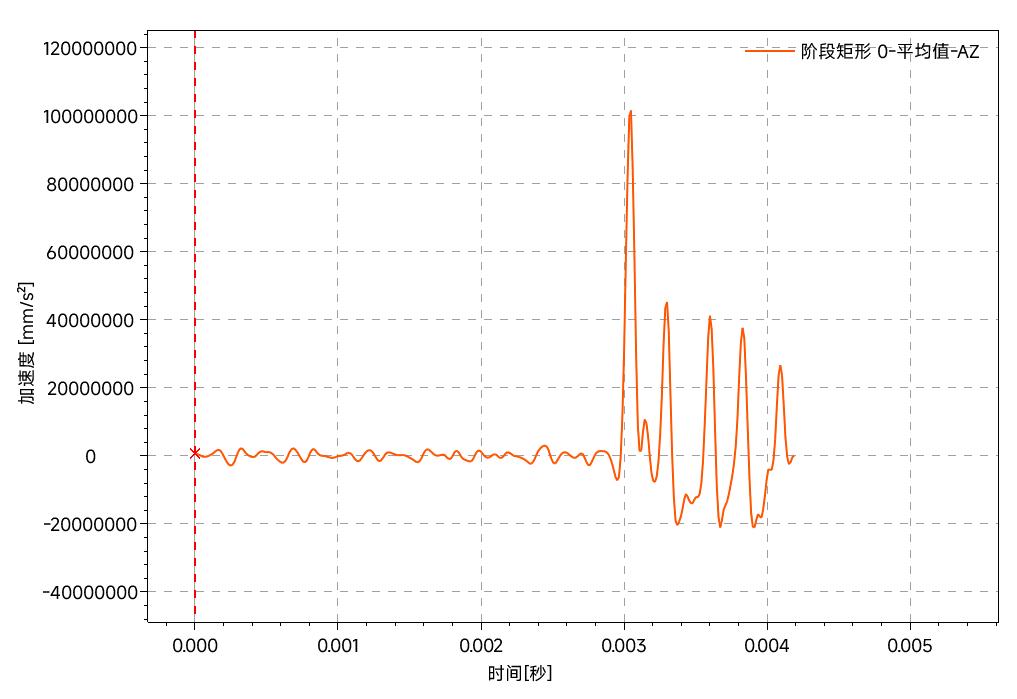
Figure 8: RVM software measuring Z-direction acceleration RMS value under impact condition
Aspect | Accelerometer Array | Laser Vibrometer | RVM DIC System |
Measurement method | Contact, mass loading | Non-contact, point-by-point scanning | Non-contact, full-field synchronous |
Spatial resolution | Limited discrete points, wiring required | Discrete points synthesized | Full-field displacement field, tens of thousands of points |
Transient capture | Supported but limited points | Not supported | Supported (high-speed camera) |
Rotating component measurement | Difficult | Difficult | High applicability |
Output | Discrete point time-history curves | Synthesized mode shape maps | Full-field contour + mode shape animation + time-history curves |
Operational complexity | Wiring, complex calibration | Moderate | Easy (guided workflow) |
Table 2: Comparison between 3D-DIC acquisition mode and traditional methods
Rotating machinery: Suitable for Operational Modal Analysis (OMA) and resonance avoidance of blades, shafts, etc.
Electronic components: Reliability validation of PCBs, chip solder joints, connectors under vibration and impact loads.
Aerospace components: Modal testing of solar panels and lightweight thin-walled structures.
Automotive components: Vibration characterization of body panels, brake discs, exhaust pipes.
The vibration modal measurement module in Revealer Digital Image Correlation (DIC) software RVM deeply integrates high-speed imaging, 3D-DIC full-field displacement measurement algorithms, and modal analysis algorithms to achieve non-contact, full-field, synchronous acquisition of vibration modal parameters, solving measurement pain points encountered with traditional methods in scenarios involving rotating components, lightweight structures, and transient impacts.
The two engineering cases – high-speed rotating blade vibration and component impact response – validate the feasibility and measurement accuracy of the system under extreme conditions. As high-speed camera hardware performance continues to improve and DIC algorithms are further optimized, DIC-based optical full-field modal measurement technology is expected to become a standard tool for structural dynamics testing across a wider range of engineering fields.
Q1: How is the accuracy of vibration modal measurement using RVM software ensured?
A: Accuracy is guaranteed by a triple guarantee: "hardware sampling + algorithm reconstruction + data fusion". At the hardware level, tens-of-thousands-of-fps sampling strictly satisfies the Nyquist sampling theorem. The DIC local algorithm achieves sub-pixel matching accuracy better than 0.01 pixels, and combined with binocular calibration, pixel errors are converted to micron-level physical displacement. At the modal extraction stage, RVM software integrates PSD data from tens of thousands of full-field measurement points and performs singular value decomposition, effectively suppressing single-point noise and greatly improving the robustness of frequency identification and mode shape reconstruction.
Q2: How to choose between monocular DIC and binocular DIC systems for vibration testing?
A: The binocular system is preferred. Vibrating structures usually involve complex 3D deformations such as bending and torsion. A monocular system can only measure in-plane displacements; any out-of-plane motion will cause projection errors, distorting the extracted modal parameters. The binocular system reconstructs the true 3D displacement field through stereo vision, which is essential for obtaining accurate out-of-plane mode shapes (Z-direction modes).
Q3: How to ensure complete capture of millisecond-level impact events?
A: Use the "pre-trigger" function of RVM software together with a high-speed camera. In pre-trigger mode, the camera continuously buffers images before the trigger signal arrives. After triggering, it saves images from a period before the trigger, ensuring that the baseline before impact and the entire impact process are fully recorded. Additionally, appropriately cropping the field of view of the NEO25 high-speed camera can dramatically increase the frame rate to above 80,000 fps, fully recording the before-and-after process of the impact.
Q4: How to prepare a speckle pattern on a highly reflective surface or one that cannot be painted?
A: For surfaces that cannot be painted, use a matte marker pen to manually draw a random speckle pattern. To address reflection: first, add a polarizer in front of the light source and an analyzer in front of the lens, adjusting the polarization angle to eliminate specular reflection; second, adjust the incident angle of the light source to avoid light reflecting directly into the camera; finally, use the real-time "exposure evaluation curve" displayed by RVM software to optimize parameters, ensuring a reasonable grayscale histogram without saturation.
Q5: What is the difference between "ODS (Operational Deflection Shape)" and "OMA (Operational Modal Analysis)" outputs in RVM software?
A: ODS shows the actual response shape of a structure under a specific excitation frequency (e.g., operating speed or forced vibration frequency) – it may be a superposition of multiple modes. OMA extracts the structure’s inherent properties (natural frequencies, damping ratios, and pure mode shapes). In RVM software, ODS is used for rapid diagnosis of actual vibration fault patterns at specific frequencies, while OMA is used for the structure’s intrinsic dynamic characteristics to update finite element models or design for resonance avoidance.
 English
 Deutsch