Email Us
中文
A Pressure Field Reconstruction Technology Based on Particle Image Velocimetry (PIV) Velocity Field Inversion

A Pressure Field Reconstruction Technology Based on Particle Image Velocimetry (PIV) Velocity Field Inversion

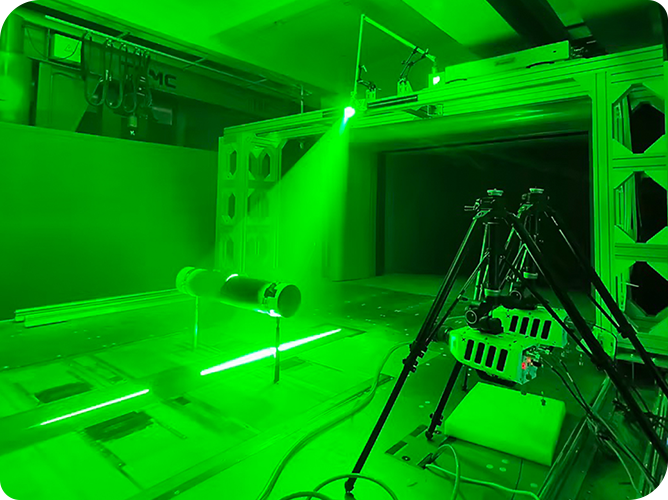
This video demonstrates a cutting-edge approach to fluid mechanics: reconstructing pressure fields directly from Particle Image Velocimetry (PIV) velocity data. By applying the Navier-Stokes equations to the high-resolution velocity vectors captured by our cameras, researchers can derive pressure gradients without the need for intrusive physical probes.


The PIV Inversion Workflow

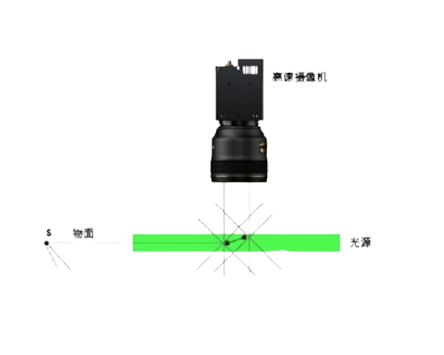
  • Image Acquisition: Capturing dual-frame particle images using a synchronized PIV system.

  • Velocity Calculation: Utilizing cross-correlation algorithms to generate the initial velocity vector field.

  • Pressure Inversion: Implementing the Poisson equation or Omni-directional integration to reconstruct the 2D or 3D pressure distribution.


Why Choose Particle Image Velocimetry (PIV) for Pressure Reconstruction?

In traditional fluid dynamics research, measuring pressure often requires physical sensors that can inadvertently alter the flow field. Our video demonstrates how Particle Image Velocimetry (PIV) overcomes these limitations by utilizing non-intrusive, high-speed imaging to derive pressure gradients.


Below is a technical comparison highlighting the advantages of using a PIV system for dynamic pressure mapping versus conventional methods:

Key FeatureConventional Pressure ProbesPIV-Based Reconstruction
IntrusivenessHigh: Sensors/pitot tubes can disturb the flow and create wake interference.Zero: Non-intrusive optical measurement maintains the integrity of the flow field.
Spatial ResolutionPoint-based: Limited to the specific locations where sensors are physically installed.High-density: Captures a complete 2D/3D vector map with thousands of data points.
Data SynchronizationComplex: Difficult to align multiple pressure transducers for transient, high-speed events.Perfect: Temporal correlation is built-in through synchronized laser pulses and high-speed frames.
Application ScopePrimarily static or low-speed laminar flows.Superior: Ideal for complex turbulence, aeroacoustics, and transient flow phenomena.

Insight for Research Engineers:

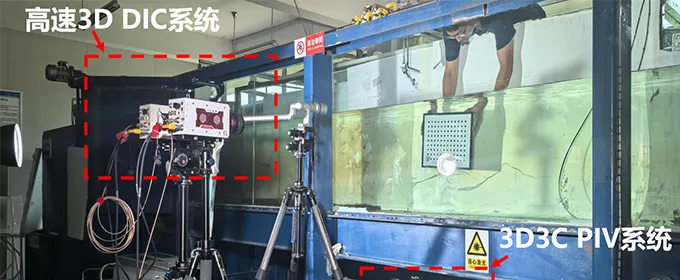
By leveraging the high temporal resolution of our Particle Image Velocimetry (PIV) systems, you can now reconstruct pressure fields in real-time. This eliminates the need for complex multi-sensor arrays and provides a more holistic view of the aerodynamic forces acting on your model, whether in a wind tunnel or a water flume.

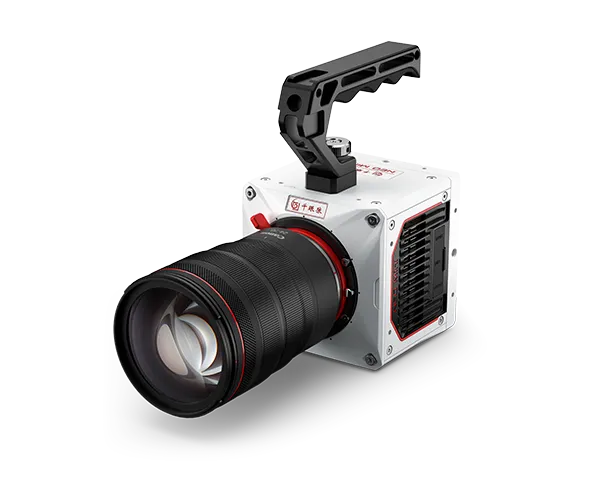
Note: The accuracy of pressure inversion is highly dependent on the image quality. Our sCMOS cameras provide the ultra-low noise needed for high-fidelity Particle Image Velocimetry (PIV) data.

FAQs: Advancing Fluid Analysis with Particle Image Velocimetry (PIV)

What software is required to convert PIV velocity fields into pressure fields?

Processing Particle Image Velocimetry (PIV) data for pressure reconstruction requires specialized algorithms such as the Poisson equation solver or Omni-directional integration. Our systems are compatible with industry-standard post-processing tools and custom MATLAB/Python scripts, allowing researchers to seamlessly transition from raw particle images to quantified pressure maps.
Why is Particle Image Velocimetry (PIV) preferred over physical probes for pressure measurement?

The primary advantage of Particle Image Velocimetry (PIV) is its non-intrusive, whole-field nature. Traditional pressure transducers or Pitot tubes are "point-measurement" tools that must be physically placed in the flow, which often creates wake interference and distorts the data. In contrast, a PIV system captures thousands of velocity vectors simultaneously across the entire plane. By applying the pressure-gradient integration method to these vectors, researchers can reconstruct a complete, high-resolution pressure map without ever touching the fluid.

What determines the accuracy of pressure reconstruction from PIV data?

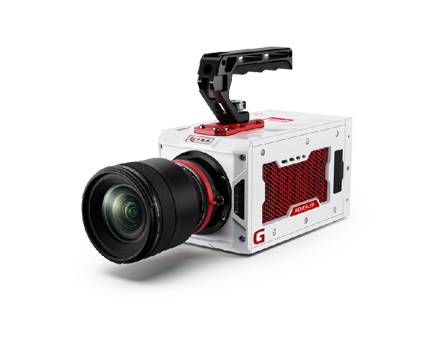
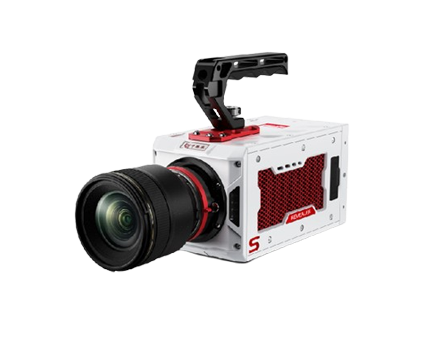
The fidelity of the reconstructed pressure field is directly linked to the spatial resolution and signal-to-noise ratio (SNR) of the initial Particle Image Velocimetry (PIV) measurements. Because pressure is derived from the spatial derivatives of velocity, any "noise" in the vector field is amplified during calculation. Revealer’s high-speed sCMOS cameras mitigate this by offering ultra-low read noise and high dynamic range, ensuring high-fidelity velocity data. This allows for pressure reconstruction with uncertainties as low as 5-10%, even in highly unsteady or turbulent flows.

Can this PIV-based technique be used for 3D pressure field mapping?

Yes. While standard 2D Particle Image Velocimetry (PIV) provides a planar view, our advanced Stereo-PIV and Tomographic PIV setups allow for 3D velocity acquisition. By capturing the full volumetric flow, the pressure inversion algorithms can calculate the 3D pressure distribution (e.g., around a wing section or a turbine blade), providing a much deeper understanding of aerodynamic lift and drag forces.

Quick Links
Contact Us
Email:
sales@revealerhighspeed.com
Add:
Fuhuang Intelligent New Vision Building, Baohe District, Hefei City, China.
Quick Links
Add:
Fuhuang Intelligent New Vision Building, Baohe District, Hefei City, China.