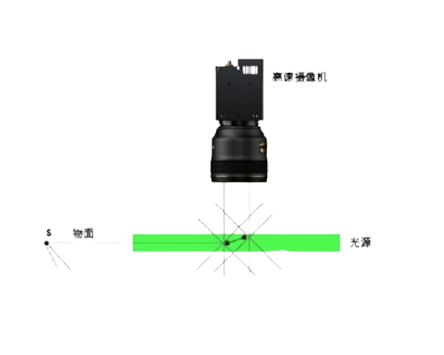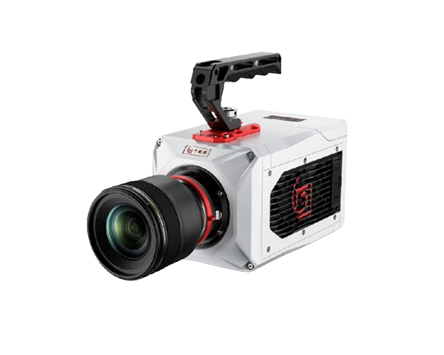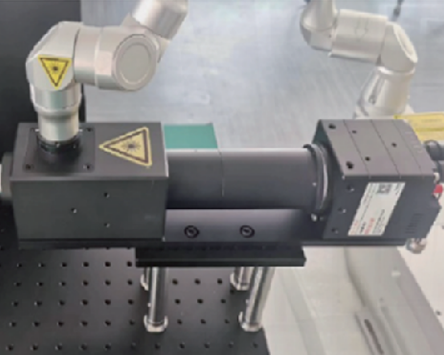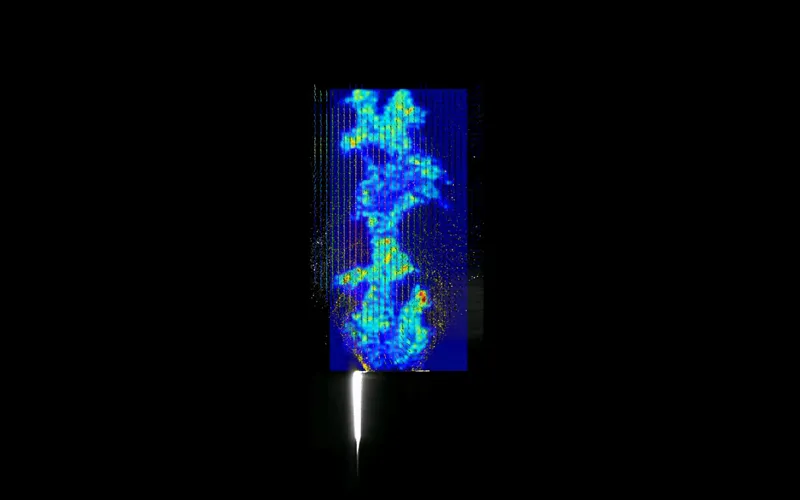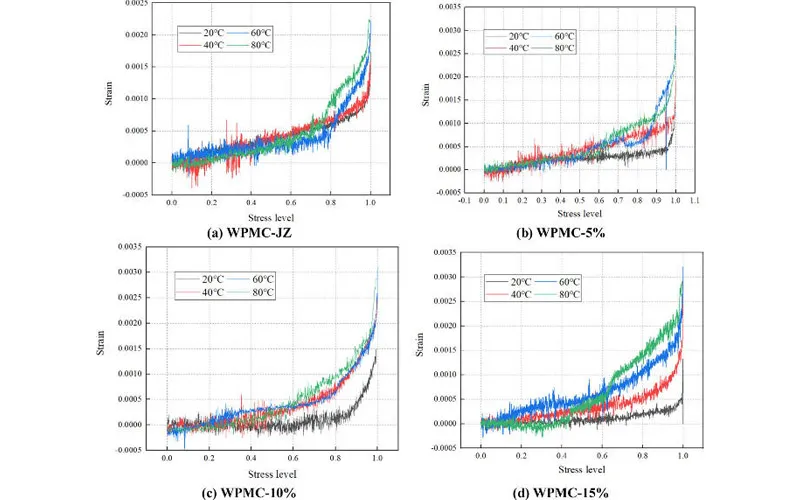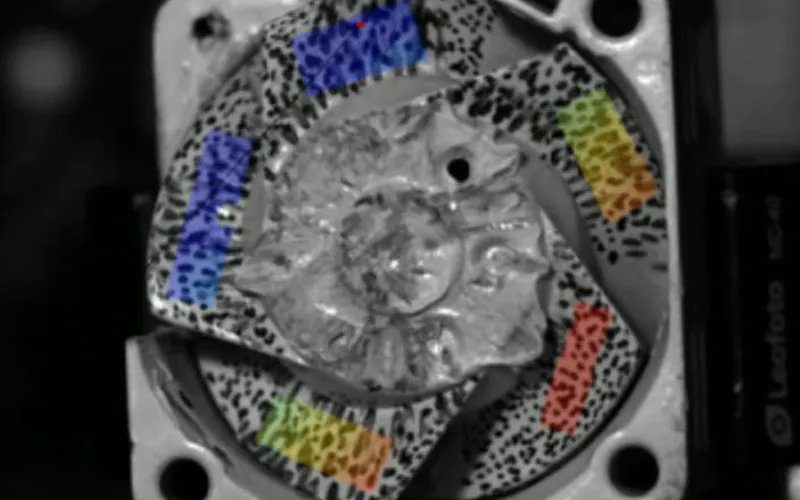
In this experiment, the self-developed Revealer High-speed Camera by Agile Device was used to successfully observe the 1-Mach supersonic jet flow at a frame rate of 90,000 fps in combination with the schlieren method. The entire process—from the distinct Mach ring structure at the nozzle outlet, the turbulent mixing in the central shear layer, to the oscillation of the airflow at the tail—was clearly recorded, providing a visual basis for aero-engine design.
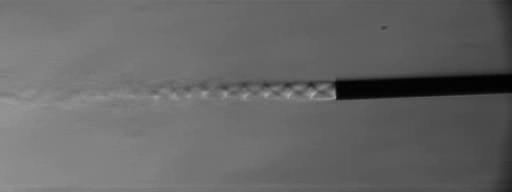
Supersonic jet flow is the critical power source for propulsion systems such as aviation engines. Understanding the density gradient structures within this flow—such as annular shock waves, Mach rings, and jet oscillation—is essential for optimizing nozzle design and improving propulsion efficiency.
However, because supersonic airflow is transient and extremely fast, standard imaging equipment cannot capture the necessary details. This article details how researchers utilized a professional High Speed Camera from Agile Device combined with Schlieren photography to visualize these invisible flow phenomena.
The primary challenge in aerodynamic research is that supersonic airflow structures are highly transient. To characterize the pressure distribution and instability of the flow field, engineers need to observe the "Mach rings"—a typical density gradient structure. Standard cameras lack the frame rate and sensitivity required to freeze these micro-second events.
To solve this, researchers employed the Revealer High Speed Camera, a proprietary technology developed by Agile Device, capable of frame rates reaching the ten-thousand-frame level.
The experiment aimed to capture the supersonic flow emerging from a micro-nozzle. The specific configuration was as follows:
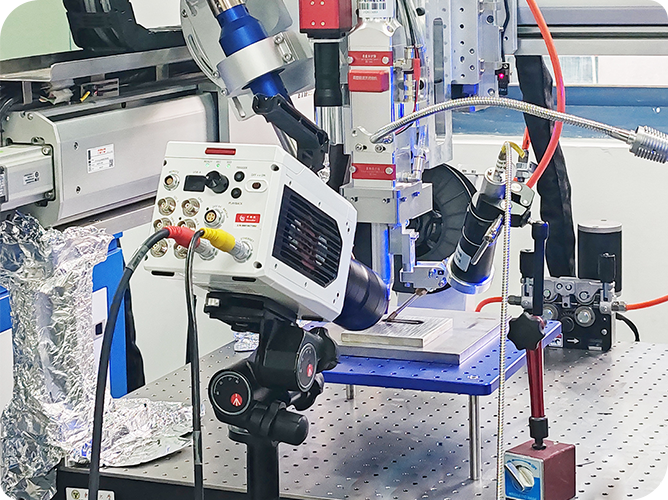
Imaging Core: The Revealer High Speed Camera by Agile Device.
Resolution & Speed: The camera was set to a resolution of 1280×1024 at 15,000 fps. By cropping the Region of Interest (ROI), the actual acquisition frame rate reached 90,000 fps.
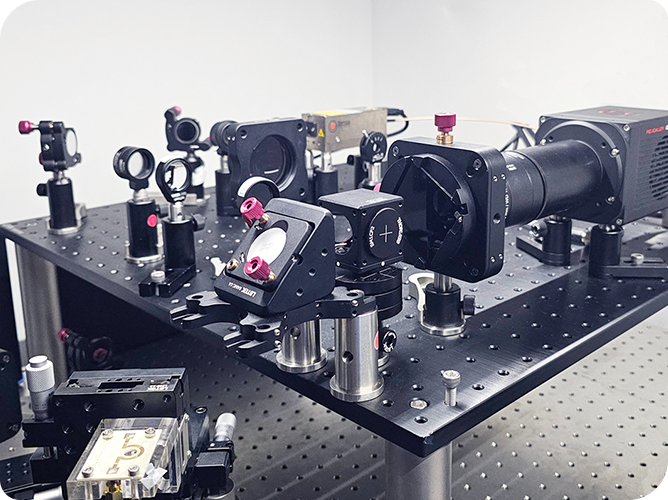
Optical Technique: A Schlieren system using a parallel light path and knife-edge filtering was used to visualize the shock waves.
Flow Source: Compressed air ejected from a 3mm diameter straight circular tube at Mach 1 speed.
Optimization: To enhance the visibility of subtle air texture changes caused by shock waves, the brightness of the High Speed Camera footage was lowered, making air disturbances more distinct.
Using the sequence images captured at 90,000 fps by the Revealer High Speed Camera, researchers identified three distinct phases of the jet stream evolution.
Phase I: Clear Multi-Stage Mach Rings (0–12 mm)
In the initial section near the nozzle (approx. 12 mm), the footage reveals a highly structured flow.
Observation: Four stable, neatly arranged Mach rings are visible. They possess sharp boundaries, high axisymmetric degree, and distinct contrast.
Physics: This pattern indicates a "expansion-compression" cycle. As gas leaves the nozzle, the static pressure is higher than the ambient pressure, causing immediate expansion and density reduction. The flow is then re-compressed by external pressure, forming annular shock waves (Mach rings).

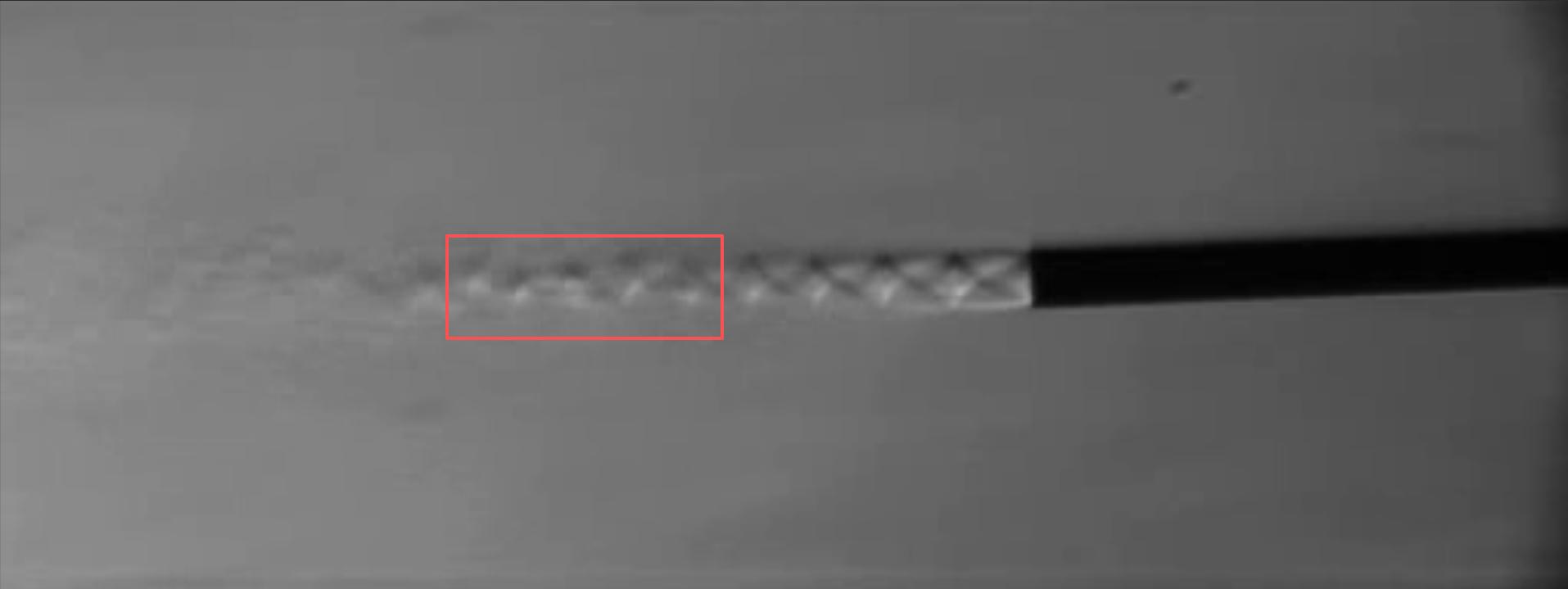
Phase II: Deformation and Blurring (12–27 mm)
Further downstream (approx. 12–27 mm), the structure begins to degrade.
Observation: About five fuzzy Mach rings are visible with reduced brightness.
Physics: This is caused by the shear layer—the boundary between high-speed jet flow and low-speed ambient air. As the distance increases, the shear layer thickens and penetrates the jet center. Intense turbulent mixing within this layer dilutes the pressure waves, turning the clear shock surfaces into discrete, broken compressed airflow.
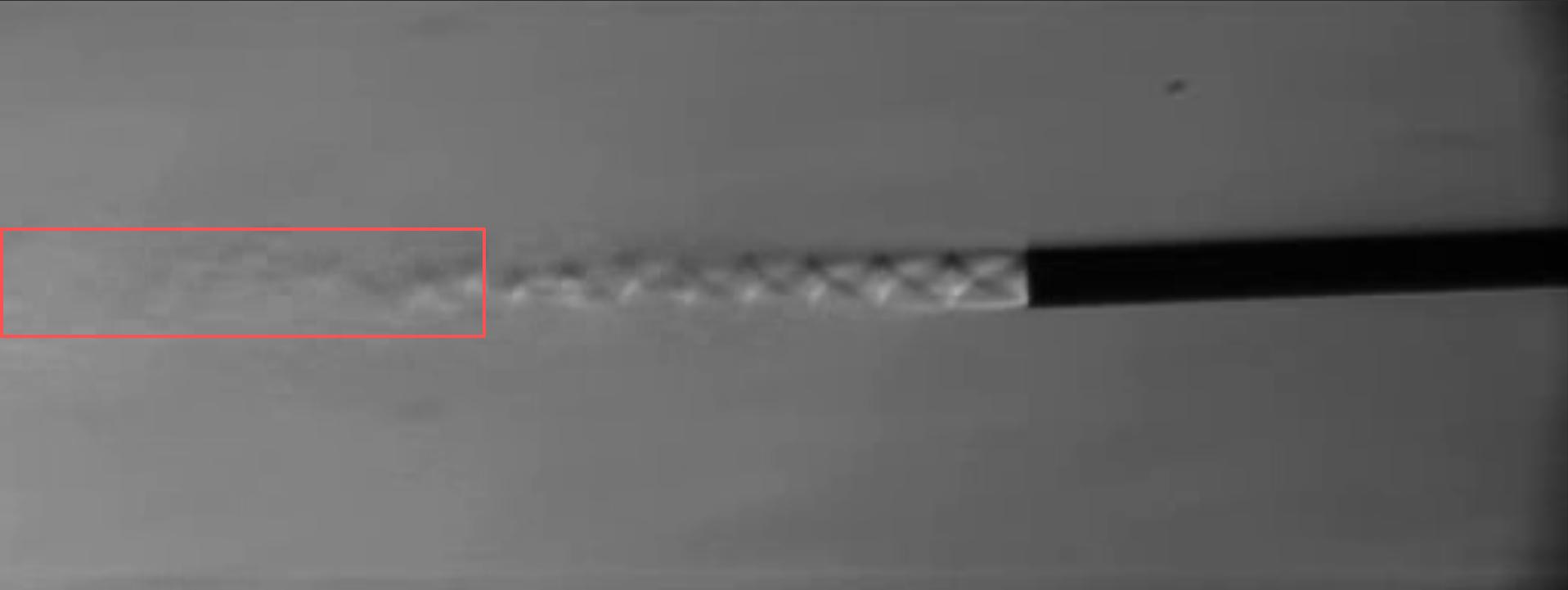
Phase III: Jet Oscillation and Dissipation (>27 mm)
Beyond 27 mm, the flow characteristics shift from shock-dominated to turbulence-dominated.
Observation: The Mach ring structure dissipates completely. The jet stream exhibits a "swinging" or lateral oscillation morphology.
Physics: As the jet velocity drops to sonic or subsonic levels, large-scale eddy structures develop alternately on the upper and lower sides of the stream. These eddies force the jet axis to undergo lateral displacement, resulting in the observed oscillation.
This study demonstrates that the Revealer High Speed Camera from Agile Device, when paired with Schlieren optics, is a powerful tool for hypersonic flow visualization. By achieving frame rates of 90,000 fps, the system successfully captured the dynamic lifecycle of supersonic jets—from the formation of clear Mach rings to the final turbulent oscillation. These high-fidelity visualizations provide critical data for advancing aviation engine design and flow control technologies.
 English
 Deutsch