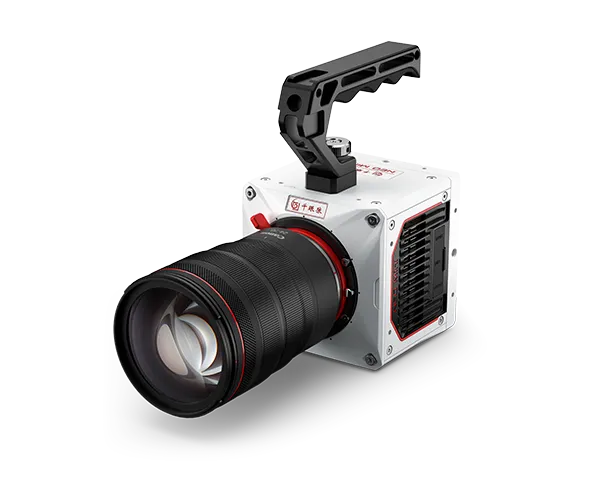
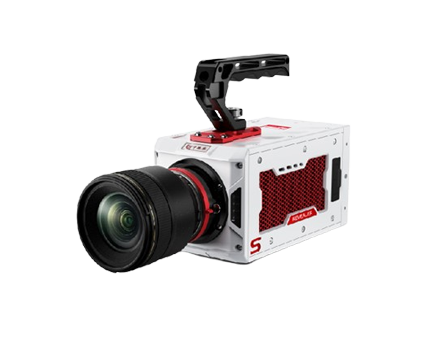
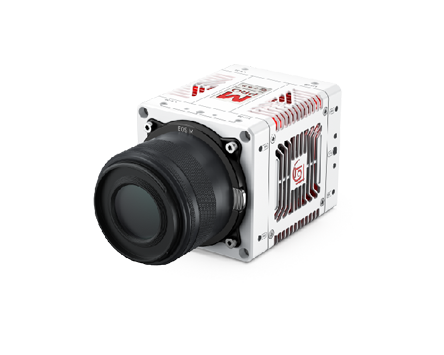
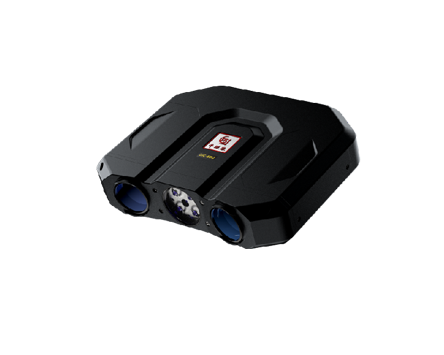
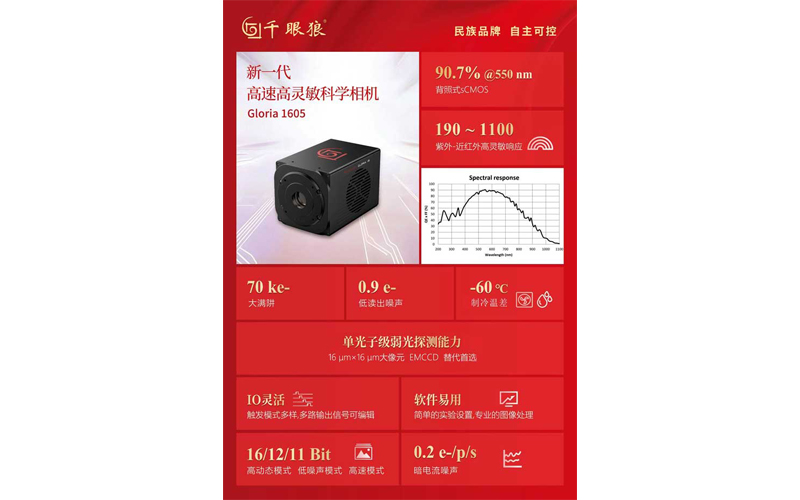
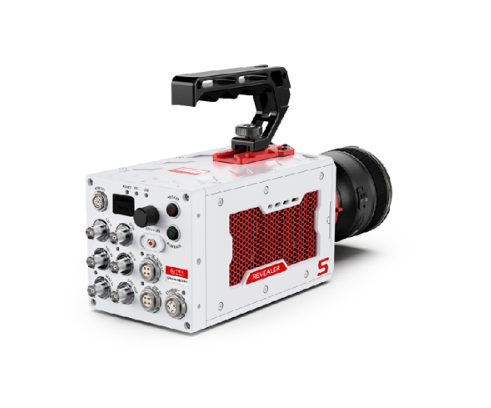
A scientific high-speed camera is designed for research and precision measurement, offering low-noise imaging, high quantum efficiency, and ultra-short exposure times that standard industrial cameras cannot match. Revealer scientific high-speed cameras combine back-illuminated (BSI) CMOS sensors with frame rates from 2,000 to 25,000+ FPS, making them ideal for fluid mechanics (PIV), material strain analysis (DIC), combustion research, and single-molecule fluorescence imaging.
Hey there! If you’ve ever marveled at a slow-motion video of a water droplet splashing or a racecar tire spinning, you’ve seen the magic of a high-speed camera. These incredible devices capture moments too fast for the human eye, turning fleeting seconds into detailed, frame-by-frame stories. Whether you’re a filmmaker, a scientist, or an engineer, understanding high-speed cameras can unlock a world of possibilities. In this guide, we’ll break down what makes these cameras tick, how high speed camera works, where they’re used, how much they cost, and how to pick the right one for your needs.
What Defines an Ultra High Speed Camera?
An ultra high speed camera is defined by its ability to capture transient events at rates exceeding 10,000 FPS (Frames Per Second) at high resolution. Modern digital high speed video cameras utilize high-bandwidth back-illuminated (BSI) CMOS sensors to maintain high Quantum Efficiency (QE) even at microsecond exposure times, ensuring critical data capture in ballistics, combustion, and high-speed manufacturing.
Why High-Speed Cameras Are Essential for Modern Manufacturing
For quality control engineers and production managers, high-speed cameras for manufacturing provide critical insights into fast-moving processes that are invisible to the human eye.
What Is a Scientific High-Speed Camera?
A scientific high speed camera is a specialized device designed to capture fast-moving events at thousands or even millions of frames per second (fps). Unlike your smartphone’s camera, which typically shoots at 30–60 fps, high-speed cameras can record at 1,000 fps or more, making them perfect for analyzing rapid motion in slow motion. They’re used in industries like automotive, scientific research, and filmmaking to freeze moments that happen in the blink of an eye.
Insight: High-speed cameras are defined by their ability to capture over 100 fps, with professional models often exceeding 10,000 fps for ultra-detailed slow-motion playback.
How Do High-Speed Cameras Work?
High-speed cameras rely on advanced sensors, like CMOS or global shutter cameras, to capture images at rapid intervals. The shutter speed—how quickly the camera opens and closes to capture light—is critical. A fast shutter speed (e.g., 1/10,000th of a second) prevents motion blur, while high frame rates ensure every moment is recorded. These cameras often use high-speed CMOS sensors for better light sensitivity and resolution, sometimes up to 8,21 megapixels or more.
Here’s a quick breakdown of key components:
Component
Role
Example Specs
Sensor
Captures light to create images
CMOS, 5120×4096 resolution
Shutter
Controls light exposure
Global shutter, 1/100,000s
Memory
Stores high volumes of data
320 GB internal memory
Processor
Handles fast data transfer
40Gbps fiber interface
Insight: Global shutter cameras are preferred for high-speed applications because they capture the entire frame at once, avoiding distortion seen in rolling shutter cameras.
Key Applications of High-Speed Cameras
High-speed cameras shine in scenarios where precision matters. Here are some top use cases:
· Aerospace: Launch Vehicle Testing and Monitoring, Aerodynamic Testing in Wind Tunnels, In-Flight Component Inspection, Flight Control System Testing, Spacecraft Re-entry Analysis
· Biomedical: Studying Insect Flight and Animal Movement, Analyzing Human Biological Processes, In-Vitro Cell and Tissue Research, Medical Device Testing and Surgical Simulation, Sports Medicine and Rehabilitation
· 3C Electronics/Semiconductors: Semiconductor Chip Manufacturing Process Monitoring, Lithium-Battery Production and Safety Testing, Drop test
· Automotive Crash Testing: Capture airbag deployment or crash dynamics at thousands of fps to improve vehicle safety.
· Scientific Research: Physics Research, ballistics, Fluid mechanics, mechanics of materials, Combustion, energy and power engineering
· Sports Analysis: Analyze an athlete’s golf swing or sprint mechanics in slow motion.
· Manufacturing: Detect defects on high-speed production lines, like in food packaging or electronics.
· Filmmaking: Create stunning slow-motion shots for movies or commercials, like exploding fruit or splashing liquids.
Insight: The automotive industry dominates high-speed camera use due to rigorous safety testing requirements, with over 33% market share in North America alone.
How Scientific High-Speed Cameras Work with PIV and DIC Systems
Scientific high-speed cameras serve as the core imaging component in two of the most important non-contact optical measurement techniques: Particle Image Velocimetry (PIV) and Digital Image Correlation (DIC), where a high speed imaging camera is required to capture rapidly changing physical phenomena with high temporal resolution. Their combination of high frame rates, low noise, and precise synchronization enables researchers to capture and quantify dynamic phenomena that traditional cameras cannot resolve.
1. Integration with Particle Image Velocimetry (PIV) Systems
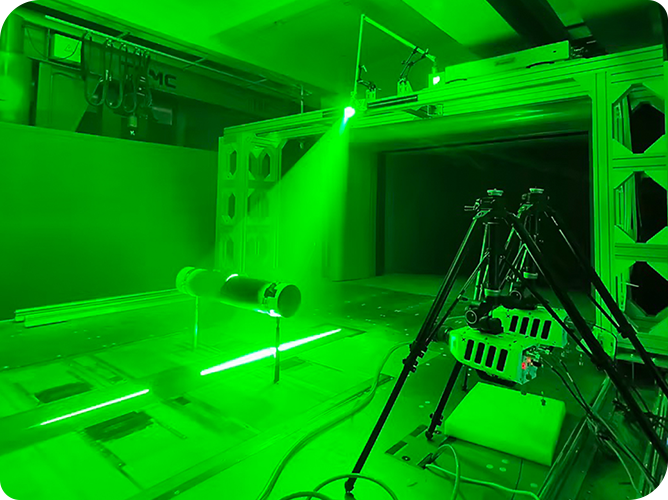
In PIV experiments, scientific high-speed cameras record the movement of tracer particles illuminated by a laser sheet. The cameras must deliver consistent high-speed image pairs with microsecond-level timing accuracy to calculate velocity vectors accurately.
Revealer scientific high-speed cameras excel in PIV applications because:
Frame rates of 10,000–25,000 FPS (or higher) support time-resolved PIV for unsteady and turbulent flows
Back-illuminated (BSI) sensors provide high quantum efficiency and excellent low-light performance
Flexible external triggering and multi-camera synchronization enable stereo-PIV, Tomo-PIV, and micro-PIV setups
Large on-board memory or real-time transmission options handle long-duration or high-data-volume experiments
Common scientific applications include combustion flow-field analysis, spray atomization, microfluidic studies, and wind tunnel testing. Many researchers pair Revealer cameras with our dedicated PIV measurement systems for complete turnkey solutions.
2. Integration with Digital Image Correlation (DIC) Systems
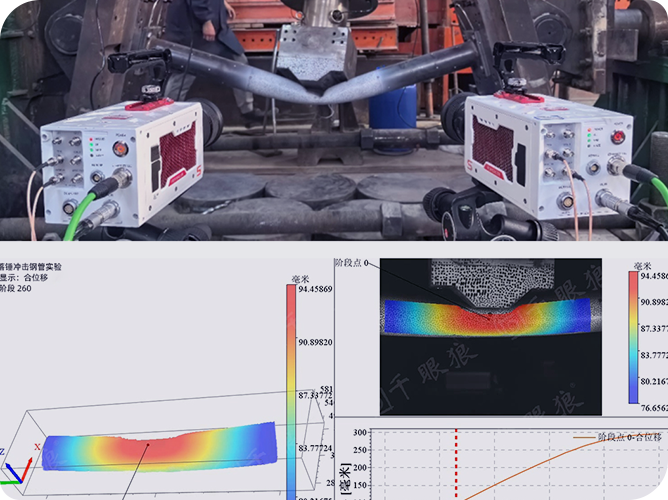
DIC uses high-resolution image sequences to measure full-field displacement and strain on material surfaces. Scientific high-speed cameras are essential when testing involves rapid deformation, impact, or vibration.
Key advantages of Revealer scientific high-speed cameras in DIC:
Global shutter eliminates rolling-shutter distortion during high-speed events
High spatial resolution combined with sufficient temporal resolution for dynamic events
Precise multi-camera synchronization for accurate 3D-DIC measurements
Excellent image quality even under short exposure times or challenging lighting conditions
These capabilities make them ideal for high-strain-rate material testing, fracture mechanics, aero-engine blade vibration analysis, drop tests, and Split Hopkinson Pressure Bar (SHPB) experiments.
3. Why Revealer Scientific High-Speed Cameras Deliver Superior Performance
Superior synchronization accuracy (microsecond level) for hybrid techniques such as PIV + PLIF or DIC + infrared thermography
High quantum efficiency and low read noise, critical for weak-signal scientific imaging
Robust compatibility with external triggers, lasers, and data acquisition systems
By integrating Revealer scientific high-speed cameras with professional PIV and DIC systems, researchers can obtain high-quality, repeatable data suitable for academic publications and industrial validation.
Need a complete high-speed imaging solution for your PIV or DIC experiment?
Contact Revealer for technical consultation and system configuration
High-Speed Camera vs. Traffic Speed Camera
There’s often confusion between high-speed cameras and traffic speed cameras (like those used to catch speeders). Let’s clear it up:
· High-Speed Cameras: Professional tools for slow-motion analysis, used in labs, studios, or testing facilities. They’re not for traffic enforcement.
· Traffic Speed Cameras: Automated devices that monitor vehicle speeds on roads, often using radar or laser technology. In the US, their legality varies by state—California allows them in some areas, but regulations are strict.
If you’re wondering, “Are speed cameras illegal in CA or the US?” the answer depends on local laws. Most states permit them, but usage is restricted to specific zones like school areas. As for “How fast can you go through a 70 mph speed camera?” it depends on the camera’s trigger threshold, typically set 5–10 mph above the limit.
Insight: Misunderstanding high-speed cameras as traffic enforcement tools highlights the need for clear educational content to guide users to the right technology.
Factors Affecting High-Speed Camera Prices
For users wondering how much is a high speed camera, costs can vary widely, from $1,000 for entry-level models to over $100,000 for professional-grade systems. Understanding the price of high speed camera is crucial for budgeting. Here’s what drives the price:
Factor
Impact on Cost
Example
Frame Rate
Higher fps (e.g., 100,000+) increases cost
$50,000+ for 100,000 fps models
Resolution
2–5 MP cameras are pricier than 0–2 MP cameras
$10,000–$30,000 for 4 MP
Sensor Type
CMOS or global shutter costs more
$5,000–$20,000 extra
Memory/Storage
Larger internal memory raises the price
$2,000–$10,000 for 10GB+
For example, a high-speed video camera for filmmaking might cost $5,000–$15,000, while a high-speed industrial camera for manufacturing could hit $50,000. Renting is a budget-friendly option, with daily rates starting at $100–$500.
Insight: Advancements in sensor technology are making high-speed cameras more affordable, with the market size projected to reach $2.19 billion by 2034.
Popular High-Speed Camera Models
Here’s a quick comparison of some top high-speed camera models available through revealerhighspeed.com:
Model
Frame Rate (fps)
Resolution
Key Feature
Approx. Price
Phantom T2410
24270 fps @ 1280×800
1280x800
84.3% QE,BSI CMOS,256GB
$150,000+
Photron Nova S20
18750fps @1024×1024
1024×1024
83%QE, 128GB
$100,000+
Revealer NEO 25
25,000 @1280×1024
1280×1024
85% QE,BSI CMOS,320GB
$100,000+
Insight: Entry-level models like the Chronos 2.1-HD offer high performance at a lower cost, making high-speed imaging accessible to smaller businesses and hobbyists.
FAQs About Scientific High-Speed Cameras
What is considered a high-speed camera? A camera that captures over 100 fps, with professional models often exceeding 1,000 fps for slow-motion analysis.
What’s the difference between a high-speed camera and a high-speed movie camera? A high-speed movie camera is a subset of high-speed cameras optimized for cinematic quality, often with higher resolution and color accuracy for filmmaking.
How fast can a high-speed camera record? Anywhere from 100 fps to over 2 million fps, depending on the model. For example, the i-Speed 7 Series can hit 2.45 million fps.
Are high-speed cameras used in manufacturing? Yes, high-speed cameras for manufacturing help detect defects in fast-moving production lines, like in food or electronics.
What’s the price of a high fps video camera? Entry-level models start at $1,000, while professional high-speed digital cameras can cost $50,000 or more.
Are high-speed infrared cameras different? High-speed infrared cameras capture thermal images at high frame rates, which is ideal for heat pattern analysis in industrial or research settings.
Can high-speed cameras be integrated with existing production lines?
Yes, absolutely. Modern digital high-speed video camera systems are designed for industrial integration. They typically offer standard communication protocols (like GigE Vision, Camera Link, or 10GigE), trigger inputs for synchronized capture with machine cycles, and software development kits (SDKs) for custom automation. They can be mounted on robotic arms, enclosed in protective housings for harsh environments, and connected directly to your factory network or PLC system for real-time or batch analysis of production data.
What's the ROI on high-speed cameras for manufacturing?
The Return on Investment (ROI) for high-speed cameras in manufacturing is typically compelling and can be realized in 6 to 18 months. Tangible benefits include a significant reduction in scrap and rework costs by catching defects early, minimizing production downtime through faster root-cause analysis of machine failures, and improving overall product quality and consistency. Intangible benefits include enhanced process understanding, better design validation, and valuable data for training and continuous improvement initiatives.
What is the fastest ultra high speed camera available?
While standard industrial models reach 25,000 - 100,000 FPS, specialized ultra high speed cameras like the Revealer series can reach up to 1,000,000 FPS at reduced resolutions for studying shockwaves and plasma physics.
Why choose a digital high speed video camera over a standard industrial camera?
Standard cameras are limited by data transfer speeds (usually 60-120 FPS). Digital high speed cameras use massive internal RAM buffers to store images at gigabyte-per-second rates before transferring them to long-term storage.
What is the difference between a scientific high-speed camera and an industrial high-speed camera?
Scientific high-speed cameras prioritize low read noise, high quantum efficiency (often >80%), and excellent low-light performance for research-grade data. Industrial cameras focus more on durability, integration with production lines, and cost-effectiveness for quality control. Scientific models usually offer better synchronization with lasers and other instruments, making them ideal for PIV, DIC, and fluorescence imaging, while industrial ones are optimized for repetitive manufacturing tasks.
Why is quantum efficiency (QE) important in scientific high-speed cameras?
Quantum efficiency measures how effectively the sensor converts incoming photons into electrical signals. High QE (e.g., 85% in Revealer NEO series) is critical in scientific applications because many experiments involve weak light signals, such as fluorescence, chemiluminescence, or short-exposure microsecond events. Higher QE delivers brighter, cleaner images with less noise, improving data accuracy in combustion, single-molecule tracking, and low-light fluid studies.
Are sCMOS cameras the same as scientific high-speed cameras?
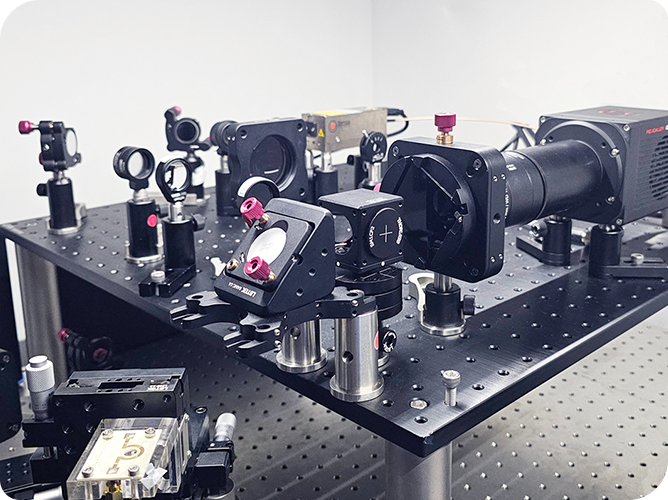
Not exactly, but they are closely related. sCMOS (scientific CMOS) is a sensor technology known for low noise and high sensitivity, often used in scientific high-speed cameras. Revealer offers both high-speed CMOS cameras and dedicated sCMOS models (e.g., Gloria series) optimized for widefield fluorescence, single-molecule imaging, and other life-science applications. Many scientific high-speed setups combine high-speed capabilities with sCMOS advantages.
Can scientific high-speed cameras be used for both research and industrial applications?
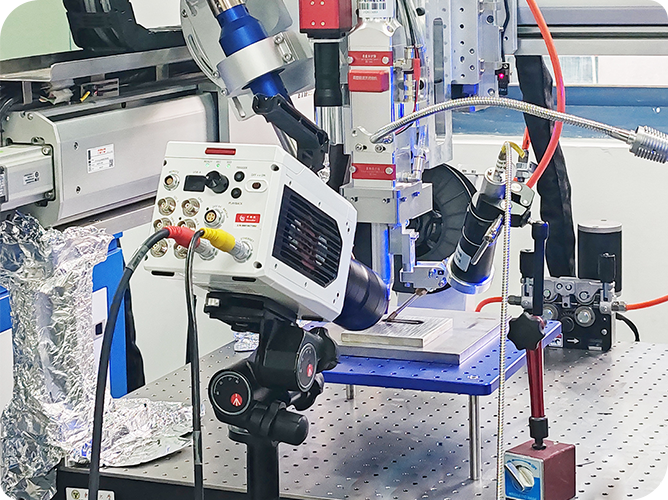
Yes. While optimized for scientific work, Revealer cameras are versatile enough for industrial R&D, such as welding process optimization, crash testing analysis, and high-speed manufacturing troubleshooting. Their combination of research-grade image quality and robust design makes them suitable for both academic labs and advanced industrial environments.
References
Wikipedia. (2025). High-speed photography.
Wikipedia. (2025). High-speed camera.
Grand View Research. (2024). High-speed camera market size, share & trends analysis report.
Mordor Intelligence. (2025). High-speed camera market - size, share & industry analysis.
Gminsights. (2024). High-speed camera market size & share, industry forecasts 2032.
Fastec Imaging. (2018). High-speed cameras for manufacturing.

 English
 Deutsch