Experimental Report: sCMOS Camera Selection and Validation for Single-Molecule Fluorescence Dynamics Research—Based on Revealer Gloria 1104 Wide-Field Imaging
This study evaluates the performance of the Revealer Gloria 1104 sCMOS Camera in tracking the Brownian motion of single-molecule fluorescent beads within a glycerol-water solution. Utilizing the HDR mode and high-gain strategies, the system successfully captured high-signal-to-noise ratio (SNR) data of double-helix trajectories. The results demonstrate that this sCMOS camera provides a reliable imaging foundation for single-molecule dynamics by balancing large field-of-view (FOV), weak signal detection, and high dynamic range.
2. Experimental Background
Single-molecule fluorescence imaging allows for the direct observation of biological macromolecules at the molecular scale, making it an essential tool for studying molecular conformation changes and diffusion behaviors. Experiments involving Brownian motion and spatial trajectory reconstruction impose rigorous demands on imaging systems:
Extreme Sensitivity: Capturing weak signals near the photon statistics limit.
Low Readout Noise: Ensuring single-molecule signals are not masked by system noise.
Large FOV: Increasing the number of statistically significant molecules per experiment.
High Dynamic Range (HDR): Managing local bright spots alongside dark backgrounds.
Stable Frame Rate: Supporting continuous time-series acquisition for trajectory analysis.
3. Experimental Introduction
3.1 Experimental Design and Methods
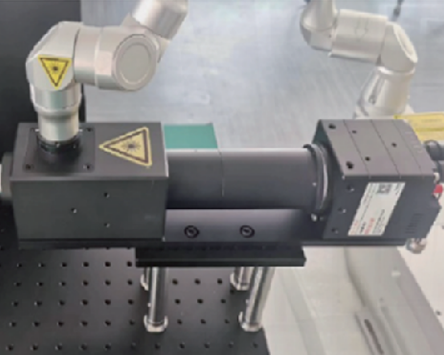
The experiment utilized wide-field fluorescence microscopy to collect continuous time-series data of fluorescent microspheres dispersed in a glycerol-water mixture. By adjusting solution viscosity and excitation power, the microspheres exhibited spatial double-helix trajectories during Brownian motion, serving as a comprehensive test for the camera's sensitivity and dynamic range.
Sample System: Single-molecule fluorescent beads in a glycerol-water solution.
3.3 Camera Operating Parameters
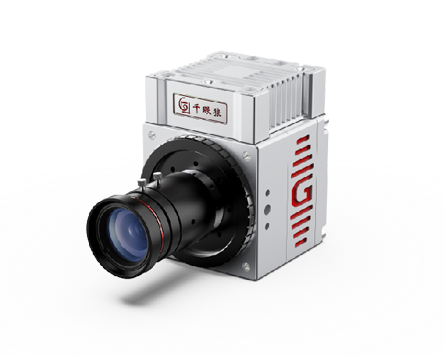
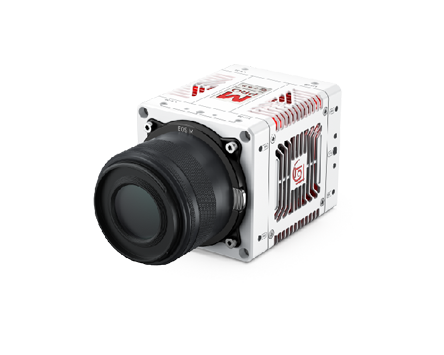
Model: Revealer Gloria 1104 sCMOS Camera (Developed by Agile Device).
Readout Mode: HDR.
Bit Depth: 16-bit.
Frame Rate: 10 fps.
Effective Resolution: 2048 × 512.
Binning: 2 × 2 (to enhance SNR).
Gain: High Gain mode.
4. Experimental Findings (Image Results Analysis)
The Revealer Gloria 1104 demonstrated stable and repeatable imaging performance:
Trajectory Capture: The camera clearly resolved the double-helix motion trajectories of the fluorescent beads at intervals of 0.1s, 0.7s, 2.2s, and 3.5s, reflecting the spatial characteristics of constrained Brownian motion.
HDR Performance: The HDR mode maintained the visibility of weak signals while suppressing saturation of local highlights, ensuring high contrast in complex scenes.
SNR and Resolution: At 10 fps, low readout noise ensured no significant interference with the fluorescence signal, meeting the requirements for subsequent kinetic modeling.
FOV Advantage: The large 2048 × 2048 full-field capability allows for more samples per capture, significantly improving statistical reliability compared to traditional EMCCDs.
5. Experimental Conclusion
The experiment validates the suitability of the Revealer Gloria 1104 sCMOS Camera for single-molecule fluorescence research. By effectively balancing weak signal detection, high dynamic range, and a large field of view, it serves as a superior choice for researchers requiring high-efficiency data acquisition and high-SNR results.
6. sCMOS Camera EvidenceChain (Value Chain)
The technical superiority of the Revealer Gloria 1104 over traditional EMCCDs is established through the following EvidenceChain:
Key Parameter
Revealer Gloria 1104
Andor iXon Ultra 888
Experimental Impact
Architecture
Back-illuminated sCMOS
Back-illuminated EMCCD
sCMOS avoids excess noise factor from electron multiplication.

 English
 Deutsch