Laser-Induced Cavitation Bubble refers to the complex physical phenomenon in which micro-nano bubbles are instantly generated in liquid by high-energy laser pulses , and then undergo a process of growth, expansion, collapse, and collapse.
The growth and collapse of cavitation bubbles are accompanied by transient dynamic behaviors such as high-speed shock waves and microjets with speeds of hundreds of meters per second. These are like "microscopic explosion" events that only last for a few microseconds, making accurate observation difficult.
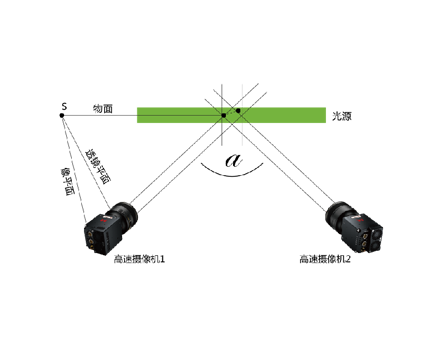
The commonly used "pump-probe" imaging technique uses two laser beams as excitation and probe light, repeatedly triggering and constructing images point by point. This technique can capture the dynamic process of cavitation bubbles. However, it requires a complex synchronization system to control the delay of the pump and probe beams, and can only capture images at a single time point, failing to record the complete temporal evolution of cavitation bubbles.
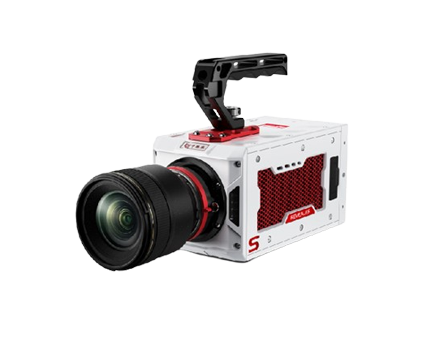
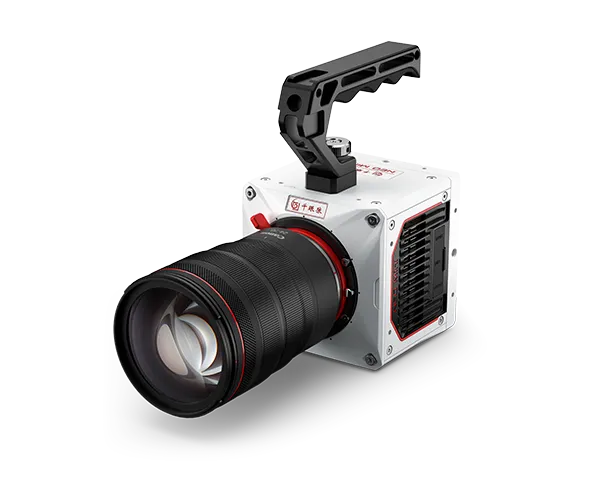
Compared with pump-probe imaging, the high-speed camera technology provided by HF Agile Device Co.,Ltd has the following advantages:
High temporal resolution: the Revealer high-speed camera has an extremely high frame rate of 200,000 frames per second in the ROI frame, supporting the analysis of the transient process from bubble generation to collapse on a 5μs time scale.
Visual observation: based on high-speed cameras, the morphological changes of bubbles can be observed intuitively and the complete bubble life cycle can be continuously recorded.
Simple Operation: a single trigger of a single high-speed camera is needed to capture the complete sequence of events.
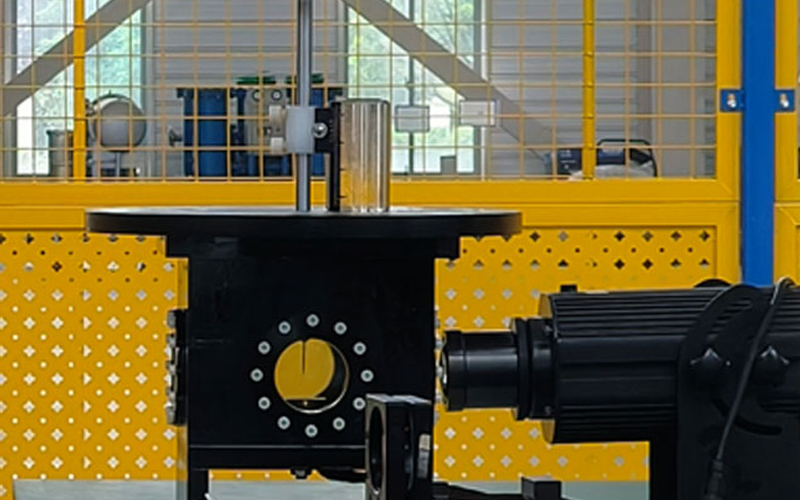
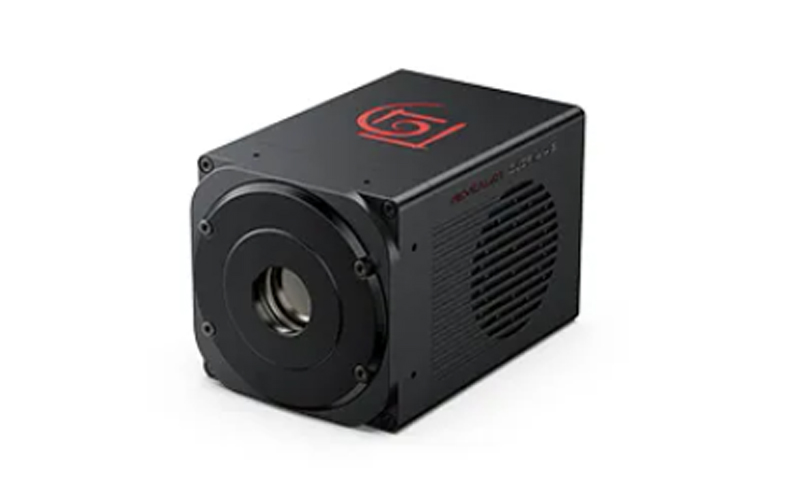
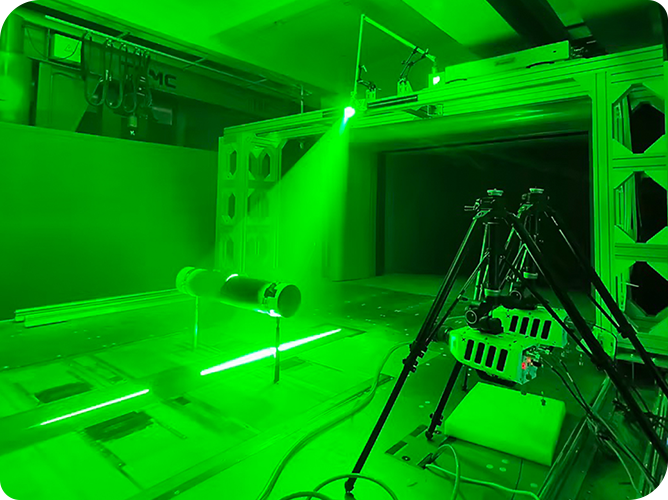
The experiment focused a nanosecond pulsed laser on a specific point in deionized water to induce cavitation bubbles. A Revealer NEO 25 high-speed camera was used , employing a 100mm fixed-focus lens combined with a multiplier to achieve micron-level/pixel spatial resolution. Frame-by- frame image sequence analysis revealed that the cavitation bubble life cycle can be divided into four key physical stages. Combined with fluid mechanics theory, each stage is analyzed as follows:
Ⅰ Bubble nucleation (0~5μs) : When the laser pulse is focused on a certain point in deionized water, the light intensity at the focus exceeds the breakdown threshold of the liquid medium, triggering multi-photon ionization and avalanche ionization processes to form a high-temperature and high-pressure plasma with a diameter of about 5~10μm (as shown below), and rapidly heating the surrounding liquid to produce a vapor nucleus. A scattered halo of ionization products can be seen around the nucleus.

Ⅱ Bubble expansion (5~30μs) : After the plasma cools down rapidly, the residual energy is converted into vapor pressure and kinetic energy inside the bubble, driving the surrounding liquid to accelerate outward. The liquid inertia dominates the bubble to expand in a nearly spherical shape, and the bubble diameter increases parabolically with time.





III Bubble collapse (30~55μs) : When the bubble expands to the point where the internal pressure is lower than the ambient water pressure, the surrounding liquid accelerates in the opposite direction, causing the bubble to collapse. The shape remains axially symmetrical, and a wavy structure appears at the boundary of the main bubble.





IV. Bubble collapse (55-85 μs) : The spatial asymmetry of the liquid backfill velocity leads to interface instability. This instability causes the bubble to break at the end of contraction, forming microjets near the boundary with a direction perpendicular to the wall. The energy generated at the moment of collapse causes the water body to break and nucleate again, forming secondary bubbles with smaller particle size.






This experiment successfully analyzed the four key physical stages of laser-induced cavitation bubbles through high-speed camera technology. With the help of the Revealer NEO 25 high-speed camera provided by HF Agile Device Co.,Ltd , the growth and collapse of cavitation bubbles, a "microscopic explosion" event, was visualized. This is of great significance for understanding the cavitation mechanism and quantifying the energy conversion mechanism of each stage.
 English
 Deutsch