Use Revealer high-speed camera to capture particles colliding with walls
The study of particle-wall collision dynamics is a core topic in the fields of energy, chemical and materials science, which affects the efficiency and reliability of energy equipment, such as fluidized bed reactor design. With its high spatiotemporal resolution, high-speed cameras have become an indispensable visualization tool for capturing particle collision trajectories in real time and quantifying energy dissipation behavior.
The rebound behavior of particles after collision is characterized by the recovery coefficient COR, which is controlled by particle properties (particle size, Young's modulus), wall properties (material stiffness, surface layer structure) and collision velocity. Traditional contact sensors cannot capture microsecond transient processes and can easily interfere with particle movements. The research team at Southeast University used the Revealer 10,000-frame high-speed camera to track the entire collision of 50μm-level particles at a frame rate of 40,000fps. For detailed research results, see Comprehensive Study on Particle−Wall Interactions From.
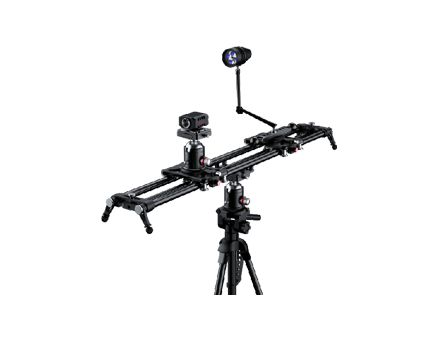
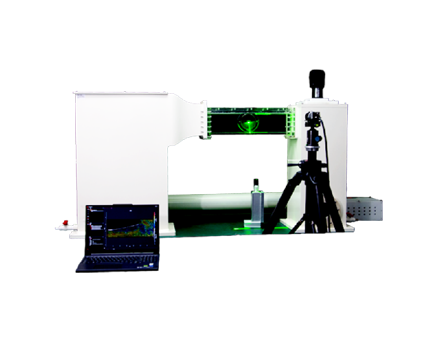
A dynamic capture device for particle collision was designed, which consisted of a particle emission system and a velocity measurement system (Fig. 1). Polystyrene (PS) and silicon dioxide (SiO₂) particles (particle size 50–100 μm) were selected as typical particles for the particle emission system, which hit the molybdenum (Mo) and Teflon targets, respectively. By adjusting the particle velocity (0–30 m/s), particle size and target properties, the dynamic evolution of COR was systematically studied. The velocity measurement system uses a displacement platform to accurately align the target surface and the nozzle on the same axis, adjusts the focus of the high-speed camera to the midpoint of the nozzle, and optimizes the physical field of view size and pixel resolution of 8×5.25mm by adjusting the distance between the nozzle and the target, ensuring that the frame rate of the high-speed camera at 40,000fps can accurately capture the particle motion trajectory.

1) Trace the collision trajectory
The high-speed camera captures the collision video sequence at 40,000 fps and analyzes it frame by frame with analysis software. Taking the 50μm PS particle hitting the Mo target surface as an example (Fig. 2), the system can accurately measure the incident angle, reflection angle and velocity components of the particles, and calculate the normal recovery coefficient. The data show that COR exhibits four stages of evolution with collision velocity, including adhesion, transition, stability, and shaping deformation, and the high-speed camera provides direct evidence for the division of collision dynamics.

2) Analyze the energy dissipation mechanism
By comparing the collision processes of different particle sizes (50 μm vs. 100 μm PS particles), the high-speed camera revealed the difference in the dominant role of elastic mechanics and damping force. Due to the inertial effect, the contact time of large particles is significantly prolonged, and the elastic resilience of large particles increases faster than that of viscous dissipation, resulting in higher COR values. This finding provides an important basis for optimizing the design of granular materials.

3) Validate the discrete element simulation model
In view of the complex working conditions of the preset particle layer on the target surface, the Discrete Element Method (DEM) model was used to verify the regulation law of cubic accumulation, hexagonal accumulation and layer thickness on COR in the accumulation mode, and the high-speed camera was used to provide an important experimental image basis for the verification of DEM. The experimental results show that the hexagonal stacked structure reduces the energy dissipation efficiency due to the alternating contact mode, and the COR value is 20% lower than that of the cube stacked structure.
The high-speed camera of Revealer provides multi-scale spatiotemporal analysis capability in this particle and wall collision experiment, and becomes a benchmark verification tool for particle dynamics research, with a high frame rate of 40,000fps to accurately quantify the COR dynamic partition, and provides sequence image data for DEM model verification by analyzing the particle velocity-displacement relationship, promoting cross-scale prediction from microscopic parameters to macroscopic phenomena.
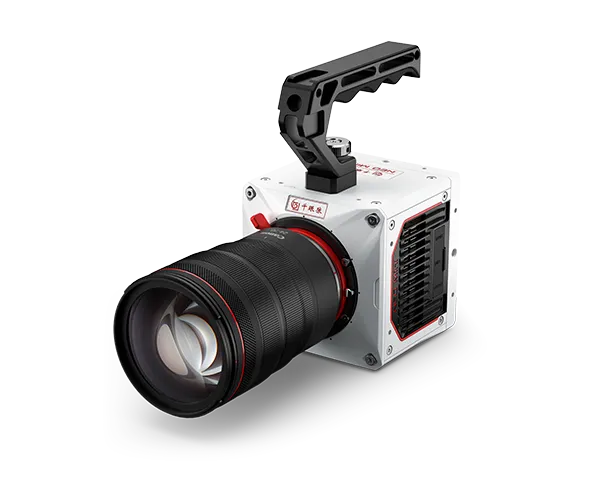
Attached: Revealer NEO 25 High Sensitivity Ultra High Speed Camera
40,000 frames per second at 1280×640 resolution

 English
 Deutsch