As fluid mechanics research continues to expand into interdisciplinary fields such as biofluids and energy engineering, advanced experimental measurement technologies are becoming essential bridges between fundamental research and engineering applications.
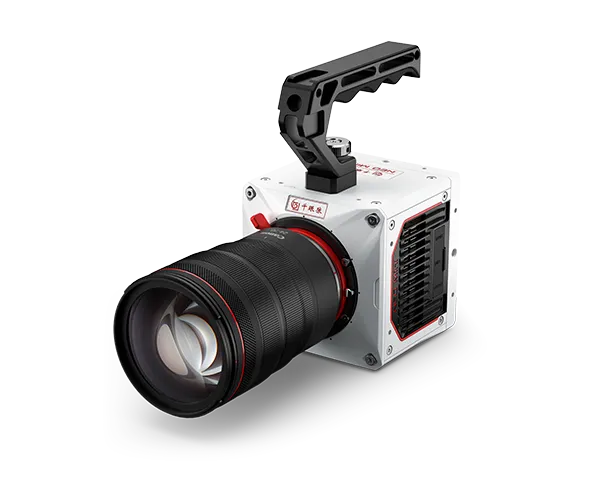
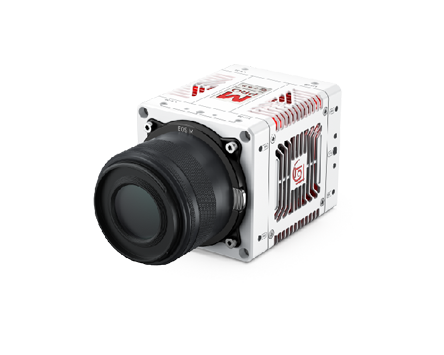
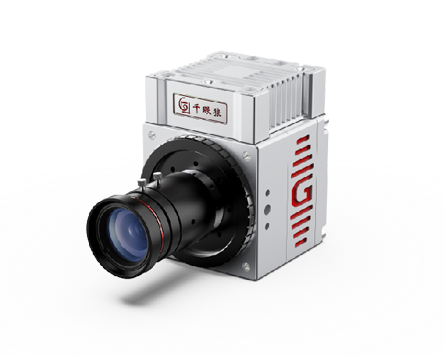
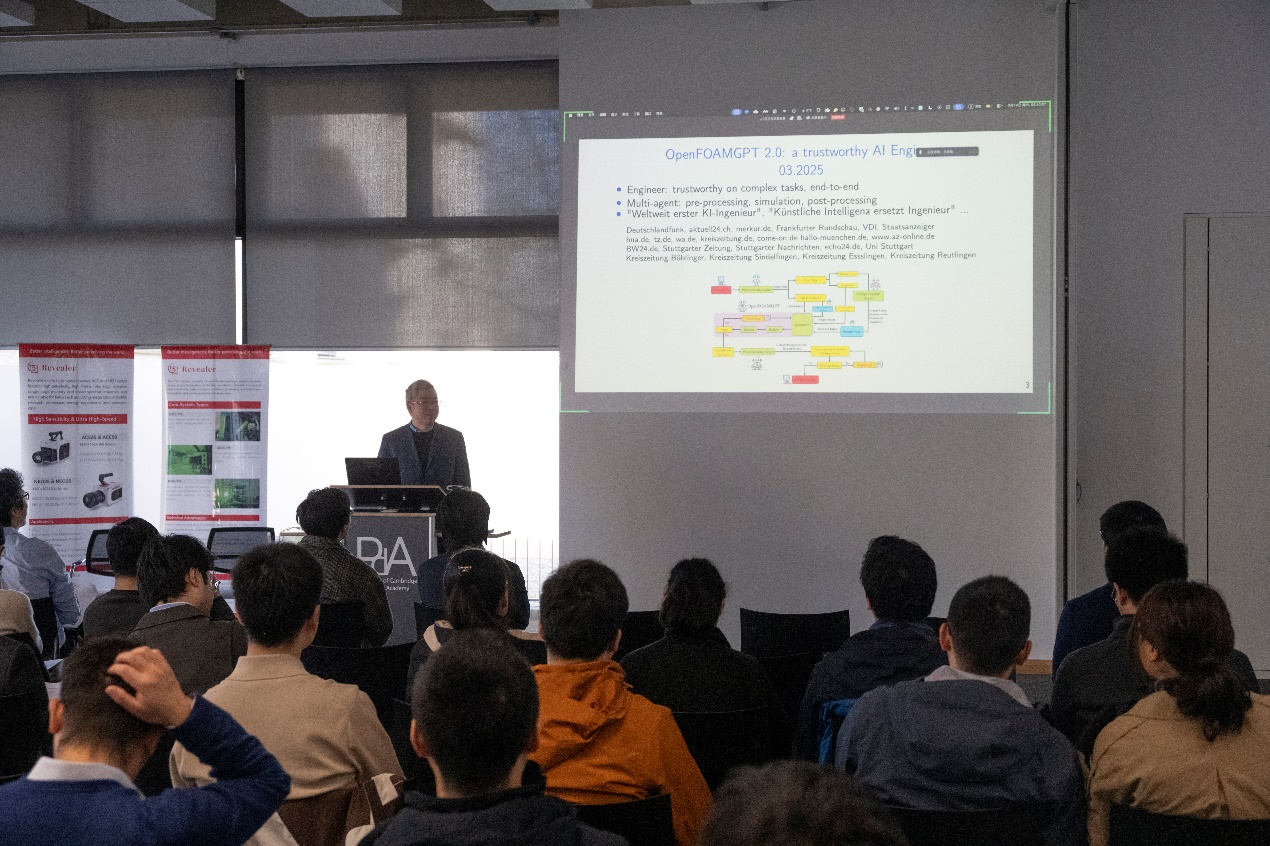
Recently, Agile Device participated in the Third Young Scholar Conference for Fluid Dynamics, held at the Postdoctoral Exchange Center of the University of Cambridge, showcasing the Revealer high-speed camera and Particle Image Velocimetry (PIV) measurement system. The forum brought together young scholars from leading universities including the University of Cambridge, the University of Oxford, Imperial College London, UCL, and the University of Edinburgh, focusing on frontier research topics and interdisciplinary applications in fluid mechanics.
In modern fluid mechanics research, many key phenomena occur over extremely short time scales and within complex spatial structures, such as turbulence evolution, interface breakup, and microscale biological flows.

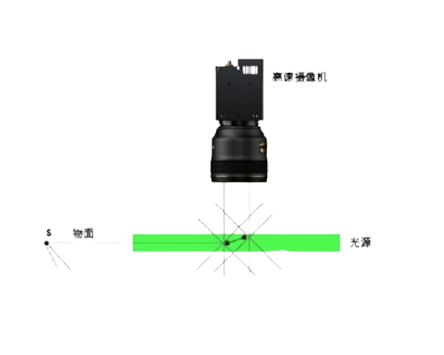
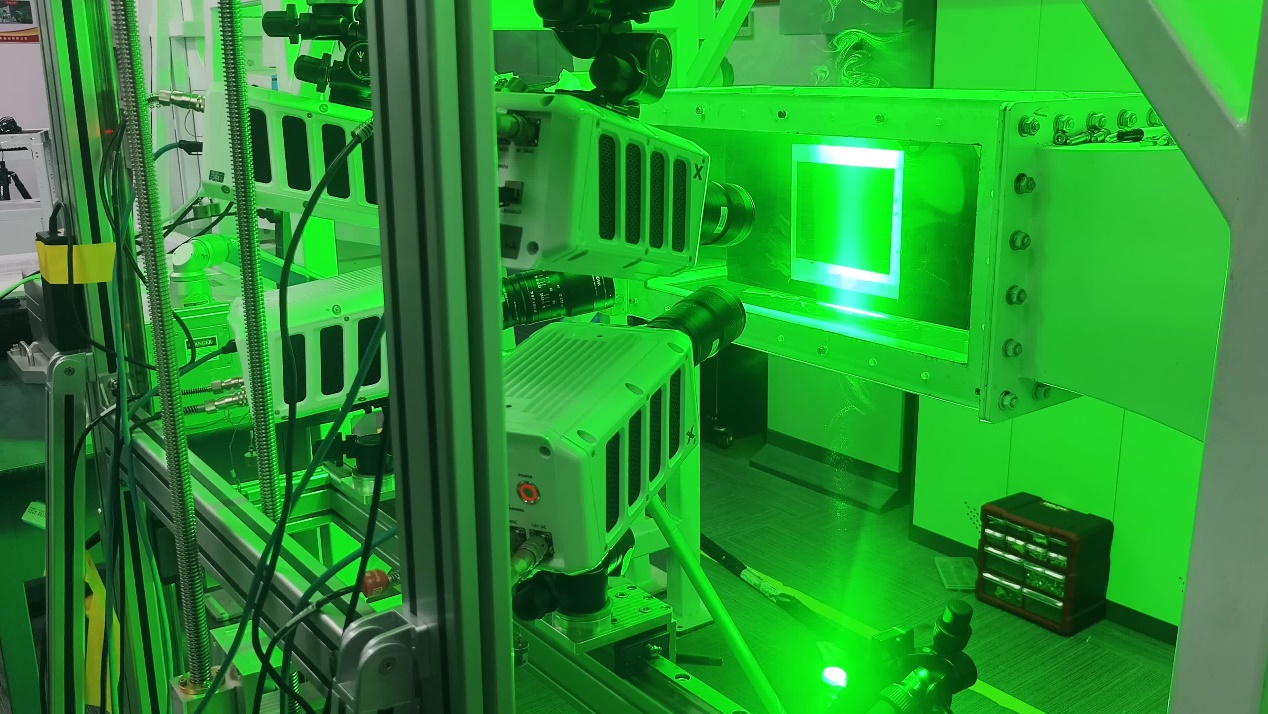
The combination of high-speed cameras and Particle Image Velocimetry (PIV) has become one of the most important measurement approaches in experimental fluid mechanics. These technologies enable researchers to capture microsecond-scale transient flow events, obtain high-resolution 2D or 3D velocity fields, analyze vortex dynamics, shear layers, and turbulence evolution, and validate experimental results against numerical simulations and computational models.
1. Biofluid Mechanics: From Microscale Biological Flows to Biomedical Engineering
Hemodynamics Research
Hemodynamics focuses on the flow behavior of blood within blood vessels, the heart, and cardiovascular medical devices. Key fluid dynamic parameters include velocity distribution, shear stress, vortex structures, and pulsatile flow characteristics. These flow features are closely related to cardiovascular disease mechanisms, thrombosis risk, and medical device performance.
High-speed PIV systems enable time-resolved measurements of transient blood flow velocity fields, transforming complex pulsatile flow patterns into quantifiable data. This allows researchers to better understand flow structures and their evolution, providing valuable experimental insights for cardiovascular research and medical device optimization.
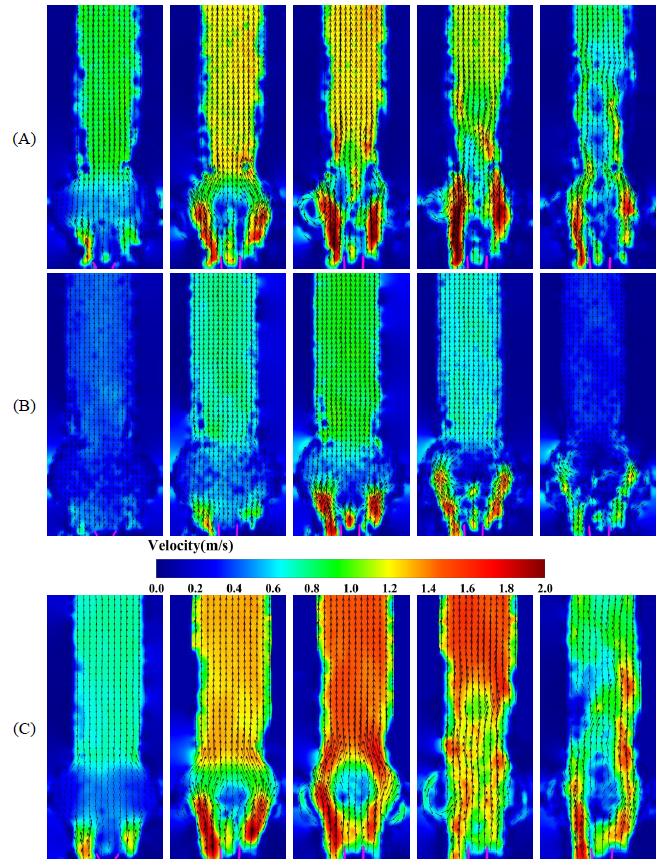
Figure-Velocity distribution nephogram measured by particle image velocimetry (PIV) system downstream of the aortic valve under healthy, heart failure and exercise conditions
Biological Propulsion Mechanisms
Many organisms in nature generate thrust by interacting with surrounding fluids through body undulations, fins, or wing motions. Understanding the formation of vortex rings, wake structures, and momentum transfer is crucial for studying biological propulsion efficiency.
High-speed PIV measurements allow researchers to capture instantaneous velocity fields around moving organisms, revealing the coupling between biological motion and surrounding flow structures. These insights are important for understanding natural propulsion mechanisms and inspiring the development of bio-inspired propulsion systems and robotic designs.
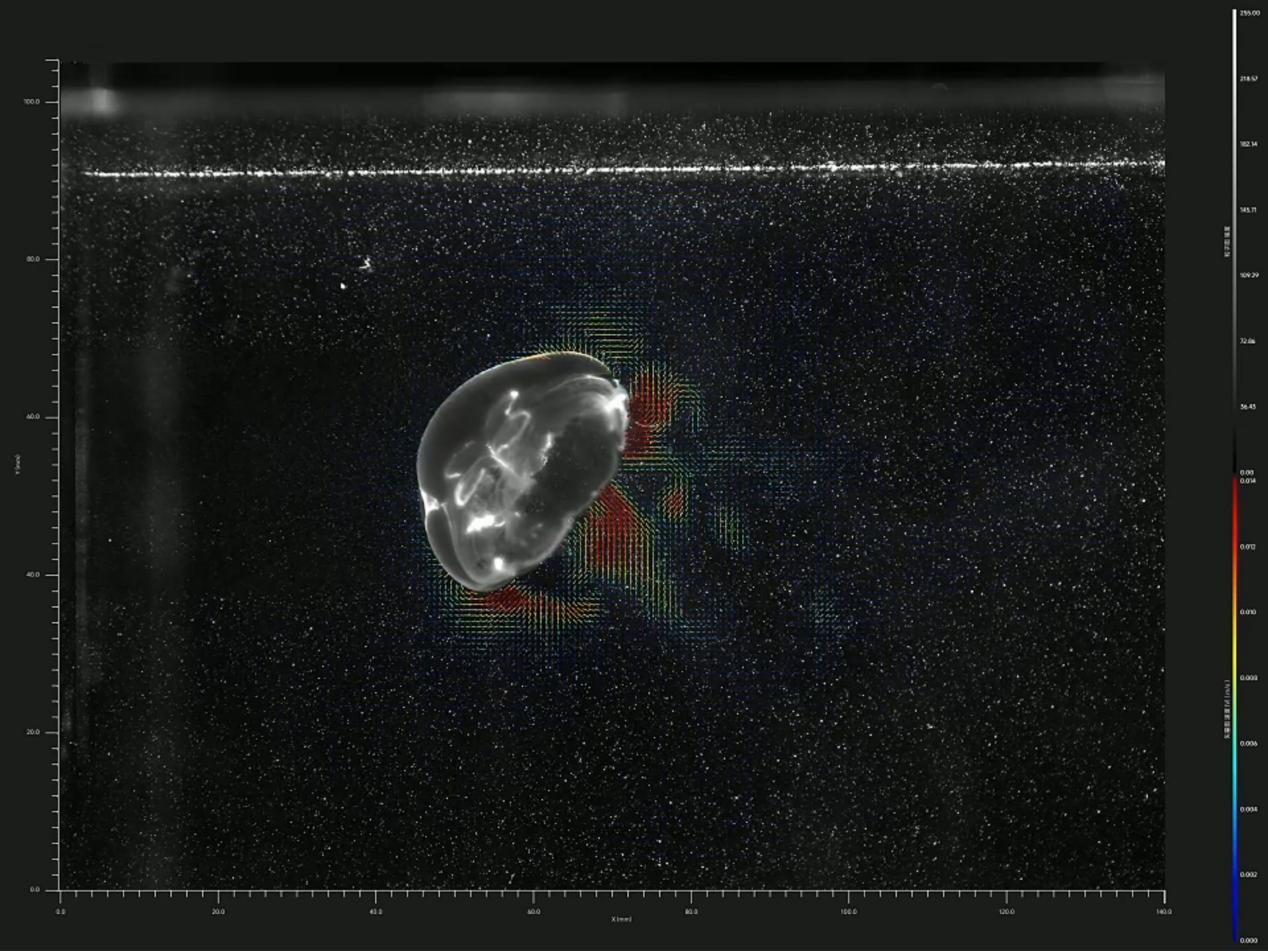
Figure-Velocity vector diagram of jellyfish swimming visualized and measured using a Particle Image Velocimetry (PIV) system.
Microfluidics Research
Microfluidic experiments involve fluid transport and mixing within microchannels typically ranging from tens to hundreds of micrometers in scale. Measuring velocity fields and interfacial dynamics in such confined environments presents significant experimental challenges.
Micro-PIV techniques enable high-resolution velocity measurements in microscale flows, making it possible to quantify transport phenomena and complex flow structures inside microchannels. These capabilities support research in microfluidic chip design, cell manipulation, particle control, and biomedical diagnostics.
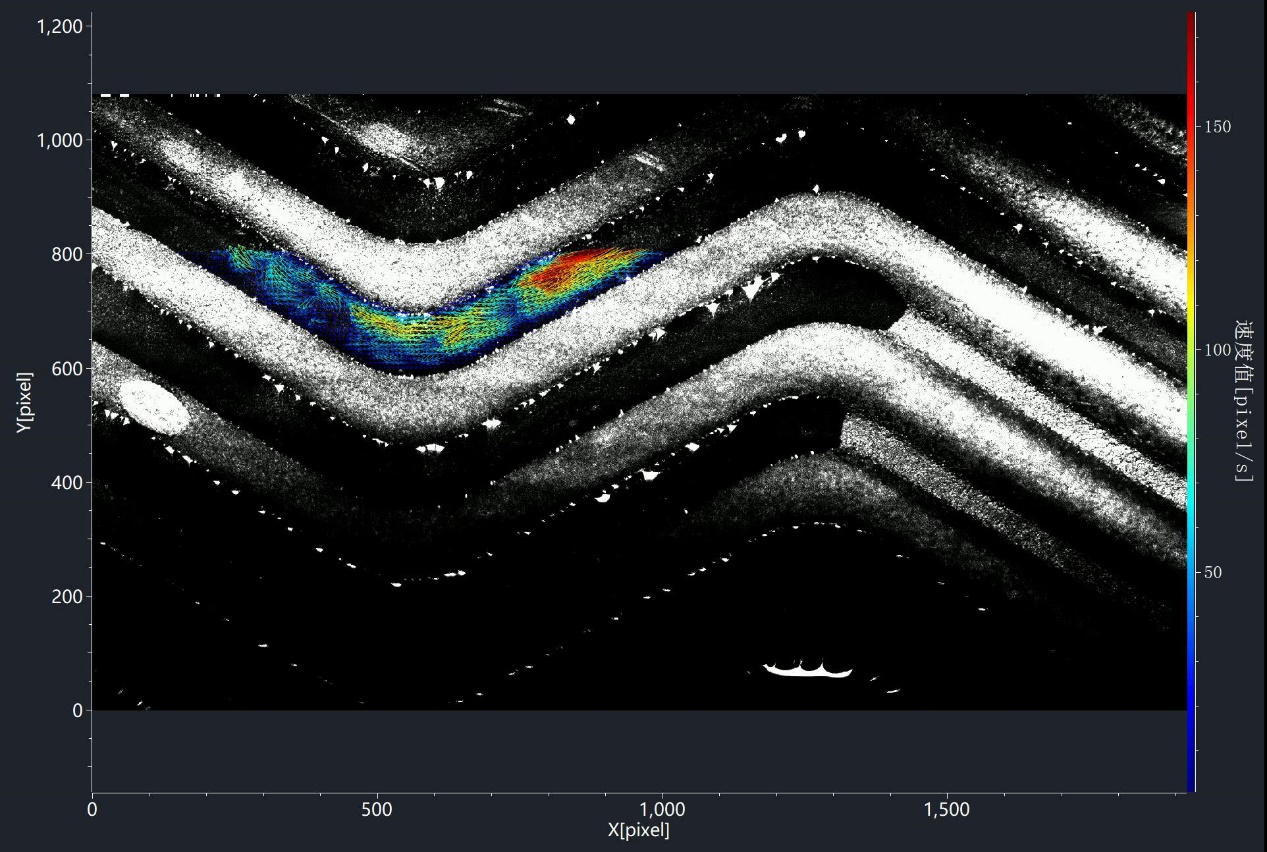
Figure-Velocity vector diagram of jellyfish swimming visualized and measured using a Particle Image Velocimetry (PIV) system.
2. Energy Engineering: Understanding Complex Flows in Energy Systems
Wind Energy and Aerodynamics
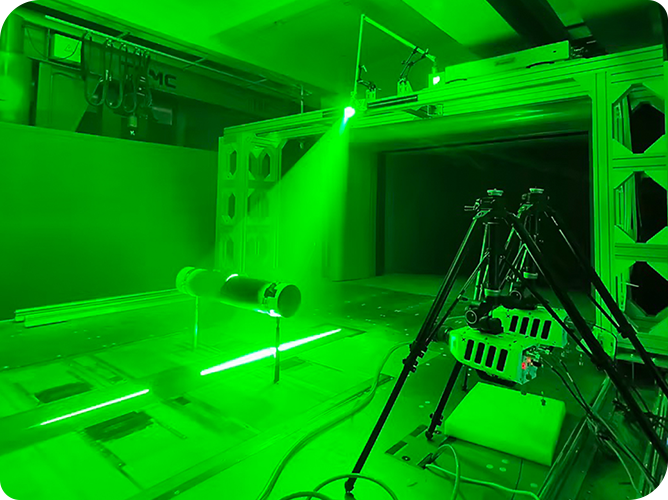
In wind energy research, airflow around turbine blades generates complex structures such as boundary layers, vortex shedding, and wake flows, which directly influence turbine efficiency, structural loading, and wind farm layout optimization.
PIV measurement systems allow researchers to capture time-resolved velocity fields in wind tunnel experiments, enabling direct observation of flow structures around turbine blades and wake evolution. These measurements provide valuable experimental data for improving aerodynamic performance and enhancing wind energy efficiency.
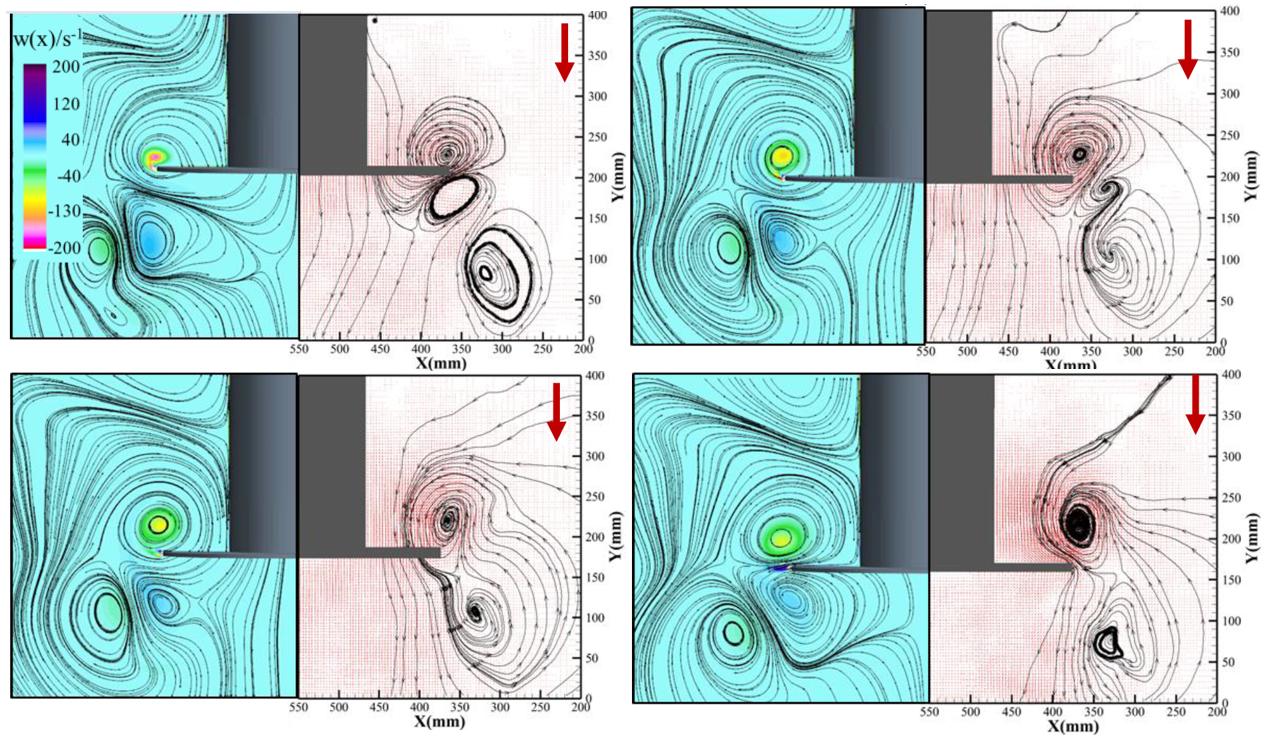
Figure-Velocity vector diagram of jellyfish swimming visualized and measured using a Particle Image Velocimetry (PIV) system.
Hydrogen and Clean Combustion Research
Hydrogen and clean combustion research involves complex processes such as fuel injection, turbulent mixing, and flame propagation, which occur on extremely short time scales and involve intricate flow interactions.
High-speed PIV systems can capture transient velocity fields in combustion regions, revealing the flow structures associated with fuel-air mixing and flame dynamics. These insights support research on combustion mechanisms, burner design optimization, and the development of clean and efficient combustion technologies.
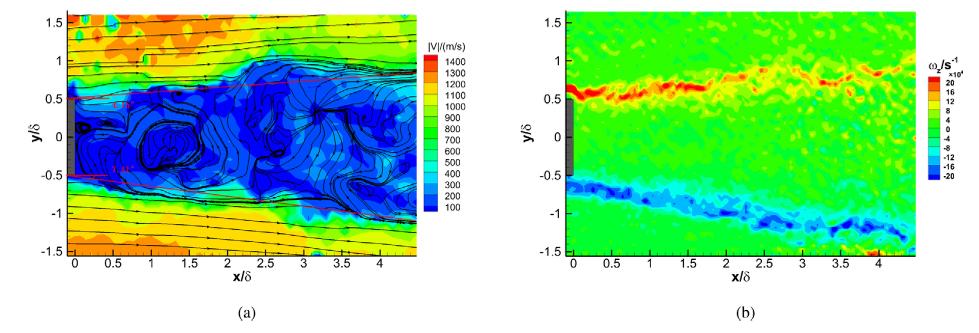
Figure-Instantaneous velocity field (left) and vorticity field (right) of an induction mechanism in a combustion chamber, visualized and measured using particle image velocimetry (PIV) system.
Multiphase Flow and Heat Transfer
Multiphase flow and heat transfer processes often involve phenomena such as bubble formation, droplet breakup, and phase change, accompanied by complex flow structures and dynamic interfaces.
High-speed PIV systems enable time-resolved measurements of velocity fields in multiphase flows, helping researchers analyze bubble dynamics, phase interactions, and local heat transfer mechanisms. These measurements provide valuable insights for optimizing heat transfer equipment and improving energy system efficiency.
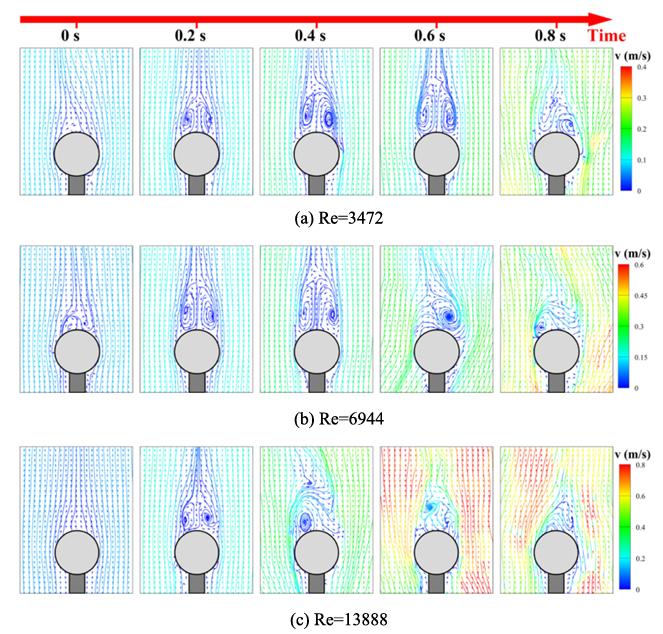
Figure-Evolution of velocity vectors and streamlines around particles under different turbulence intensities, visualized and measured using particle image velocimetry (PIV) system.
The Young Scholar Conference for Fluid Dynamics at Cambridge provided a valuable platform for early-career researchers to exchange ideas and explore the latest developments in fluid mechanics. It also highlighted the critical role of advanced experimental measurement technologies in advancing the frontiers of fluid science.
As fluid mechanics continues to intersect with fields such as biomedicine, energy engineering, and interdisciplinary research, high-precision and high-speed flow measurement techniques are becoming indispensable tools for connecting fundamental research with practical engineering applications.
Through visualization and quantitative analysis, the Revealer high-speed camera and Particle Image Velocimetry (PIV) measurement system enable researchers to gain deeper insights into complex flow phenomena, supporting both scientific discovery and engineering innovation while empowering the next generation of fluid mechanics researchers to explore new frontiers in fluid science.
 English
 Deutsch