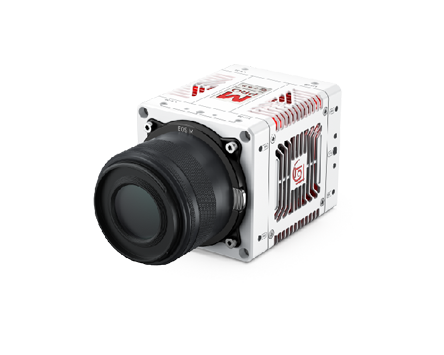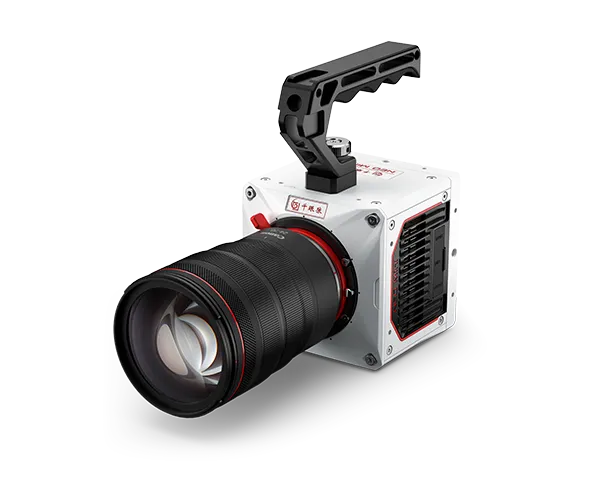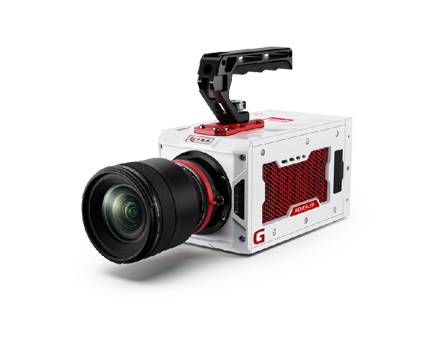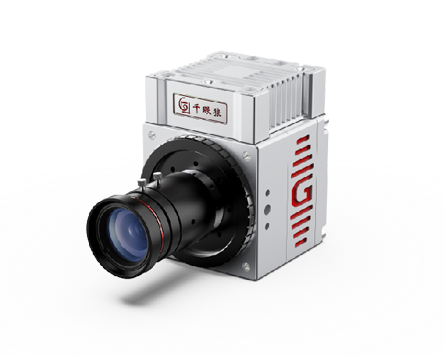
The multi-radical radiation characteristics during the mixed combustion of methane/ammonia/oxygen are observed with spatiotemporal resolution using a multi-band UV imaging system constructed with the Revealer high-sensitivity high-speed camera NEO25(UV).
In the study of low-temperature oxidation reaction kinetics, the generation and evolution of key radicals (such as NO*, OH*, CH*, NH2*) inside the flame directly determine the combustion reaction path branching, heat release structure, and pollutant formation mechanism. Especially in the methane-ammonia mixed combustion system, the introduction of ammonia changes the radical pool structure, making traditional diagnostic methods based on global luminescence or temperature field unable to meet the requirements of reaction zone resolution.
Narrowband-filtered spontaneous emission imaging enables selective observation of characteristic radicals. However, for wavelengths below 300 nm (UV), weak emission signals, significant air absorption, and low optical system transmittance impose a strong coupling constraint between image quality and temporal resolution.
To address this challenge, the research team adopted the Revealer NEO25(UV) high-speed camera to construct a multi-band UV imaging system, enabling time-resolved observation of radical emission signals at different characteristic bands and evaluating the applicability of imaging system configurations in low-light combustion diagnostics.
A non-contact optical diagnostic platform centered on the high-speed camera was used.
Imaging system: The Revealer NEO25(UV) high-speed camera provides a spatial resolution of 1280×1024 @ 25,000 fps and a spectral detection range of 200–1100 nm. At the weak UV wavelength of 250 nm, the quantum efficiency reaches 60% (Figure 1), providing a foundation for detecting deep-UV weak emission signals.
-high-speed-camera.jpg "figure-1-spectral-response-of-the-neo25(uv)-high-speed-camera.jpg")
Figure 1 – Spectral response of the NEO25(UV) high-speed camera
Optical system: Two UV-specific lenses (100 mm/F2.0 and 75 mm/F3.2) balance light throughput and field of view; narrowband filters with center wavelengths of 228 nm, 310 nm, 430 nm, and 632 nm isolate emission signals from different radicals.
Additional equipment: An image intensifier is introduced for photomultiplication, amplifying incident photon signals especially for the NO* 228 nm UV band, thereby improving the signal-to-noise ratio of the imaging system and enabling high-speed imaging.
The overall imaging system consists of "high-speed camera NEO25(UV) + UV optics + narrowband filtering + image intensifier".
Experiments were conducted in an open combustion burner with stable mixed combustion of methane, ammonia, and oxygen supplied from the bottom. The flame develops freely, minimizing wall effects on the radiation field.
For each radical, the corresponding filter was configured and the acquisition parameters of the Revealer NEO25(UV) high-speed camera were adjusted. Controlled variables include:
Spectrum: Different center wavelengths to distinguish NO*, OH*, CH*, and NH2* emissions.
Imaging parameters: Frame rate (20–1000 fps) and exposure time for dynamic capture.
Sensitivity: Camera gain adjustment or image intensifier activation for photon signal amplification.
Optical throughput: Aperture and focal length optimization to maximize photon collection efficiency.
Multiple parameter sweeps across different bands were performed to identify the trade-off between imaging capability and temporal resolution.
4.1 Deep-UV imaging at 228 nm (NO*)
The 228 nm band corresponds to NO* emission, which is extremely weak and significantly absorbed by air. With an image intensifier, the Revealer NEO25(UV) high-speed camera clearly captures the flame contour at 100 fps under maximum exposure (Figure 2). The image shows that the reaction zone is mainly concentrated in the axial region, exhibiting an elongated structure.
Further increasing the frame rate causes rapid signal decay, indicating that imaging at this band is limited by incident photon counts rather than the readout performance of the high-speed camera.
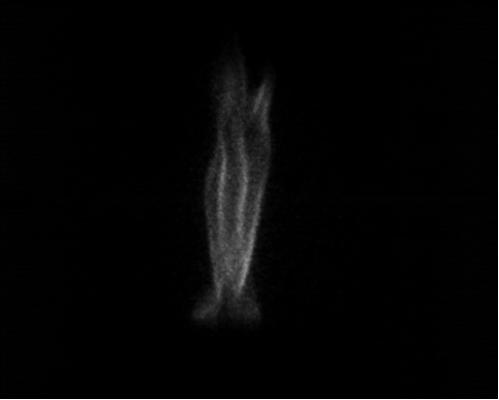
Figure 2 – Methane+ammonia combustion at 228 nm – 100 fps – 100mm/F2.0 aperture (with image intensifier)
4.2 Main reaction zone structure at 310 nm (OH*)
The 310 nm band corresponds to OH* emission, a typical marker of the main reaction zone. Without an intensifier, the NEO25(UV) camera obtains a clear flame contour at 100 fps (Figure 3). Higher frame rates lead to insufficient signal and degraded imaging performance.
With an image intensifier, the NEO25(UV) captures continuous flame structures at 1000 fps (Figure 4). The images show pronounced fluctuations at the flame front, reflecting shear-layer instabilities and local flow effects on the reaction zone.
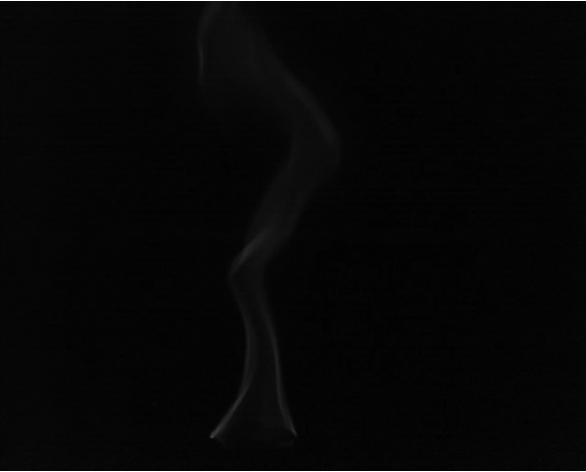
Figure 3 – Methane+ammonia combustion at 310 nm – 100 fps – 8000 μs exposure – 100mm/F2.0 aperture (without intensifier)
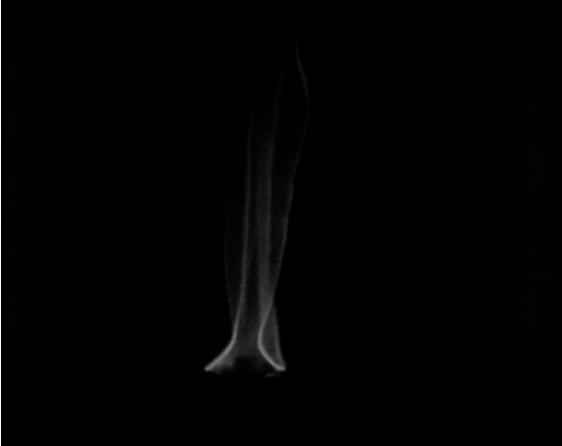
Figure 4 – Methane+ammonia combustion at 310 nm – 1000 fps – maximum exposure – 100 mm/F2.0 aperture (with intensifier)
4.3 Flame front structure at 430 nm (CH*)
The 430 nm band has higher signal intensity than the UV bands. At 1000 fps with maximum exposure and without an intensifier, the NEO25(UV) high-speed camera achieves stable imaging. The captured images(Figure 5) clearly resolve curvature and local entrainment structures at the flame front, reflecting interface morphology changes due to flow–combustion coupling. Compared to OH*, CH* is located closer to the outer flame boundary, indicating that the NEO25(UV) camera is suitable for flame front tracking and flame propagation speed analysis.
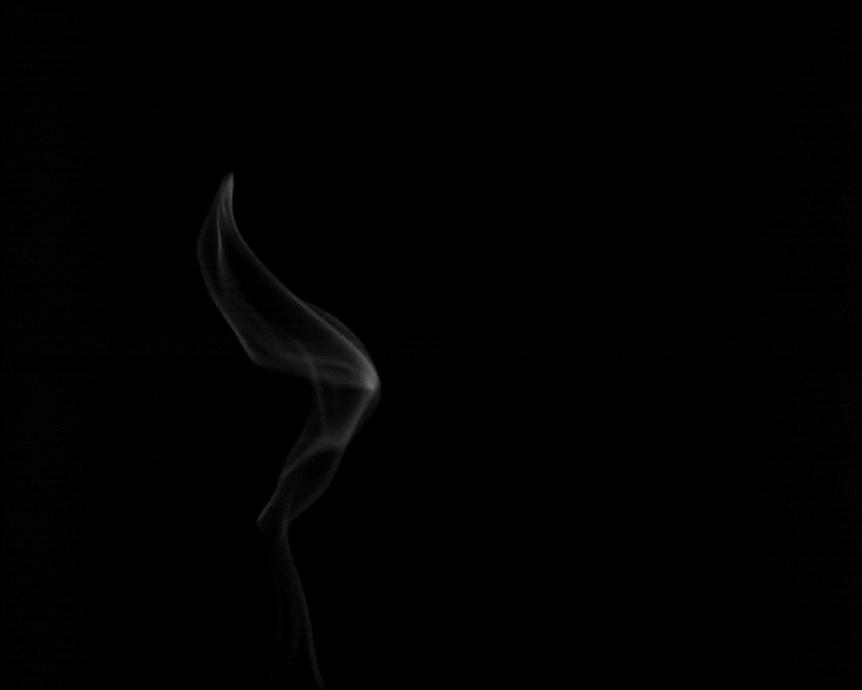
Figure 5 – Methane+ammonia combustion at 430 nm – 1000 fps – maximum exposure – 100 mm/F2.0 aperture (without intensifier)
4.4 Nitrogen reaction pathway at 632 nm (NH2*)
The 632 nm band corresponds to NH2* emission in the visible range, with significantly higher intensity than the UV bands. The NEO25(UV) camera obtains high-contrast images at 1000 fps without an intensifier. Figure 5 shows high overall flame brightness and a more voluminous structure. The spatial distribution of NH2* is substantially broader than that of OH* and CH*, indicating its presence over a wider temperature range and reflecting intermediate product diffusion and subsequent secondary reactions during ammonia combustion.
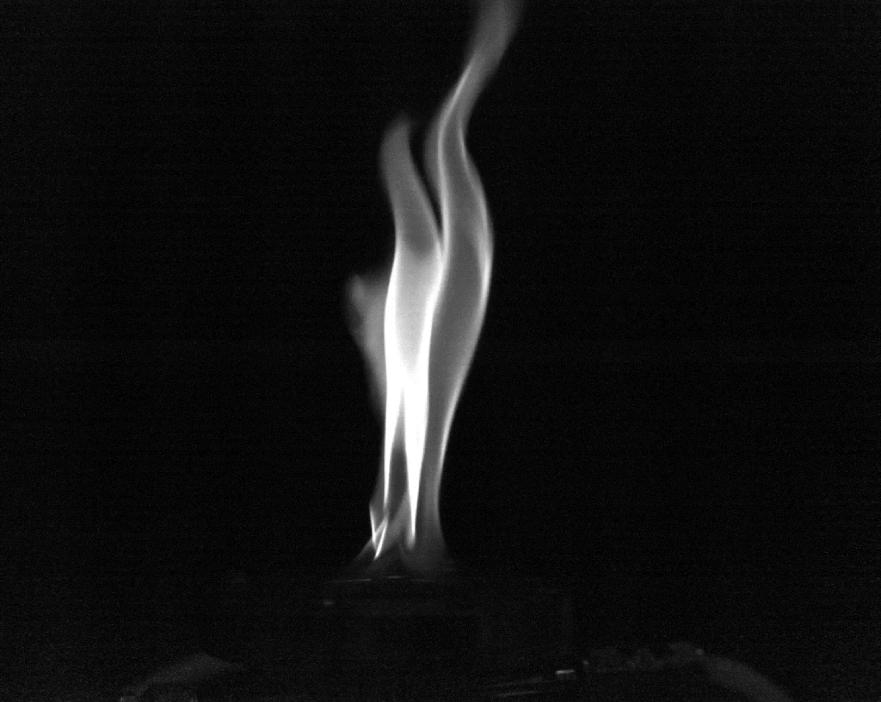
Figure 6 – Methane+ammonia combustion at 632 nm – 1000 fps – maximum exposure – 100 mm/F2.0 aperture (without intensifier)
4.5 Relationship between imaging capability at different bands and imaging system configuration
Based on multi-band experimental results, the applicability of the NEO25(UV) high-speed camera can be summarized from the perspective of imaging system capability:
228 nm deep-UV band (NO*): Extremely low photon flux. Imaging is entirely limited by photon shot noise. The NEO25(UV) camera must be combined with an image intensifier to achieve photoelectric signal multiplication, enabling observation at the hundred-fps level.
310 nm and 430 nm bands (OH*, CH*):Higher emission intensity. The imaging system transitions from photon-limited to parameter-limited. Without an intensifier, the NEO25(UV) camera achieves hundred-fps imaging; with an intensifier, it extends to thousand-fps time-resolved imaging.
632 nm visible band (NH2*):High emission intensity. The NEO25(UV) camera stably supports 1000 fps high-speed imaging without an intensifier.
Using the multi-band combustion imaging system built around the Revealer NEO25(UV) high-speed camera, this study systematically observed typical radical emissions in methane/ammonia mixed combustion. The key conclusions are as follows:
I. The radical emission intensity at different bands determines the baseline configuration of the imaging system. NO* (228 nm) requires an intensifier for effective observation; OH* (310 nm) can be elevated to thousand-fps time resolution with intensifier assistance; CH* and NH₂* support high-speed imaging without intensification.
II. A coupling exists between imaging frame rate and signal intensity. Under low photon flux, imaging performance is limited by photon statistics; under high light intensity, it is primarily constrained by parameter settings.
III. Flame structures exhibit spatial stratification under different radical imaging: CH* marks the flame front, OH* characterizes the main reaction zone, and NH₂* reflects the distribution of nitrogen-containing intermediates, providing image-based support for multi-band diagnostics.
IV. The Revealer NEO25(UV) high-speed camera demonstrates excellent cross-band adaptability from deep UV to visible light. Combined with an image intensifier and optical systems, it covers a wide range of combustion diagnostic scenarios.
The imaging system centered on the Revealer NEO25(UV) – comprising a "high-speed camera, UV optics, narrowband filtering, and image intensifier" – represents a key technological pathway for visualizing low-temperature oxidation reaction kinetics. It provides a reliable experimental tool for future high-spatiotemporal-resolution reaction mechanism studies and low-carbon combustion technology development.
 English
 Deutsch