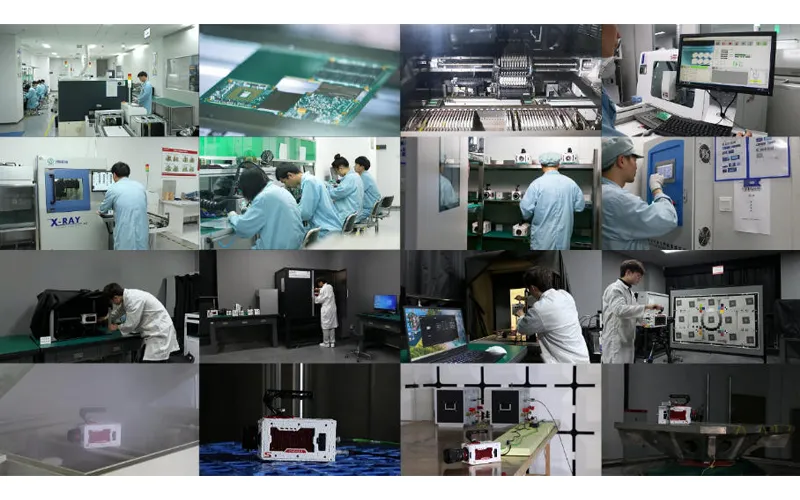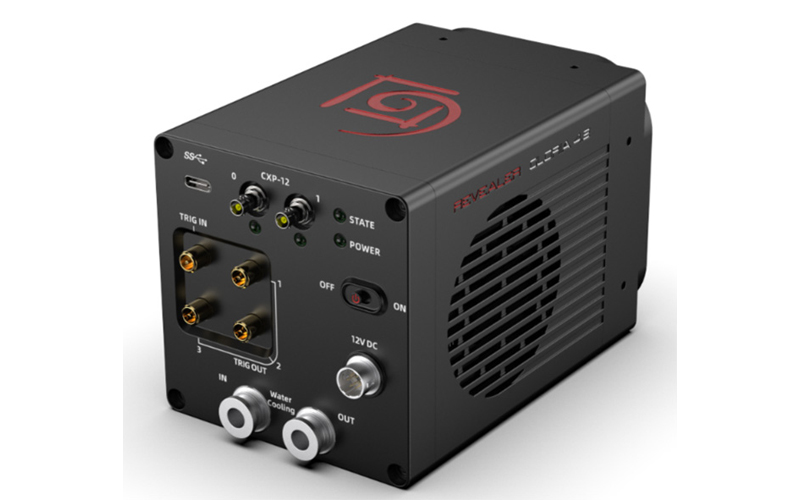
The flow–structure interaction (FSI) vibration mechanism of high mass ratio bluff bodies is investigated using the Revealer high-speed camera combined with particle image velocimetry (PIV) technology, enabling high spatiotemporal resolution measurements.
Flow-induced vibration (FIV) of bluff bodies is a typical flow–structure interaction (FSI) problem in hydraulic and ocean engineering. Its dynamic response originates from the interaction between unsteady wake structures and structural motion.
Unlike vortex-induced vibration (VIV) in circular cylinders, where separation points are mobile, prism-type bluff bodies exhibit fixed separation points. This leads to more complex coupling relationships between wake evolution and structural vibration response.
Existing FIV studies mainly focus on low and moderate mass ratio conditions. However, under high mass ratio conditions, the vibration behavior and wake mechanisms still lack high-resolution experimental evidence.
To address this gap, the research team from Tianjin University introduced Revealer high-speed imaging technology combined with a PIV system to quantitatively measure wake structures. Through synchronized analysis of flow fields and vibration signals, the flow–structure interaction mechanism is investigated from the perspective of wake dynamics.
This study adopts a particle image velocimetry (PIV) system as the core measurement technique to establish a high spatiotemporal resolution flow field observation system.
Image acquisition:
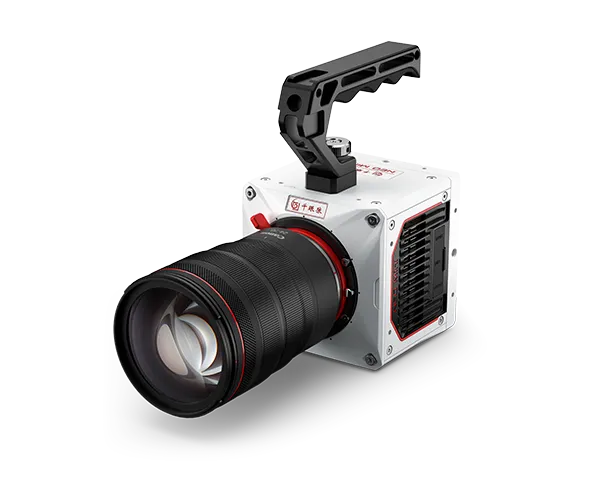
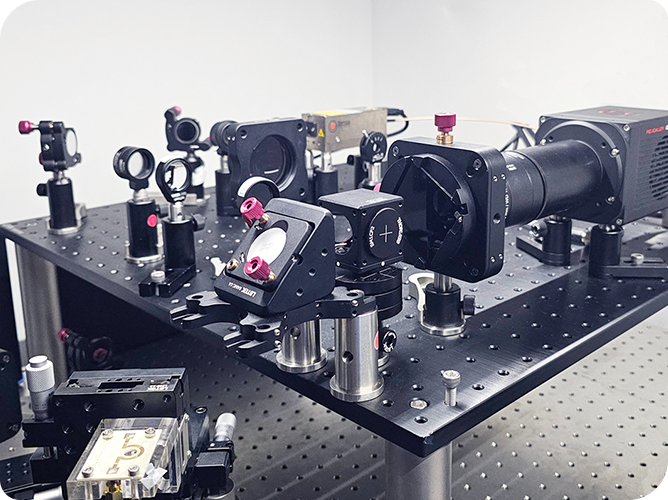
The Revealer X150 high-speed camera is used, providing a resolution of 2560 × 1920 pixels and a maximum acquisition rate of 2000 fps. In this experiment, images are continuously recorded at 100 fps to capture wake evolution. The high-speed camera plays a critical role in identifying shear layer structures, vortex cores, and phase-averaged flow features.
Flow measurement and illumination:
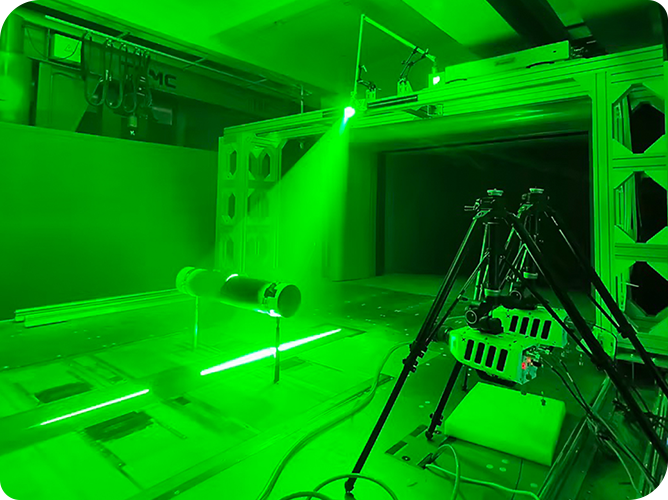
The PIV system employs a dual-pulse laser to generate a laser sheet with a thickness of approximately 3 mm. Tracer particles (glass beads with an average diameter of 5 μm and density of 1.1 g/cc) are used to enable accurate two-dimensional velocity field measurements.
Additional instrumentation:
A laser displacement sensor is used to monitor vibration amplitude in real time.
The synergy between the X150 high-speed camera and the PIV system is reflected in two aspects:
(1) High-speed camera provides stable, high-resolution image sequences;
(2) PIV algorithms convert images into quantitative velocity fields, enabling detailed analysis of wake structures and supporting flow–structure interaction studies.
Experiments are conducted in a circulating water flume. The X150 high-speed camera is used to observe the wake region of a representative high mass ratio bluff body model.
By varying the angle of attack and reduced velocity, different flow conditions are obtained. For each case, more than 2000 image pairs are collected. A two-pass cross-correlation algorithm (from 64×64 pixels to 16×16 pixels with 75% overlap) is applied to compute high-resolution instantaneous velocity vector fields.
Simultaneously, vibration responses are measured using a displacement sensor. Frequency characteristics are extracted through spectral and time–frequency analysis.
Through time synchronization, wake structures obtained from the PIV system are aligned with vibration signals, enabling the establishment of coupling relationships between flow dynamics and structural response.
Based on data captured by the X150 high-speed camera and processed using time-resolved PIV (TR-PIV), the wake structure evolution and flow–structure interaction characteristics under different conditions are analyzed:
4.1 2S Vortex Shedding Mode at α = 0°
At α = 0°, PIV results show a typical symmetric 2S vortex shedding mode, where shear layers separate from the upper and lower vertices and shed vortices alternately.
This flow pattern corresponds to very small vibration amplitudes, indicating that the flow energy input is insufficient to excite significant structural vibration.
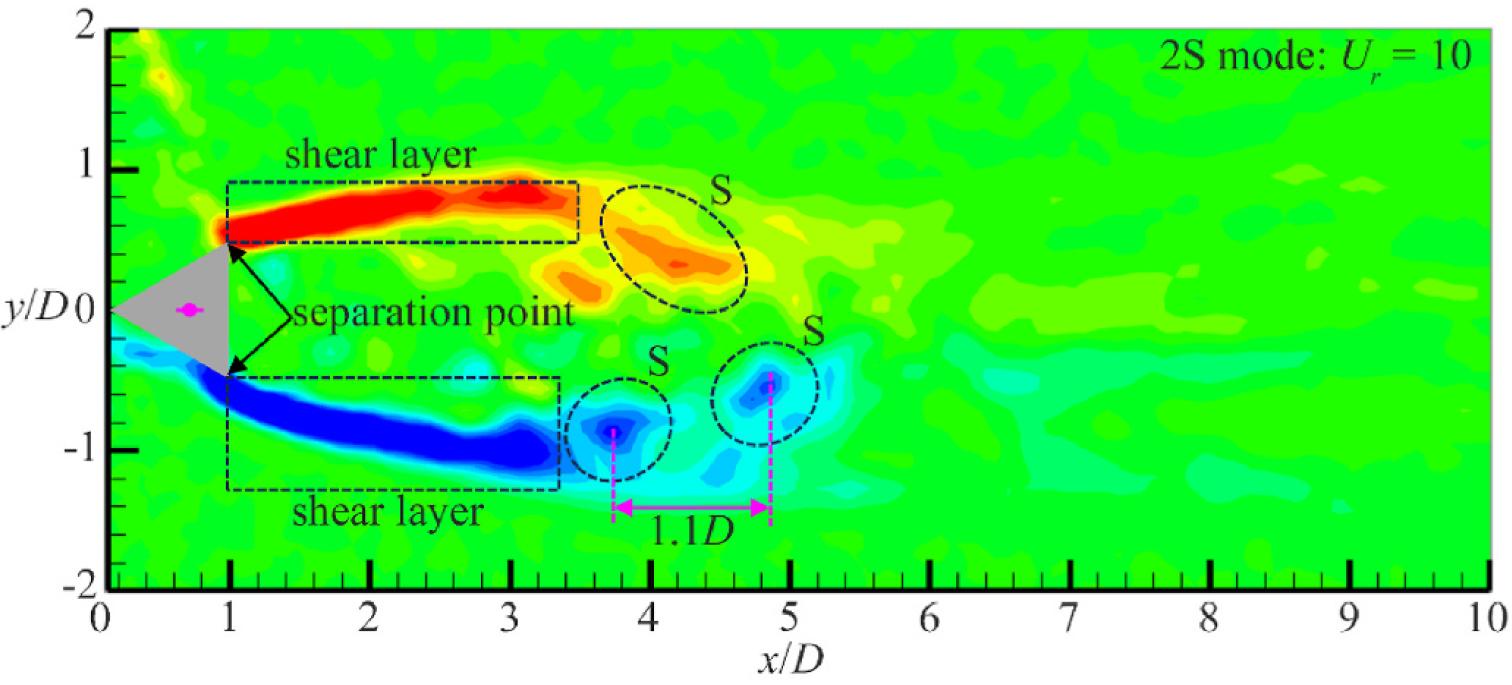
Figure 1. Symmetric 2S wake structure measured by PIV system
4.2 Asymmetric Separation at α = 15°
At α = 15°, the wake still exhibits a 2S vortex shedding mode. However, the lower shear layer undergoes a complex process of separation, reattachment, and re-separation.
This asymmetric flow behavior modifies local pressure distribution, but the overall wake structure remains unchanged, resulting in low vibration amplitudes.
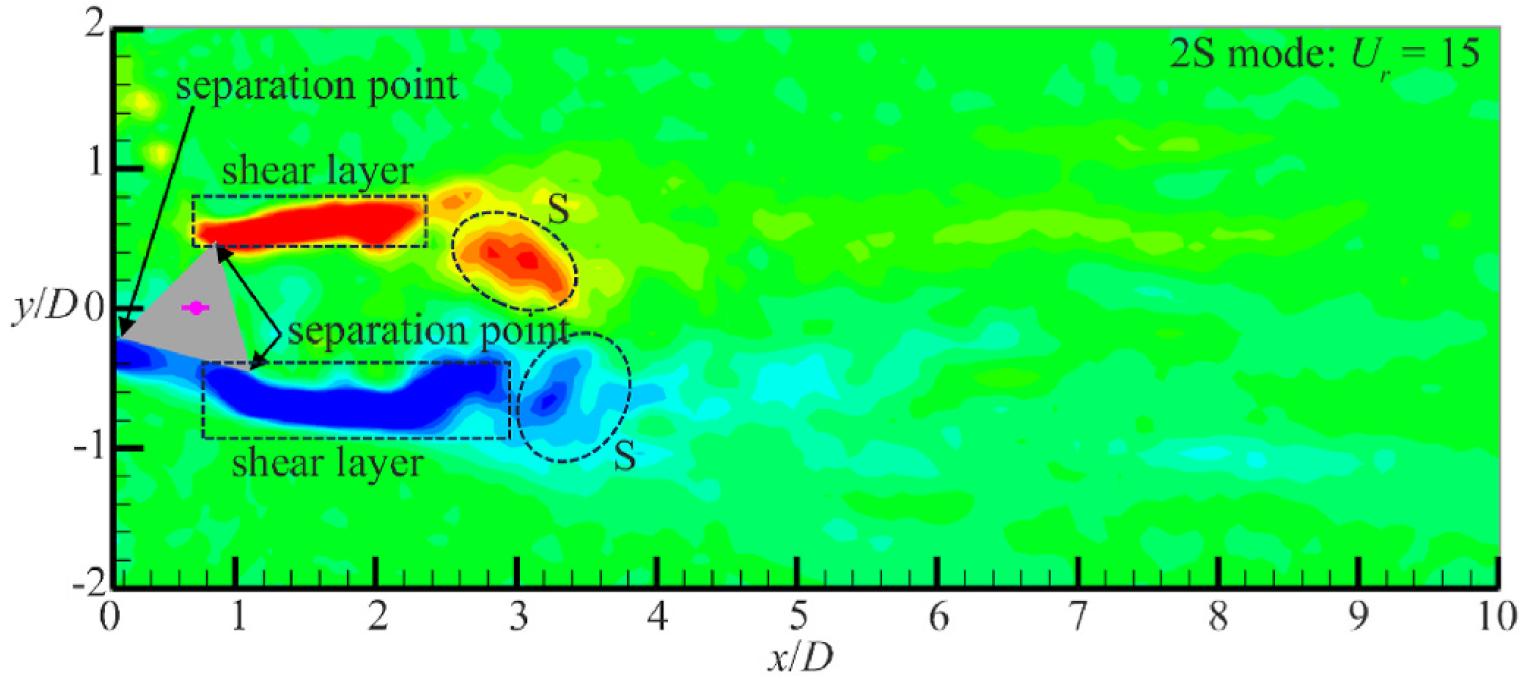
Figure 2. Asymmetric shear layer evolution captured by PIV system
4.3 Intermittent Galloping at α = 25°
At α = 25°, corresponding to the intermittent galloping regime, the X150 high-speed camera captures elongated vortex streets.
PIV results show increased vortex spacing and delayed shear layer development, leading to enhanced wake unsteadiness. This flow structure corresponds to unstable lift fluctuations and serves as the hydrodynamic basis of intermittent galloping.
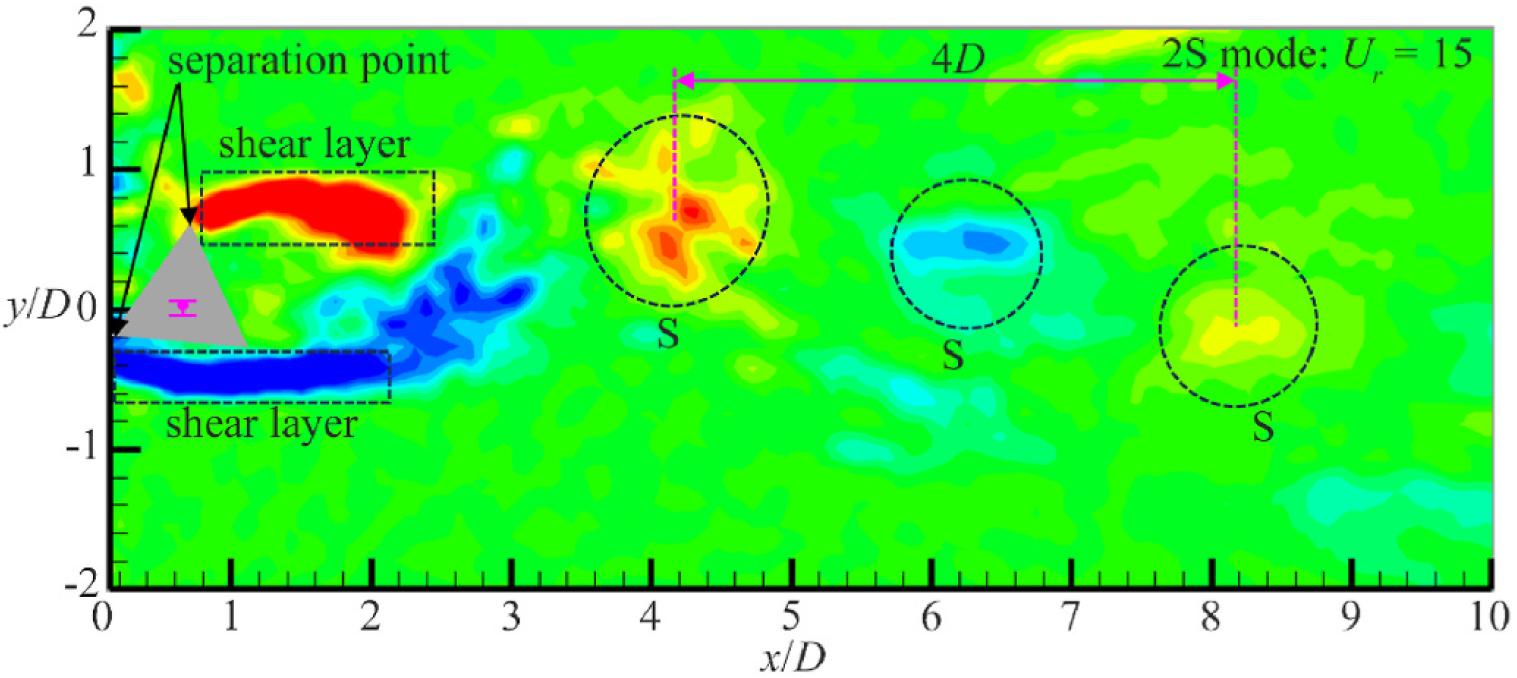
Figure 3. Intermittent galloping wake captured by high-speed imaging and TR-PIV
4.4 Separated VIV and Galloping at α = 35°
At α = 35°, in the regime where VIV and galloping coexist separately, PIV results indicate shortened shear layers and downstream-shifted vortex formation.
The wake width and vortex spacing increase, corresponding to the transition from vortex-induced vibration to galloping. This reflects enhanced flow instability and stronger flow–structure coupling.
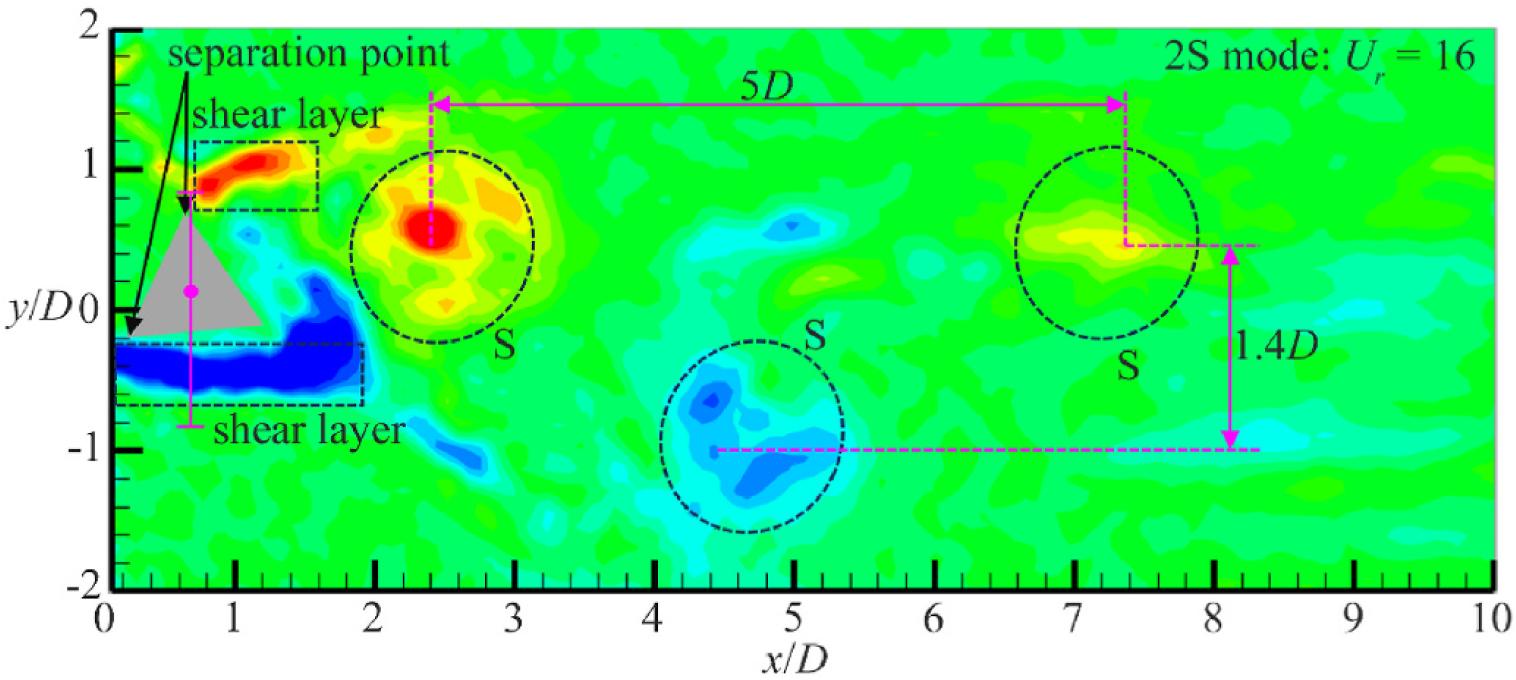
Figure 4. Wake structure transition from VIV to galloping measured by PIV system
4.5 Galloping at α = 60°
At α = 60°, PIV captures a typical 2P vortex shedding mode, where two pairs of counter-rotating vortices are shed per vibration cycle.
The X150 high-speed camera reveals large-scale vortex structures and their evolution, indicating significant energy input into the wake and resulting in large-amplitude vibration.
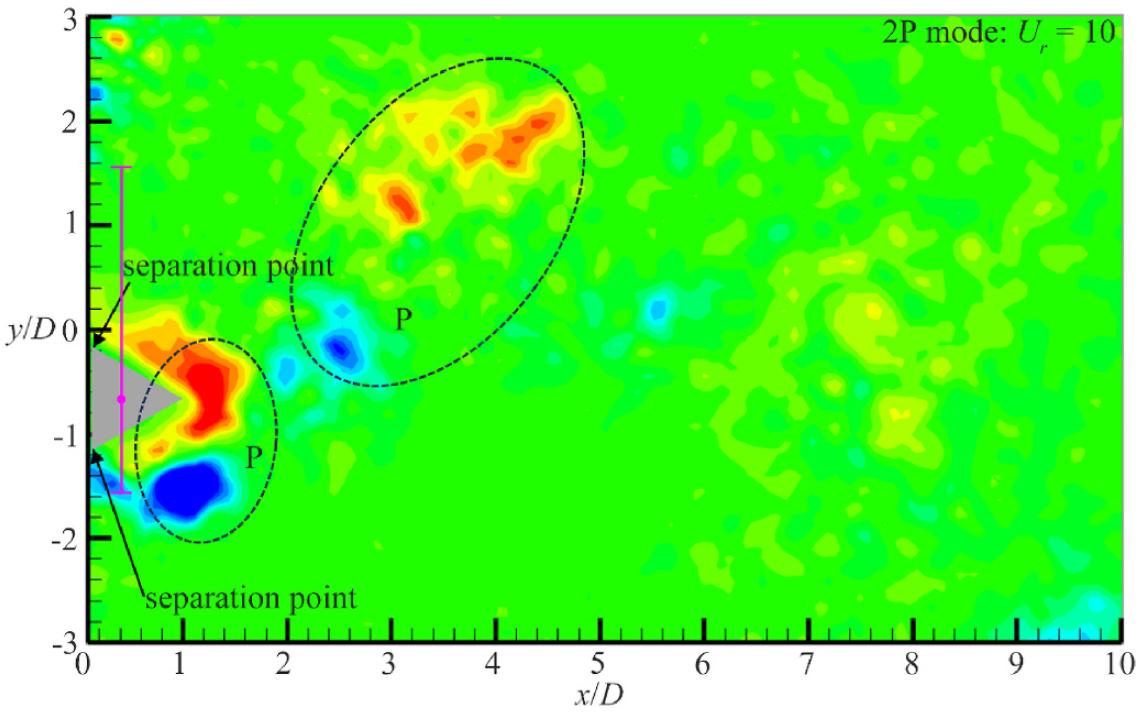
Figure 5. 2P galloping wake structure observed by high-speed imaging
Overall, the results show that the wake structure evolves from a 2S to a 2P vortex shedding mode. This transition, along with changes in separation location, vortex scale, and wake expansion, directly determines the evolution of vibration responses.
This study investigates the flow-induced vibration mechanism of high mass ratio prism-type bluff bodies using high-speed imaging and PIV measurements, revealing the flow–structure interaction mechanism from the perspective of wake dynamics.
The main conclusions are:
I. Under different angles of attack, vibration responses can be classified into four regimes: no vibration, intermittent galloping, separated VIV and galloping, and galloping. These regimes reflect variations in coupling between wake structures and structural dynamics.
II. At high mass ratios, wake structure dominates the vibration response. PIV measurements demonstrate that variations in shear layer separation and vortex shedding modes are the key factors governing vibration regimes, forming a typical flow–structure interaction pathway:
wake structure → fluid force → structural response.
III. Intermittent galloping is essentially a non-stationary switching process between different unstable wake states, indicating high sensitivity of the flow–structure interaction system near critical conditions.
IV. The combined use of the Revealer X150 high-speed camera and the PIV system transforms flow–structure interaction analysis from indirect inference to direct observation and quantitative measurement, providing a powerful experimental tool for unsteady fluid mechanics and FSI research.
With the continuous advancement of flow–structure interaction and unsteady fluid mechanics research, high-resolution flow measurement based on PIV systems provides a visualized and quantitative experimental approach for investigating complex fluid–structure interaction problems.
 English
 Deutsch