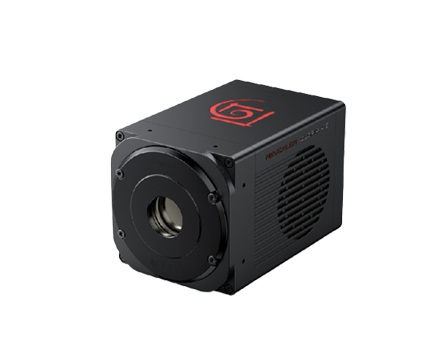
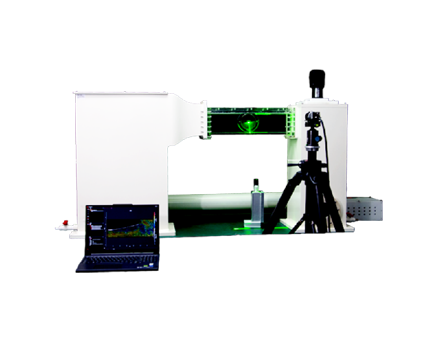
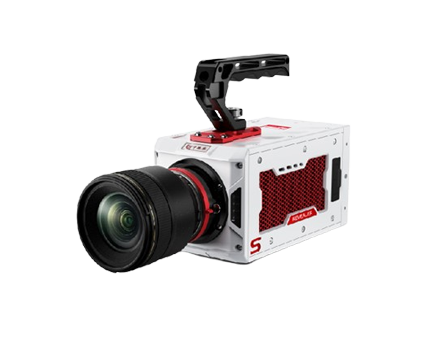
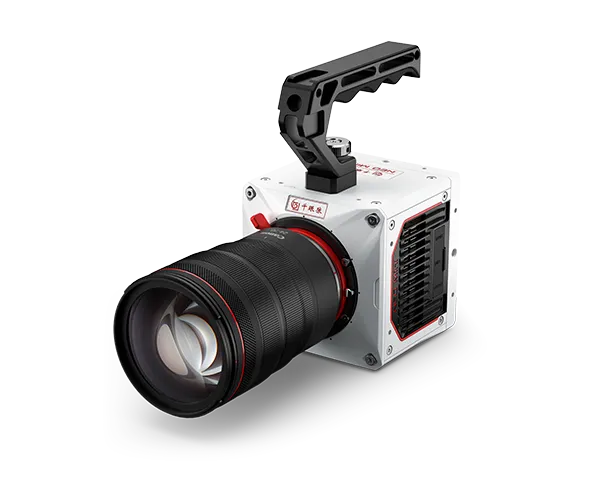
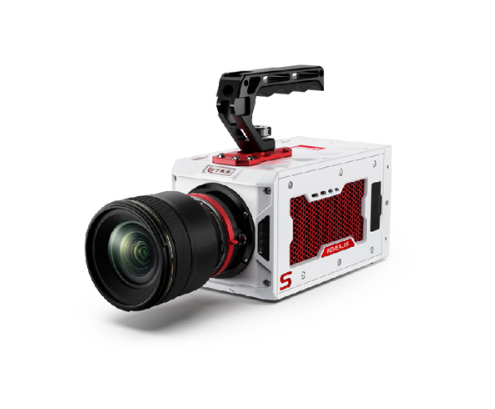
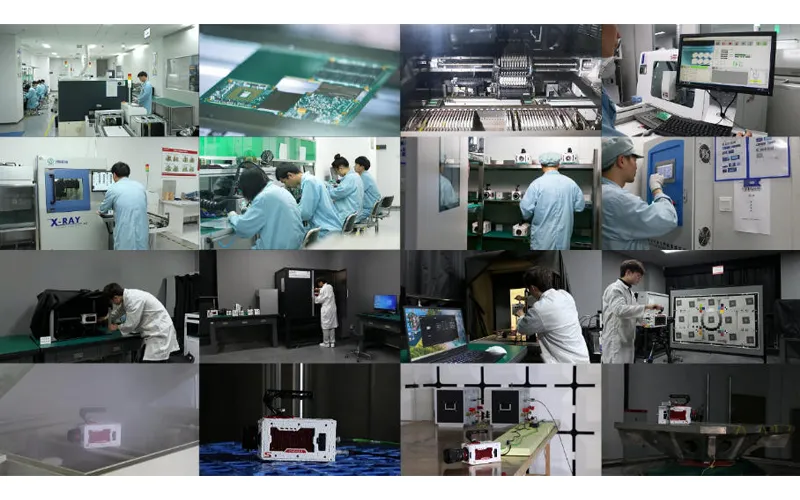
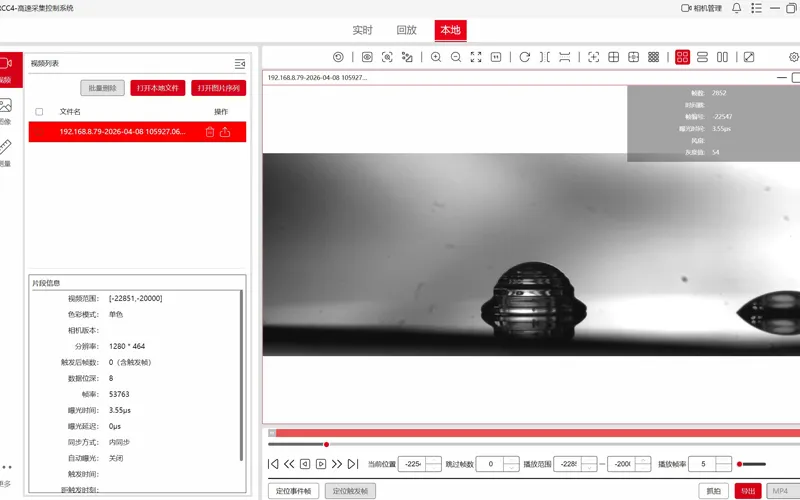
When researching industrial or laboratory imaging systems, engineers often search for the camera with most fps or a specialized fast frame rate camera. However, in high-speed videography, speed never exists in a vacuum. The most critical technical challenge when deploying a high frame per second camera is understanding how framing speed interacts with sensor resolution and throughput.
Many commercial high fps cameras advertise blistering speeds, such as acting as a 100 000 fps camera. What the datasheets often hide in the footnotes is that achieving these extreme framing rates requires severe "windowing" (cropping the active sensor row count), which reduces your resolution to a tiny fraction of the screen. For advanced scientific research, maintaining spatial integrity at maximum speed is paramount to ensure accurate data tracking.
Key Specifications to Evaluate Before Buying a High-Speed Camera
To maximize your research ROI and ensure your data meets peer-reviewed standards, you must analyze four foundational sensor attributes:
Throughput and Native Frame Rate: A true high frame per second camera must handle immense gigapixel-per-second data transfers.
Exposure and Shutter Speed: To capture hyper-velocity impacts without distortion, a global shutter with sub-microsecond exposure (e.g., 100 ns) is non-negotiable.
Pixel Size and Sensitivity: Larger pixels (such as 14.6 μm) capture significantly more photons, eliminating the need for expensive, high-heat specialized laboratory lighting.
Data Interface Bandwidth: Capturing 10000 fps video generates gigabytes of data per second. Legacy USB 3.0 or standard GigE ports create severe laboratory bottlenecks, whereas 10 Gb Ethernet allows near-instant offloading.
Tech Comparison: Frame Rate vs. Spatial Resolution Across Applications
Different industrial and scientific applications require specific balances of framing speed and spatial resolution. The table below outlines how specific frame rates meet the criteria of various research fields:
Target Speed Profile
Achievable Resolution
Ideal Application Scene
Technical Requirement
High Speed Camera 500 fps
2048 × 2048 (4K/2K)
High-speed packaging lines, belt inspections
Broad field of view to track large components.
Ultra High Speed Video Camera (3,000 - 5,000 fps)
1280 × 1024
Automotive crash testing, airbag deployment
Balanced spatial detail for structural deformation tracking.
Super Slow Motion Camera 10,000 fps
1280 × 1024 (Full Frame)
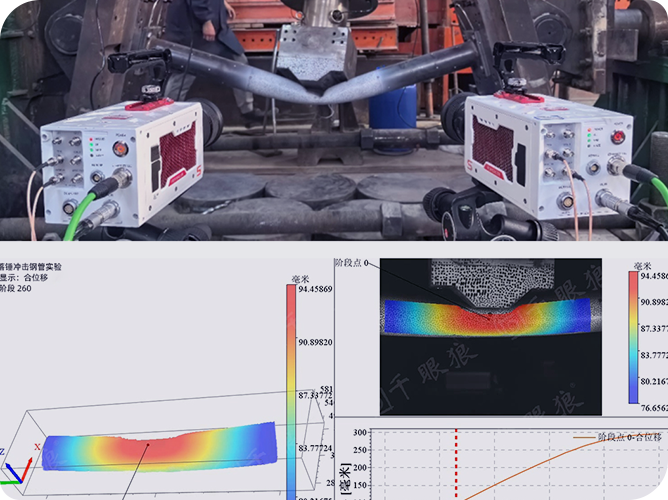
Ballistics, PIV, DIC, Fracture Mechanics
Maximum spatial density needed for micro-crack and vector mapping.
Extreme Framing Camera (100,000+ fps)
1280 × 128 (Windowed)
Detonation physics, hypersonic combustion
Extreme temporal resolution where image height is sacrificed.
Strategic Guide: Selecting the Right System for Your Budget
If you are hunting for the cheapest 10000 fps camera or trying to optimize an institutional budget, the smartest strategy is to look at unwindowed resolution.
Instead of buying a system that claims to be a multi-million FPS system but drops to a useless resolution at high speeds, opt for a dedicated matrix setup. For instance, a system specialized in delivering a full 1.3-megapixel matrix as a dedicated 10 000 fps camera ensures that every dollar of your budget goes toward scientific data integrity, making it the most cost-effective solution for university and industrial R&D labs.
Frequently Asked Questions About High-Speed Camera Selection
Q1: Why does resolution drop when I increase the camera's slow motion 10000 fps framing rate?
A: This is due to sensor throughput limits. The camera's internal analog-to-digital converters (ADC) can only process a set number of pixels per second. To achieve a faster frame rate, standard cameras reduce the vertical rows read from the sensor. However, flagship systems like the Revealer S1310 series utilize advanced parallel storage circuitry to maintain a full 1280x1024 layout at a complete 10,000 fps profile.
Q2: What factors have the biggest impact on a 10000 fps camera price?
A: The primary price drivers are sensor bandwidth (maintaining high resolution at peak speed), bit depth (10-bit vs 8-bit gray-scale accuracy), and the size of the internal high-speed RAM (e.g., 96GB or 192GB) needed to store uncompressed frames in real-time. These factors become especially important when evaluating an Ultra high-speed camera for demanding scientific and industrial imaging applications.
Q3: Can a standard slow motion camera 10000 fps system be used for Digital Image Correlation (DIC)?
A: Generally, no. DIC applications rely heavily on high spatial resolution to track pixel deformation accurately. If a camera sub-samples or severely crops its window to hit 10,000 fps, it will lack the pixel density required for dense vector mapping. Always ensure your camera guarantees a full-frame matrix at your target frame rate.

 English
 Deutsch