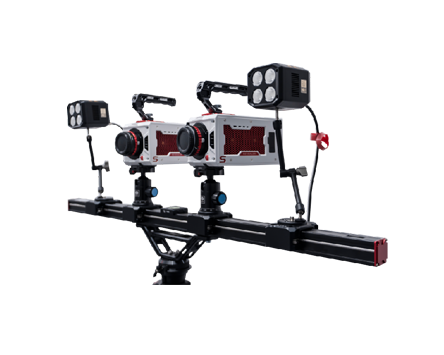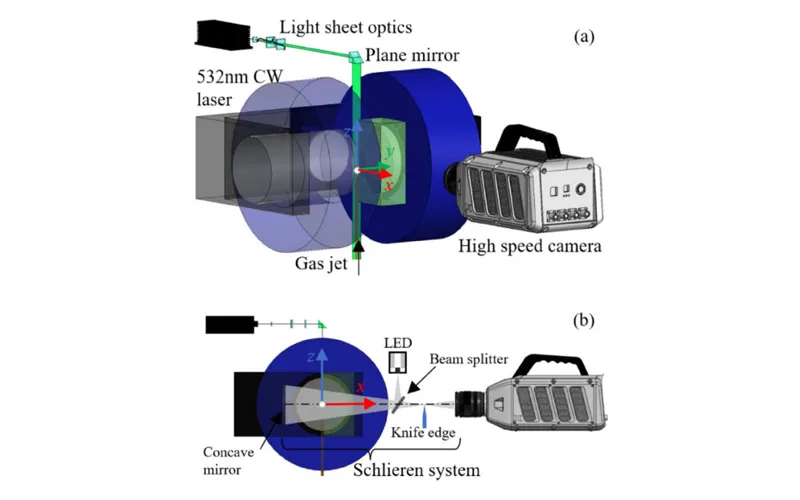
The suppression characteristics of two conventional powder suppressants, NaHCO₃ and NH₄H₂PO₄, on methane mixed deflagration with long-flame coal, coking coal, and anthracite at 9.5 vol% methane concentration were investigated using the Revealer high-sensitivity high-speed camera integrated with a synchronized pressure acquisition system.
In underground coal mines and industrial dust environments, methane–coal dust deflagration involves gas–solid two-phase coupled reactions, featuring higher flame temperatures, faster propagation velocities, and more severe accident consequences. Inert powder suppressants such as NaHCO₃ and NH₄H₂PO₄ have become major explosion prevention and mitigation materials due to their low cost, easy storage, and absence of secondary pollution.
Different coal ranks, including long-flame coal, coking coal, and anthracite, exhibit varying volatile matter contents. Their pyrolysis behaviors and gas-phase participation levels differ significantly, resulting in substantial variations in suppression effectiveness for the same suppressant within different coal dust–methane hybrid explosion systems. Existing studies lack high-temporal-resolution comparisons of transient flame morphology evolution among different coal type–suppressant combinations.
The research team from Chongqing University introduced the Revealer NEO25 high-sensitivity high-speed camera to record the suppression process of methane–coal dust deflagration by NaHCO₃ and NH₄H₂PO₄. The system continuously captured the complete process of flame kernel formation, flame front acceleration, interface instability, local extinction, and flame splitting. Combined with reaction kinetics simulations and residue microstructure analysis, the study established a correlation mechanism among “flame temporal evolution–pressure rise–free radical dissipation.”
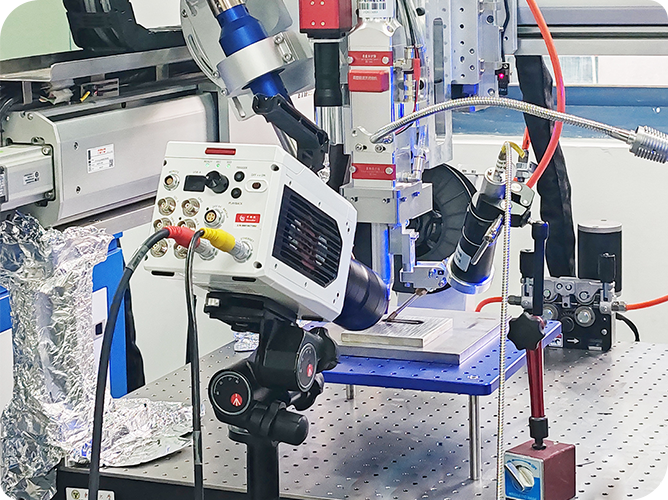
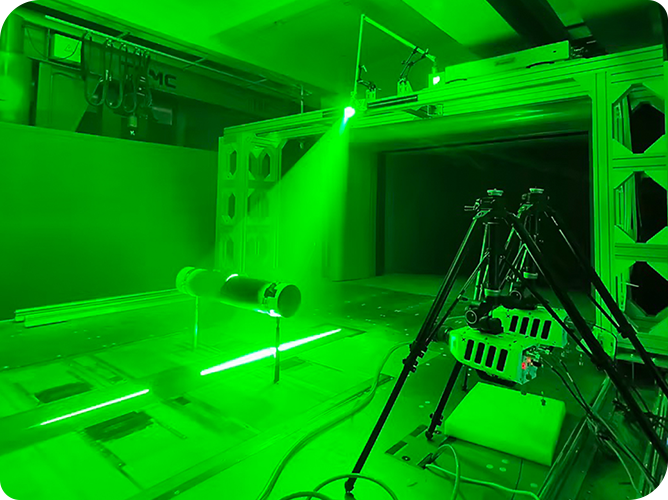
The experiments were conducted using a self-developed methane–coal dust deflagration visualization platform. The system consisted of a deflagration pipeline, coal dust dispersion system, methane gas distribution system, ignition system, pressure acquisition system, and high-speed flame diagnostic system (Figure 1).
The experimental materials included three representative coal-rank dusts: long-flame coal (LMM), coking coal (CMM), and anthracite (AMM), all mixed with 9.5 vol% methane to form hybrid deflagration systems. NaHCO₃ and NH₄H₂PO₄ were selected as explosion suppressants.
Flame propagation was synchronously recorded using the NEO25 high-sensitivity high-speed camera. The frame rate was set to 5000 fps (the camera supports up to 25,000 fps at full resolution of 1280 × 1024), corresponding to a temporal resolution of 200 μs. With a peak quantum efficiency of 85%, the system clearly captured flame boundaries and internal structures under weak-light conditions caused by low methane concentrations or high suppressant concentrations.
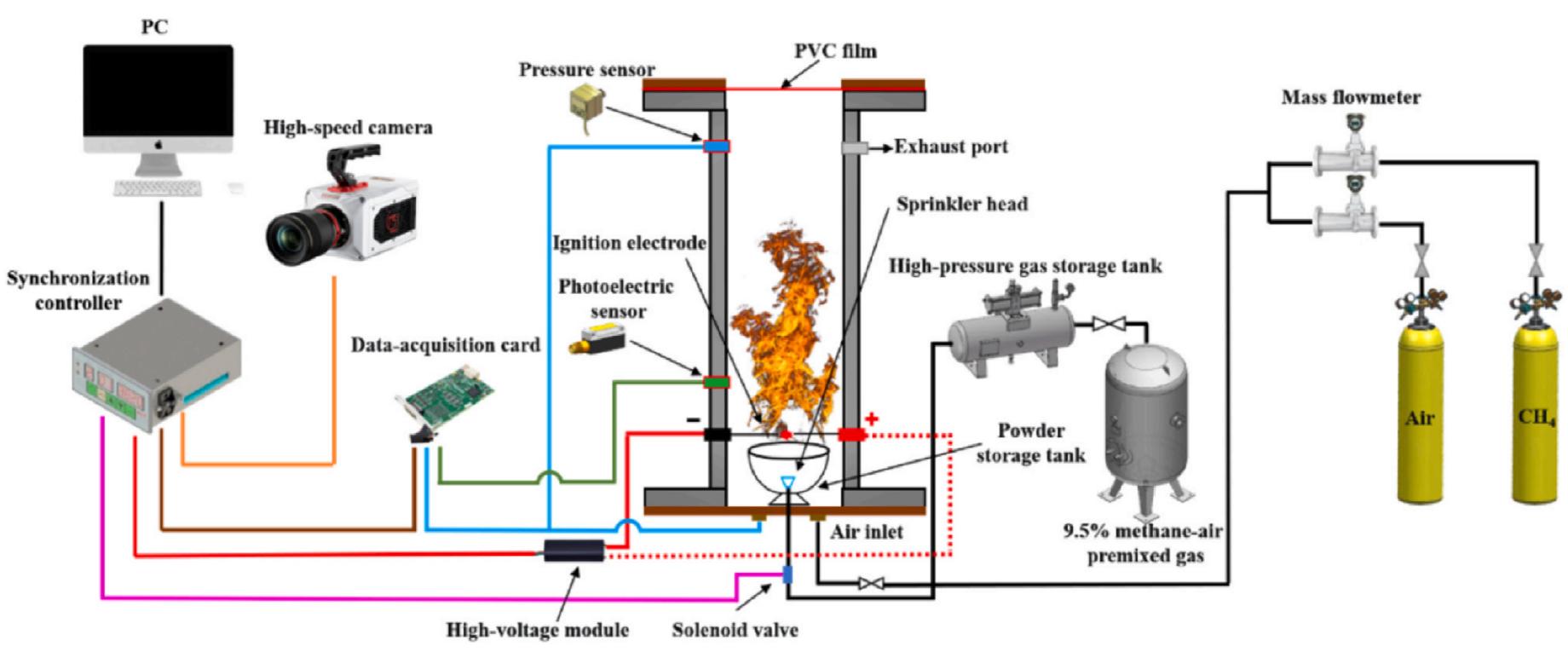
Figure 1 – Transient diagnostic system for methane–coal dust hybrid deflagration based on a high-sensitivity high-speed camera. Through flame imaging at 5000 fps temporal resolution, the system synchronously records flame propagation, crack formation, local extinction, and explosion pressure evolution, supporting high-speed combustion research in the field of safety engineering.
Cross-comparison experiments were conducted based on three coal types, two suppressants, and multiple suppressant concentrations.
Three representative coal samples—long-flame coal, coking coal, and anthracite—were selected. Methane concentration was fixed at 9.5 vol%, while coal dust mass concentration was maintained at 200 g/m³.
Suppressants were added at mass fractions of 0%, 10%, 30%, 50%, 70%, and 90% to perform visualization deflagration experiments.
For each experimental group, the high-sensitivity high-speed camera, ignition system, and pressure acquisition system were synchronously triggered using a unified timing sequence.
The NEO25 high-speed camera continuously recorded the entire flame propagation process. Based on time-series images, flame front position, propagation velocity, flame brightness variation, and flame interface evolution behavior were extracted.
At the microscopic level, Chemkin reaction kinetics simulations were employed to analyze the rate-of-production (ROP) variation of free radicals. Combined with SEM, XRD, and TG-DTG analyses, the interaction mechanisms between suppressants and coal particles were investigated.
The flame image sequences recorded at 5000 fps by the Revealer NEO25 high-speed camera constitute the core evidence distinguishing the suppression performance differences between the two suppressants across different coal types.
The following sections analyze representative operating conditions under NH₄H₂PO₄ and NaHCO₃ suppression, respectively.
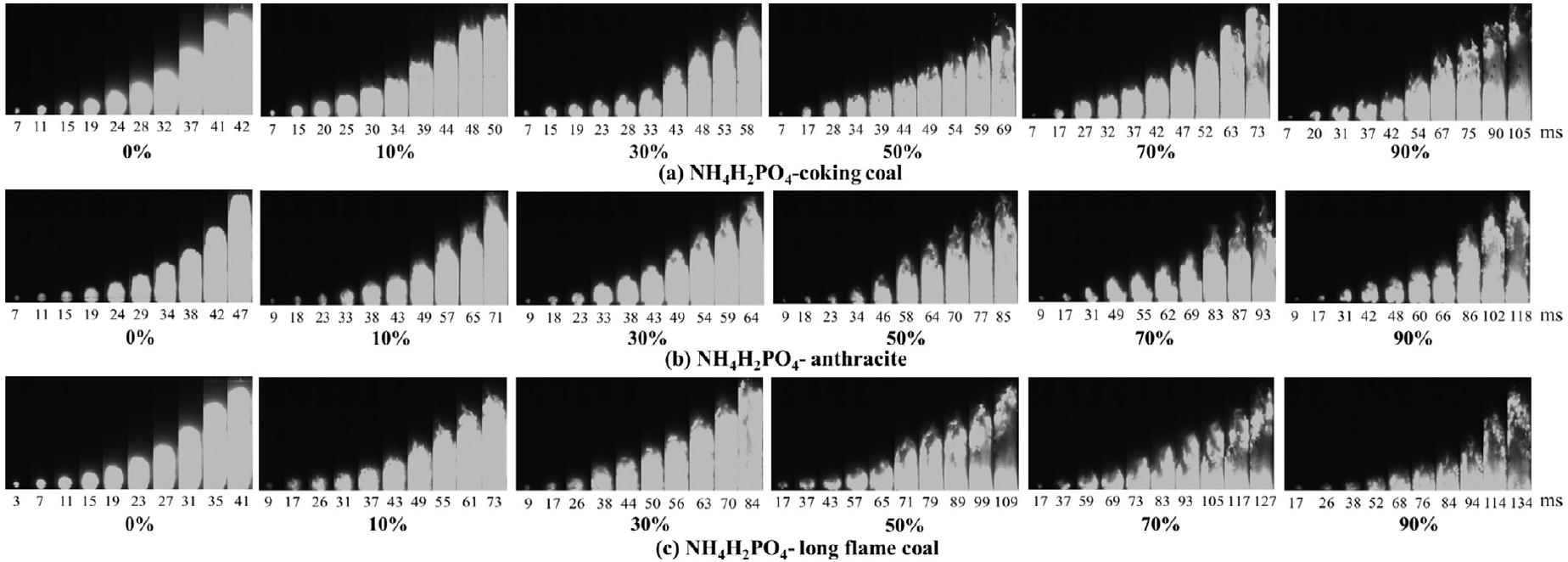
Figure 2 – Continuous flame propagation image sequences recorded by the NEO25 high-sensitivity high-speed camera during NH₄H₂PO₄ suppression of methane–coal dust hybrid deflagration across different coal ranks. The images demonstrate longitudinal crack formation, flame front instability, local extinction, and collapse of flame propagation continuity, supporting research on gas–coal dust explosion suppression and transient combustion diagnostics in coal mines.
4.1.1 Coking Coal System: Progressive Collapse of Continuous Flame Propagation Structure
Coking coal possesses a medium volatile matter content. Flame evolution exhibited continuous response characteristics with varying NH₄H₂PO₄ concentrations. The high-sensitivity high-speed camera recorded the following key transition stages at 5000 fps (Figure 2a):
0% concentration: A spherical flame kernel formed 7 ms after ignition. At 24 ms, the spherical flame transitioned into a finger-shaped flame. Throughout the process, the flame remained continuous with uniform brightness.
50% concentration: Flame evolution extended to 69 ms. At 39 ms, the flame front developed the first longitudinal crack, and by 54 ms the crack expanded, splitting the flame into multiple segments. Frame-by-frame replay from the high-speed camera showed that the crack originated near the central axis of the flame front and subsequently propagated toward both sides, eventually dividing the flame surface into two independent luminous regions. This phenomenon indicates that NH₄H₂PO₄ interrupted gas-phase chain reactions, causing local reaction extinction.
90% concentration: High-speed images showed a distinct unburned region inside the flame at 90 ms, and the flame could no longer sustain stable propagation to the top of the pipeline.
Summary
NH₄H₂PO₄ does not simply reduce combustion intensity; instead, it progressively weakens free-radical chain growth capability during propagation, making localized regions unable to sustain stable heat release.
From the combustion mechanism perspective, coking coal is a medium-volatile coal whose deflagration propagation depends simultaneously on volatile gas-phase combustion and particle surface reactions. When NH₄H₂PO₄ thermally decomposes and releases phosphorus-containing active species, gas-phase free-radical chain growth is significantly suppressed, resulting in low-reactivity regions inside the flame and ultimately forming longitudinal cracks.
4.1.2 Anthracite System: Early Flame Front Instability and Propagation Delay
Anthracite possesses the lowest volatile matter content. The flame morphology changes under NH₄H₂PO₄ suppression were significantly different from those of coking coal (Figure 2b):
0% concentration: A flame kernel formed 7 ms after ignition, and the spherical flame transitioned into a finger-shaped flame at 24 ms. Flame brightness was significantly lower than that of coking coal.
50% concentration: At 46 ms, the flame front exhibited obvious suppression. Frame-by-frame replay showed that the flame front transformed into discrete luminous spots rather than forming longitudinal cracks as observed in coking coal, indicating lower sensitivity to gas-phase chain interruption.
70% concentration: High-speed recordings showed flame front deformation occurring as early as 17 ms, before the flame entered the rapid propagation stage.
90% concentration: The flame became globally dimmer while maintaining continuity and propagated until 118 ms without obvious crack formation as seen in the coking coal system.
Summary
NH₄H₂PO₄ began influencing flame propagation structure during the initial flame formation stage in anthracite systems, significantly advancing the onset of propagation instability.
Mechanistically, anthracite combustion relies more heavily on heterogeneous particle surface reactions due to its low volatile matter content. Suppressive species generated from NH₄H₂PO₄ decomposition weaken local thermal feedback around particles, making it difficult for the flame front to establish a stable high-temperature propagation zone.
4.1.3 Long-Flame Coal System: Difficulty in Establishing a Stable Gas-Phase Propagation Core
Long-flame coal possesses the highest volatile matter content (40.34%) and exhibited the strongest sensitivity to NH₄H₂PO₄ among the three coal types (Figure 2c):
0% concentration: A flame kernel formed only 3 ms after ignition. At 19 ms, the spherical flame transformed into a finger-shaped flame, exhibiting the fastest development speed and highest brightness among all coal types.
50% concentration: The high-speed camera captured longitudinal crack formation at 71 ms. By 99 ms, the middle region of the flame was completely extinguished, splitting the flame into a bottom combustion zone and an upper propagation zone.
90% concentration: The initial flame kernel failed to form a complete spherical structure. Flame front extinction began at 84 ms, indicating that the suppressant disrupted flame kernel formation during the ignition stage and prevented the deflagration from entering a self-sustaining propagation regime.
Summary
NH₄H₂PO₄ demonstrated the best suppression performance in high-volatile long-flame coal systems, where establishing a stable gas-phase propagation core became difficult.
From the combustion mechanism perspective, long-flame coal deflagration propagation relies heavily on gas-phase chain combustion after volatile release. Phosphorus-containing small molecules generated from NH₄H₂PO₄ pyrolysis preferentially suppress key free-radical growth processes during volatile combustion.
Unlike NH₄H₂PO₄, the suppression effect of NaHCO₃ on methane–coal dust hybrid deflagration was not primarily manifested as collapse of flame propagation continuity, but rather as weakening of particle surface combustion uniformity.
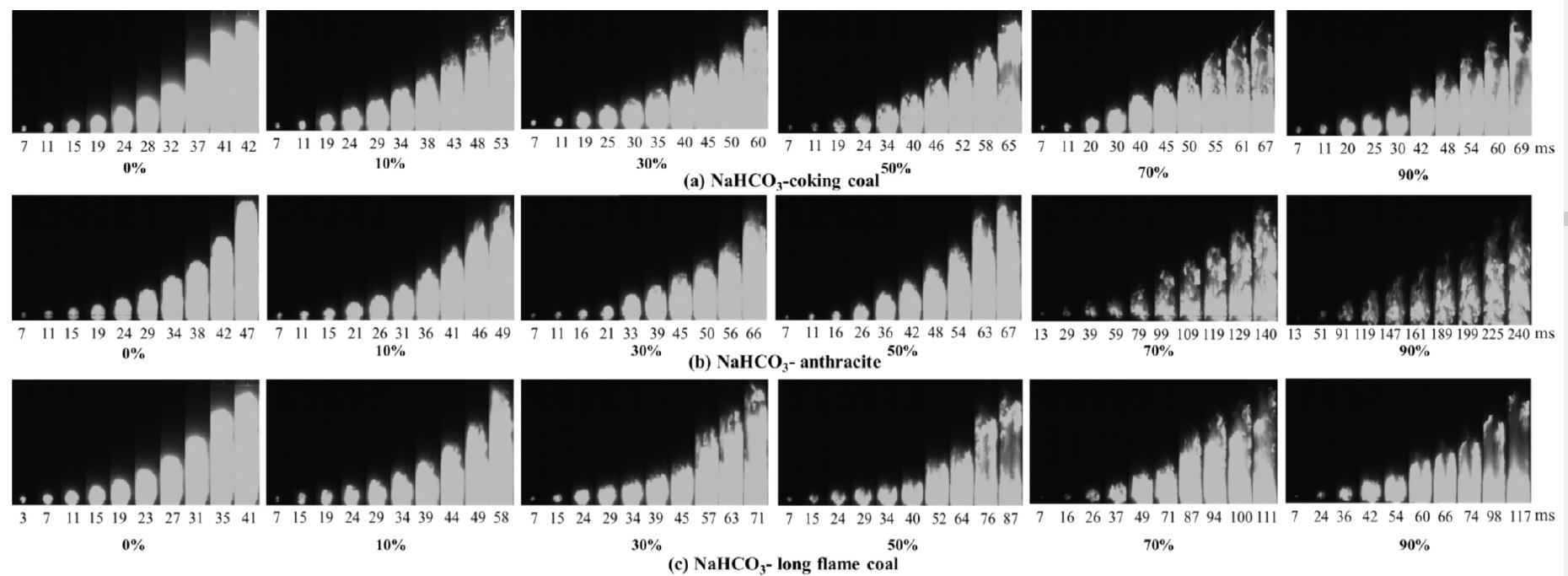
Figure 3 – Flame propagation time-series images continuously recorded by the NEO25 high-sensitivity high-speed camera during NaHCO₃ suppression of methane–coal dust hybrid deflagration across different coal ranks. The images demonstrate flame front spatial discretization, formation of localized unburned regions, and non-uniform particle surface combustion propagation, supporting research on dust explosion suppression in safety engineering.
4.2.1 Coking Coal System: Formation of Localized Unburned Regions (Figure 3a)
0% concentration: A flame kernel formed 7 ms after ignition. The flame rapidly propagated to 42 ms, maintaining continuous morphology and uniform brightness, confirming the standard flame behavior of coking coal without suppression.
50% concentration: High-speed camera images showed the appearance of clustered unburned regions in the middle of the pipeline at 65 ms, without flame splitting.
90% concentration: The high-speed camera captured a longitudinal crack appearing in the middle of the flame at 48 ms, although the crack remained narrow and incomplete. Compared with NH₄H₂PO₄, which induced crack formation at only 50% concentration, NaHCO₃ required a much higher concentration (90%) to induce similar behavior, indicating weaker gas-phase chemical chain interruption capability.
Summary
The suppression effect of NaHCO₃ in coking coal systems did not manifest as direct collapse of flame propagation continuity.
Mechanistically, Na₂CO₃ particles generated from NaHCO₃ decomposition coated the coal particle surfaces, reducing pyrolysis efficiency and weakening local oxygen diffusion capability, thereby shrinking high-brightness flame regions and enlarging unburned zones.
4.2.2 Anthracite System: Most Pronounced Spatial Discretization of the Flame Front (Figure 3b)
Anthracite exhibited the strongest suppression response to NaHCO₃, forming a sharp contrast with the NH₄H₂PO₄ suppression behavior.
0% concentration: A flame kernel formed 7 ms after ignition, and the spherical flame transformed into a finger-shaped flame at 24 ms. Flame propagation continued until 47 ms, with relatively low brightness due to inherently low volatile content.
50% concentration: High-speed camera images showed that the flame front no longer maintained a continuous luminous surface but instead appeared as multiple discrete luminous regions of varying sizes separated by dark areas. This fragmented morphology was not observed in either coking coal or long-flame coal systems.
90% concentration: Flame kernel appearance was delayed until 51 ms, representing a 44 ms delay compared with the 7 ms observed at 0% concentration. Throughout the entire propagation process, the flame remained fragmented. Frame-by-frame replay revealed that the flame consisted of dozens of tiny luminous spots continuously appearing and disappearing, resulting in slow overall propagation velocity.
Summary
Mechanistically, Na₂CO₃ particles generated from NaHCO₃ decomposition coated anthracite particle surfaces and hindered heterogeneous contact between coal particles and oxygen, leading to highly non-uniform spatial combustion distribution.
4.2.3 Long-Flame Coal System: High Volatile Content Weakens the Particle Coating Effect (Figure 3c)
Long-flame coal possesses the highest volatile matter content and exhibited suppression behavior intermediate between coking coal and anthracite.
0% concentration: A flame kernel formed only 3 ms after ignition. The spherical flame transformed into a finger-shaped flame at 19 ms. Flame propagation continued until 41 ms, exhibiting the fastest development speed and highest brightness.
50% concentration: Unlike anthracite, long-flame coal did not exhibit fragmentation at 50% concentration. Flame morphology remained continuous, with only a uniform reduction in brightness. This indicates that the solid-phase coating effect of NaHCO₃ on high-volatile coal dust is limited because large quantities of gas-phase combustibles are rapidly released during pyrolysis before stable particle coating layers can form.
90% concentration: Local flame front depressions appeared at 54 ms, followed by longitudinal crack formation at 60 ms. However, flame splitting or extinction did not occur, and overall propagation capability remained intact. Compared with the “full-duration fragmentation” observed in anthracite at 90% concentration, long-flame coal exhibited only deformation and cracking, indicating significantly weaker suppression.
Summary
Mechanistically, long-flame coal rapidly releases large amounts of gas-phase combustible species during the early pyrolysis stage. As a result, continuous gas-phase combustion propagation is established before Na₂CO₃ particles can form a stable surface coating layer.
This study established a time-resolved flame database for methane–coal dust hybrid deflagration suppression using the Revealer NEO25 high-sensitivity high-speed camera. Combined with reaction kinetics simulations and residue analysis, the study revealed the differentiated suppression mechanisms of NaHCO₃ and NH₄H₂PO₄.
I.
NH₄H₂PO₄ is more suitable for high-volatile coal dust systems. By generating phosphorus-containing free-radical intermediates that continuously dissipate *H radicals, it disrupts volatile-phase chain combustion and induces flame core cracking and separated flame propagation.
In contrast, NaHCO₃ is more suitable for low-volatile coal dust systems. By forming stable particle coatings on coal particle surfaces and continuously dissipating *O radicals, it significantly reduces flame propagation velocity and pyrolysis efficiency.
II.
The core value of the NEO25 high-sensitivity high-speed camera lies in its ability to provide visual image evidence for explosion suppression mechanisms. With a temporal resolution of 5000 fps (supporting up to 25,000 fps), the system precisely identified the onset timing and morphological evolution of flame longitudinal cracks, distinguishing the visual signatures of thermal dilution mechanisms from chemical chain interruption mechanisms.
III.
High-sensitivity high-speed cameras can serve as standardized tools for suppressant screening and visual evaluation of explosion suppression effectiveness, providing direct time-resolved imaging evidence for explosion suppression equipment design, accident reconstruction, and safety standard development in the field of safety engineering.
 English
 Deutsch