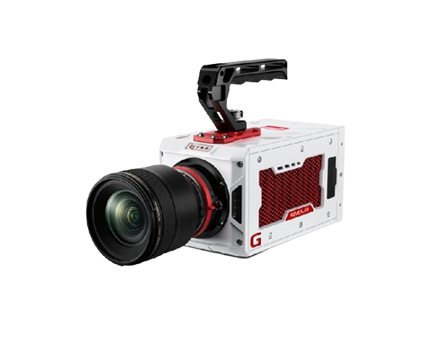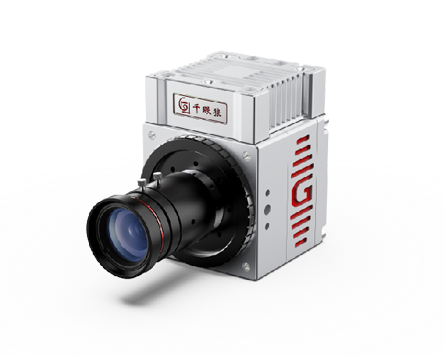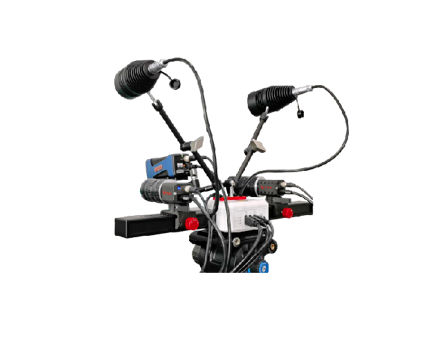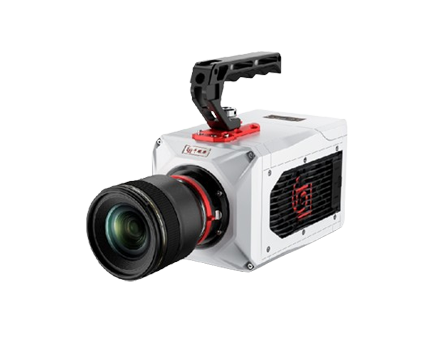
Industrial inspection requires different imaging technologies depending on what you need to observe. If your goal is continuous automated inspection of products moving through a production line, a machine vision camera is often the best choice. If you need to understand why defects occur, capture extremely fast events, or analyze equipment failures in slow motion, an industrial high-speed camera provides capabilities that conventional machine vision systems cannot. Understanding the strengths of each technology helps manufacturers improve product quality, reduce downtime, and optimize production efficiency.
A machine vision camera is designed for automated inspection, measurement, identification, and process control. It continuously captures images of products or components as they move through a production line and works together with image processing software to make pass/fail decisions in real time.
Machine vision systems perform best when inspection conditions are consistent and repeatable. They are commonly integrated with industrial automation equipment, PLCs, robots, and conveyors.
Typical applications include: Surface defect detection. Dimensional measurement. Barcode and QR code reading. Assembly verification. Object positioning. Part presence detection. Packaging inspection
Because these systems operate continuously, they are ideal for high-volume manufacturing environments where every product must be inspected automatically.
An industrial high-speed camera captures thousands—or even hundreds of thousands—of frames per second, allowing engineers to visualize events that occur too quickly for the human eye or conventional cameras.
Instead of simply determining whether a product passes inspection, a high-speed camera for manufacturing helps engineers understand why defects occur—a core advantage that makes high-speed cameras for manufacturing indispensable in quality control and process optimization. Typical applications include: High-speed stamping. Metal cutting. Laser processing. Injection molding. Packaging machinery. Material fracture analysis. Vibration testing. Drop testing. Fluid jet observation. Production line troubleshooting
By replaying events in slow motion, engineers can identify the exact sequence of failures and optimize manufacturing processes.
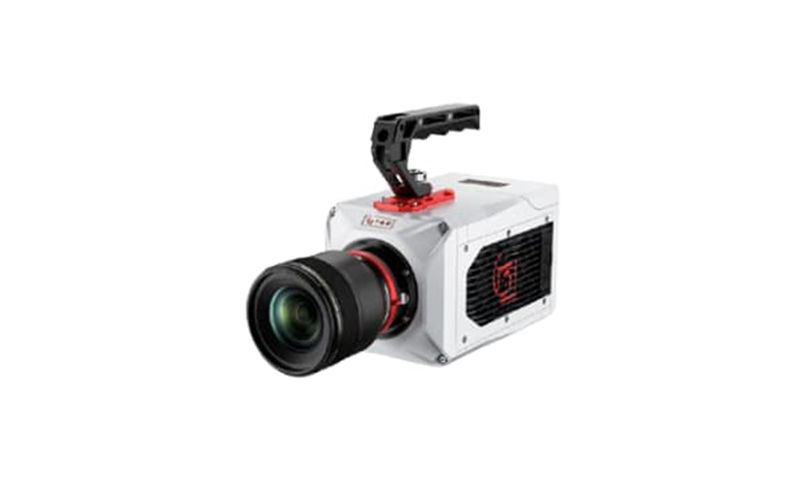
Although both camera types are used in industrial environments, they serve different purposes.
Feature | High-Speed Camera | Machine Vision Camera |
Primary Purpose | Motion analysis and fault diagnosis | Automated inspection and quality control |
Typical Frame Rate | Hundreds to millions of FPS | Usually 30–300 FPS |
Resolution | Varies depending on recording speed | Typically optimized for inspection accuracy |
Image Capture | Records high-speed image sequences | Captures individual inspection images continuously |
Trigger Method | External trigger, event trigger, manual trigger | PLC, encoder, sensor, production line trigger |
Online Continuous Inspection | Not typically designed for 24/7 inspection | Yes |
Failure Analysis | Excellent | Limited |
Slow Motion Playback | Yes | No |
Typical Users | R&D engineers, process engineers, maintenance teams | Automation engineers, quality control teams |
In many factories, these two technologies complement each other rather than compete. A machine vision system detects defective products, while a high-speed camera investigates the root cause of those defects.
A machine vision camera is the right choice when your inspection process is stable, repetitive, and requires immediate automated decisions.
Common scenarios include: Measuring product dimensions. Detecting scratches or surface defects. Inspecting labels and packaging. Reading barcodes or QR codes. Checking assembly completeness. Position verification. Sorting products automatically.
Advantages include: Continuous operation. High inspection speed. Automated pass/fail decisions. Easy integration with production lines. Reduced labor costs. Consistent inspection quality.
Machine vision systems are essential for manufacturers seeking to improve production efficiency while maintaining consistent product quality.
A high-speed camera for production line applications becomes invaluable when defects happen too quickly to observe directly.
Typical scenarios include: Metal stamping failures. Cutting tool vibration. Packaging jams. Seal failure analysis. Bottle filling optimization. Material cracking. Impact testing. Robot motion analysis. High-speed conveyor synchronization. Electronics manufacturing troubleshooting.
Instead of inspecting every product continuously, high-speed cameras are typically used during: Process optimization. Equipment commissioning. Research and development. Failure investigation. Root cause analysis. Manufacturing validation.
These cameras help engineers reduce downtime by revealing exactly what occurs before, during, and after a failure event.
Yes. High-speed cameras can support industrial inspection, but their role differs from that of traditional machine vision systems.
Rather than performing continuous online inspection, they excel at capturing transient events that occur in milliseconds or even microseconds—a capability that defines a high-speed camera 10000 fps and above for ultra-fast motion analysis. Examples include: Unexpected production line stoppages. Machine collisions. Product ejection failures. Fluid spray analysis. Wire bonding inspection. Semiconductor manufacturing validation. High-speed assembly verification.
Many manufacturers use both technologies together:
Machine vision cameras continuously inspect every product.
High-speed cameras diagnose the causes of recurring defects and improve manufacturing processes.
This combination enables higher production efficiency, better product quality, and faster troubleshooting.
Choosing the appropriate imaging solution depends on your production requirements.
Requirement | Recommended Camera |
Continuous quality inspection | Machine Vision Camera |
Product measurement | Machine Vision Camera |
Barcode reading | Machine Vision Camera |
Surface defect detection | Machine Vision Camera |
High-speed motion analysis | High-Speed Camera |
Equipment troubleshooting | High-Speed Camera |
Failure analysis | High-Speed Camera |
R&D testing | High-Speed Camera |
Process optimization | High-Speed Camera |
Production line commissioning | High-Speed Camera |
Selecting the right solution depends on whether your primary objective is automated inspection or understanding complex, high-speed manufacturing events.
Revealer specializes in imaging solutions designed for demanding industrial and scientific applications. Our high-speed camera systems help manufacturers capture high-speed events with exceptional image quality, flexible triggering options, and reliable performance for process optimization, equipment diagnostics, and research.
Whether you need to analyze production line failures, validate manufacturing processes, or improve product quality, our engineering team can recommend a solution tailored to your application.
A machine vision camera performs automated inspection during production, while a high-speed camera records extremely fast events for slow-motion analysis and fault investigation.
Not usually. High-speed cameras are primarily used for diagnostics and process optimization, whereas machine vision cameras are designed for continuous automated inspection.
The exact definition varies by application, but industrial high-speed cameras generally begin at several hundred frames per second and can exceed hundreds of thousands or even millions of FPS for specialized imaging.
Yes. They are commonly used on production lines for troubleshooting, process validation, equipment optimization, and identifying the root causes of intermittent defects.
If your goal is automated quality control, choose a machine vision camera. If you need to analyze rapid motion, unexpected failures, or transient events, a high-speed camera is the better choice.
Looking for the right industrial high-speed camera for your manufacturing process?
Whether you need a solution for production line troubleshooting, motion analysis, equipment validation, or industrial research, the Revealer engineering team can help you select the most suitable camera system based on your application, speed requirements, resolution, and integration needs.
Contact us today to request technical specifications, discuss OEM requirements, or receive a bulk quotation for your industrial imaging project.
PREV
 English
 Deutsch