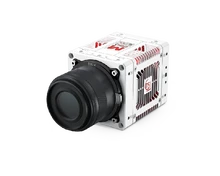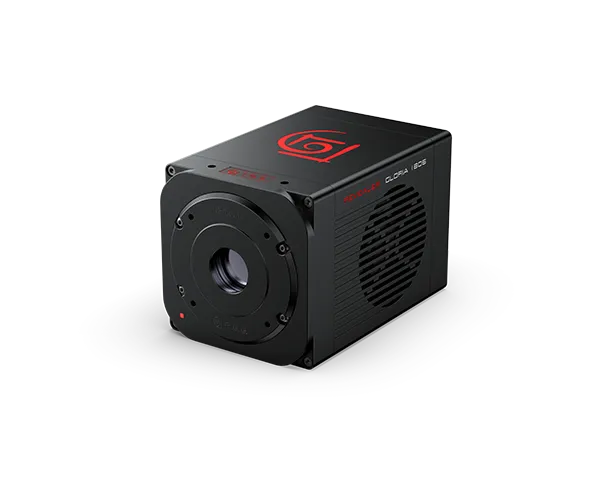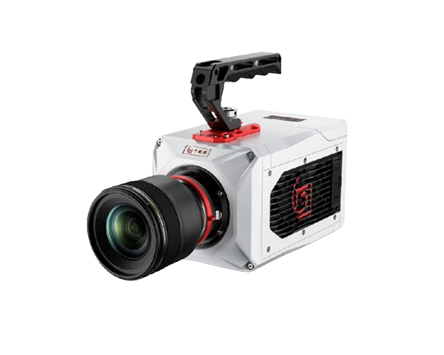
The entire process of impact, spreading, recoiling, bouncing, and detachment of a specially formulated solution droplet on a silicon wafer surface was captured from vertical and horizontal perspectives using two Revealer high-speed cameras (NEO25M and G536M Pro) at microsecond-level temporal resolution.
Droplet impact and bouncing on solid surfaces are classical research topics in interfacial fluid mechanics, with direct implications for applications such as inkjet printing, pesticide spraying, and surface engineering. The moment of impact involves severe deformation and rapid internal flow rearrangement, with characteristic time scales ranging from milliseconds to microseconds. Conventional industrial cameras, limited by frame rate and exposure time, cannot capture transient phenomena such as shockwaves and shockwave reflections inside the droplet during impact. Moreover, typical high-speed cameras often sacrifice light sensitivity at high frame rates, making it difficult to resolve droplet contours and internal flow structures.
To address these challenges, a research team at Ningbo University introduced two Revealer high-speed cameras: the NEO25M (high sensitivity) for horizontal viewing and the G536M Pro (high resolution) for vertical viewing. These two orthogonal perspectives were used to capture the entire droplet bouncing process, aiming to reveal the generation and evolution of impact-induced shockwaves.
Two Revealer high-speed cameras were deployed simultaneously.
NEO25M (horizontal view): configured at 1280×512 resolution and 50,000 fps (20 μs temporal resolution). It captured droplet contour evolution, dynamic contact angle, and shockwave propagation near the impact point, with effective suppression of motion blur.
G536M Pro (vertical view): configured at 2560×2016 resolution and 3,000 fps (333 μs temporal resolution). It recorded the two-dimensional spatial symmetry of spreading and recoiling, as well as possible non-axisymmetric instabilities. The high spatial resolution enabled accurate extraction of contour, contact angle, and spreading factor.
Parameter | NEO25M | G536M Pro |
Viewing angle | Horizontal (side) | Vertical (top-down) |
Resolution | 1280×512 | 2560×2016 |
Frame rate | 50000 FPS | 3000 FPS |
Temporal resolution | 20 μs | 333 μs |
Primary function | Shockwave oscillation imaging | Contour & contact angle extraction |
Table 1 – Specifications of the high-speed camera system
Both cameras were synchronously triggered and controlled using Revealer RCC4.0 image acquisition software, which supports real-time preview, triggered acquisition, and post-recording playback analysis.
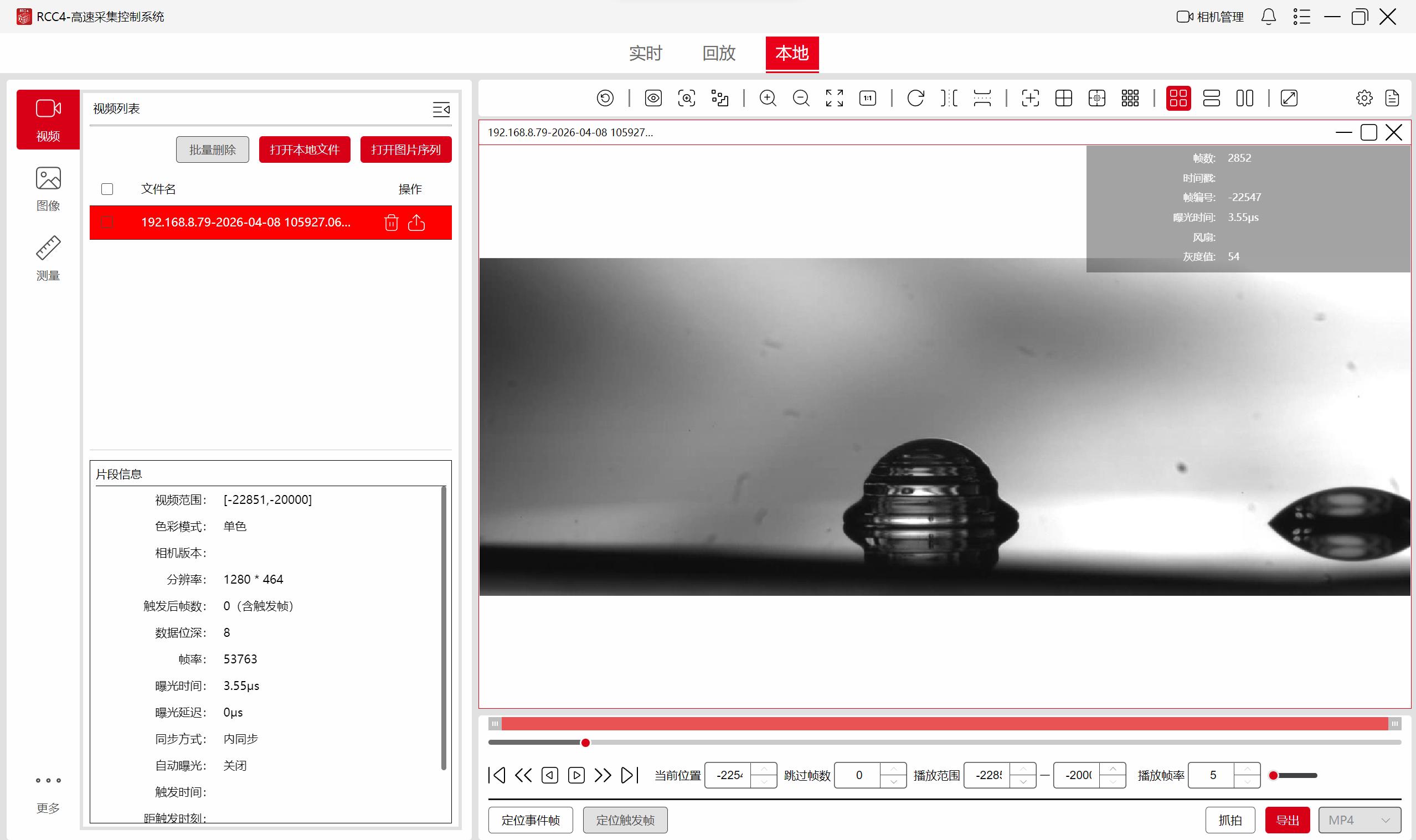
Figure 1 – Screenshot of Revealer RCC4.0 software interface
A custom-formulated solution was used as the test droplet, and a silicon wafer served as the impact substrate. Droplets were released from a preset height using a micro-dispensing device. The two high-speed cameras recorded simultaneously from side and top views. Raw image sequences were exported from RCC4.0 and post-processed using image analysis algorithms, including droplet contour extraction, contact angle calculation, spreading factor determination, and identification of internal shockwave features.
Based on the image sequences acquired from the two orthogonal views, the full droplet impact-bouncing dynamics were analyzed, with emphasis on the initial shockwave phenomenon and the subsequent macro-scale morphological evolution (spreading, recoiling, bouncing).
0–5000 μs: Free-fall phase after droplet detachment. The droplet is nearly spherical with a smooth surface, providing a clear baseline for impact comparison.
5020 μs(impact zero time): The lower edge of the droplet first contacts the silicon wafer. The bottom of the droplet is abruptly decelerated, converting kinetic energy into a pressure pulse and generating a spherical compression shockwave.
5260 μs: A curved dark fringe appears near the contact line at the droplet bottom. This fringe corresponds to the abrupt refractive index change across the shockwave front, indicating a distinct density gradient inside the droplet. The shockwave then propagates rapidly toward the droplet top.
5500 μs: The shockwave reaches the free (air-liquid) interface and reflects as an expansion wave. The reflected expansion wave meets the still-propagating original shockwave inside the droplet, leading to superposition and interference. This complex wave interaction creates alternating bright-and-dark fringes in the images — the “shockwave oscillation” phenomenon.
5600 μs: Oscillation decays due to viscous dissipation, and the droplet enters the inertia-dominated spreading phase. The bottom contact line quickly slides outward, forming a “cap + brim” structure (a raised cap on top and a thin brim at the bottom). As spreading proceeds, the cap gradually shrinks while the brim expands. At **8700 μs**, the cap disappears completely, and the droplet becomes a flat pancake-like shape with maximum spreading radius.
11400 μs: Driven by surface tension, the droplet begins to recoil and bounce. The cap re-emerges. At 14700 μs, the droplet reaches a second peak height, then enters the next spreading-recoiling cycle.
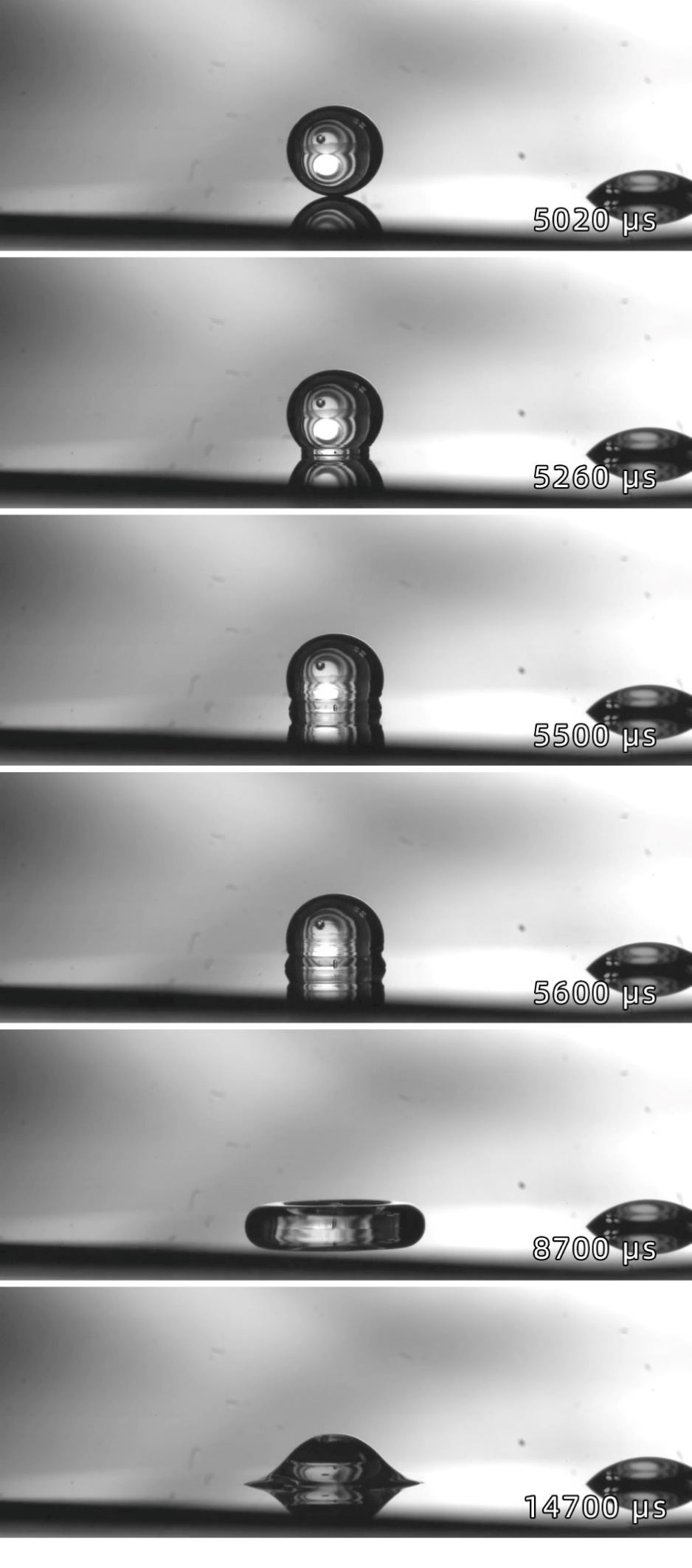
Figure 2 – Horizontal view image sequence showing shockwave oscillation and morphological evolution
0–16000 μs: Free-fall phase.
16333 μs(impact zero time): The droplet contour first contacts the silicon wafer, forming a circular contact spot, indicating vertical impact and isotropic wetting.
17000 μs: Spreading begins. Concentric interference fringes appear at the outer periphery, demonstrating that the front of the spreading film is thin (sub-micron thickness) while the central region remains thicker.
20333 μs: The spreading diameter reaches its maximum; the droplet assumes a flattened disc shape with clearly visible concentric fringes. Thereafter, surface tension and adhesion drive recoiling.
22666 μs: During recoiling, the central region of the droplet lifts upward, forming a characteristic “cone-like” morphology.
26333 μs: The droplet enters a second spreading phase, producing asymmetric concentric interference fringes (shifted center or elliptic distortion), revealing a loss of axisymmetry in the liquid film thickness distribution.
The temporal evolution of morphology observed from the vertical view is fully consistent with the horizontal-view results.
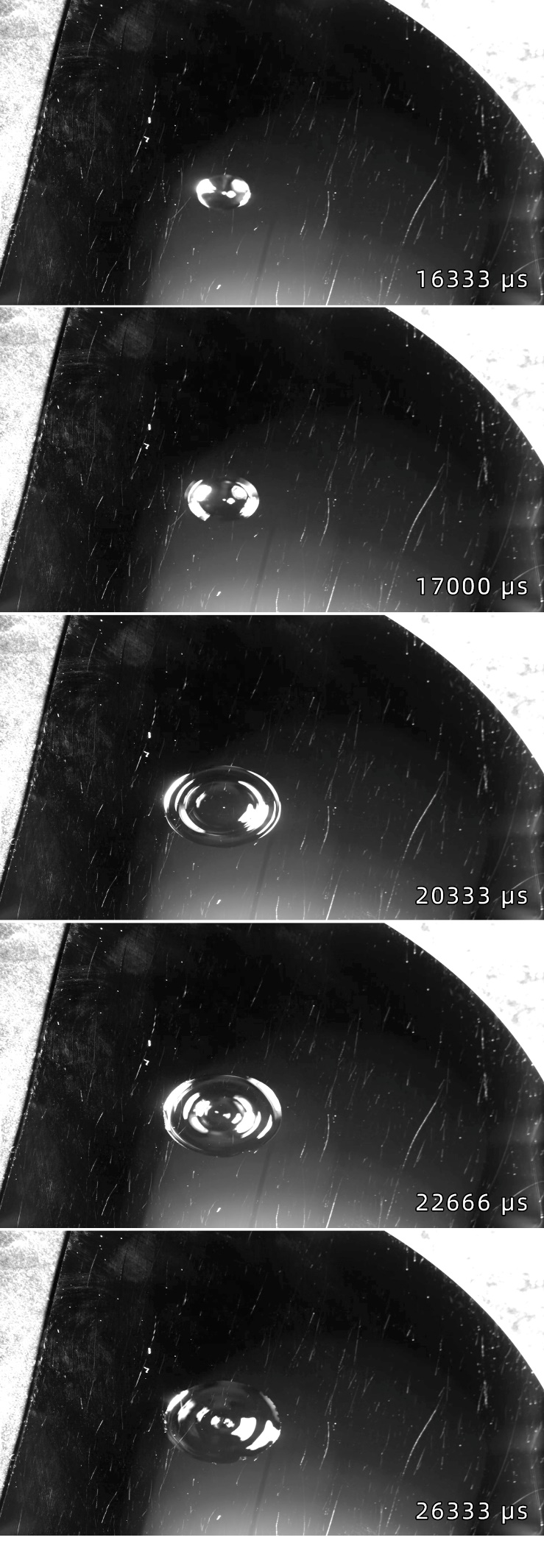
Figure 3 – Vertical view image sequence showing concentric fringes, cone formation, and asymmetric fringes
By combining two Revealer high-speed cameras (NEO25M and G536M Pro), this study achieved multi-perspective recording of microsecond-scale shockwave phenomena and the entire spreading-bouncing process. Key findings:
I. From the horizontal view, the water-hammer effect generates a compression shockwave when the droplet impacts the solid surface. This shockwave propagates to the free interface, reflects as an expansion wave, and the superposition of the two waves creates shockwave oscillation.
II. From the vertical view, no splashing or film rupture was observed. Concentric interference fringes during spreading were clearly captured, enabling the inference of film thickness distribution from fringe spacing.
III. Joint analysis of the two views shows that the shockwave-induced internal flow asymmetry is amplified during the first spreading-recoiling stage, leading to anisotropic contact line contraction and loss of axisymmetry in film thickness distribution. Consequently, asymmetric concentric interference fringes appear in the second spreading phase.
These observations demonstrate the high-speed, high-sensitivity imaging capability of Revealer cameras under extreme spatiotemporal resolution. In particular, the NEO25M’s ability to operate at 50,000 fps with 1280×512 resolution makes microsecond-scale shockwave structures directly visualizable. This work helps establish a coupling relationship between shockwave oscillation and droplet macro-morphology, providing a new pathway for developing shockwave- feature-based predictive models of droplet bouncing. The results have practical value for precise droplet control in microfabrication, inkjet printing, and self-cleaning surfaces.
Answer: Two Revealer cameras were used:
- NEO25M (horizontal view): 1280×512 resolution, 50,000 fps (20 μs temporal resolution), designed for capturing shockwave oscillations.
- G536M Pro (vertical view): 2560×2016 resolution, 3,000 fps (333 μs temporal resolution), designed for precise contour and contact angle extraction.
Both were synchronized via Revealer RCC4.0 software.
Answer: At impact (5020 μs), a water-hammer induced compression shockwave formed. By 5260 μs, a curved dark fringe (shock front) appeared and travelled upward at ~1500 m/s. At 5500 μs, the shockwave reflected at the free surface as an expansion wave. The reflected expansion wave interfered with the incoming shockwave, producing alternating bright-dark fringes – the “shockwave oscillation”. The oscillation decayed within several tens of microseconds due to viscous dissipation.
Answer: The concentric fringes are thin-film interference (Newton-ring type) arising when the liquid film thins to sub-micron thickness. They first appeared at 17000 μs, confirming that the spreading front is much thinner than the center. At 20333 μs (maximum spreading) the fringes were clearest. Asymmetric fringes (off-center or elliptic) appeared at 26333 μs (second spreading), indicating loss of axisymmetry in film thickness. This asymmetry is attributed to anisotropic contact line contraction during the first recoiling, amplified by shockwave-induced internal flow non-uniformity.
Answer: The horizontal view captured microsecond shockwave generation, reflection, and oscillation – phenomena invisible at lower frame rates. The vertical view simultaneously recorded the macro-scale film thickness distribution via interference fringes. Joint analysis revealed that shockwave-induced asymmetries persist and are amplified during recoiling, leading to non-axisymmetric second spreading. This coupling between shockwave dynamics and macroscopic droplet morphology had not been previously documented.
Answer: The ability to visualize shockwave oscillations and film thickness evolution provides a new basis for predicting droplet bouncing behavior. By incorporating shockwave characteristics into predictive models, one can better control droplet spreading, rebound, and deposition. This is directly relevant to inkjet printing (droplet placement accuracy), spray coating (uniform film formation), and self-cleaning surfaces (droplet removal efficiency).
 English
 Deutsch