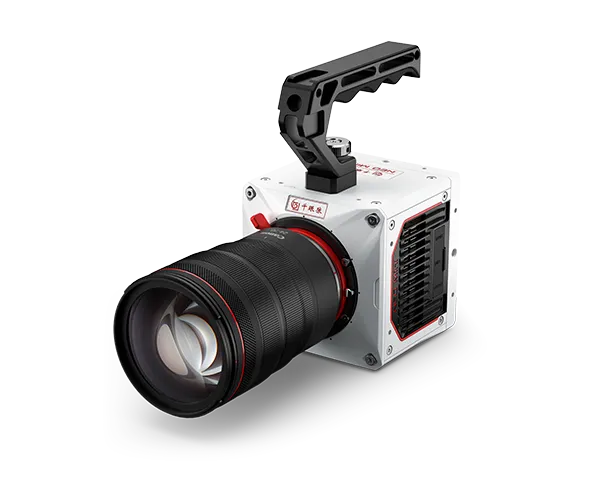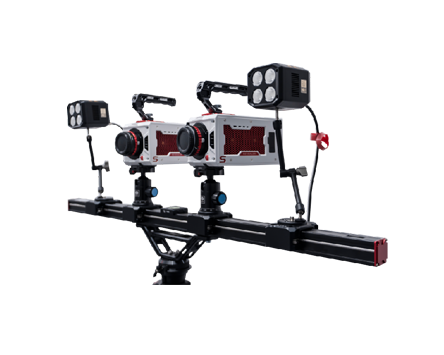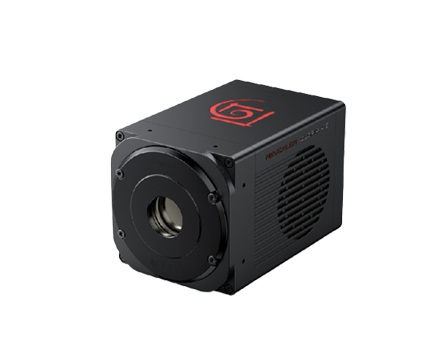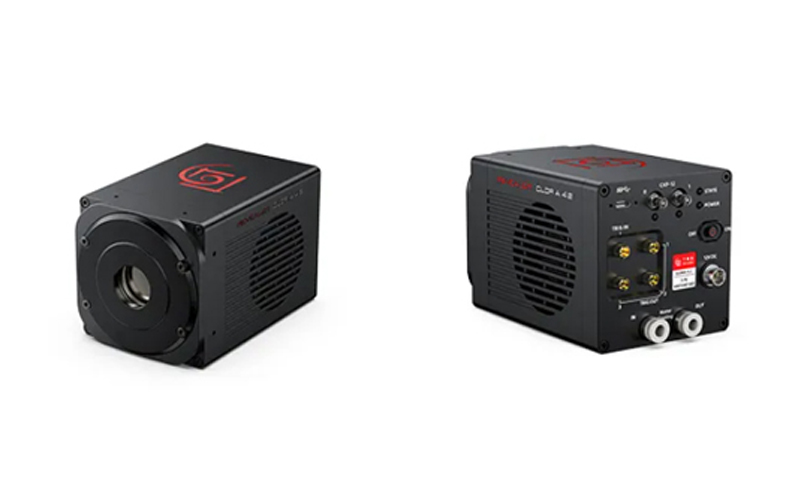

The 5th Academic Conference on Carbon Neutrality Science and Engineering was successfully held in Chongqing recently. Under the theme of Pioneering Frontier Research for Dual-Carbon Strategy, Building a Green and Low-Carbon Future, the conference carried out thematic discussions focusing on core research directions including carbon capture and sequestration, green low-carbon coal exploitation, CCUS (Carbon Capture, Utilization and Storage) and energy storage safety. As a renowned supplier of high-speed cameras and Particle Image Velocimetry (PIV) systems, Revealer attended the exhibition alongside NEO25 and S1315 high-sensitivity high-speed cameras as well as the synchronously coupled PIV-PLIF measurement system. The company presented a special technical report entitled PIV-Based Measurement Technology for Combustion Flame Flow Field, which elaborated the application value of synchronized high-speed PIV-PLIF testing in carbon-neutrality-oriented experimental research.

Driven by China’s Dual-Carbon targets, the low-carbon restructuring of energy systems puts forward stricter requirements for precise combustion control. Whether for clean and high-efficiency coal utilization or combustion stability exploration of new fuels such as hydrogen and ammonia, the transient coupling between flow structures and chemical reaction zones fundamentally determines combustion efficiency, pollutant generation and carbon emission level.
Current research is confronted with four prominent challenges:
omplex flow-reaction coupling: Flame stability, combustion efficiency and pollutant formation are strongly dominated by transient interaction between flow configuration and chemical reactions, which cannot be captured via conventional single-type measurement methods.
Spatio-temporal mismatch from asynchronous testing: Separated or staggered data acquisition of Particle Image Velocimetry (PIV) and Planar Laser-Induced Fluorescence (PLIF) fails to establish causal links between flow perturbation and reaction zone variation.
High-frequency transient behaviors: Vortex structure evolution and turbulent shear inside combustion chambers happen instantaneously, and conventional imaging devices lack adequate temporal resolution for such fast-changing phenomena.
Irregular laser output and uneven sheet-light distribution: PLIF detection signals are vulnerable to pulsed laser energy fluctuation and non-uniform spatial distribution of laser sheet beam, resulting in misjudgment of reaction zone concentration distribution.
The above difficulties were widely discussed across multiple conference forums, and research fields including CCUS & energy storage safety and eco-friendly exploitation of coal-derived gas have raised urgent demands for synchronous multi-physics measurement solutions.
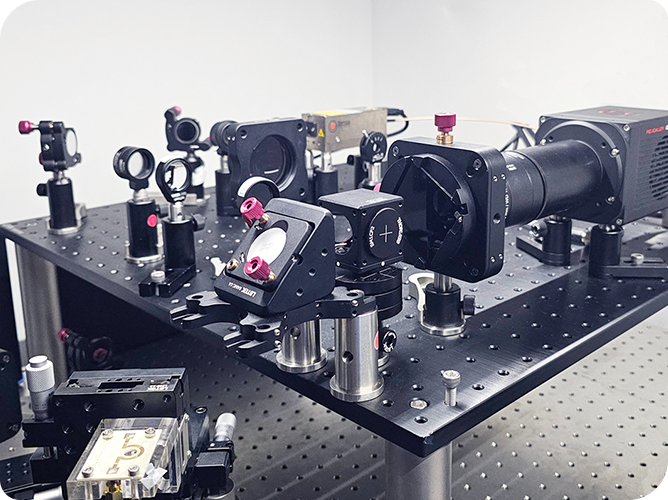
Targeting the aforementioned technical bottlenecks, engineers developed a 10 kHz synchronous coupled PIV-PLIF measurement system based on Revealer high-speed cameras, realizing simultaneous imaging of flame flow structures and chemical reaction zones on the identical measuring plane at the same timestamp. Key supporting technologies are specified as below:
PIV-PLIF spatial coupling calibration: A universal calibration plate is adopted to complete spatial registration between velocity field and fluorescence field alongside lens aberration correction, unifying physical coordinate systems and realizing subpixel-level spatial alignment accuracy for the two testing subsystems.
Precise timing synchronization: A digital delay pulse generator centrally governs trigger circuits of two Revealer high-speed cameras, image intensifiers, PIV dual-pulse lasers, PLIF pump lasers and dye lasers. With high-speed camera trigger signals as the master timing benchmark, combined with pre-calibrated laser delay and gated window parameter setting of image intensifiers, nanosecond (ns)-grade synchronous precision is achieved.
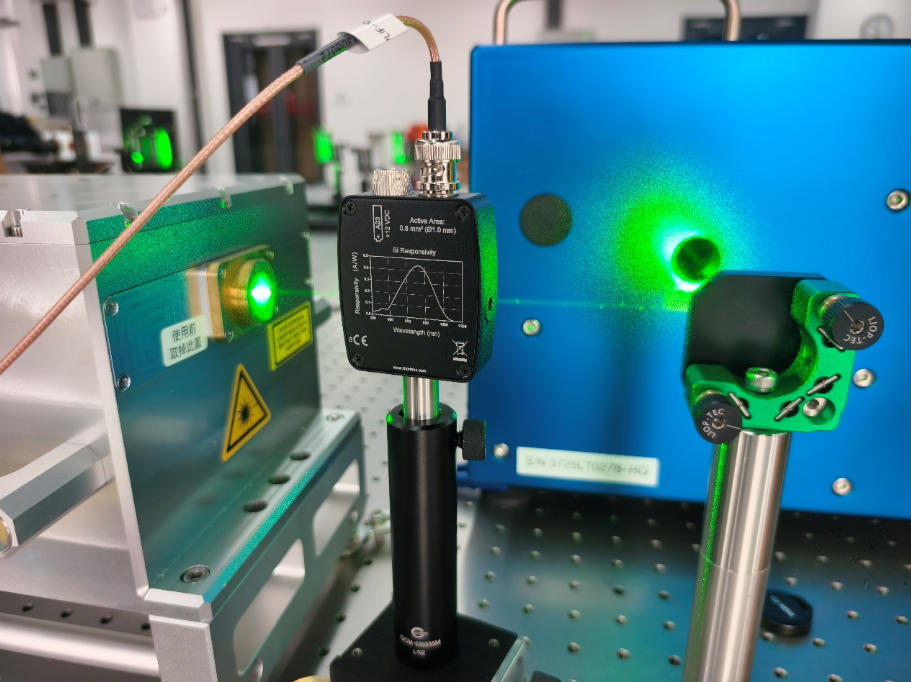
PIV laser energy fluctuation correction: A photodiode samples the output energy of every single laser pulse synchronously, while an oscilloscope records peak pulse values to build a standard energy database. Revealer RFlow4 flow field measurement software correlates the energy dataset with frame numbers of PLIF images to implement frame-wise grayscale calibration and eliminate intensity deviation errors.
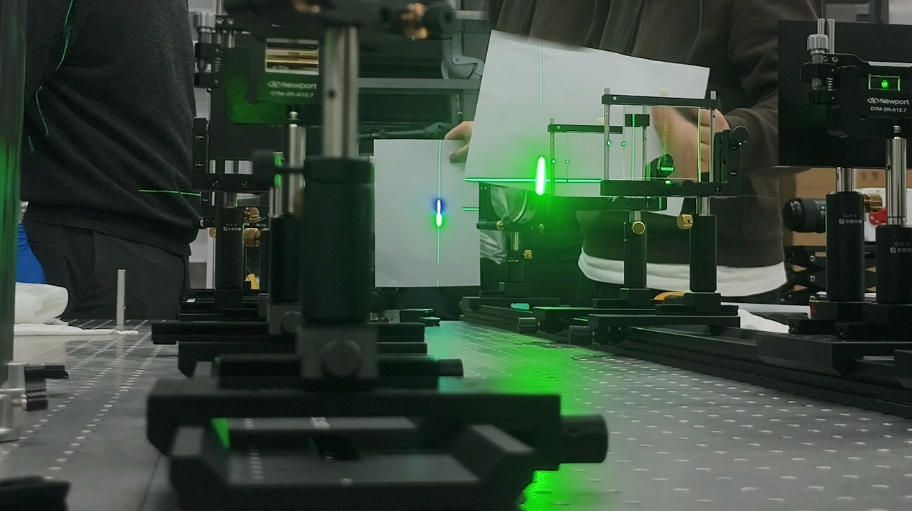
PLIF sheet-light intensity homogenization: The non-uniform cross-section intensity of Gaussian-distributed laser sheet is optimized and equalized to make collected fluorescent intensity match the actual spatial distribution of flame reaction zones.
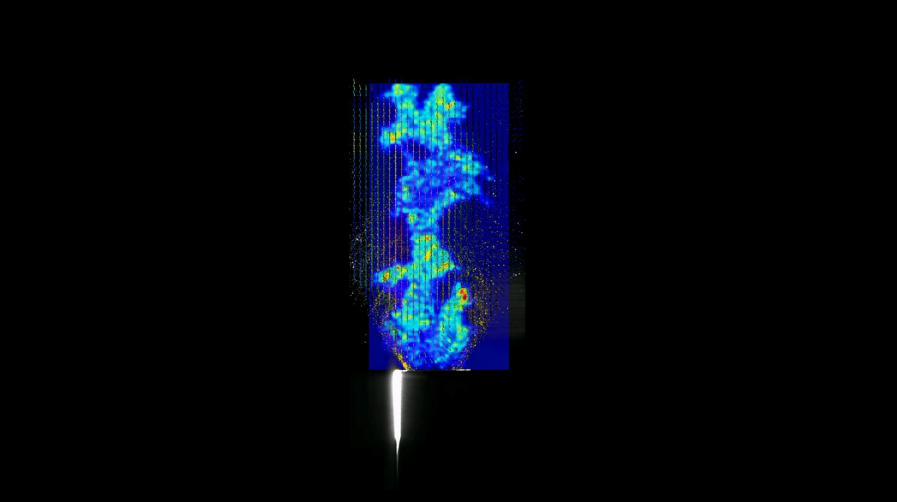
Integrated coupling analysis: After finishing spatial and temporal alignment, overlapping analysis is performed on co-frame PIV velocity field and PLIF fluorescence field to directly visualize the intrinsic correlation between flame front topological deformation and local flow structure changes.
1. Research Background: A state key laboratory aims to explore the dynamic interaction between vortex structures and reaction zones within turbulent flames, while traditional measurement techniques cannot synchronously obtain flow field and reaction zone information.
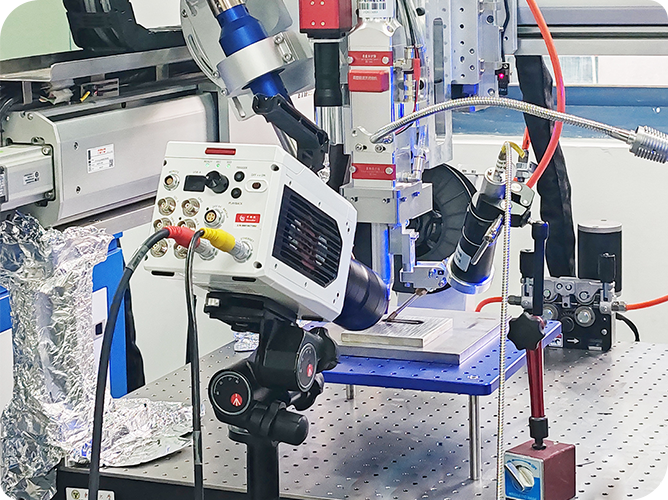
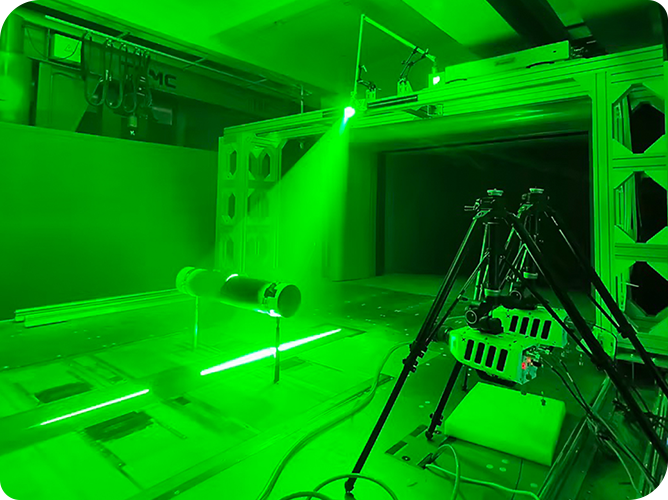
2. Experimental Setup: One revealer high speed camera, the S1310, acquires PIV particle images, which is synchronously matched with another image-intensifier-equipped S1310 camera for OH-PLIF signal collection. A dual-pulse 527 nm laser excites 1 μm Al₂O₃ tracer particles for PIV testing, and a tunable dye laser excites hydroxyl (OH) radicals to generate PLIF fluorescence signals.
3. Application Value: Spatial registration and co-frame superposition of PIV velocity field and PLIF fluorescence field reveal the transient coupling law describing how turbulent shear and vortex deformation induce wrinkling, bending of flame fronts and instantaneous feedback of internal reaction zones. These observations are enabled by the precise temporal resolution provided by Ultra high-speed camera and high-speed camera systems.
As dual-carbon-related research deepens, experimental investigations on combustion and carbon abatement are developing toward high-speed transient processes and multi-physics coupling characteristics. The synchronous high-speed PIV-PLIF measurement technology achieves co-frame visualization of flow fields and chemical reaction regions and clarifies transient interaction rules between turbulent structures and reaction zones, shifting research paradigm from superficial phenomenon observation to in-depth mechanism interpretation. It provides reliable experimental data for combustion optimization, CCUS process intensification and advanced new energy research. At present, Revealer high-speed cameras and its synchronous coupled PIV-PLIF measurement system have become core diagnostic equipment for carbon neutrality fundamental research.
PREV
 English
 Deutsch