From July 17 to July 19, 2026, the 7th World Photonics Conference (WPC2026) was held at Phase II of the China National Convention Center in Beijing.
Jointly organized by the Chinese Society for Optical Engineering and the International Society for Optical Engineering (SPIE), the conference featured thematic forums covering micro/nano-optics, quantum optics, optical imaging and display, biomedical photonics, intelligent photonics, optoelectronic sensing and detection, and other advanced research fields.
Discussions focused on frontier topics including optical field manipulation, low-light detection, advanced microscopy, and optoelectronic devices.
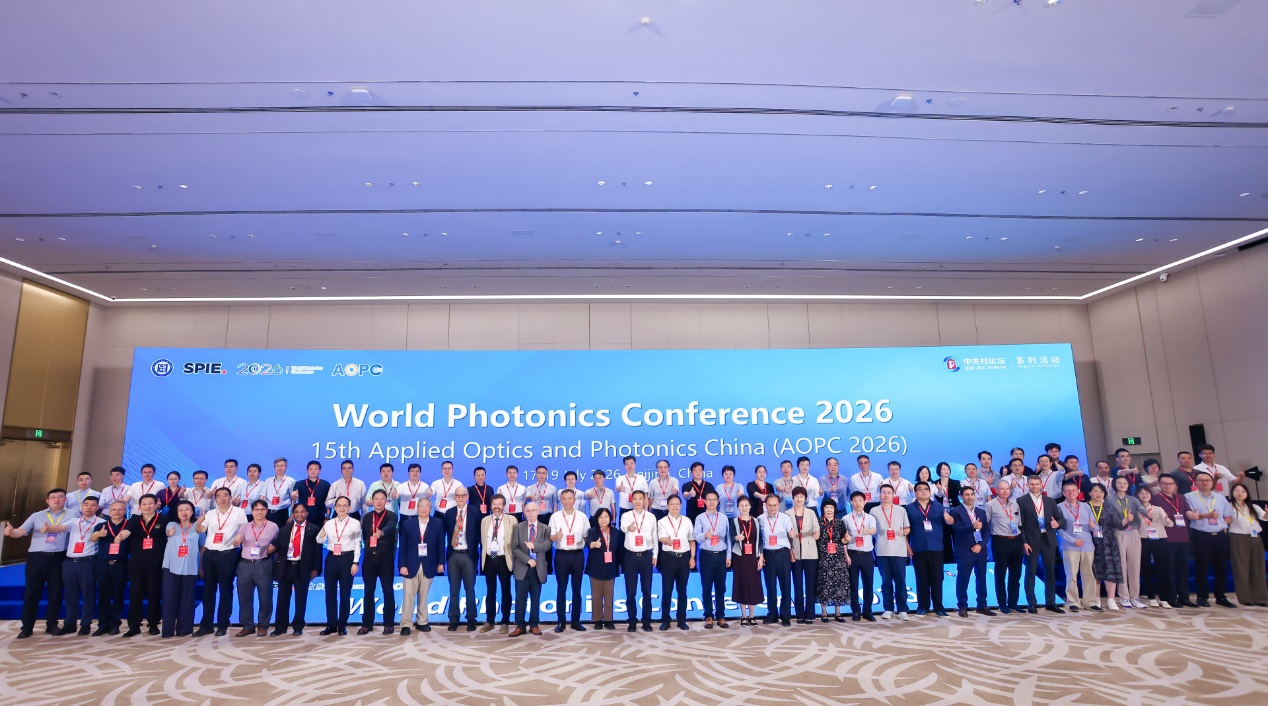
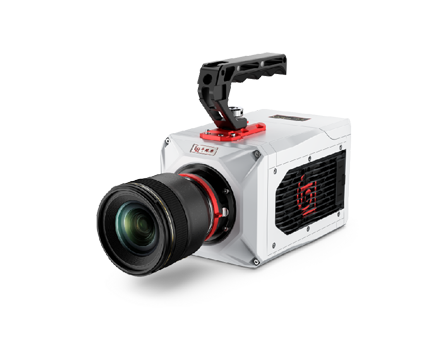
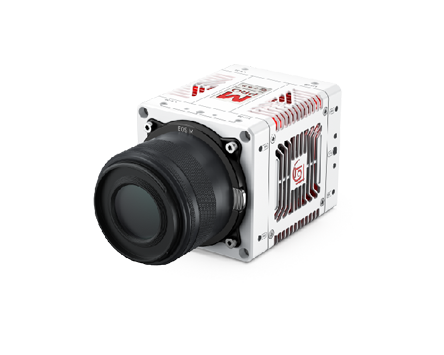
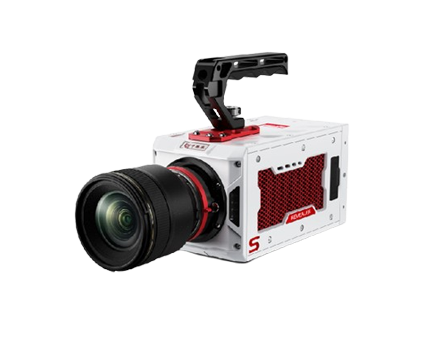
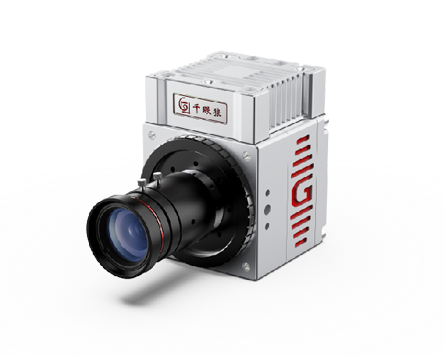
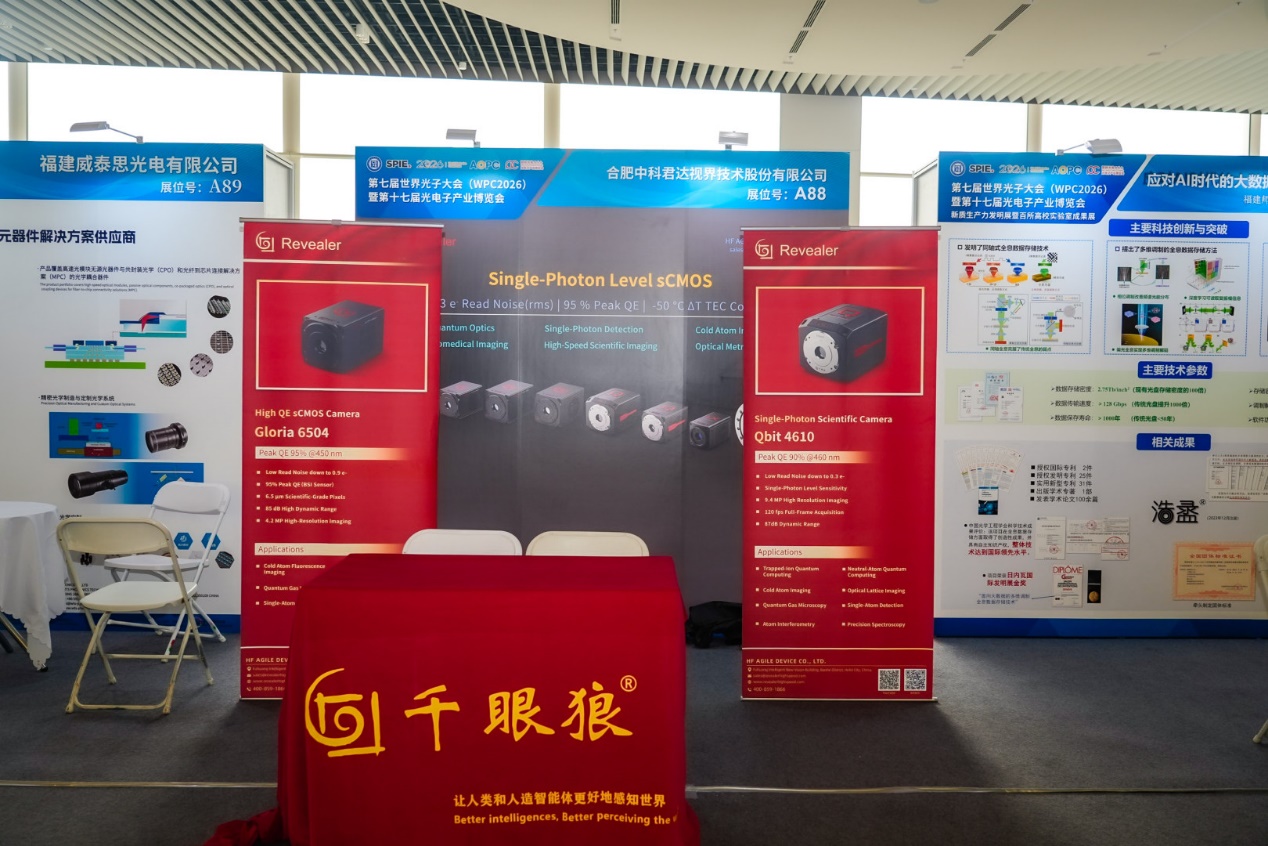
HF Agile Device Co., Ltd. participated in the conference with its Revealer Qbit and Gloria series sCMOS scientific cameras and exchanged technical insights with researchers regarding applications in micro/nano optical field imaging, cold-atom and cold-ion fluorescence detection, and super-resolution microscopy.
In conventional optical experiments, cameras primarily serve as image-recording devices.
As research subjects have expanded from macroscopic optical spots and static samples to subwavelength structures, photon-limited signals, and rapid cellular dynamics, cameras have become a critical component that determines the detection limit, temporal resolution, and quantitative reliability of experiments.
Micro/nano-optics research commonly involves microcavities, photonic crystals, metasurfaces, nanowaveguides, and other subwavelength structures.
Such experiments not only focus on geometric morphology but also require analysis of scattering, radiation, coupling, and optical mode distributions generated by these structures.
In quantum optics and atomic physics experiments, fluorescence signals emitted from cold atoms, cold ions, and neutral atom arrays are typically very weak.
Available exposure times are constrained by particle lifetime, heating effects, decoherence time, and experimental cycle frequency.
Consequently, the detection system must achieve sufficiently high statistical confidence under a limited photon budget.
Super-resolution microscopy simultaneously relies on optical modulation and computational reconstruction.
For example, in Structured Illumination Microscopy (SIM), a reconstructed image is generally generated from multiple raw frames acquired under different illumination directions and phase conditions.
Readout noise, response uniformity, frame-to-frame stability, and acquisition speed of the camera collectively affect spectral reconstruction quality.
Therefore, the selection of an sCMOS scientific camera should not be based solely on pixel count or peak frame rate.
Instead, comprehensive evaluation should include quantum efficiency within the target spectral band, readout noise, dark current, dynamic range, pixel size, effective field of view, shutter mode, trigger synchronization capability, and long-term operational stability.
Although different research fields exhibit distinct apparent requirements, their underlying objective remains the same: maximizing the effective utilization of incident photons.
Micro/nano-photonics research focuses on the propagation, localization, coupling, and radiation behaviors of light within subwavelength structures.
Variations in structural dimensions, material refractive index, boundary conditions, incident wavelength, and polarization state may all lead to changes in output optical modes and spatial energy distributions.
Experiments typically employ microscopic optical systems, spectroscopic instruments, and scientific cameras to measure transmitted, reflected, scattered, or luminescent signals generated by micro/nano structures.
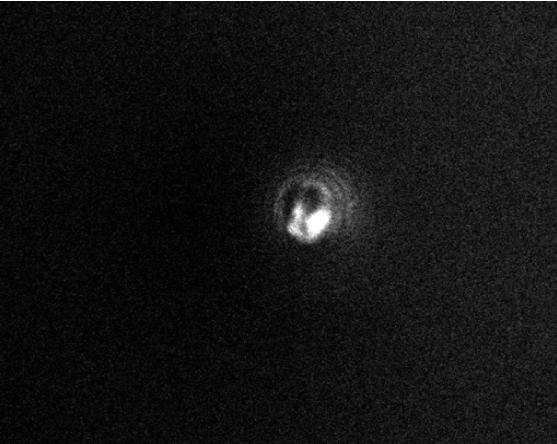
In ultraviolet micro/nano-photonics experiments conducted at Zhejiang University, the Gloria 4.2 sCMOS scientific camera was integrated into a microscopic optical system to record spatial optical intensity distributions generated under ultraviolet excitation.
Ring-shaped or localized bright spots observed in the measured images can be used to analyze the spatial symmetry of output modes, centroid positions, relative intensity distributions, energy concentration regions, and mode variations under different experimental conditions.
Within the Quantum Optics Forum, precision observation of cold-ion clouds represented a highly challenging measurement task.
To clearly capture ion clouds that have been laser-cooled to extremely low temperatures and suspended within an ultra-high-vacuum environment, the detector—in this case an sCMOS scientific camera—must possess exceptionally high signal-to-noise ratio and ultra-low dark current characteristics.
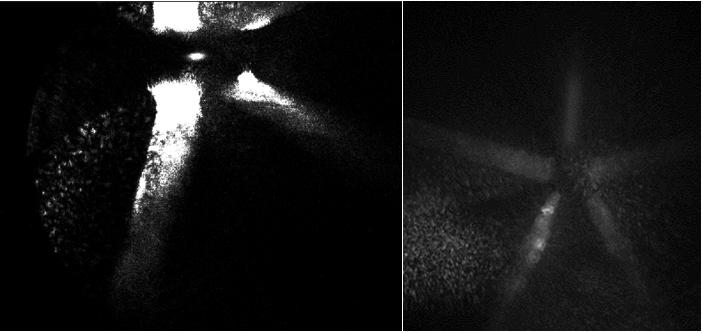
The School of Physics at Sun Yat-sen University adopted the Revealer Gloria 1605 sCMOS scientific camera for locating and observing cold-ion cloud signals.
Its sub-electron readout noise of 0.9 e− and high quantum efficiency of 90.7% enable clear identification of ion-cloud position and overall morphology variations, while preserving original experimental data for subsequent quantitative calibration and measurements of ion-cloud size and particle number.
At the Biomedical Photonics Forum, live-cell dynamic observation using super-resolution imaging technology was one of the major discussion topics.
Conventional super-resolution techniques are often limited by imaging throughput and acquisition speed, making it difficult to capture complete biological dynamic processes.
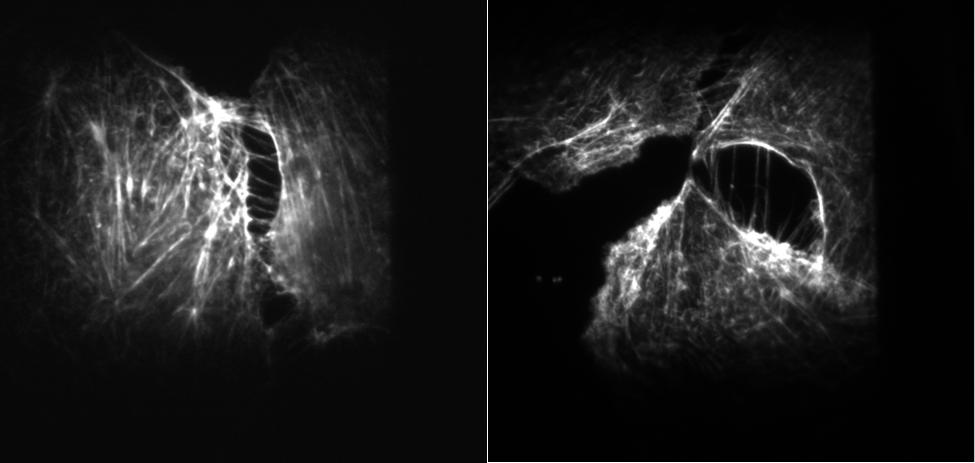
A research team at South China Normal University introduced the Revealer Gloria 4.2 BSI sCMOS camera and successfully established a high-throughput super-resolution imaging system.
Benefiting from the Gloria 4.2 BSI’s ultra-high quantum efficiency (QE) of 95% and extremely low readout noise (<1.0 e−), the system is capable of clearly capturing cytoskeletal structures and fluorescent microstructures under very low laser power conditions.
Experimental raw images demonstrate that the camera maintains continuity of filamentous structures across a large field of view while providing relatively complete spatial-frequency information for subsequent super-resolution reconstruction.
Compared with traditional serial-readout EMCCD cameras, the Gloria 4.2 BSI sCMOS camera offers stronger parallel-readout advantages in balancing large field of view, high frame rate, and low readout noise.
These advantages help reduce the acquisition time required for multi-phase structured illumination imaging and decrease the probability of sample displacement during the reconstruction cycle.
The technical themes presented at WPC2026 indicate that photonics research is evolving from simply “acquiring images” toward obtaining optical-field information that is quantifiable, reconstructable, and interpretable.
In this transition, sCMOS scientific cameras are responsible not only for imaging but also for low-light signal conversion, high-speed temporal sampling, spatial-information fidelity preservation, and synchronization within complex experimental systems.
As photonics research continues to advance toward lower photon counts, higher temporal resolution, and increasingly sophisticated computational reconstruction techniques, sCMOS scientific cameras are expected to evolve from general-purpose imaging devices into core measurement units within advanced photonics experimental platforms.
 English
 Deutsch