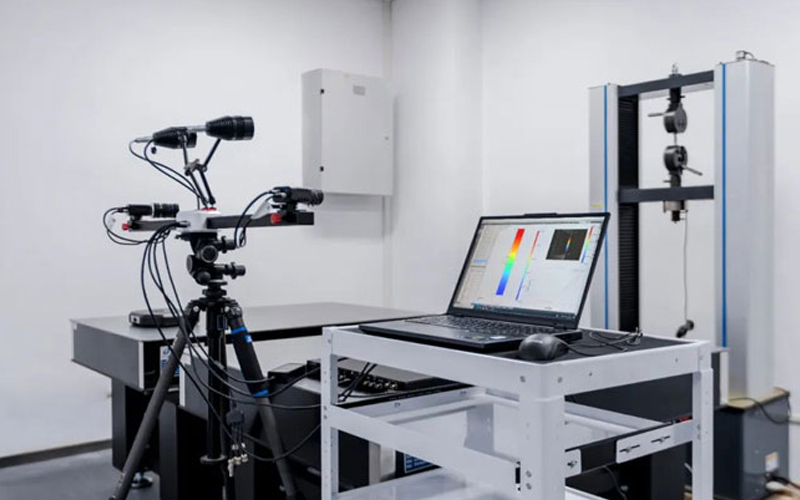
For detailed research results, please refer to doi.org/10.1016/j.ijmecsci.2025.110430
Using the Revealer M220 high-speed camera and VOF numerical simulations, it was discovered that the minute density difference between the continuous phase and the dispersed phase can accumulate during microchannel transport to alter droplet trajectories, forming three motion modes: contact, floating, and bouncing.
In microfluidic systems, droplet sizes are typically on the micron scale, where interfacial tension and viscous forces dominate. Since the Bond number is usually much less than 1, the effect of gravity is often neglected in analyses of droplet formation and local interface evolution. However, for sustained transport of droplets in relatively long channels, the net body force arising from density differences, though weak, may accumulate over residence time into observable transverse displacement.
A joint research team from Nanjing Tech University and Zhejiang Normal University systematically investigated the effects of continuous phase viscosity, flow rate, and channel scale on droplet settling and near-wall motion, using denser water-phase droplets transported in silicone oil as the continuous phase. The experiments continuously recorded the processes of droplet generation, settling, near-wall deceleration, and rebound using a high-speed camera, and combined numerical simulations to analyze the dynamic mechanisms.
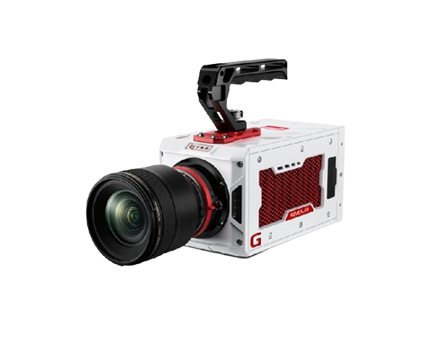
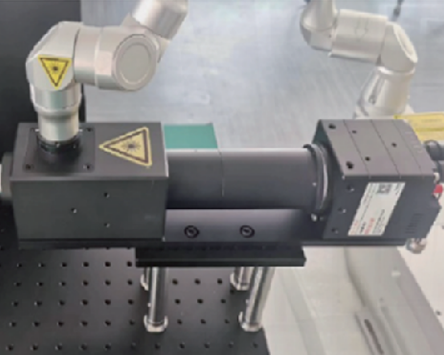
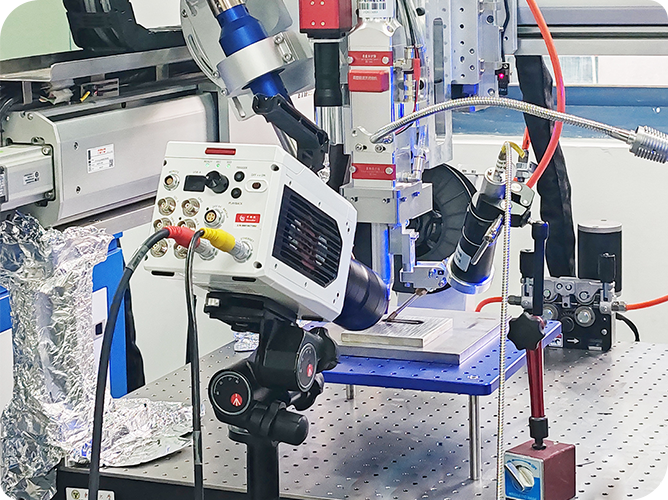
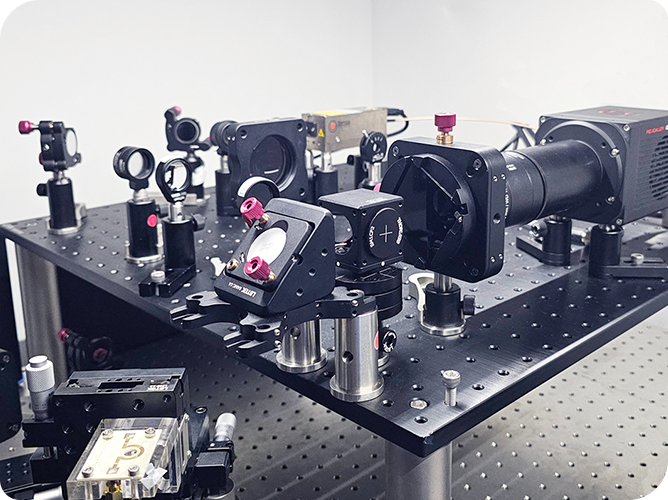
The experimental system consists of a microfluidic chip, a precision syringe pump, a Revealer M220 high-speed camera, a uniform light source, and a computer.
The microfluidic chip was fabricated from acrylic material and sealed by thermal bonding. The chip was placed vertically with the main channel axis horizontal, so the main flow direction of the droplets was perpendicular to the direction of gravity, facilitating observation of transverse migration caused by density differences. The dispersed phase was a 1 wt% sodium alginate aqueous solution with a density of approximately 1010 kg/m³ and a dynamic viscosity of about 100 mPa·s; the continuous phase was dimethyl silicone oil with a density of about 963 kg/m³ and viscosities of 10, 50, 100, and 200 mPa·s, respectively. The density difference between the two phases was about 47 kg/m³.
The M220 model used in this experiment is a Revealer high speed camera, positioned opposite the transmitted light source on the other side of the chip. Uniform backlighting improved the image contrast of the droplet contours, channel walls, and near-wall gaps. The high-speed camera continuously acquired changes in droplet position, shape, and droplet-wall distance, serving as the primary experimental equipment for droplet motion mode identification and trajectory analysis.
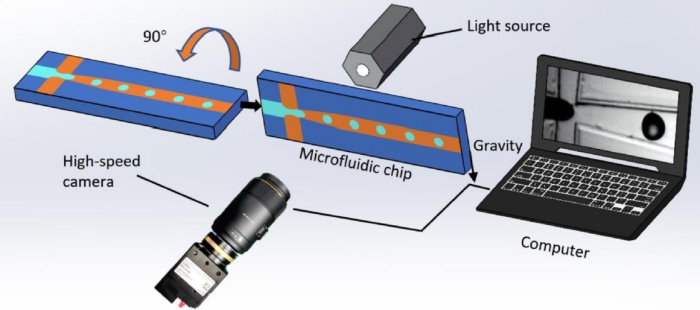
Figure 1. Droplet transport observation system composed of a Revealer M220 high-speed camera, a transmitted light source, and a vertical microfluidic chip.
The aqueous phase and the oil phase were separately injected into a cross-junction microfluidic chip by precision syringe pumps, forming water-in-oil droplets under flow focusing. The experiments varied droplet size, transport speed, and channel residence time by adjusting the continuous phase viscosity, continuous phase flow rate, and dispersed phase flow rate.
The high-speed camera continuously recorded the motion process of droplets from the generation point into the main channel. The distance, *h*, from the lowest point of the droplet to the lower wall of the channel was taken as the position characteristic parameter. The droplet trajectory was obtained through frame-by-frame image analysis, and three modes were classified based on this:
Contact mode: *h* continuously decreases and approaches zero;
Floating mode: *h* first decreases then stabilizes at a non-zero value;
Bouncing mode: *h* approaches zero then rapidly increases.
Numerical simulations employed ANSYS Fluent and the VOF model to analyze the droplet interface, velocity field, and pressure field. Experimental results were further mapped into We–Oh and Ca–Oh parameter spaces to establish a droplet behavior phase diagram.
High-speed image sequences show that microdroplets exhibit three typical transport modes within the channel: contact, floating, and bouncing.
In contact mode, the droplet migrates downward continuously while moving along the main channel, eventually approaching or contacting the lower wall. In floating mode, the droplet first settles, then maintains a stable distance without contacting the wall and continues transport. In bouncing mode, the droplet deforms after approaching the wall, then rapidly changes its vertical motion direction.
The high-speed camera, by preserving the complete time series, clearly distinguishes between continuous settling, stabilization after settling, and reverse motion after contact.
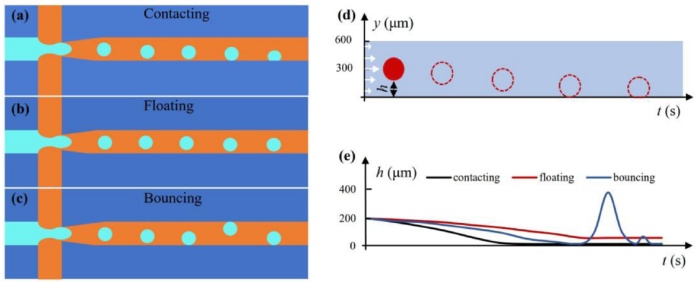
Figure 2. High-speed camera continuously observes the contact, floating, and bouncing modes of microchannel droplets, distinguished by changes in droplet-wall distance.
Under the conditions of a continuous phase flow rate of 100 μL/min and a dispersed phase flow rate of 4 μL/min, high-speed images compared droplet transport states at continuous phase viscosities of 200, 100, 50, and 10 mPa·s.
High-speed images show that when the continuous phase viscosity is 200 mPa·s, the droplet basically maintains a stable height within the observation range; as viscosity decreases, the droplet settling trend gradually strengthens; when viscosity drops to 10 mPa·s, the droplet clearly approaches the lower wall within a relatively short transport distance.
This result indicates that continuous phase viscosity determines whether the minute density difference can translate into significant transverse displacement within finite transport time. Higher viscosity generates stronger viscous resistance, which can suppress droplet settling; lower viscosity weakens damping, making the cumulative effect of the density-difference net body force more pronounced. The high-speed camera converts static positions under different working conditions into continuous trajectory evidence, avoiding misjudging initial droplet generation position differences as settling effects.
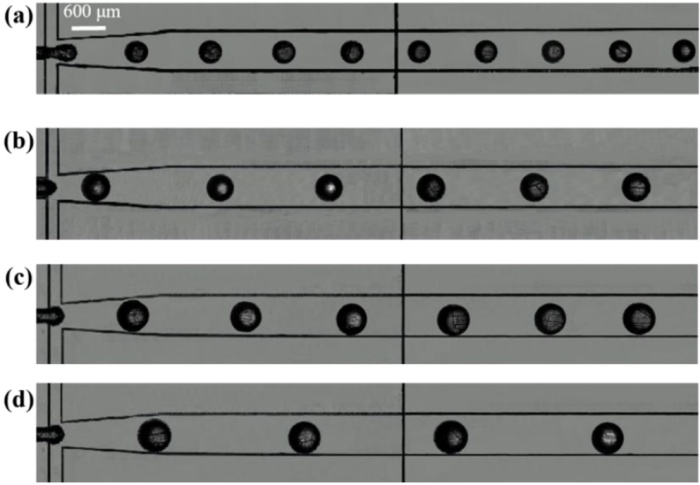
Figure 3. High-speed camera records high-speed image sequences of microdroplets under different continuous phase viscosities, showing that viscosity reduction leads to enhanced droplet settling and near-wall migration.
High-speed images demonstrate that after entering the main channel, the droplet first settles downward, then stops descending at a position not contacting the wall and maintains a stable distance for continued transport. Therefore, floating is a new dynamic equilibrium formed after settling.
Numerical simulations show that the flow path below the droplet gradually narrows, and the continuous phase accelerates in the narrow gap, forming a local high pressure. This pressure, acting together with viscous resistance, counteracts the micro-gravity, allowing the droplet to maintain a stable wall distance. The high-speed camera captures the “first settling, then stabilizing” process, while numerical simulations explain the cause of the stable state formation.
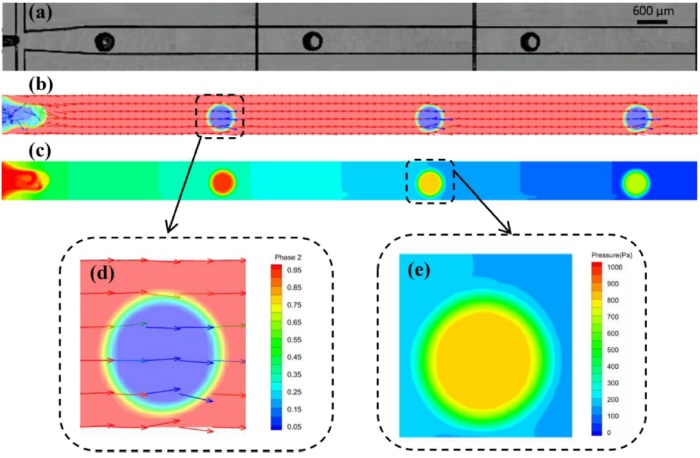
Figure 4. Comparison between high-speed camera experiment and VOF simulation showing the floating mode where the microdroplet first settles then maintains a stable wall distance.
The high-speed camera records that the droplet first moves downward, undergoes compressive deformation after approaching the wall, and then recovers its shape under surface tension and gains an upward velocity. This process indicates that droplet bouncing is not a rigid collision, but a combined result of liquid film lubrication, droplet inertia, interface deformation, and surface energy release.
Since the bouncing time is on the millisecond scale and the displacement scale is small, low-time-resolution imaging can easily misidentify it as ordinary floating. With the high speed camera, the complete transient process of approach, deformation, recovery, and rebound is recorded.
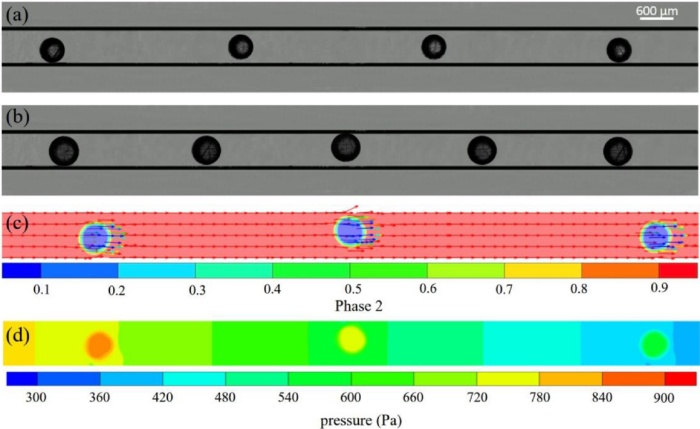
Figure 5. High-speed camera records the complete transient process of a microdroplet approaching the wall, compressive deformation, interface recovery, and upward rebound.
The study classified each experimental condition based on high-speed image sequences and established We–Oh and Ca–Oh droplet behavior phase diagrams. Although the phase diagrams are not raw images captured by the high-speed camera, the contact, floating, or bouncing labels for each experimental point in the diagrams are derived from high-speed image determination.
The phase diagrams show that droplet state is determined by density difference, viscous force, inertial force, interfacial tension, and droplet scale. When Ca increases to above about 0.01, droplets are more likely to transition from contact mode to floating mode; in the lower Ca region, the influence of the density-difference net body force is more pronounced, and contact and bouncing modes are more likely to occur.
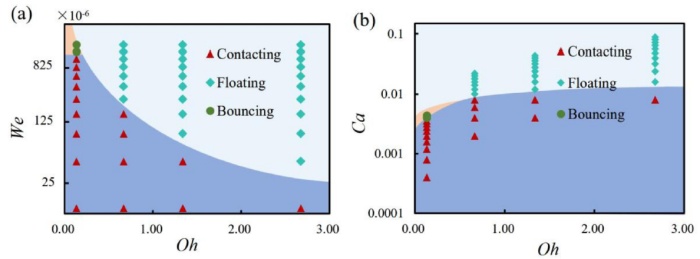
Figure 6. Microdroplet We–Oh and Ca–Oh behavior phase diagrams established based on high-speed image mode classification, marking the parameter distributions of contact, floating, and bouncing modes.
This study, through high-speed camera experiments and VOF numerical simulations, revealed the cumulative effect of minute density differences on the long-term transport behavior of droplets in microfluidic channels. The core conclusions are as follows:
I. The millisecond-scale time-resolved live images provided by the Revealer M220 high-speed camera revealed three motion modes—contact, floating, and bouncing—of droplets in microfluidic channels driven by density differences.
II. Continuous phase viscosity is an important parameter affecting droplet settling. Higher viscosity enhances viscous resistance, which can suppress transverse migration; lower viscosity makes the micro-gravity effect more prominent. After a droplet approaches the wall, liquid film resistance and local high pressure increase significantly, which can delay contact or even cause the droplet to remain in stable suspension. Under specific low-viscosity and flow-rate conditions, droplets can also generate rebound through interface deformation and surface energy release.
III. For problems of weak body forces, near-wall transport, and droplet collisions in microfluidic systems, the sequential images captured by the high-speed camera are the experimental foundation connecting transient morphology, motion trajectories, force mechanisms, and operating boundary measurements. The relevant research findings can provide a theoretical basis for channel height design, continuous phase selection, flow window setting, wall coating protection, and long-term operational stability assessment for droplet microfluidic chips.
 English
 Deutsch