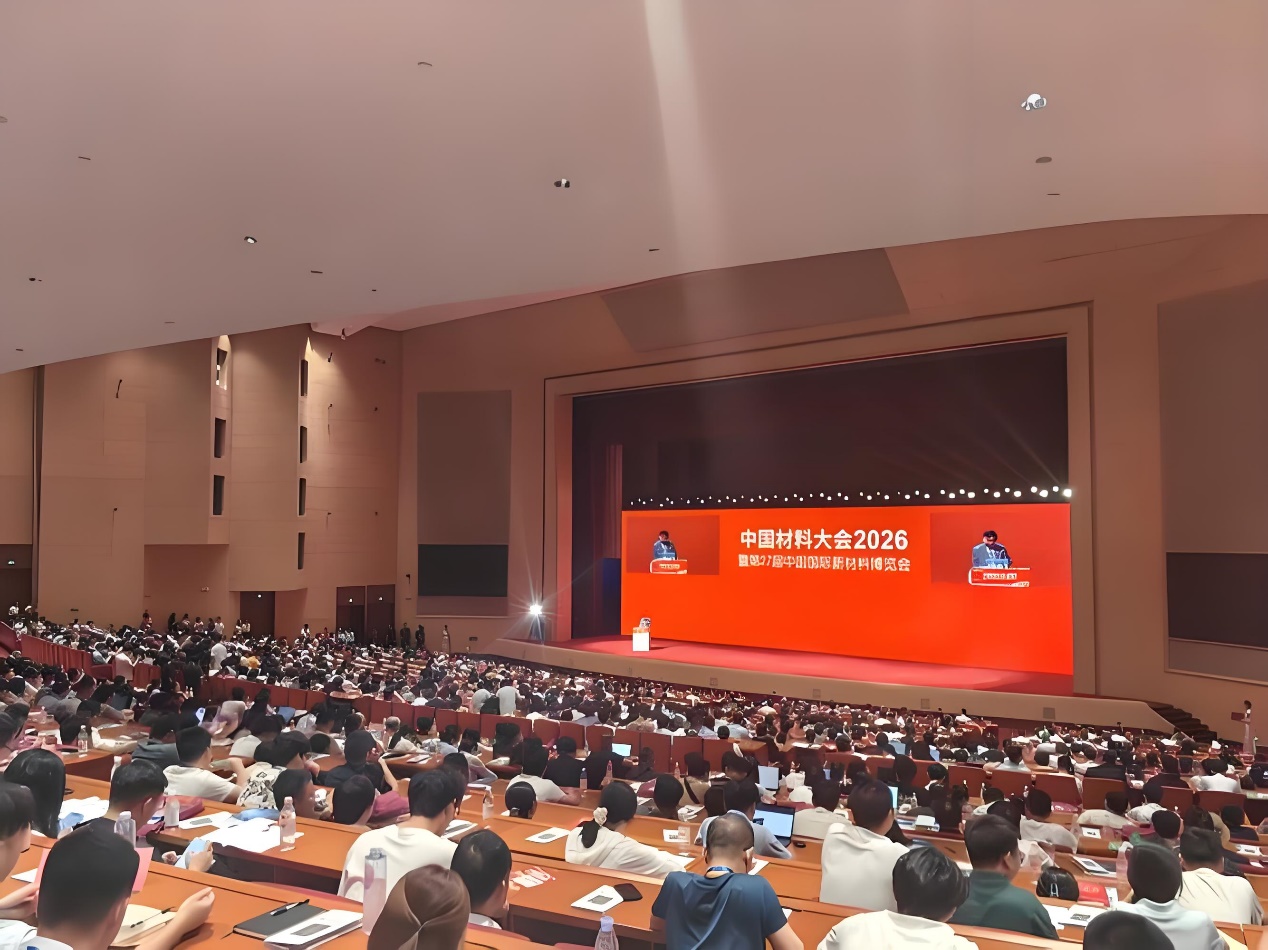
Recently, China Materials Conference 2026 concluded in Wuhan. The conference featured specialized forums covering energy materials, information materials, advanced structural materials, biomedical materials, environmental materials, safety materials, and artificial intelligence materials. Among the sessions related to composite materials, discussions covered not only material systems such as metal-matrix composites and fiber modification and composite technologies, but also interdisciplinary topics including thermo-mechanical behavior of structural materials, materials technologies under impact environments, material structure and property characterization techniques, and biomimetic materials. Research on composite materials is expanding from studies of “material constituents and manufacturing processes” toward investigations of service behavior under coupled “material–structure–load–environment” conditions.
This transition has introduced new requirements for experimental characterization.
Composite materials are typically characterized by multiphase architectures, hierarchical structures, anisotropy, and interface-dominated behavior. Their failure processes rarely manifest as stable propagation of a single crack. Instead, they often involve the competition and coupling of multiple mechanisms, including matrix cracking, fiber fracture, interfacial debonding, delamination, local buckling, and global deformation. Traditional extensometers and strain gauges can provide localized measurement data, but they cannot fully describe the initiation, transfer, and propagation of strain concentration zones. Likewise, relying solely on load–displacement curves makes it difficult to identify the specific damage mechanisms associated with changes in macroscopic stiffness.
Digital Image Correlation (DIC) technology calculates surface displacement fields by tracking grayscale features of speckle subsets before and after loading, and subsequently derives strain fields, principal strain directions, and deformation histories. For laminated plates, blades, and membrane structures exhibiting out-of-plane deformation, Stereo Three-Dimensional DIC (Stereo 3D DIC) is generally employed to reconstruct three-dimensional coordinates and displacement fields through stereoscopic vision. Therefore, the significance of DIC lies in extending discrete measurement points into continuous full-field measurements, enabling researchers to analyze when strain concentrations emerge, how localized deformation migrates, and how different regions of a structure participate in load transfer.
Bonded metal laminates, fiber-metal laminates, and other layered composite structures are widely used in aerospace, vehicle protection systems, and lightweight load-bearing structures. During drop-weight impact events, specimens may simultaneously experience local bending, transverse shear, interfacial damage, and layer separation. Because the duration of impact events is extremely short and deformation rates are high, observing only residual dents or post-impact fracture morphologies is insufficient for reconstructing the damage evolution process and the dynamic interactions between structural layers.
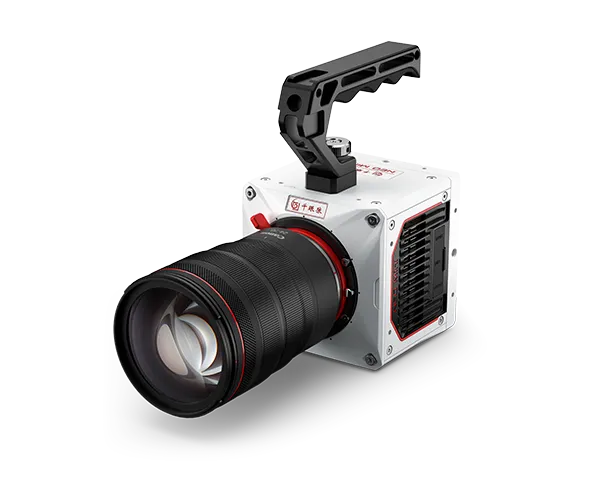
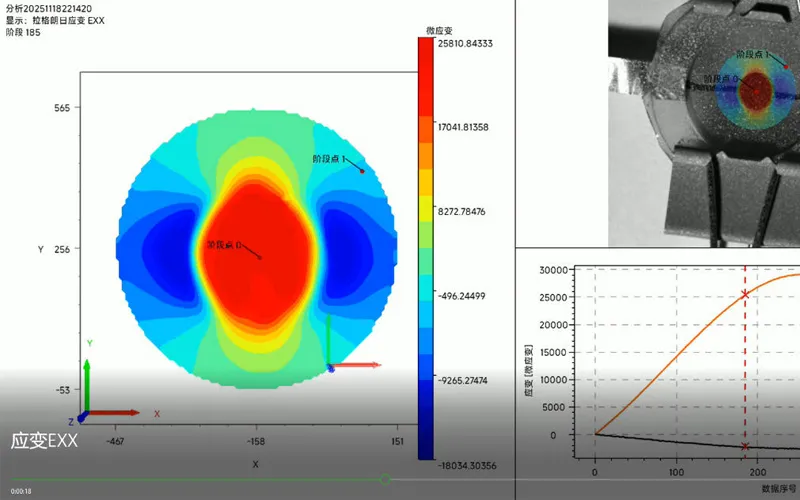
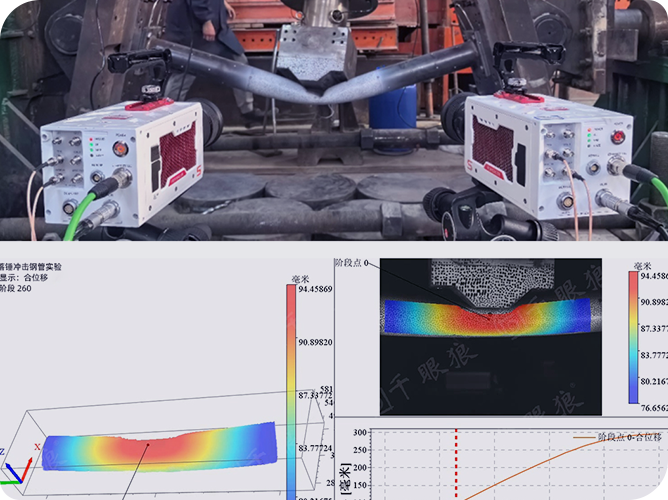
In a drop-weight impact experiment on a double-layer bonded metal composite plate conducted at University of Science and Technology Beijing, the research team employed a Revealer High-Speed DIC system to record transient deformation on the specimen side surface at a resolution of 1280 × 600 pixels and a frame rate of 20,000 frames per second. Due to limitations imposed by the protective frame of the impact-testing machine and restricted observation space, it was not feasible to deploy two high-speed cameras in the conventional configuration. Consequently, a single-camera two-dimensional High-Speed DIC arrangement was adopted to measure approximately in-plane deformation on the side surface.
By comparing specimens that experienced separation failure with those that exhibited no obvious separation damage, distinct strain states were observed on the lower plate surface. In specimens with separation failure, localized regions of the lower plate exhibited tensile strain (Figure 1). In specimens without significant separation damage, the observed lower plate surface remained predominantly under compressive strain (Figure 2). This difference suggests that changes in interlayer bonding conditions may be accompanied by alterations in local bending morphology and surface strain distribution. As interfacial load-bearing capacity decreases, coordinated deformation between different layers weakens, causing adjustments in load-transfer paths and potentially inducing transitions between tensile and compressive stress states. The value of High-Speed DIC lies in providing experimental evidence for establishing relationships among impact loading, surface deformation, and damage characterization, while enabling comparisons of structural responses under varying interlayer bonding methods, material thicknesses, and impact energy conditions.
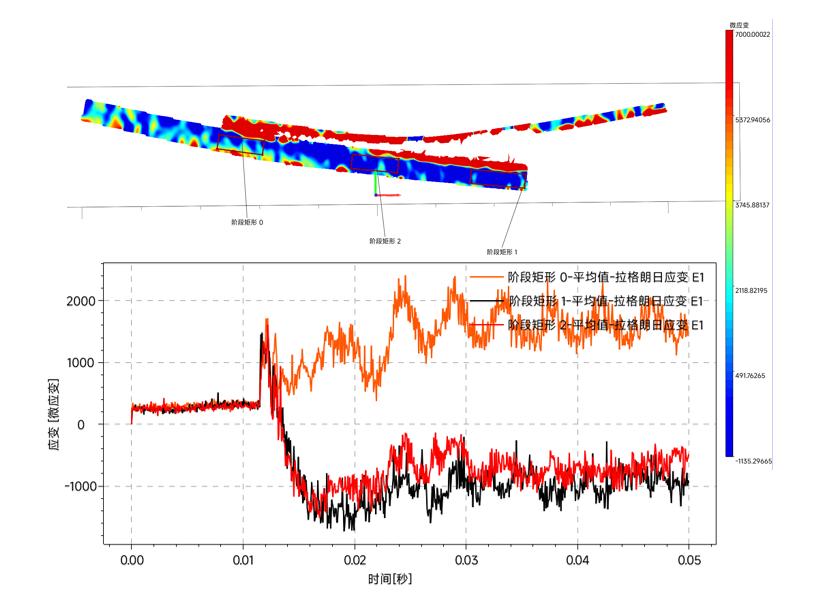
Figure 1. During failure of the double-layer bonded laminate, the left-side surface region of the lower plate is under tensile strain.
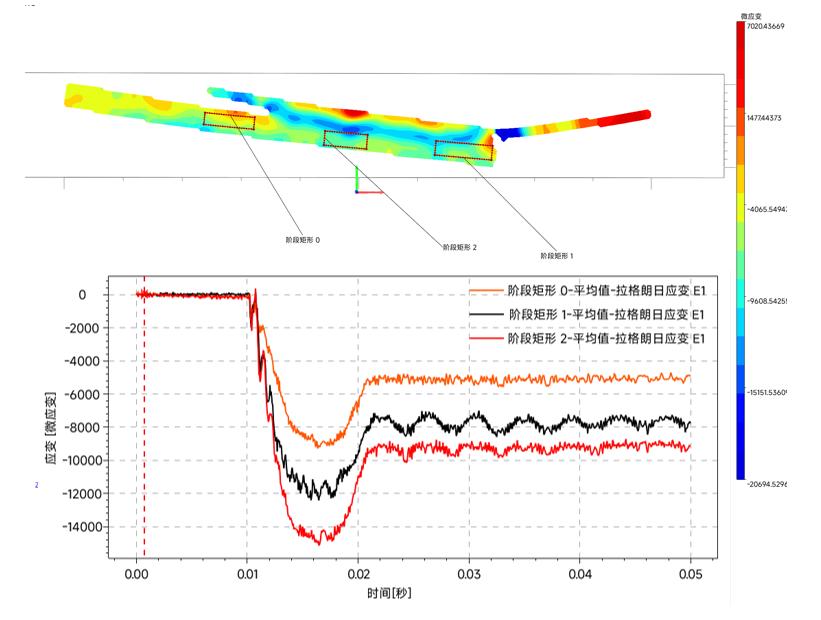
Figure 2. When no failure occurs in the double-layer bonded laminate, the entire surface of the lower plate remains under compressive strain.
Fatigue damage in composite materials is cumulative and progressive. During the early stages of cyclic loading, matrix microcracks, interfacial microdamage, or localized interlaminar damage may first appear. As the number of loading cycles increases, damage gradually propagates, leading to changes in local stiffness and load-transfer paths within the structure. Ultimately, this process manifests as strain redistribution, variations in deformation amplitude, and degradation of overall structural performance.
Conventional fatigue testing typically evaluates structural performance based on cycle count, load amplitude, displacement, stiffness, or fatigue-life curves. While these parameters can reflect the overall structural response, they do not necessarily identify regions of high strain directly, nor do they adequately explain deformation differences among various structural locations.
In a fatigue test of an unmanned aerial vehicle (UAV) rotor blade, HK Aviation employed a Revealer Stereo Three-Dimensional DIC system to measure the surface displacement field and strain field of the rotor blade under loading from a three-axis actuator. Measurement regions were arranged along both the blade span direction, extending from the blade root to the blade tip, and the chord direction, extending from the leading edge to the trailing edge.
The measurement results revealed pronounced spatial nonuniformity in the principal strain distribution on the rotor-blade surface. Along the span direction, the principal-strain history evolved from an approximately sinusoidal waveform into a periodic waveform characterized by alternating major and minor peaks. Strain amplitudes increased from approximately 90 με near the blade root to approximately 295 με near the blade tip. Along the chord direction, strain histories exhibited overall periodic variation from the leading edge to the trailing edge. The central region of the blade showed an amplitude of approximately 299 με, whereas the trailing-edge region exhibited an amplitude of approximately 81 με (Figure 3). Corresponding displacement responses showed that the resultant displacement amplitude along the span direction increased from approximately 0.457 mm near the blade root to approximately 0.644 mm near the blade tip. Along the chord direction, the resultant displacement amplitude decreased from approximately 0.656 mm at the leading edge to approximately 0.486 mm at the trailing edge (Figure 4).
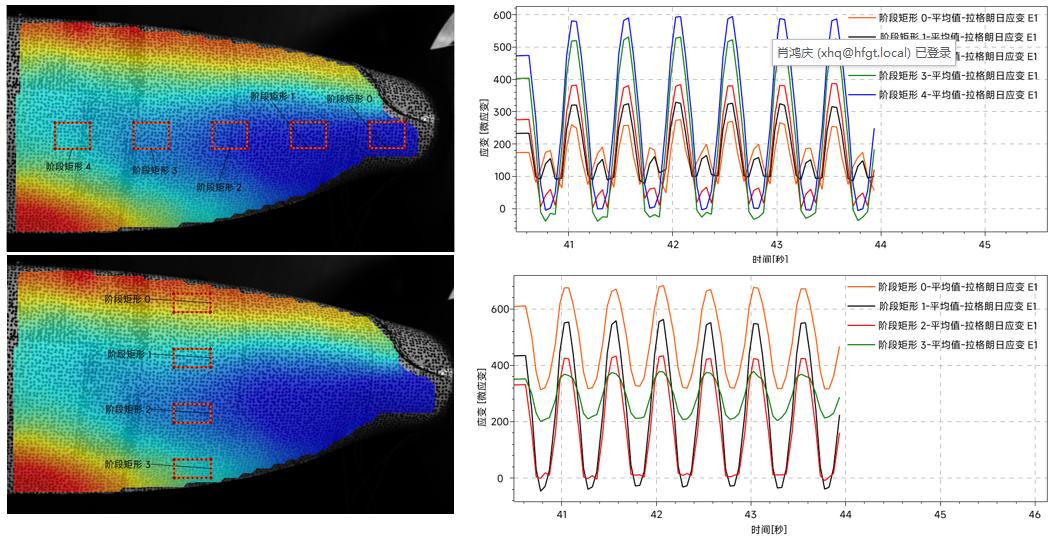
Figure 3. Strain fields measured on the rotor-blade surface using the Stereo Three-Dimensional DIC system. Top: Spanwise direction; Bottom: Chordwise direction.
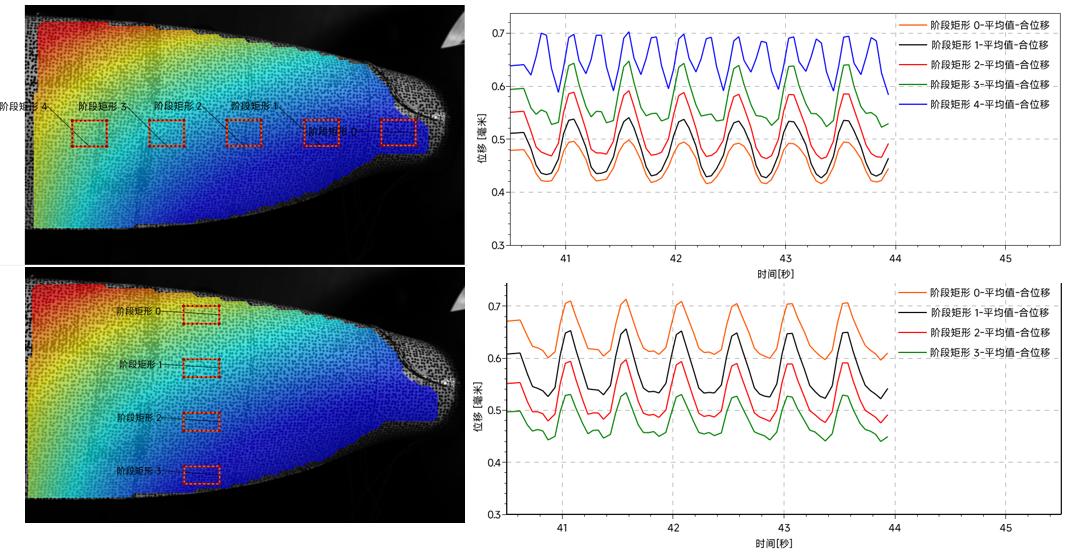
Figure 4. Displacement fields measured on the rotor-blade surface using the Stereo Three-Dimensional DIC system. Top: Spanwise direction; Bottom: Chordwise direction.
These data reflect the coupled bending–torsion behavior of the rotor-blade structure under cyclic loading. Since the blade tip is farther from the constrained end, it exhibits a larger overall displacement amplitude. However, the location of maximum strain does not necessarily coincide with the location of maximum displacement, because local strain is also influenced by sectional stiffness, laminate orientation, geometric transitions, and load-input locations. The primary advantage of Stereo Three-Dimensional DIC lies in its ability to simultaneously measure both in-plane and out-of-plane displacements, thereby reducing the influence of curved-surface motion and spatial rotation on measurement accuracy. Furthermore, the technique enables direct comparison of mechanical responses among blade-root, mid-span, and blade-tip regions within a unified coordinate system. Repeated measurements conducted at different stages of fatigue cycling can further reveal whether strain amplitudes, residual deformation, and phase relationships change under identical loading conditions, thereby providing evidence for identifying local stiffness evolution.
Flexible membranes, composite membrane materials, and flexible skins possess relatively low bending stiffness and readily undergo significant out-of-plane deformation under pressure, temperature variations, or fluid–structure interaction loading. As deflection increases, the structural response gradually transitions from the small-deformation regime into a geometrically nonlinear regime. Consequently, membrane curvature, in-plane strain, and stress states continuously evolve with changes in three-dimensional morphology.
For such applications, single-point displacement sensors can provide only limited deflection information and cannot fully characterize the complete inflation profile. Contact-based probes may additionally introduce unwanted loads onto thin membrane structures. Since the primary motion of the membrane is typically perpendicular to its initial surface, the fundamental assumptions of single-camera two-dimensional DIC are no longer satisfied.
In a geomembrane inflation experiment conducted at Hohai University, researchers employed a Revealer Stereo Three-Dimensional DIC system to measure a membrane specimen approximately 200 mm in diameter. The specimen was continuously pressurized using an air pump until failure occurred. The inflation process, lasting approximately ten minutes, was recorded at a resolution of 4096 × 3000 pixels and an acquisition rate of one frame per second. Three-dimensional morphology, out-of-plane displacement, and strain distributions on the membrane surface throughout the inflation process were obtained (Figure 5).
During inflation, the membrane gradually evolved from an approximately planar surface into a curved three-dimensional geometry with pronounced curvature. Both out-of-plane displacement and local strain exhibited nonuniform distributions. By reconstructing the three-dimensional coordinates of the specimen surface, Stereo Three-Dimensional DIC continuously characterized inflation height, surface profile, and strain-field evolution throughout pressure loading, thereby providing experimental data for analyzing the geometrically nonlinear response of membrane structures.
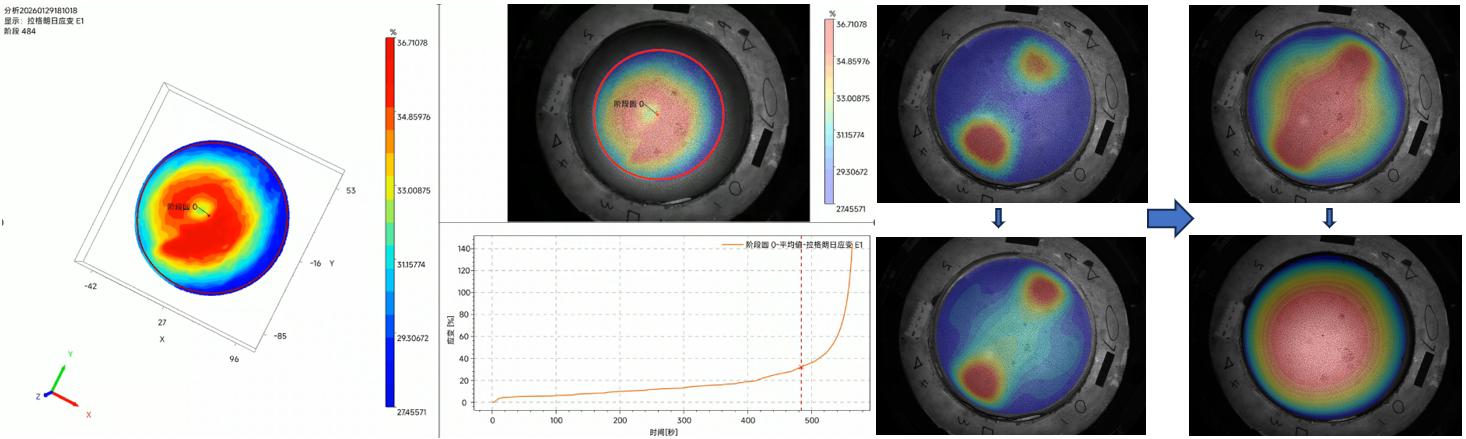
Figure 5. Three-Dimensional Morphology and Strain Evolution During Membrane Inflation Measured Using the Stereo Three-Dimensional DIC System.
The macroscopic performance of composite materials is not determined by a single factor within fibers, matrices, or interfaces. Rather, it results from the combined effects of material composition, structural configuration, manufacturing defects, boundary constraints, and load-transfer paths. As research progresses from standardized specimens to real engineering components, from static loading to impact and fatigue conditions, and from small deformations to geometrically nonlinear responses, traditional discrete measurement techniques are increasingly unable to fully characterize structural deformation and damage evolution.
Through non-contact, full-field, and time-resolved measurements, Digital Image Correlation (DIC) technology converts specimen surface images into quantitatively analyzable displacement and strain fields. High-Speed DIC enables characterization of transient strain redistribution during impact events in layered structures. Stereo Three-Dimensional DIC can measure spatial deformation of composite rotor blades under cyclic loading while also reconstructing the three-dimensional morphology of flexible membranes during inflation.
These applications demonstrate that Digital Image Correlation (DIC) technology is evolving from a tool for recording macroscopic deformation into an important experimental methodology for load-transfer analysis, damage-process characterization, and numerical-model validation in composite-materials research. Its true value lies not merely in generating colorful strain contour maps, but in establishing verifiable relationships between observable structural responses and the complex deformation and damage mechanisms of composite materials through reliable full-field spatiotemporal data.
 English
 Deutsch