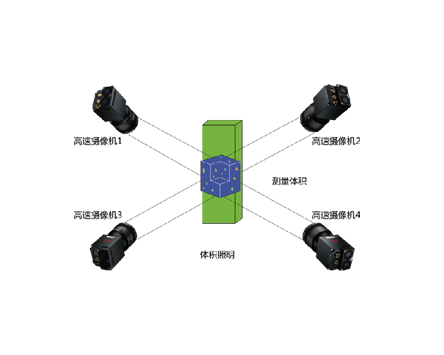
At the 32nd Fluid Mechanics Forum held in Mexico, researchers and engineers from academia and industry converged to discuss recent advances in fluid dynamics, with a strong emphasis on multiphase flow systems, turbulent transport mechanisms, and high-fidelity experimental validation of computational fluid dynamics (CFD) models. Within this context, high-speed imaging and Particle Image Velocimetry (PIV) have increasingly become essential diagnostic tools for resolving transient, multi-scale flow physics that cannot be captured by conventional measurement approaches.

A central theme of the forum was the increasing demand for quantitative, time-resolved, and full-field flow diagnostics in complex engineering systems, particularly in energy conversion, chemical processing, and renewable energy applications. In these regimes, flow structures are inherently unsteady, strongly coupled, and highly sensitive to operating conditions, requiring measurement technologies capable of capturing both Eulerian velocity fields and Lagrangian particle dynamics with high temporal resolution.
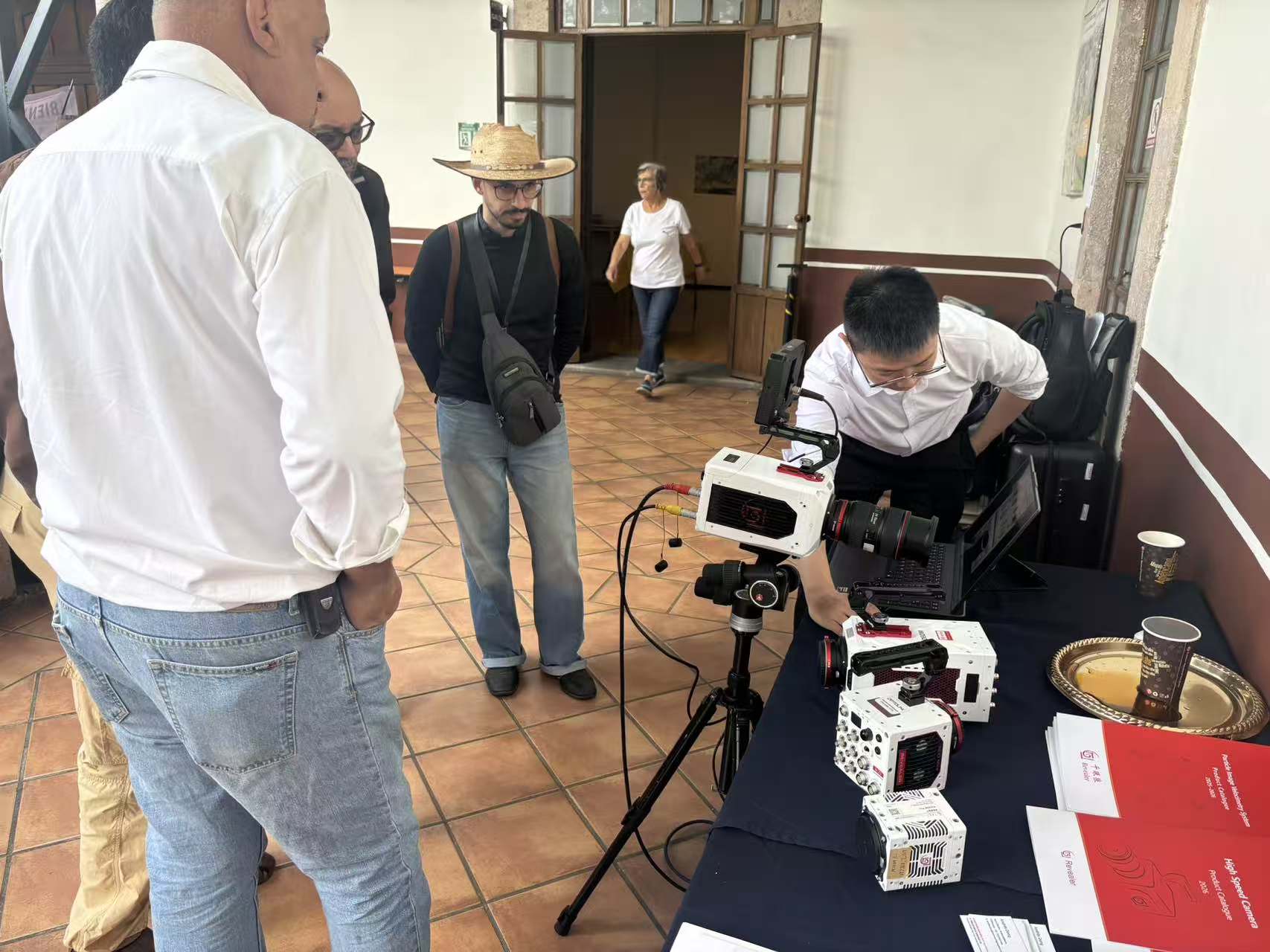
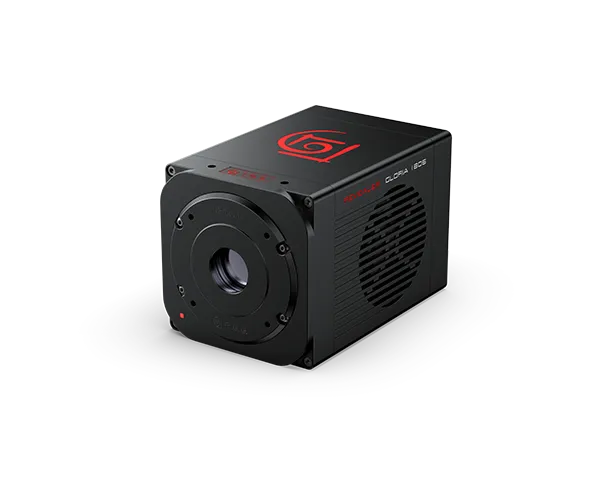
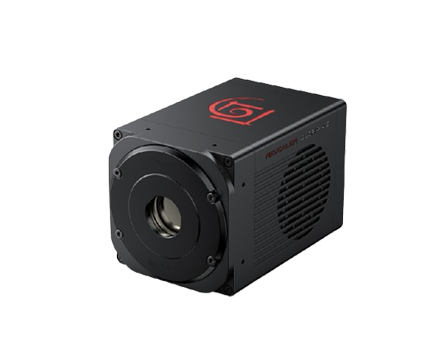
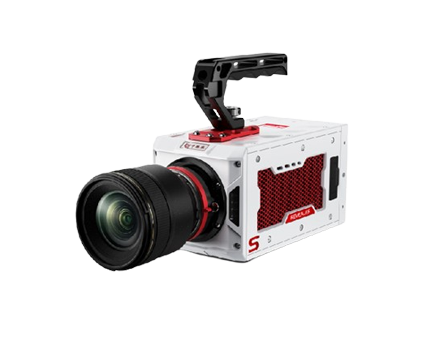
In electrochemical water electrolysis systems, multiphase transport processes play a decisive role in determining energy efficiency and reaction uniformity. Using a high-frequency pulsed illumination system combined with a Revealer high speed camera (X150M, 2560×1920 @ 2000 fps) and 2D2C-PIV configuration, this high speed camera 2000 fps setup enables researchers to resolve the internal flow field within electrolyzer channels.
As documented in experimental studies , tracer-based PIV measurements using fluorescent particles (Rhodamine-based seeding) enable visualization of velocity distributions near electrode surfaces and separator interfaces. These results provide direct experimental evidence for optimizing flow field plate design, improving reactant transport efficiency, and enhancing gas removal pathways. The combination of optical filtering and high-speed synchronization further reduces metallic reflection interference, enabling reliable reconstruction of local velocity fields in electrochemical reactors.
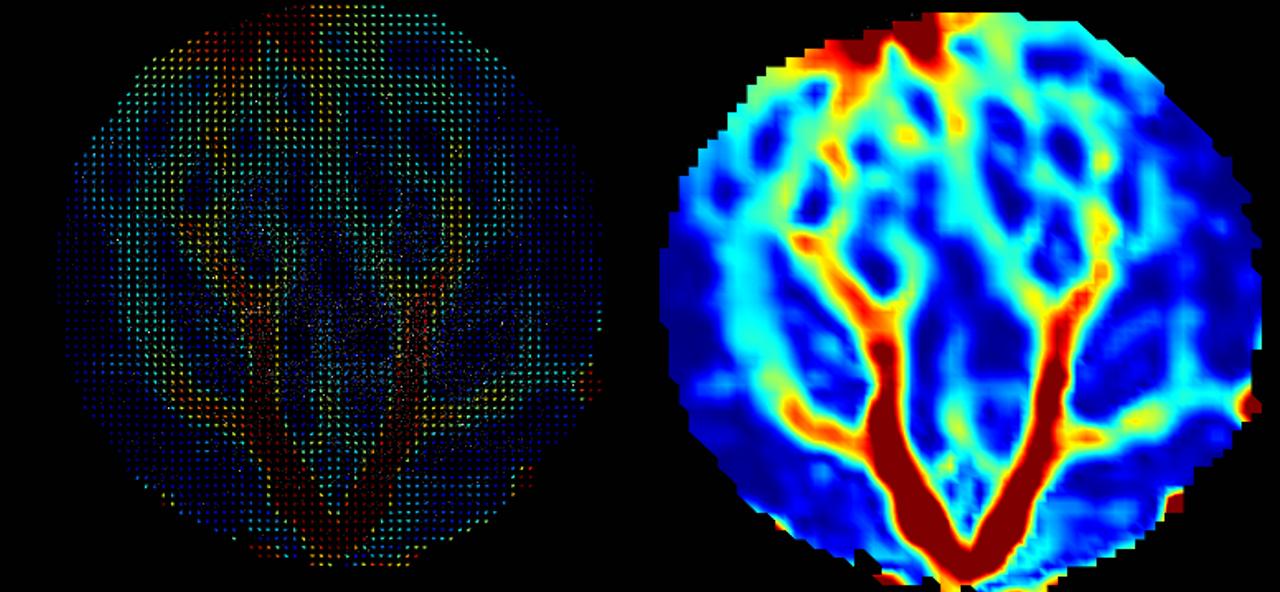
Figure-Velocity vector diagrams and velocity cloud maps of fluid inside the electrolytic cell measured using Revealer high-frequency 2D2C-PIV system
In stirred tank systems, the forum highlighted the complexity of turbulent vortex structures and their direct influence on mixing efficiency and energy dissipation. Revealer high-resolution PIV measurements conducted at 5120×4096 @ 2000 fps reveal detailed vortex evolution patterns near impeller blades, baffles, and free-surface regions.
Experimental results demonstrate that impeller-induced flow is characterized by strong periodicity governed by blade passing frequency, rather than purely stochastic turbulence. As shown in industrial-scale mixing experiments, time-resolved velocity vector fields and vorticity distributions reveal coherent structures that evolve cyclically with impeller rotation. This finding provides a physical basis for improving reactor design, particularly in optimizing impeller geometry, clearance distance, and baffle configuration for enhanced mixing performance.
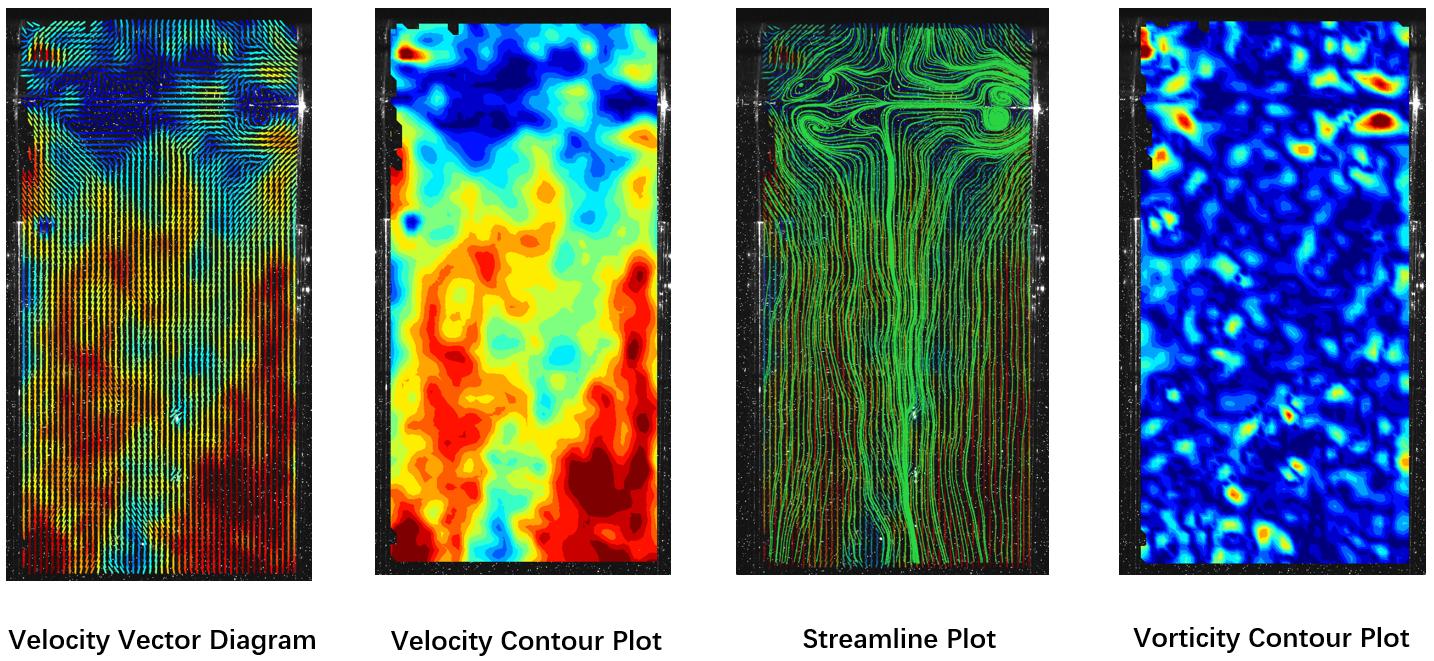
Figure-Velocity vector diagrams, velocity contour plots, streamline plots and vorticity contour plots of the flow field near the baffle in the stirred tank at a rotational speed of 94 r/min measured by Revealer high-frequency 2D2C-PIV
For gas–liquid–solid three-phase fluidized beds and flotation columns, accurate characterization of particle–bubble interactions remains a fundamental challenge. At the forum, studies using combined Revealer 2D2C-PIV and 2D-PTV techniques demonstrated the ability to simultaneously resolve liquid-phase velocity fields and discrete bubble trajectories.
According to experimental datasets from flotation column systems , high-speed imaging at 500 fps enables precise tracking of bubble size distribution, rise velocity, and trajectory instability, while PIV measurements capture surrounding fluid turbulence modulation induced by particle loading. These coupled measurements provide a mechanistic understanding of phase interaction dynamics, particularly in mineral flotation and gas dispersion systems.
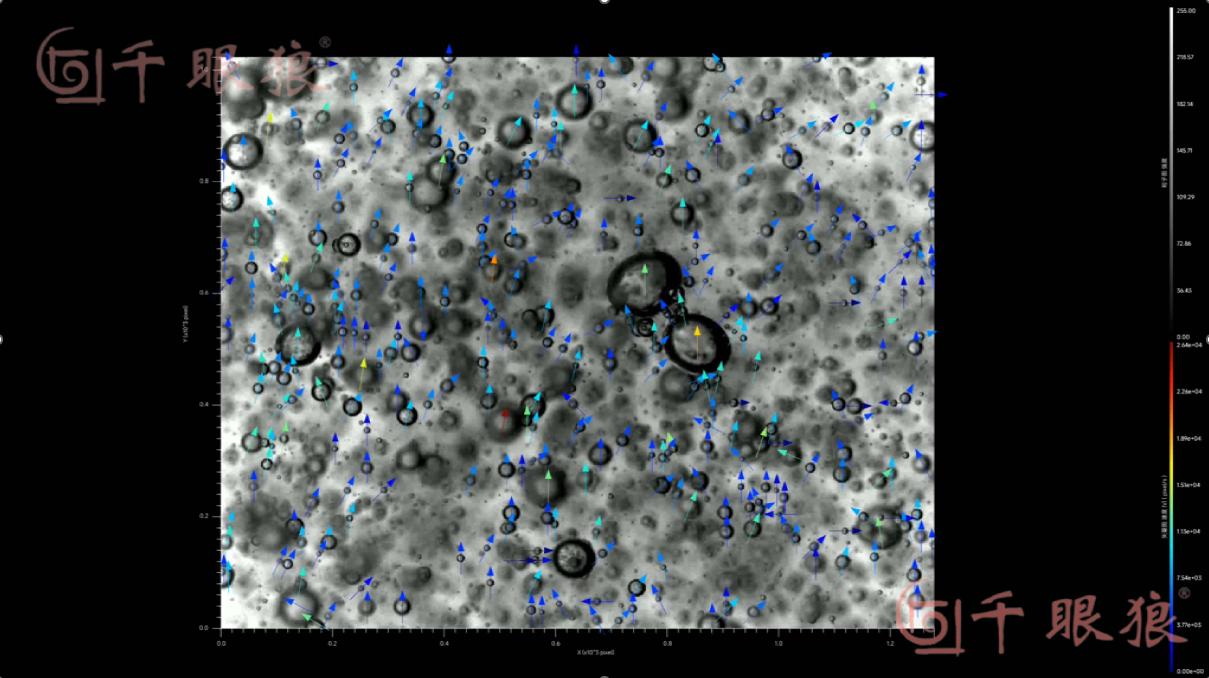
Figure-The bubble size distribution and two-dimensional bubble morphology distribution maps were measured using the PTV function in Revealer PIV software.
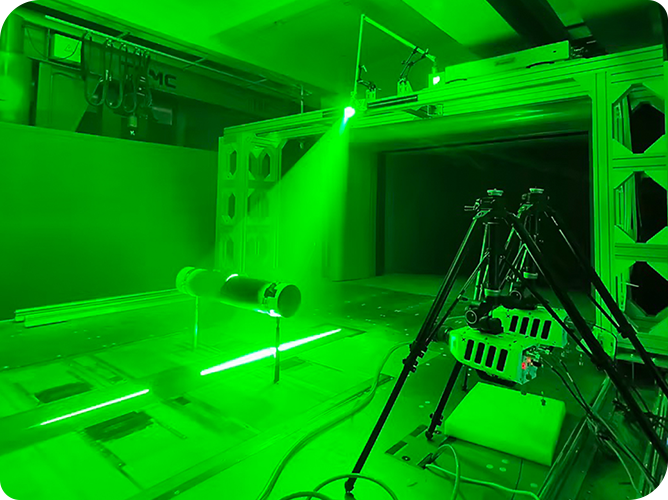
In renewable energy research, wake-induced turbulence behind wind turbines remains a key factor affecting wind farm efficiency. Revealer High-speed PIV measurements conducted in vertical-axis wind turbine experiments demonstrate the capability of resolving wake vortex shedding and downstream flow recovery mechanisms.
As shown in recent experimental validation studies, full-field velocity reconstruction at 5120×4096 @ 1000 fps enables identification of coherent wake structures under wave–flow interaction conditions. These datasets provide critical validation benchmarks for CFD models used in wind farm layout optimization, reducing inter-turbine wake interference and improving overall energy harvesting efficiency.
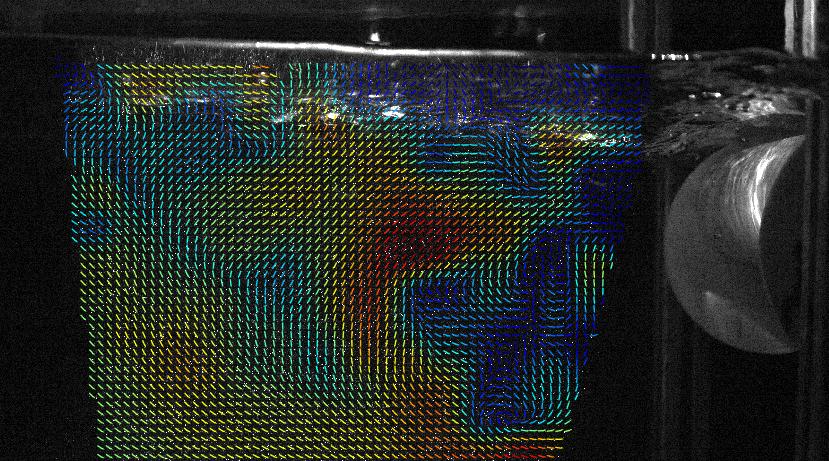
Figure-Measurement of wake flow field evolution and vortices of wind turbine under wave-current interaction by Revealer high-frequency PIV
Across all presented applications, a consistent trend emerges: fluid mechanics research is transitioning from qualitative visualization toward quantitative, time-resolved, and model-validating measurement science. High-speed cameras combined with PIV/PTV methodologies now serve not only as diagnostic tools but also as foundational infrastructure for multiphysics model verification.
The integration of high-speed imaging systems, advanced laser illumination, and synchronized data acquisition platforms enables researchers to reconstruct transient flow fields with unprecedented fidelity. This PIV measurement capability is particularly critical in systems involving strong multiphase coupling, interfacial instability, and rapidly evolving turbulence structures.
The discussions at the Mexico Fluid Mechanics Forum underscore a clear trajectory: future progress in fluid dynamics will increasingly depend on high-resolution experimental diagnostics capable of bridging the gap between numerical simulation and physical reality. High-speed camera-based PIV systems are expected to play a central role in this transformation, particularly in energy systems, chemical reactors, and environmental fluid mechanics.
As experimental complexity continues to increase, the demand for integrated measurement solutions—combining high-speed imaging, particle tracking, and advanced optical diagnostics—will further expand across both academic research and industrial process optimization domains.
 English
 Deutsch