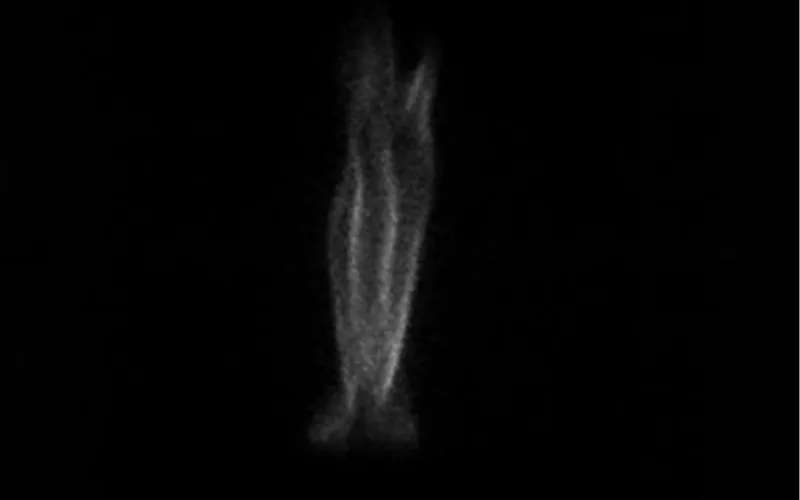
High-speed events often occur too quickly for the human eye—or even standard video cameras—to observe accurately. Whether it is a material fracture, a fuel injection process, or the moment a projectile impacts a target, critical details can unfold within fractions of a millisecond. This is where ultra-high-speed imaging becomes essential.
A 10,000 FPS camera is a high-speed imaging system capable of recording 10,000 individual frames every second, allowing events lasting only microseconds to be analyzed in slow motion with exceptional temporal resolution.
For engineers, researchers, and industrial testing teams, understanding what 10,000 frames per second actually means in practical terms is often more important than the specification itself. This article explains how fast a 10,000 FPS camera really is, what types of events it can capture, and when this frame rate is the right choice compared with 5,000 FPS and 20,000 FPS systems.
FPS stands for "frames per second," the number of images captured in one second of recording. A conventional video camera typically records at 30 FPS. A 10,000 FPS camera records over 333 times more frames during the same period.
The interval between frames can be calculated as:
| Frame Rate | Time Between Frames |
|---|---|
| 30 FPS | 33.3 ms |
| 240 FPS | 4.17 ms |
| 5,000 FPS | 0.20 ms |
| 10,000 FPS | 0.10 ms |
| 20,000 FPS | 0.05 ms |
At 10,000 FPS, the camera captures one image every 0.0001 second (100 microseconds). This temporal resolution makes it possible to observe phenomena that would otherwise appear as a blur or be missed entirely.
According to Encyclopaedia Britannica, high-speed photography generally involves exposure times shorter than 1/1,000 second and often reaches microsecond-level imaging for scientific and industrial applications.
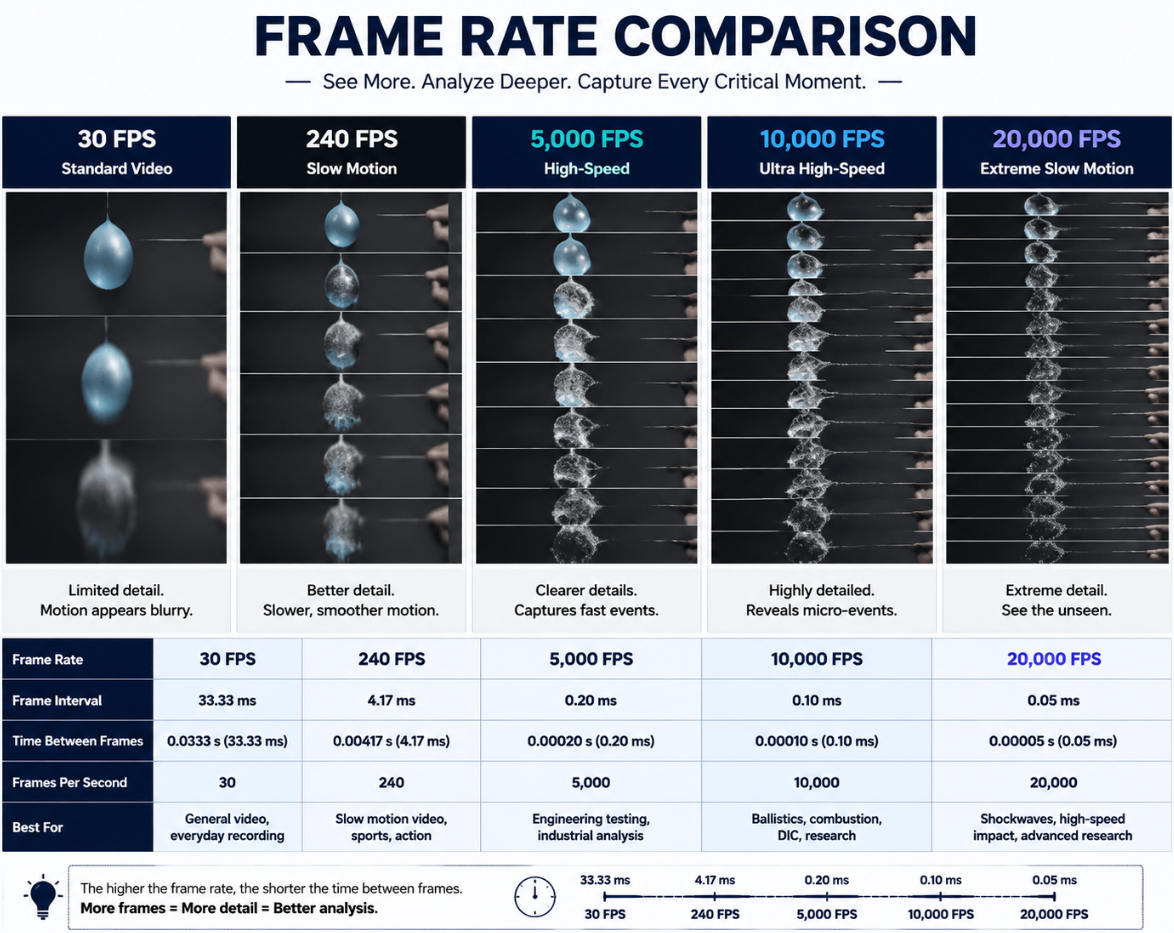
One of the easiest ways to understand a 10,000 FPS camera is to calculate playback speed. Most videos are displayed at 30 FPS. If footage recorded at 10,000 FPS is played back at 30 FPS:10,000 ÷ 30 = 333.3×
This means one second of real-world motion becomes approximately 5.5 minutes of slow-motion playback. The ability to stretch a fraction of a second into several minutes of analyzable footage is one reason why 10,000 FPS cameras are widely used in engineering diagnostics and scientific research. In many laboratories, an ultra high speed video camera is used to reveal motion details that cannot be observed through conventional imaging systems.
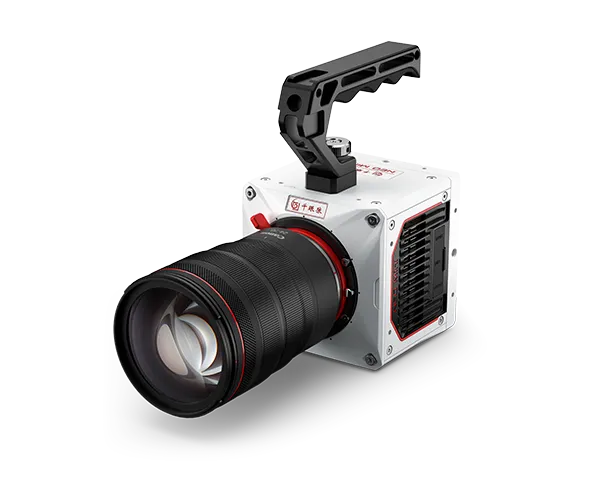
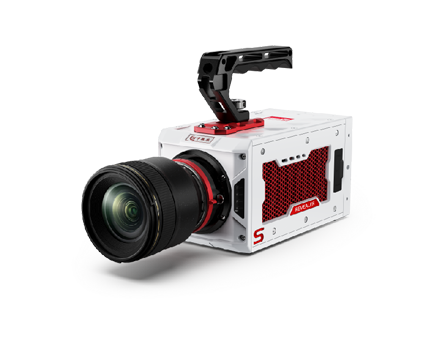
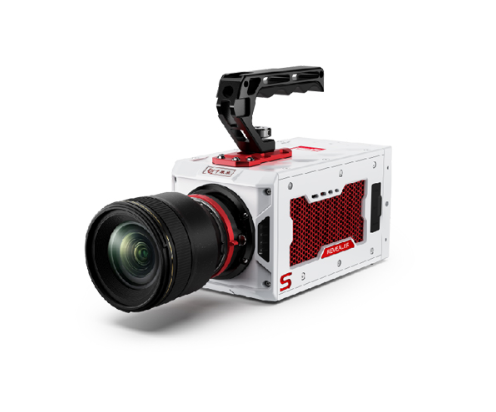
For example, the Revealer S1310M/C records at 10,000 FPS at full 1280 × 1024 resolution, allowing researchers to maintain image detail while studying extremely rapid events.
Many industrial and scientific processes occur on timescales that are impossible to evaluate using conventional cameras.
A 10,000 FPS system is commonly used to analyze:
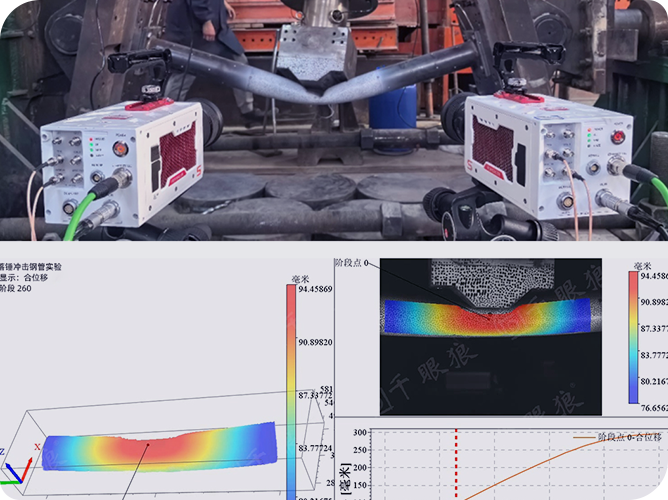
Material crack initiation and propagation
Fuel spray atomization
Ballistic impact testing
Arc discharge events
Mechanical component failures
Combustion and ignition studies
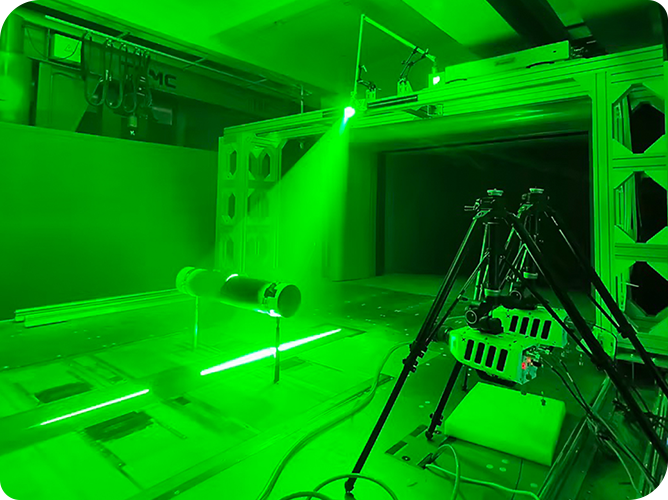
Fluid dynamics experiments
The table below shows typical applications.
| Application | Why 10,000 FPS Is Useful |
|---|---|
| Ballistics Testing | Tracks projectile motion and fragmentation |
| Material Failure Analysis | Reveals crack formation sequence |
| Combustion Research | Observes flame propagation dynamics |
| Fluid Dynamics | Captures droplet breakup and turbulence |
| Manufacturing Inspection | Identifies machine timing issues |
| Aerospace Testing | Records rapid structural responses |
In many of these scenarios, engineers are not simply interested in seeing an event happen. They need frame-by-frame measurements that can support simulation validation, product development, or failure analysis.
Selecting the right frame rate depends on the speed of the phenomenon being studied.
| Specification | 5,000 FPS Camera | 10,000 FPS Camera | 20,000 FPS Camera |
|---|---|---|---|
| Full Resolution | 1280 × 1024 | 1280 × 1024 | 1280 × 1024 |
| Frame Interval | 200 μs | 100 μs | 50 μs |
| Typical Applications | Manufacturing, motion studies | Ballistics, combustion, DIC | Shockwaves, plasma, micro-events |
| Data Volume | Moderate | High | Very High |
The Revealer S1305M/C provides 5,000 FPS full-resolution capture, making it suitable for many industrial diagnostics. The S1310M/C doubles temporal resolution to 10,000 FPS, while the NEO 20M/C reaches 20,000 FPS with a high-sensitivity BSI sensor designed for low-light ultra-high-speed imaging.
For many laboratories and industrial users, 10,000 FPS represents an effective balance between temporal resolution, image quality, lighting requirements, and data management. As a result, many high speed camera manufacturers position this frame-rate range as a practical solution for industrial testing and scientific research.
A common misconception is that frame rate alone determines camera performance. In reality, maintaining resolution at high frame rates is equally important.
Many consumer cameras reduce image resolution significantly when operating in high-speed modes. This can limit measurement accuracy and make quantitative analysis difficult.
For applications such as Digital Image Correlation (DIC) and Particle Image Velocimetry (PIV), maintaining full-frame resolution enables more accurate displacement and velocity calculations.
The Revealer S1310M/C records at 10,000 FPS while maintaining a full resolution of 1280 × 1024 pixels, making it suitable for scientific imaging workflows where measurement precision is critical.
Choosing the correct frame rate starts with understanding the speed of the event being measured.
As a general guideline:
| Event Type | Recommended Frame Rate |
|---|---|
| Machine Motion Analysis | 1,000–5,000 FPS |
| Manufacturing Troubleshooting | 2,000–8,000 FPS |
| Material Fracture Testing | 5,000–15,000 FPS |
| Ballistics Research | 10,000–20,000 FPS |
| Shockwave Studies | 20,000+ FPS |
If the event changes significantly within less than one millisecond, a 10,000 FPS camera often becomes the minimum practical requirement.
By capturing one frame every 100 microseconds, engineers can isolate individual stages of failure, combustion, deformation, or fluid behavior that would otherwise remain hidden.
A 10,000 FPS camera records one image every 100 microseconds, transforming extremely fast events into slow-motion footage suitable for detailed analysis. For applications such as material testing, fluid dynamics, combustion research, and industrial troubleshooting, 10,000 FPS often provides the optimal balance between temporal resolution, image quality, and practical workflow efficiency. When combined with full-resolution imaging and large onboard memory, it becomes a powerful tool for turning invisible events into measurable data.
Not necessarily. Higher frame rates generate more data and often require additional lighting. The best choice depends on the speed of the event being studied and the level of temporal detail required.
Encyclopaedia Britannica – High-Speed Photography
https://www.britannica.com/technology/high-speed-photography
Encyclopaedia Britannica – Technology of Photography: High-Speed and Stroboscopic Photography
https://www.britannica.com/technology/technology-of-photography/Special-techniques-and-applied-photography
 English
 Deutsch