The 22nd National Symposium on Shock Waves and Shock Tubes was held in Nanjing, China, in May 2026. The symposium covered a broad range of frontier topics, including shock tube development, shock wave propagation mechanisms, boundary layer transition, detonation initiation mechanisms, and high-enthalpy flow diagnostics. It showcased the latest progress in fundamental research and engineering applications in the field of shock waves and shock tubes in China.
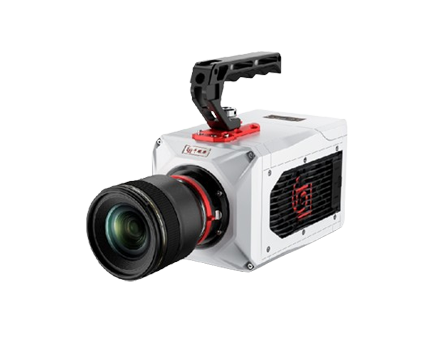
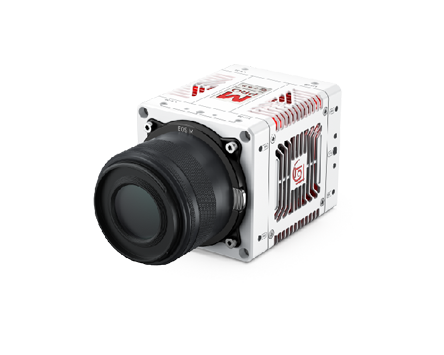
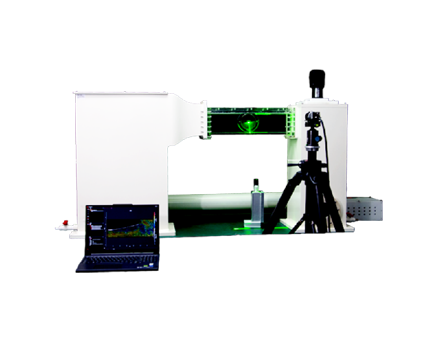
Against a backdrop of increasingly sophisticated numerical simulations and theoretical models, high-resolution experimental observation of ultra-fast transient processes has become a critical bottleneck for mechanism discovery and model validation. Revealer participated in the symposium with its latest high-speed cameras and 3D digital image correlation (DIC) systems, offering standardized measurement and quantitative testing solutions for shock wave research.
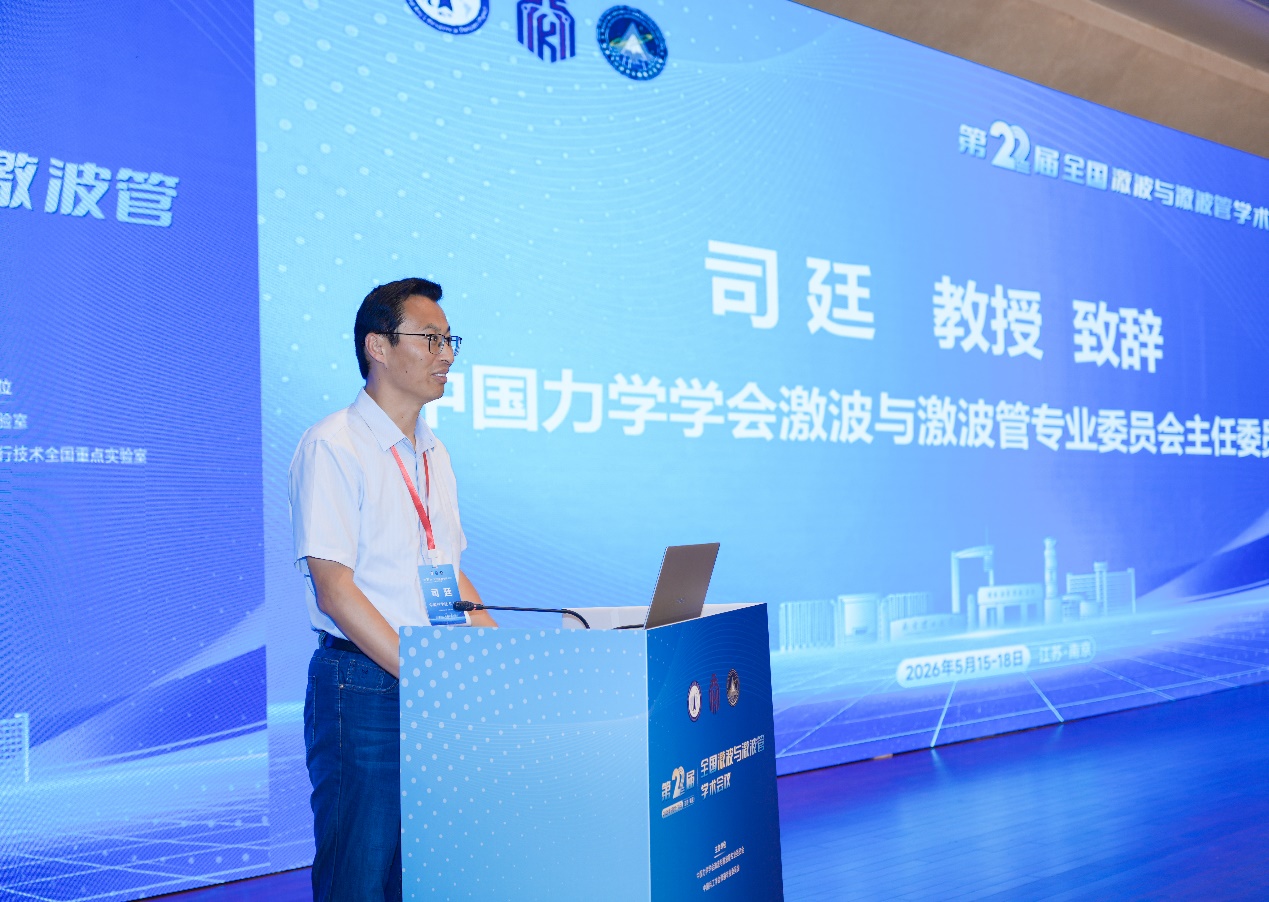
Figure 1 – Professor Si Ting (University of Science and Technology of China) delivering an opening address at the 22nd National Shock Wave and Shock Tube Symposium.
Based on discussions at the symposium, three major observational challenges remain in shock wave and detonation experiments:
Initial instability evolution of shock-impacted interfaces and detonation cell structures occur on microsecond time scales. Conventional high-speed cameras with low frame rates cannot capture continuous evolution details, which may cause distortion of wave topology and loss of key initiation or instability triggering events.
In gas-gas or gas-liquid interface instability and mixing studies, the refractive index gradients between media are often weak. Traditional schlieren methods struggle to clearly delineate interface shapes, let alone achieve spatiotemporally selective identification of specific species.
In shock tube impact loading, hypersonic shock waves, and boundary-layer interaction experiments, conventional pointwise sensors (e.g., strain gauges and pressure transducers) cannot capture the full-field distribution of strain and displacement over time, limiting the understanding of fluid-structure interaction mechanisms.
To address these observational challenges, optical diagnostics based on high-frame-rate, high-sensitivity high-speed cameras are becoming a standard tool in shock and detonation experiments. The technological evolution focuses on three areas:
Revealer’s latest ACE-series ultra-high-speed cameras can achieve 80,000 fps at megapixel resolution, with exposure times as short as 100 ns, eliminating motion blur and enabling the capture of wave dynamics with minimal distortion. The NEO-series high-sensitivity cameras utilize backside-illuminated CMOS technology and large pixel designs, achieving several times higher quantum efficiency and full-well capacity than conventional frontside-illuminated sensors at the same frame rate. This means that even at 1 μs exposure, the NEO25 can still output images with a usable signal-to-noise ratio.
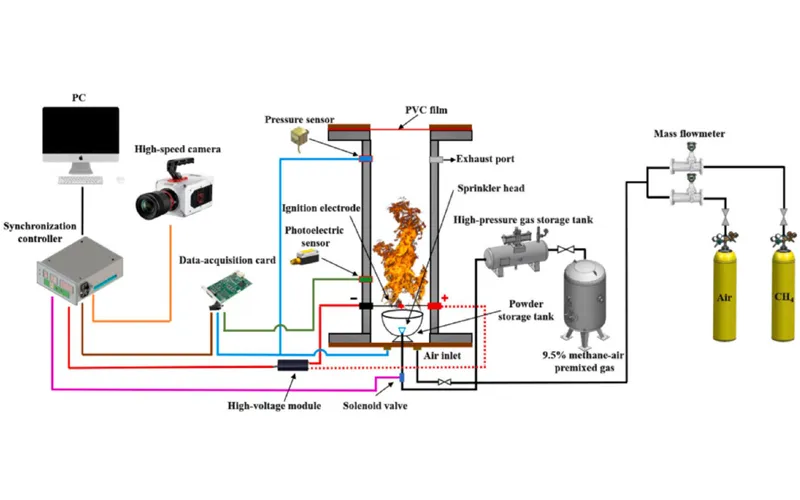
Revealer high-speed cameras are compatible with various optical methods, including laser-induced fluorescence (LIF) and schlieren visualization. Through precise timing interfaces such as the EPO (External Pulse Output) port, nanosecond-level synchronization with pulsed lasers and shock tube control systems is achieved, ensuring opto-mechanical-electronic coordination within extremely short physical time windows.
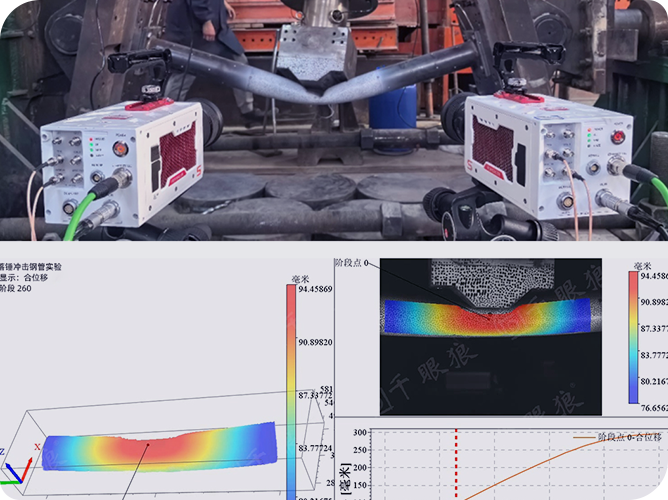
Combined with 3D DIC, the cameras capture surface speckle patterns in high-speed image sequences. By gray-level correlation matching, the full-field displacement, strain, and deformation time histories of structures under shock impact loading can be derived, providing quantitative experimental data for shock impact dynamics research.
In an experiment aimed at visualizing shock waves and Mach rings generated by a supersonic air jet (Mach ~1) from an engine nozzle, the disturbance evolution occurs on a microsecond timescale. Conventional cameras lacked sufficient frame rate and sensitivity. Using a revealer high speed camera at 90,000 fps, the periodic structure and asymmetric oscillation characteristics of the Mach rings were clearly captured, providing experimental evidence for shock wave control in nozzle design.
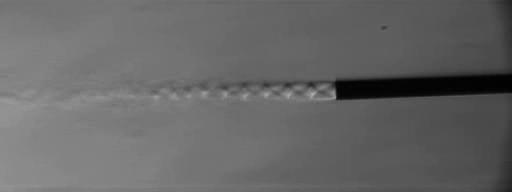
Figure 2 – Multi-stage Mach ring structure at the jet front captured by Revealer at 90,000 fps.
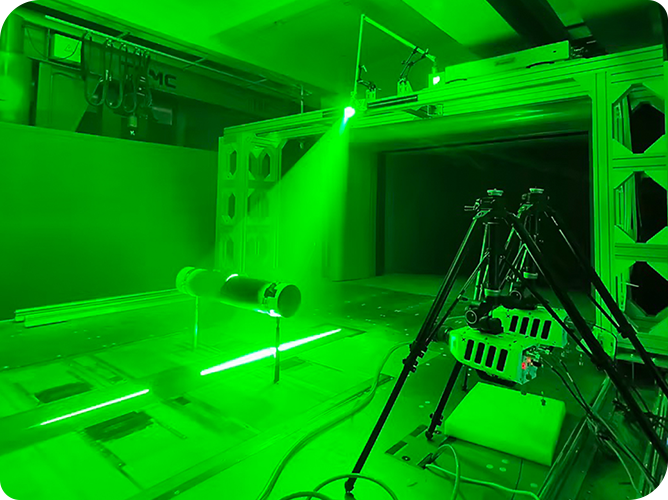
A research team led by Professor Ding Juchun studied Richtmyer-Meshkov (RM) instability on a SF₆/air diffuse interface, aiming to quantify the transition from linear perturbation growth to nonlinear rolling-up and mixing. The transparent nature of both gases and the fast evolution made optical diagnosis challenging. The team employed a Revealer NEO25 camera (1,280×1,024 at 20,000 fps, with 1 μs exposure). A UV laser (226 nm) was used to excite LIF from SF₆, converting the transparent gas into a self-luminescent tracer. The camera’s EPO port output the exposure timing to an oscilloscope, which was then used to back-control the laser pulse, achieving nanosecond-level coincidence between the laser pulse and the exposure window. The experiment clearly captured the entire evolution from a smooth, symmetric interface to late-stage nonlinear rolling-up and mushroom-shaped mixing zones. The high sensitivity of the NEO25 effectively mitigated edge blurring in low-light transparent interface conditions, significantly improving flow structure identification. The resulting quantitative image data provide directly comparable metrics for RM model validation, including mixing zone width growth and amplitude evolution.
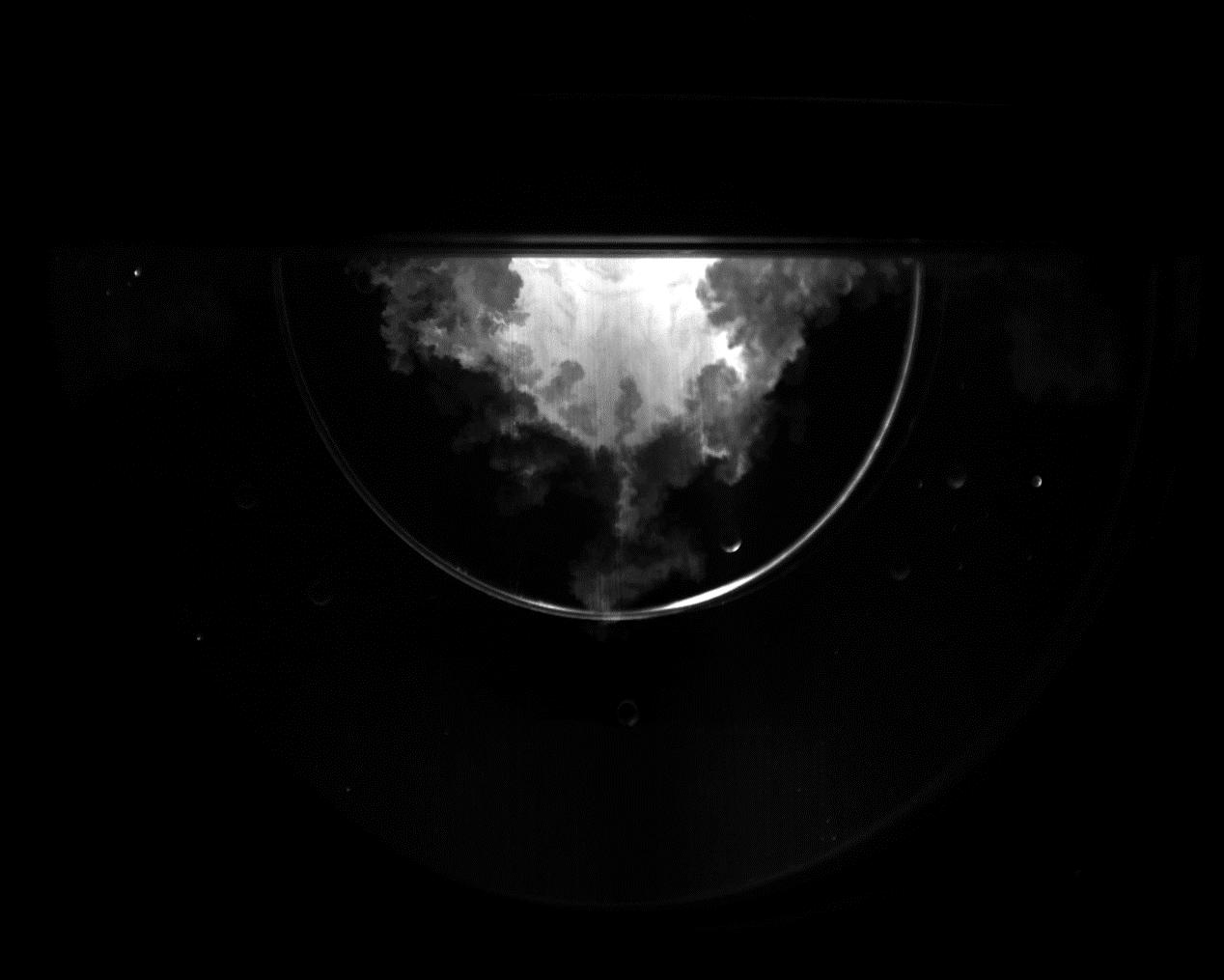
Figure 3 – Nonlinear mixing (mushroom-shaped) evolution of a shock-induced interface captured by Revealer at 20,000 fps.
A shock tube impact test focused on the strain and displacement evolution of a fiberglass plate subjected to high-speed impact (~400 m/s). Full-field, high-temporal-resolution mechanical measurements were required. The team set up a 3d digital image correlation system using two Revealer S1315 high-speed cameras synchronized at 15,000 fps. The entire impact process, from deformation and stress concentration to localized damage, was recorded continuously. Using DIC algorithms, the full-field Lagrangian strain distribution, peak micro-strain values, and displacement time histories were derived. These time-resolved full-field data provide a direct experimental basis for shock tube impact loading modeling and optimization of composite material impact resistance.
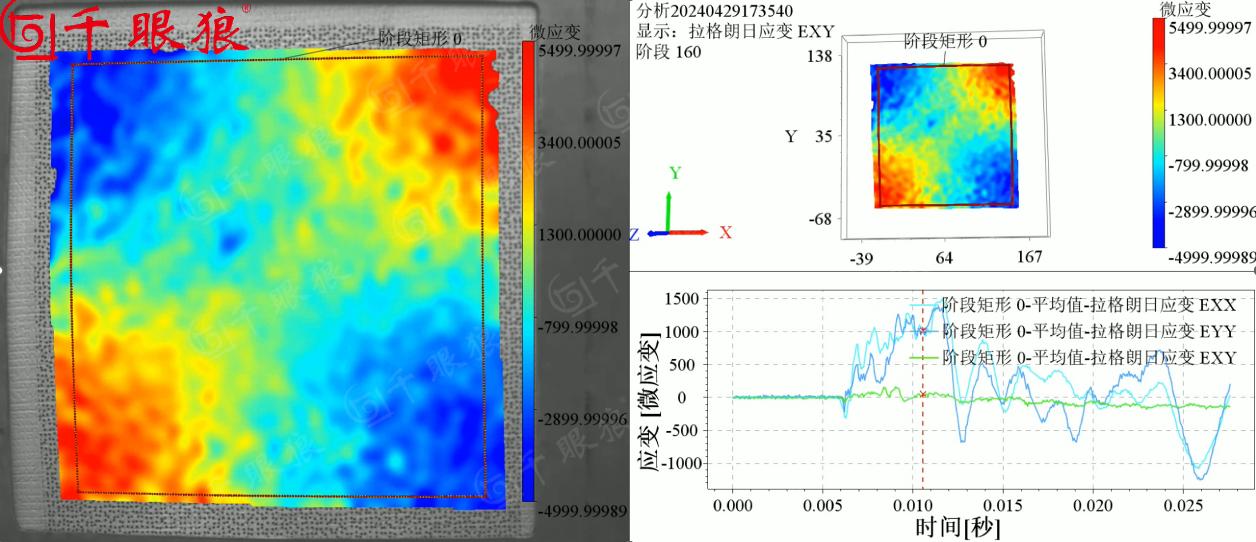
Figure 4 – Time-resolved full-field Lagrangian strain curves of the plate under shock tube impact, derived with the Revealer 3D-DIC system.
Shock wave and shock tube research is moving toward multi-physics, multi-scale, and ultra-fast transient diagnostics. Revealer high-speed imaging and DIC technology, through continuous advances in temporal resolution, spectral sensitivity, and full-field parameter reconstruction, are transitioning from simple “phenomenon recording” tools to “mechanism discovery” tools, thereby supporting high-quality development in both fundamental research and engineering applications in the shock wave community.
Q1: What frame rates are typically required to capture shock wave and detonation details?
A: Critical processes such as shock-induced interface instability and detonation cell evolution occur on microsecond scales. A minimum of 10,000–50,000 fps is often necessary, while some structures (e.g., Mach rings in supersonic jets) may require 90,000 fps or higher for full resolution.
Q2: How does Revealer achieve synchronization with pulsed lasers in LIF-based interface visualization?
A: Revealer cameras provide an EPO (External Pulse Output) interface that outputs the exact exposure timing (with nanosecond precision) to an oscilloscope. This signal is then used to trigger the pulsed laser, ensuring the laser pulse falls within the camera’s exposure window.
Q3: Can DIC be applied to measure full-field strain and displacement in shock tube impact experiments?
A: Yes. When two or more high-speed cameras are synchronized and calibrated, 3D DIC can reconstruct the full-field displacement and strain distributions of a deforming specimen at each time step, provided a suitable speckle pattern is applied to the specimen surface.
Q4: What is the main advantage of backside-illuminated (BSI) CMOS sensors in high-speed imaging for shock wave research?
A: BSI sensors have higher quantum efficiency and better light-gathering capability, allowing usable signal-to-noise ratio even at very short exposure times (e.g., 1 μs), which is essential for freezing fast-moving shock or detonation features without excessive motion blur.
Q5: Is the Revealer system compatible with existing schlieren or shadowgraph setups?
A: Yes. Revealer high-speed cameras are compatible with standard schlieren and shadowgraph optical arrangements. They can be directly mounted on most optical benches and triggered externally to synchronize with the test event.
 English
 Deutsch