Solid mechanics experiments are increasingly moving toward high-temporal-resolution, non-contact, full-field deformation measurement. For rapidly evolving processes such as dynamic fracture, impact damage, and high-strain-rate deformation, high-speed cameras continuously capture material responses, while Digital Image Correlation (DIC) converts high-speed image sequences into displacement fields, strain fields, and their temporal evolution.
Drawing on topics highlighted at the 2026 Conference of Chinese Solid Mechanics, including experimental solid mechanics, damage and fracture, and dynamic mechanics, this article examines two representative high-speed DIC experiments: Brazilian-type disk fracture and Split Hopkinson Pressure Bar impact testing. The discussion focuses on the technical value of high-speed cameras and DIC for dynamic deformation measurement, fracture-mechanism investigation, and numerical model validation.
The 2026 Conference of Chinese Solid Mechanics was recently held in Tianjin. The conference covered a broad range of topics, including solid deformation and constitutive theory, strength, damage and fracture, wave propagation and vibration mechanics, composite materials and structural mechanics, multiphysics coupling, and experimental solid mechanics.
Experimental measurement itself is becoming an increasingly important component of solid mechanics research. Sessions on experimental solid mechanics included studies on defocus deblurring of DIC speckle images, deep-learning-based Digital Image Correlation, high-temperature DIC, and material characterization under coupled mechanical, thermal, and impact loading. Other sessions addressed multi-view spatiotemporal DIC, Digital Volume Correlation (DVC), and full-field deformation measurement under extreme environments.
The underlying shift is that solid mechanics experiments are no longer concerned only with whether a material ultimately fails. Increasing attention is being paid to the entire process preceding failure.
Where does a crack initiate? How does the strain field propagate and redistribute during impact? Why do different loading configurations produce different failure modes? Can experimental measurements provide reliable validation data for numerical models and constitutive relationships?
Answering these questions requires both high temporal resolution and dense spatial information.

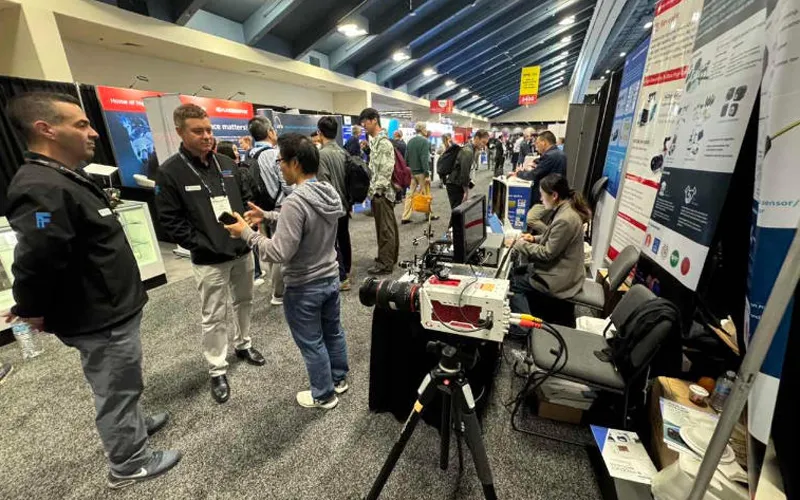
Figure 1: 2026 Conference of Chinese Solid Mechanics, featuring research on experimental solid mechanics, material damage and fracture, high-strain-rate dynamic response, and DIC-based full-field deformation measurement.
Under dynamic fracture, impact loading, and Hopkinson-bar testing conditions, the experimental environment changes substantially compared with conventional quasi-static testing.
The first challenge is the compressed time scale. Crack initiation, strain localization, and impact-induced failure may occur within milliseconds or even microseconds. Impact events are extremely short, and surface strains can evolve rapidly, requiring sufficiently high temporal resolution for continuous recording.
The second challenge is highly nonuniform deformation. Significant spatial strain gradients frequently develop near crack tips, local defects, shear bands, and material interfaces. Contact methods such as strain gauges are difficult to use for continuously describing strain-field evolution over the entire specimen surface.
The third challenge is the trade-off between imaging speed and image quality. High-speed DIC relies on robust tracking of grayscale information within the speckle pattern. As frame rate increases, exposure time generally has to decrease accordingly. Insufficient illumination and motion blur can therefore reduce image quality and compromise correlation accuracy.
The key requirement in dynamic solid mechanics is therefore not simply to increase frame rate, but to:
continuously acquire high-quality speckle images suitable for quantitative correlation analysis at sufficiently high temporal resolution.
High-speed cameras and DIC perform distinct but complementary functions.
A high-speed camera first records the continuous transient evolution of a material from loading and deformation to final failure.
DIC then compares the positions of speckle subsets before and after deformation, calculates the specimen-surface displacement field, and subsequently derives the strain field and its temporal evolution. In practical terms, DIC addresses where deformation occurs and how that deformation evolves.
For two-dimensional high-speed DIC, typical outputs include in-plane displacement, axial strain, transverse strain, shear strain, and principal strain.
In actual experiments, high-speed DIC measurement quality is jointly governed by frame rate, exposure time, spatial resolution, speckle quality, illumination, and field-of-view design.
The objective is therefore not to maximize any single camera parameter, but to match temporal resolution, spatial resolution, exposure, and signal-to-noise ratio to the characteristic time and length scales of the mechanical process being investigated.
Disk fracture testing is a representative experimental method for investigating fracture behavior in rocks and other brittle or quasi-brittle materials.
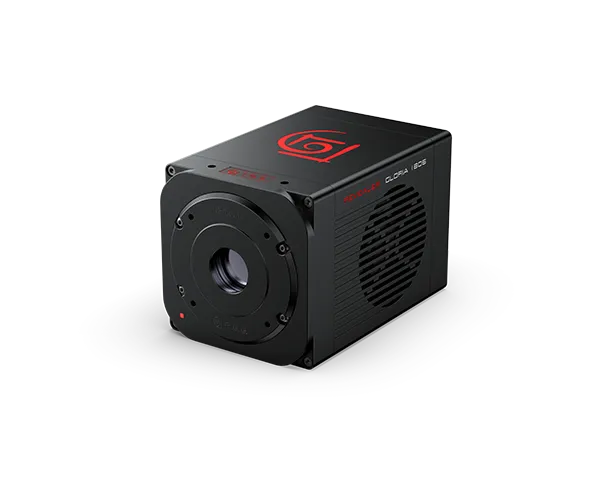
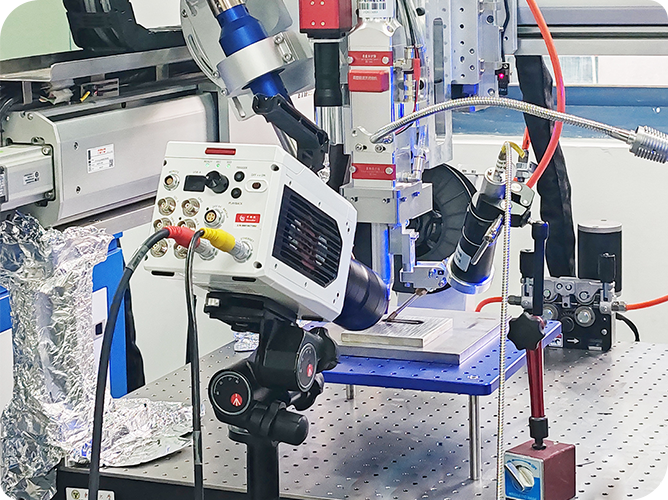
A research team at Fujian Agriculture and Forestry University investigated a 100 mm diameter disk using a Revealer NEO25M high-speed camera. Images were acquired at a resolution of 1280 × 1024 pixels and 20,000 frames per second, while the camera is capable of up to 25,000 fps at full resolution. The objective was to capture rapid crack evolution during disk fracture and subsequently analyze deformation using DIC.
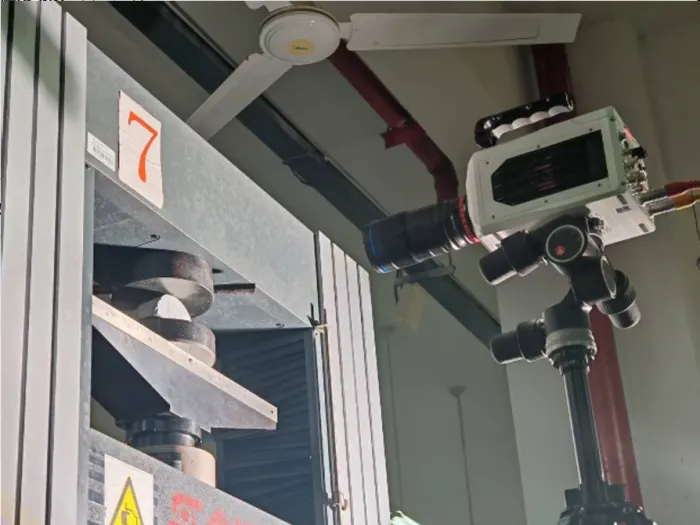
Figure 2: Revealer NEO25M high-speed camera used for a disk-fracture DIC experiment, recording rapid crack propagation in brittle material at 1280 × 1024 resolution and 20,000 fps.
Disk fracture generally proceeds from crack initiation through crack propagation to final unstable failure. During the rapid propagation stage, conventional temporal resolution may be insufficient to continuously resolve the evolution of the crack and its surrounding deformation field.
In this experiment, the high-speed camera acquired continuous speckle-image sequences, after which DIC analysis was used to establish the relationship between crack evolution and the surface strain field.
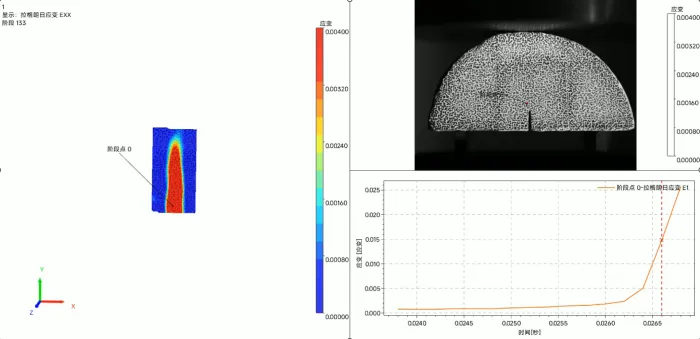
Figure 3: High-speed DIC strain-field analysis of a disk-fracture experiment, where high-speed imaging records crack initiation and propagation and DIC characterizes strain concentration and full-field deformation evolution around the crack.
For fracture mechanics research, the macroscopic visible crack represents only one part of the overall failure process. Before the crack becomes macroscopically observable, the local strain field may already have undergone significant redistribution.
High-speed DIC preserves time-resolved information on both crack morphology and surface deformation, thereby providing experimental evidence for investigating relationships among crack initiation location, crack propagation path, and local deformation.
A research team at the China University of Geosciences investigated blast stress-wave propagation and the dynamic response of rock materials.
During Split Hopkinson Pressure Bar (SHPB) impact testing, strain on the rock-specimen surface changes rapidly over a very short duration. Conventional single-point contact measurements cannot adequately characterize the spatial distribution of the strain field. High-speed DIC was therefore used to obtain full-field dynamic strain measurements during impact.
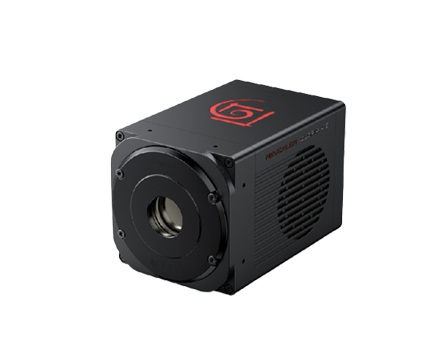
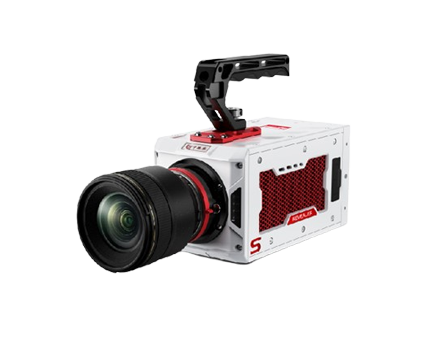
The experiment used a Revealer S1315M high-speed camera operating at 448 × 296 pixels and 50,000 fps. The measurement field of view was approximately 15 mm × 10 mm, with a working distance of approximately 50 cm.
Because of the high specimen velocity, high-intensity illumination was employed and the exposure time was reduced to 6 μs. This minimized motion blur of the speckle pattern and improved image quality for high-speed DIC correlation analysis.
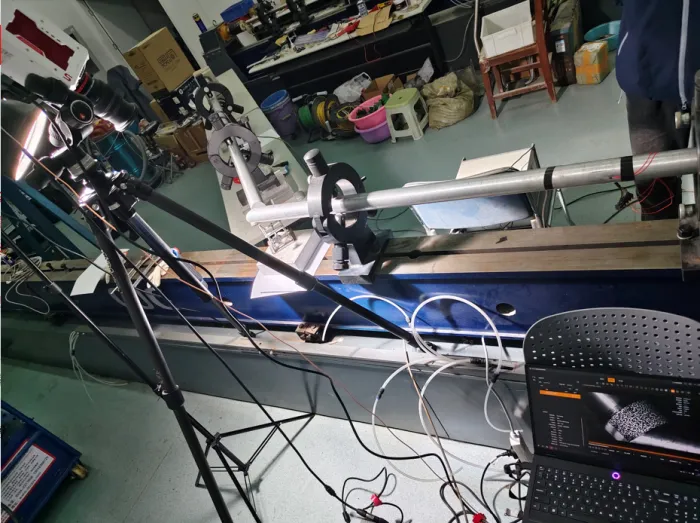
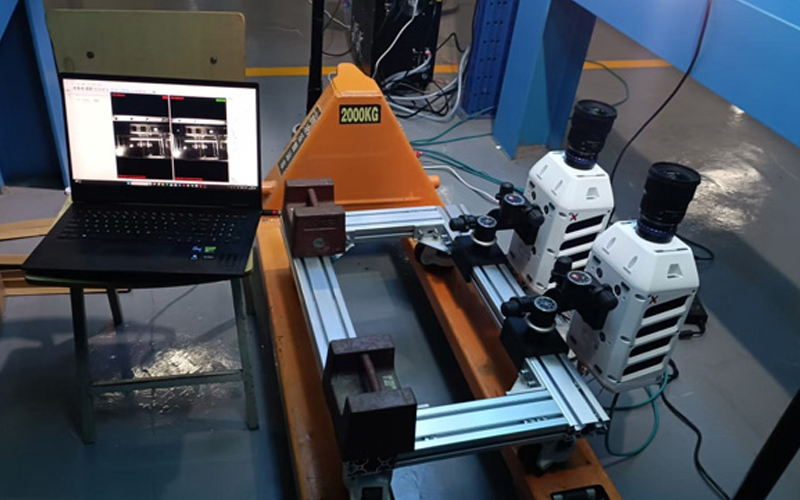
Figure 4: Split Hopkinson Pressure Bar rock-impact high-speed DIC experiment at China University of Geosciences, using a Revealer S1315M high-speed camera at 50,000 fps with a 6 μs exposure to capture high-strain-rate deformation.
After the high-speed image sequences were processed using 2D DIC, the experiment yielded shear strain, axial strain, first principal strain, and their corresponding temporal evolution. Normal-impact and oblique-impact loading conditions were analyzed separately.
Before specimen failure, the maximum shear strain under normal impact reached 10,854.4 με, whereas the maximum under oblique impact was 7,979.45 με. The shear-strain field under normal impact also exhibited a more pronounced spatial gradient.
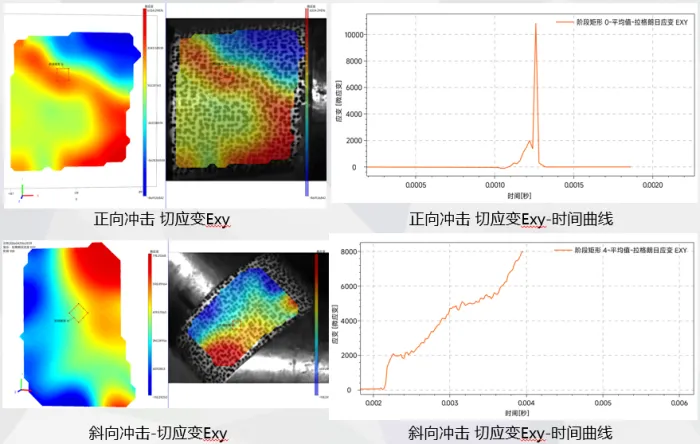
Figure 5: Comparison of 2D high-speed DIC shear strain Exy in rock specimens under normal and oblique Split Hopkinson Pressure Bar impact, showing a maximum pre-failure shear strain of 10,854.4 με under normal impact and 7,979.45 με under oblique impact.
These results illustrate that high-speed DIC does not provide only a single maximum strain value. Instead, it provides a spatial strain distribution that evolves over time.
Based on these data, researchers can compare not only the maximum strain reached under different loading conditions, but also where high-strain regions emerge, how spatial strain gradients evolve, and whether these regions correspond to the eventual failure location.
A high-speed camera can continuously record crack initiation and propagation, while high-speed DIC further provides displacement and strain fields around the crack.
For heterogeneous materials such as rock, concrete, ceramics, and composites, these temporally and spatially continuous data are better suited to investigating strain localization, crack propagation, and relationships among different failure modes.
Under Split Hopkinson Pressure Bar testing, impact, and other high-rate loading conditions, material responses exhibit pronounced time dependence.
High-speed DIC extends a strain measurement at a single instant into a continuous dataset consisting of: strain field + strain-time history + failure morphology
This enables quantitative comparison of dynamic deformation among different loading configurations, materials, and experimental conditions.
Numerical models can generally output continuous displacement fields, strain fields, and damage variables. Full-field measurements obtained using high-speed DIC enable more direct comparison between experiments and simulations in terms of both spatial distribution and temporal evolution.
As a result, dynamic experimental data can increasingly support field-to-field validation against numerical simulations rather than being limited to comparisons of individual displacement, load, or strain values.
Experimental solid mechanics is moving toward high-speed, full-field, three-dimensional, multiscale, and synchronized multiphysics measurement, placing increasingly stringent demands on the spatiotemporal resolution of deformation, damage, and fracture measurements under extreme conditions.
At the same time, high-speed DIC is evolving toward higher spatiotemporal resolution, 3D DIC and Digital Volume Correlation, multi-source synchronized measurement, operation under complex environments, and data-driven analysis.
As high-speed DIC continues to advance, experimental datasets can expand toward complete displacement-field, strain-field, and damage-evolution histories, helping drive experimental solid mechanics toward mechanism identification, constitutive-parameter identification, and quantitative validation of numerical models.
 English
 Deutsch