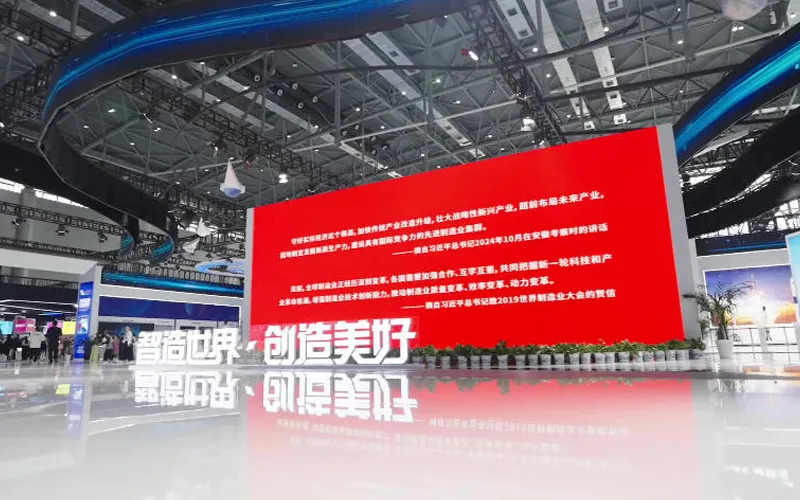
The 19th UK National Heat Transfer Conference (UKHTC 2026) was recently held at Newcastle University, United Kingdom. The conference brought together researchers to discuss convection heat transfer, gas–liquid two-phase flow, boiling and evaporation, condensation, electronics cooling, and the application of artificial intelligence in heat transfer, providing a platform for academic exchange between fundamental heat transfer research and engineering applications.
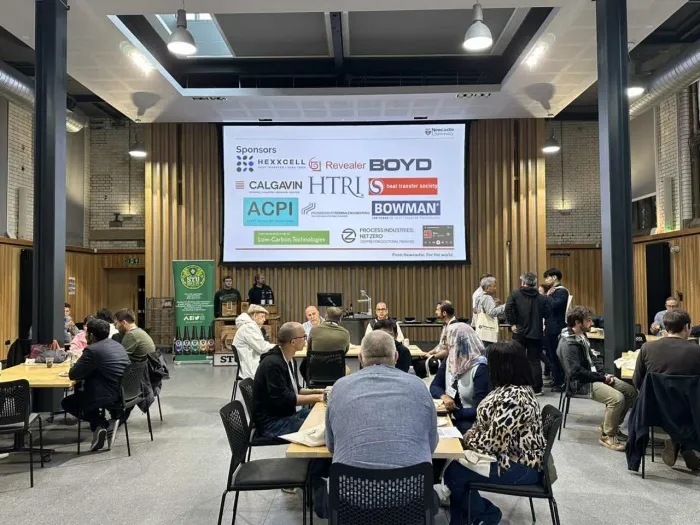
Figure 1. The 19th UK National Heat Transfer Conference (UKHTC 2026), where researchers discussed two-phase flow, boiling heat transfer, and advanced thermal management technologies.
The conference topics and related experimental research directions indicate that heat transfer research is increasingly concerned not only with macroscopic parameters such as temperature, pressure, and heat flux, but also with the quantitative characterization of local flow structures and interfacial evolution. Particularly in boiling heat transfer and gas–liquid two-phase flow, bubble dynamics—including nucleation, growth, coalescence, breakup, and departure—are closely coupled with local fluid motion, phase change, and interfacial heat transfer.
However, bubble evolution is characterized by short timescales, rapid morphological changes, and pronounced stochastic behavior. Conventional thermal measurements alone are insufficient to resolve these transient processes. Acquiring clear bubble images using high speed camera and extracting reliable geometric and kinematic parameters through bubble measurement techniques have therefore become important experimental tasks in investigating bubble dynamics and their role in heat transfer.
Conventional thermocouples, pressure sensors, and flowmeters can provide thermal parameters such as temperature, pressure, and flow rate, but they cannot directly characterize the transient deformation and motion of bubble interfaces.
For example, during rapid depressurization, a liquid may enter a superheated state as pressure drops abruptly, resulting in rapid bubble growth and morphological changes. Temperature and pressure signals alone cannot readily provide the bubble growth radius or its rate of change, making it difficult to establish a direct quantitative relationship between bubble growth behavior and interfacial heat transfer.
Measurement becomes even more challenging in dense bubbly flows. Bubble overlap, occlusion, and coalescence, together with the low contrast and blurred boundaries of small bubbles, can lead to missed detections, segmentation errors, and incorrect trajectory associations across successive frames. These errors ultimately affect the accuracy of bubble size distributions and kinematic parameters.
Consequently, the experimental challenge has evolved beyond simply acquiring high-speed images toward establishing a reliable bubble measurement system. Such a system must ensure adequate temporal resolution, spatial resolution, and image quality while enabling bubble detection, contour segmentation, trajectory tracking, and physical parameter extraction, followed by synchronized correlation with thermal parameters.
Taking the study of a Continuous Spectrum Bubble Generator (CSBG) as an example, bubble size is not merely an image feature. It is an important parameter affecting bubble swarm dynamics, void fraction distribution, slip velocity, and heat and mass transfer.
The research team employed a high-speed camera and two-phase flow measurement and analysis techniques to acquire images of bubble swarms in a visualization test section. Through background removal, binarization, boundary extraction, concave-point detection, segmented-arc clustering, and ellipse fitting, overlapping bubbles were separated and their sizes reconstructed.
This process highlights an important distinction between bubble measurement and conventional high-speed photography. The ultimate experimental objective is not simply to obtain slow-motion footage, but to extract physical parameters that can be used in quantitative analysis, including bubble equivalent diameter, projected area, major and minor axis lengths, sphericity, position coordinates, instantaneous velocity, acceleration, and motion trajectories.
In the continuous bubble generation experiment, the measurement method further enabled the determination of mean bubble diameter, Sauter mean diameter (SMD), and bubble size distributions, allowing researchers to investigate their relationships with operating parameters such as impeller rotational speed and gas flow rate.
The experimental results showed that once the shear device entered its stable operating regime, the mean bubble size decreased steadily with increasing impeller rotational speed.
For more complex, high-density bubbly flows, measurement algorithms are also evolving from conventional rule-based methods toward data-driven approaches.
For example, a heterogeneous dual-branch neural network architecture integrates a high-resolution detail branch with a context-aware branch. The former enhances edge and contour information for small bubbles, while the latter uses an expanded receptive field to identify background characteristics and the spatial distribution of bubble swarms.
A multi-object association method based on optimal transport is then employed to match bubbles across successive frames.
The objective extends beyond improving detection accuracy. By maintaining consistent bubble identities during high-speed motion, the method enables the subsequent calculation of bubble positions, instantaneous velocities, accelerations, and complete motion trajectories.
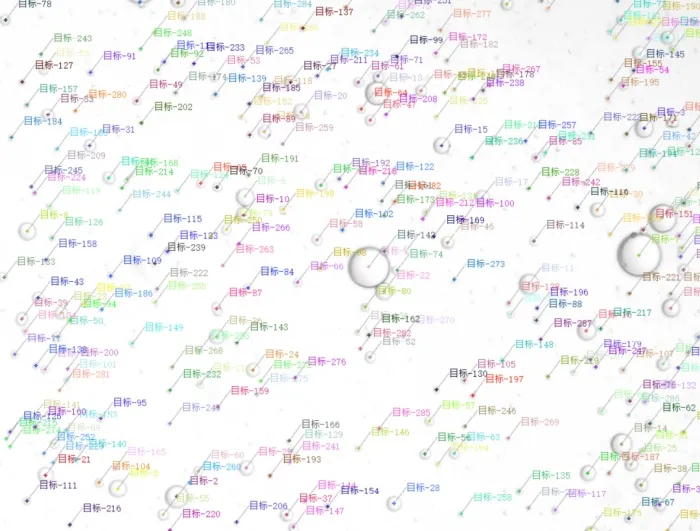
Figure 2. Revealer bubble measurement technology performs multi-object detection and trajectory tracking on dense bubble images acquired by a high-speed camera. The image displays bubble contours, object identification numbers, and motion trajectories.
In this sense, bubble measurement is becoming an intermediate technological layer in two-phase flow experiments: it connects high-speed imaging and optical acquisition upstream with heat transfer correlations, two-phase flow models, and numerical simulation validation downstream.
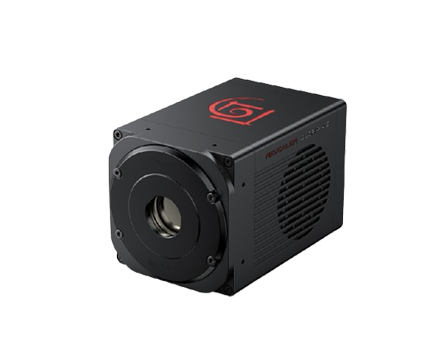
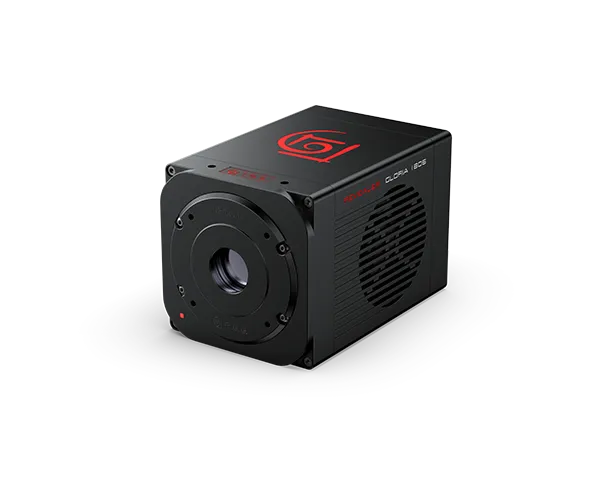
A research team at Chongqing University employed a Revealer high-speed camera integrated with a synchronized pressure and temperature acquisition system to investigate transient bubble growth during rapid depressurization.
During the experiment, the high-speed camera recorded bubble evolution at a resolution of 1280 × 1024 pixels and a frame rate of 6,800 fps.
Under a representative experimental condition, the bubble evolved from a nearly spherical shape into ellipsoidal and cap-shaped configurations within approximately 30 ms, while its projected equivalent diameter increased from approximately 0.6 mm to 2.8 mm.
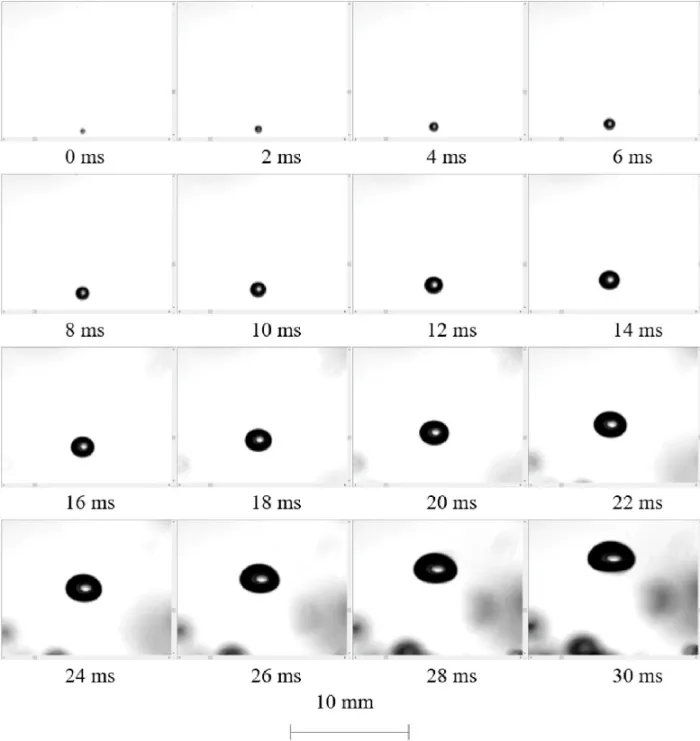
Figure 3. A Revealer high-speed camera captures bubble growth during a rapid depressurization experiment over 0–30 ms, showing the transient morphological evolution from a nearly spherical to an ellipsoidal shape and the corresponding changes in bubble size.
The researchers extracted the time-dependent bubble growth radius from high-speed images and combined it with synchronized pressure and temperature measurements.
Based on the energy conservation equation, the bubble interfacial heat transfer coefficient was calculated, and a heat transfer correlation applicable to the investigated depressurization conditions was subsequently established.
This case demonstrates that high-speed cameras and bubble measurement techniques can do more than record transient phase-change phenomena. They can also provide essential experimental inputs, such as bubble growth rate, for calculating interfacial heat transfer parameters and developing heat transfer correlations.
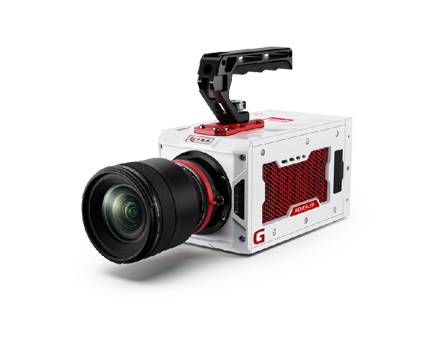
A research team at Tsinghua University employed a Revealer G820_Pro high-speed camera to record bubble nucleation, growth, coalescence, and departure during saturated pool boiling at a resolution of 4096 × 2048 pixels and a frame rate of 1,000 fps.
Bubble dynamics were analyzed in conjunction with temperature measurements.
The experimental results revealed significant variations in bubble size evolution across different growth cycles, even at the same nucleation site, with fluctuations reaching approximately 30%.
By continuously recording and statistically analyzing multiple bubble growth cycles, the researchers found that the mean bubble growth curve gradually stabilized. After approximately 20 accumulated cycles, the fluctuations decreased to around 5%.
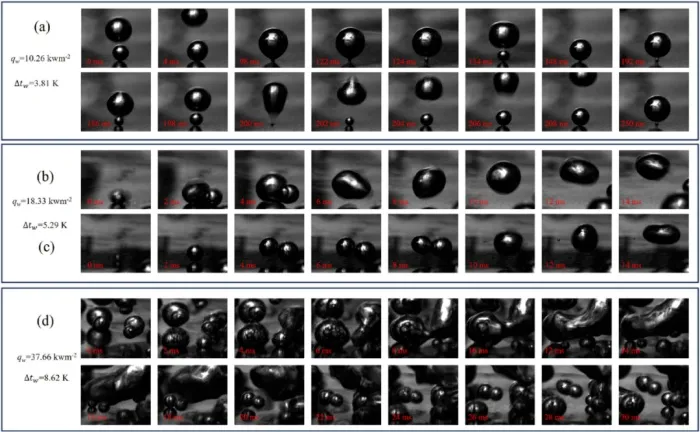
Figure 4. A Revealer G820_Pro high-speed camera records bubble growth, coalescence of neighboring bubbles, and departure during saturated pool boiling, illustrating bubble dynamics under different heat flux conditions.
Building on these observations, the research team integrated additional experimental data to establish a comprehensive dataset containing more than 2,000 data points across a wide range of operating conditions.
The applicability of 16 existing bubble growth models and correlations was systematically evaluated, and corresponding bubble growth prediction correlations were proposed for different ranges of the Jakob number.
The study demonstrates that bubble growth exhibits not only transient characteristics but also pronounced cycle-to-cycle stochasticity.
High-speed cameras and bubble measurement techniques provide experimental data for multi-cycle statistical analysis and model validation, helping improve the reliability of bubble growth predictions.
The application of bubble measurement technology is not limited to phase-change processes.
In gas–liquid two-phase flow research, bubble size and its distribution are equally important parameters for analyzing bubble swarm dynamics, interphase interactions, and heat and mass transfer.
A research team at Shanghai Jiao Tong University employed a Revealer high-speed camera and two-phase flow measurement and analysis technology to conduct visualization experiments on a Continuous Spectrum Bubble Generator (CSBG).
Through image segmentation, overlapping bubble identification, and contour fitting, the researchers obtained bubble size distributions under different operating conditions.
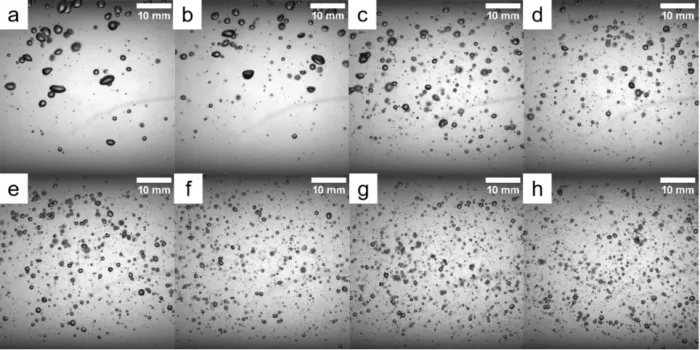
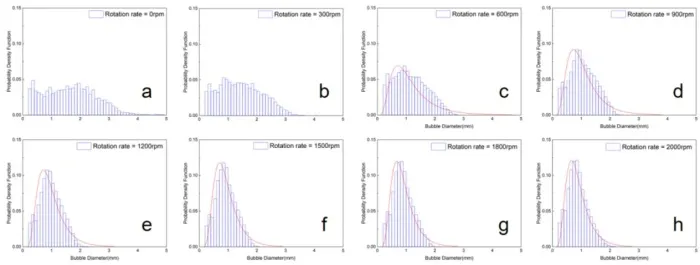
Figure 5. A Revealer high-speed camera captures bubble swarm images generated by a Continuous Spectrum Bubble Generator (CSBG) at different impeller rotational speeds. Bubble measurement algorithms are used to determine bubble size distributions and illustrate the influence of shear rate on bubble size.
The experimental results showed that as impeller rotational speed increased, the breakup of larger bubbles intensified and bubble size gradually decreased.
At higher rotational speeds, the bubble size distribution approached a lognormal distribution.
The researchers further established empirical relationships between the Sauter mean diameter (SMD), impeller rotational speed, and superficial gas velocity.
This case demonstrates how high-speed cameras and bubble measurement techniques can extend experimental analysis from individual bubble dynamics to statistical characterization of bubble swarms.
It provides an experimental basis for bubble size regulation, bubble swarm distribution characterization, and related model development in gas–liquid two-phase flows.
The research topics addressed at UKHTC 2026, including two-phase flow, boiling and evaporation, and advanced thermal management, indicate increasing experimental requirements for transient interfacial information and local physical parameter measurement.
The integration of high-speed cameras with bubble measurement technology enables parameters such as bubble size, morphology, velocity, and trajectories to be extracted from image sequences and correlated with thermal measurements, including temperature and pressure.
This provides a more comprehensive experimental basis for heat transfer mechanism analysis and model validation.
Looking ahead, high-speed visual measurement is expected to evolve toward greater automation, statistical analysis capabilities, and synchronized multiphysics measurement.
By integrating high-speed cameras and bubble measurement with piv measurement techniques, temperature field measurement, and synchronized data acquisition, researchers may establish quantitative correlations among bubble interfaces, surrounding flow fields, and local thermal parameters.
Such integrated measurements could provide more comprehensive experimental data for elucidating the coupling mechanisms between bubble dynamics and heat transfer processes.
From recording bubble evolution to quantitatively characterizing interfacial dynamics, high-speed cameras and bubble measurement technology are advancing experimental heat transfer research from phenomenological observation toward physical parameter measurement and model validation, providing essential experimental support for boiling heat transfer, gas–liquid two-phase flow, and high-heat-flux cooling research.
 English
 Deutsch